

Since the outbreak of war in Iran, the world has faced another energy crisis, with economic analysts forecasting significant impacts on the UK.
At Westminster, MPs have generally presented two main arguments on how to reduce energy costs, which can be summarized as:
However, a crucial factor contributing to rising energy bills has received little attention in this debate: network costs.
Rewiring Britain
Energy bills in the UK cover more than just the gas and electricity consumed at home; they also fund the maintenance, modernization, and expansion of Britain's energy infrastructure.
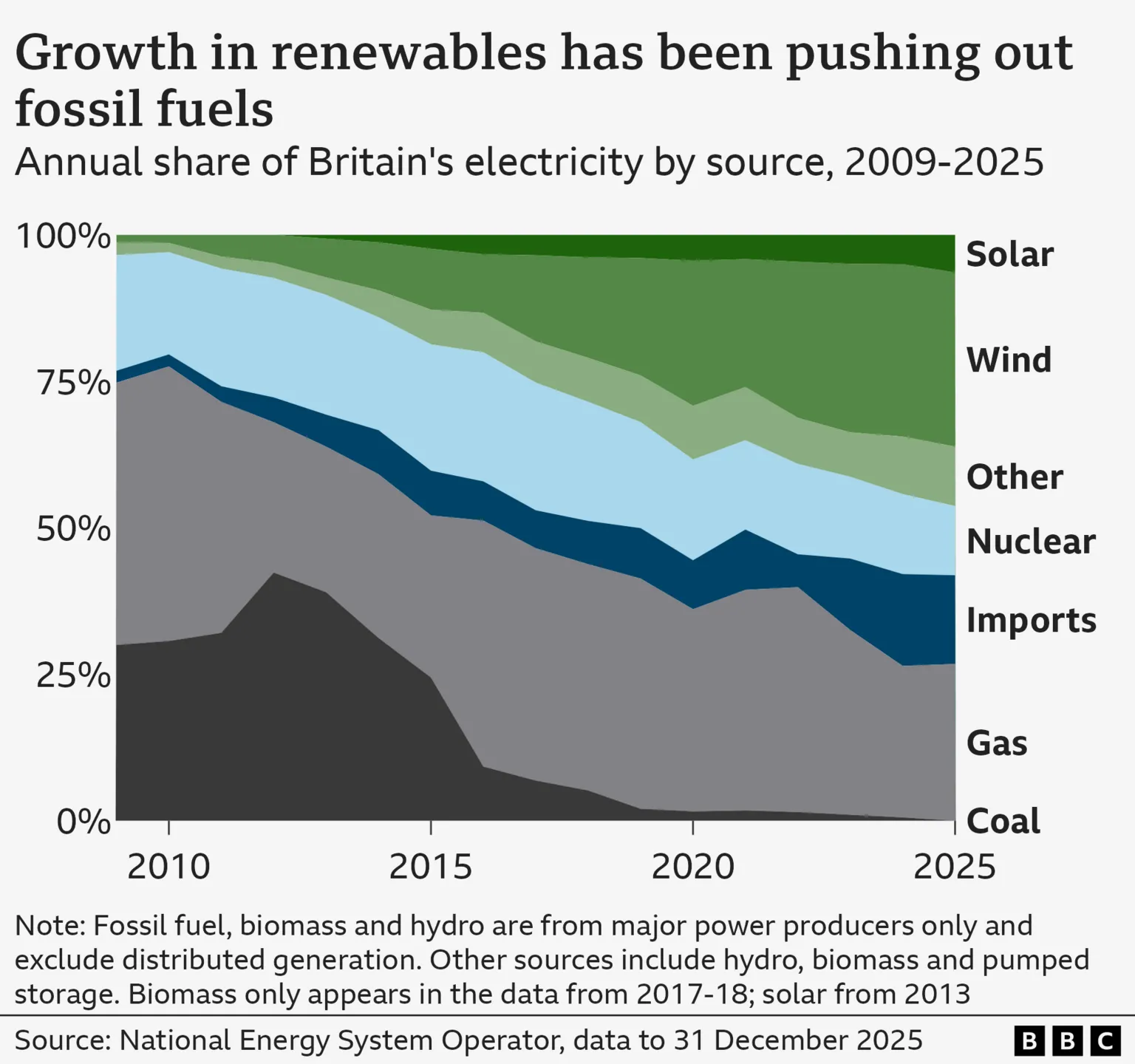
Britain's use of renewable energy sources such as wind and solar has grown substantially in recent decades, necessitating major upgrades to the national electricity grid to transmit power from these sources.
Much of the electricity now originates from offshore wind farms in northern Scotland, prompting the installation of numerous cables to distribute this power nationwide.
The extensive rewiring of Britain's energy network is projected to cost approximately £70 billion over the next five years.
Meanwhile, due to limited grid connections, wind farms are sometimes compensated to switch off turbines to prevent grid overload.
These network costs will inevitably be passed on to household energy bills.
Last year, UK energy regulator Ofgem indicated that grid investments would result in a net increase of about £30 to the average consumer bill by 2031.
That estimate excludes other bill components expected to rise.
Independent energy analyst Ben James offers a more comprehensive forecast, suggesting the average annual electricity bill could reach £1,045 by 2030, an increase of roughly £80.
According to James's calculations, much of this rise stems from network costs, which may add about £135 annually by 2030.
Another forecast by energy supplier Octopus predicts electricity bills could increase by at least 15% by 2030, with grid investments and other costs contributing an additional £260-£300.
"Even if gas prices stay steady, the non-commodity elements of the household electricity bill are likely to go up," says Rachel Fletcher, director of economics at Octopus Energy.
"It is also the case that the current instability in the Gulf is creating inflationary pressures which mean the upper end of our 2030 forecast is now even higher."
It is important to recognize that these estimates incorporate assumptions such as future electricity distribution costs and contain inherent uncertainties.
But what explains the projected high network costs?

Baked-in costs
Energy analysts often attribute the high network costs to years of underinvestment.
A recent study revealed that energy network operators have underinvested by £490 million annually.
Two energy analysts highlighted a 2009 Ofgem decision allowing new wind farms to connect to the network before grid expansion was completed.
"This created a precedent for avoiding investment," says Adam Bell, director of policy at Stonehaven, a consultancy. "This is the explanation the government prefers."
The Labour government continues its commitment to achieving 95% clean power by 2030, believing this will reduce bills.
The Liberal Democrats and the Green Party also support the transition to clean power; the former has proposed changes to how renewable projects are financed, while the latter advocates for higher taxes on oil and gas companies.
Conversely, the Conservatives and Reform parties have criticized renewables, prioritizing cost-cutting, fossil fuels, and reversing climate commitments, though their proposals differ.
If energy costs surge this year, Energy Secretary Miliband may face pressure to reconsider the government's 2030 clean power target.
As recently noted by The Economist, a slower renewable power rollout could allow more time to invest in cheaper onshore wind and reform the electricity market.
The Tony Blair Institute has also expressed skepticism about the clean power goal, suggesting that costly grid expansion should be minimized by situating electricity supply closer to demand.
In a paper published this week, the think tank recommended reviewing grid plans to "identify cost efficiencies" and approving North Sea oil and gas projects to increase government tax revenue.
However, with many wind farms awaiting grid connections, much of these network costs are already embedded.
"Inflation means that investing in our energy networks will cost more, whatever energy we use," said Susie Elks, senior policy adviser at the E3G think tank.
She argues the faster a larger supply of clean energy is connected to the grid, the better.
This is because in Britain, when renewable power supply is insufficient to meet demand, the grid relies on gas-generated electricity, which can be more expensive, especially during global energy shocks.
"The government needs to get renewable energy to people's homes so they can be protected from big spikes in the gas and oil price," Elks said.
In the long term, the transition to renewables is expected to eventually lower energy bills.
Analysis by the National Energy System Operator suggests that Britain's energy costs could decline from about 10% of national income in 2025 to approximately 5-6% by 2050.
However, the costly grid upgrades required to achieve these potential savings make the path to 2050 an expensive one.
This presents a challenge for a Labour government prioritizing immediate cost-of-living reductions, as well as for any party seeking power in the coming decades.


