Changing Attitudes Toward Food Quality in Scotland
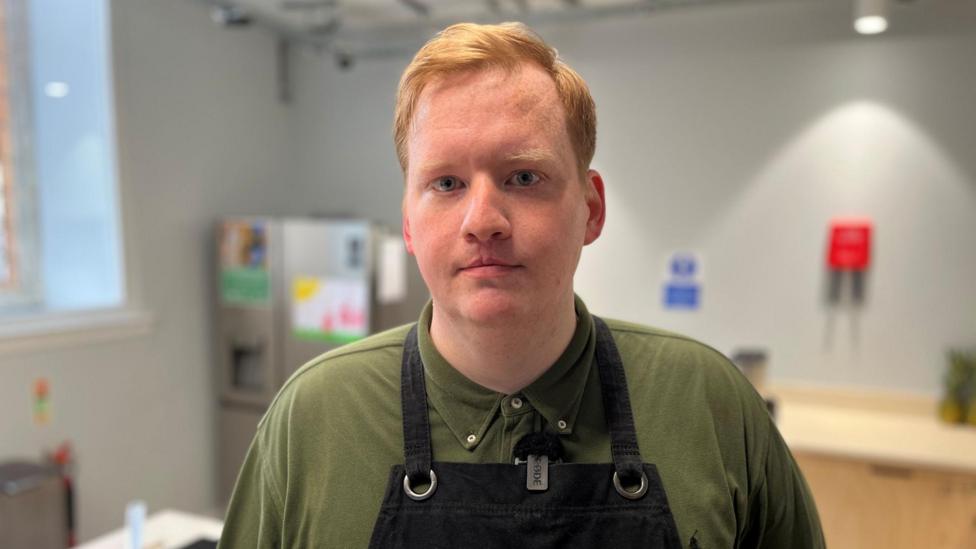
Jules Bal (right) set up Wee Knob of Butter five years ago with his business partner Kieran Woods
Jules Bal has observed a shift in how Scots view their relationship with food, noting an increasing willingness to pay more for quality products. The 34-year-old French entrepreneur, co-owner of a small artisanal butter company based in Glasgow, expresses concern over the prevailing push for cheaper food amid the cost-of-living crisis.
Bal highlights that in France, there is a stronger emphasis on food quality, with consumers prioritizing the origin and flavor of products. This perspective contrasts with recent initiatives aimed at making certain foods more affordable. For instance, the Scottish National Party (SNP) proposed a price cap on a selection of essential food items, including bread, milk, and eggs, in its manifesto for the Holyrood election.
This proposal has faced criticism from farmers and food producers. However, the Scottish government defends it as part of its "public health responsibility" to ensure access to an affordable and nutritious diet.
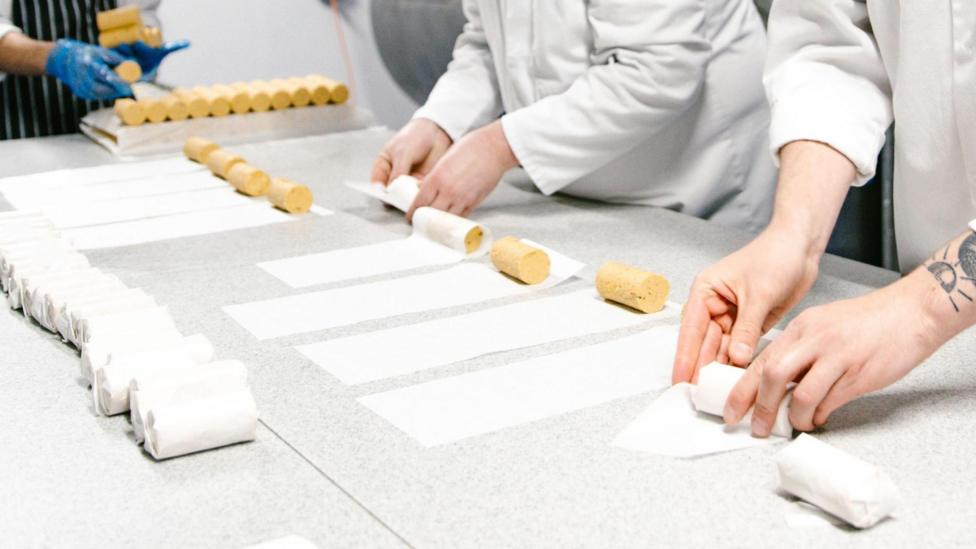
The butter is hand made and supplied to high-end restaurants across Scotland
Born in La Rochelle, a coastal city on the Bay of Biscay in France, Jules Bal moved to Scotland at age 14. Raised in a culinary environment—his father was a chef in upscale restaurants—he developed a deep connection with food from an early age.
In 2021, Bal and his friend Kieran Woods founded Wee Knob of Butter, initially selling their handcrafted butter monthly at a market. Today, their product is supplied to exclusive Scottish restaurants, available via mail order, and even served aboard the Royal Scotsman pullman train.
"In France, we like to take our time with our food," Jules said. "We like to have a strong relationship with our food as well and that quality is not necessarily a luxury. It's just something that we just expect to have as a family.
"But Scotland is really coming up. People really care about where their food comes from. Now, people are taking more time to go and shop at local markets to make sure they get quality produce."
Trends in Household Food Spending
The proportion of household income allocated to food has significantly decreased over the past six decades. According to the UK government's Living Costs and Food Survey, the share of total spending on food dropped from 33% in the 1950s to just 16% by 2016.
Experts attribute this decline partly to the industrialization of farming, which lowers production costs, and supermarkets leveraging their purchasing power to maintain low prices.
Food historian Peter Gilchrist notes that many consumers have lost touch with how food is produced.
Food historian Peter Gilchrist believes many of us have lost our connection with food production
"At the end of the day, you're buying packaged goods," Gilchrist explained. "You're not going into your greengrocer and asking 'what is fresh, what's in season, what's your best products?' You really only have one option; you go in with a trolley and you shop."
Gilchrist added that during crises, government intervention is necessary to keep food accessible and affordable, but such measures should extend beyond price caps.
"We can try to fix our food systems and ensure that schools have home economic teachers so that every young person knows how to cook with those capped grocery items, that we have a better education about what is grown locally and what is quality Scottish produce."
Impact of Food Costs on Low-Income Households
While the average household spends about 16% of its budget on food, lower-income families often allocate a much larger share. Professor Alex Johnstone, a nutrition scientist at Aberdeen University's Rowett Institute, points out that food prices have increased by 40% over the past five years.
Johnstone's research indicates that some individuals must spend nearly half of their disposable income on groceries, with families with children potentially spending up to 85%.

"That means that these families are 'food insecure' - they're living with food poverty and not able to afford and access a healthy diet," she said.
Johnstone emphasized that any cost cap should encompass a variety of foods that are healthy, environmentally sustainable, and culturally appropriate. This includes healthy ready-made meals, acknowledging that lower-income households often face time constraints.
Concerns from the Farming Community
Farmers have long expressed concerns about the pressure to provide cheaper food while maintaining high animal welfare standards and environmental stewardship. The pig farming sector, in particular, has been affected by an outbreak of African swine fever in Spain, which has disrupted exports and caused a surplus of pork in European markets.
According to NFU Scotland, Scottish pig farmers are currently losing up to £1,000 per sow place.
Martin Kennedy, former NFU Scotland president and a farmer in Aberfeldy, Perthshire, advocates for higher food prices to improve farm profitability.
"If we keep putting pressure on the primary producers they'll just simply say we can't do this any more and we'll rely more and more on imports," Kennedy said.
"If your priority is really about health and having enough affordable food, then we should be really focusing on the good food that we produce here throughout the UK which is recognised, particularly here in Scotland, as high quality," he added.
Showcasing Scottish Food at the Royal Highland Show
The Royal Highland Show, a major event in the agricultural calendar, highlights Scottish farm animals and food products. The event features "Scotland's Larder," where different regions showcase and sell locally sourced food.
This year, Aberdeen and Aberdeenshire took the spotlight, with Rora Dairy from near Peterhead participating for the first time alongside numerous small producers.
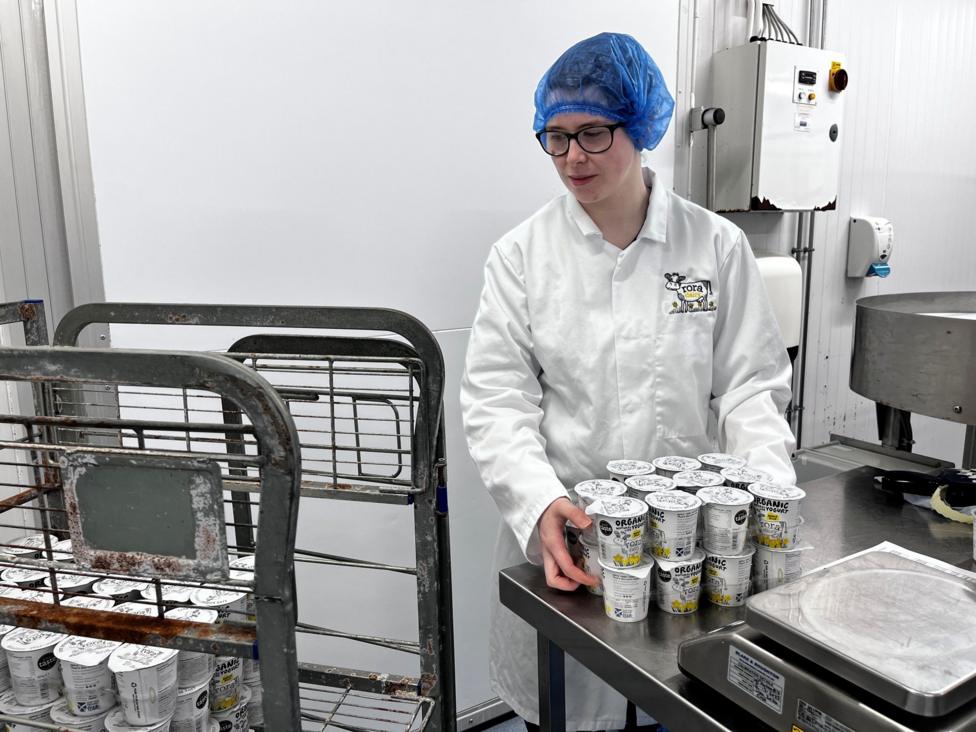
Rora Dairy produces additive-free organic yogurt from milk sourced from its own herd, with products available in supermarkets such as Sainsbury's and Morrisons.
Owner Jane Mackie reports growing demand for organic dairy products, particularly milk, with faster growth observed in England compared to Scotland.
She suggests consumers might consider reducing the frequency of products like yogurt but opting for higher-quality organic options as occasional treats.
Rora Dairy near Peterhead in Aberdeenshire produces additive free organic yogurts
"We're not educating people well enough to realise that they could feed their children differently," Mackie said.
"It's much cheaper to be feeding them a chicken McNugget than it is to be home cooking food and I think that's a real issue.
"I think we have to realise that it's important for our society and long-term health benefits to know that spending a little bit more money on your food is a good thing."
Government Initiatives and Industry Responses
In 2022, the Scottish government enacted the Good Food Nation Scotland Act, which aims to ensure that people have access to nutritious, affordable, enjoyable, and age-appropriate food in a reliable and dignified manner.
The SNP's proposal to cap prices on certain food items has been criticized by some retailers as a "potty gimmick." Nonetheless, First Minister John Swinney maintains that it is a "moral outrage" that some individuals cannot afford adequate food.
He told BBC Scotland News:
"I admire and respect the quality within Scottish agriculture but I've also got to be mindful for the genuine hardship that families are facing in delivering an affordable shop."
Swinney explained that this concern motivates the government's push to introduce price caps.
Farmers face increasing demands to meet environmental and consumer expectations, raising fears among producers of a "race to the bottom" that could lead to an influx of cheap imports undermining local markets.
First Minister John Swinney says food price caps are a public health responsibility