

Chalmers announces support package for small businesses hit by fuel crisis
The Australian Taxation Office (ATO) will offer temporary relief to businesses struggling to meet tax obligations amid the fuel crisis, while the government will facilitate faster credit access for small businesses. These initiatives aim to sustain small businesses during challenging times.
Treasurer Jim Chalmers announced these measures during a press conference held in parliament.
The ATO relief measures include
“more generous payment plans, remission of interest and penalties, and support in varying PAYG instalments where there has been a downturn in taxable income.”
Additionally, the government will extend the Small Business Responsible Lending Obligation exemption by another 10 years.
Chalmers described these actions as
“common sense steps”and added,
“What we’re announcing today will make our systems more flexible, our supply chains more responsive, and also businesses more supportive as well.
Obviously, there is a threshold for where this kind of concessional treatment will be provided, but the ATO is prepared to provide that kind of support in circumstances which are obviously because of what we’re seeing in the Middle East.”
He further explained that extending the responsible lending obligation exemption will prevent businesses from being
“slugged with additional regulatory burden and delays when they’re accessing loans.”
The small business minister, Anne Aly, acknowledged the difficulties small businesses face even under normal conditions and stated that these measures will help
“shield small businesses from the worst of these global shocks that are due to the war in the Middle East.”
Aly noted that the government consulted with small businesses and peak bodies to develop these initiatives, emphasizing,
“We can’t control the war in the Middle East. We can’t stop the war in the Middle East, but what a responsible government can do is to do everything that it’s can it can, to shield its citizens and to shield small businesses.”
Bran Black, chief executive of the Business Council of Australia, also attended the press conference and endorsed the collaboration between government and industry, stating,
“we need a genuine Team Australia response that’s not empty rhetoric.”
Claude.ai signs onto Australia’s national AI plan
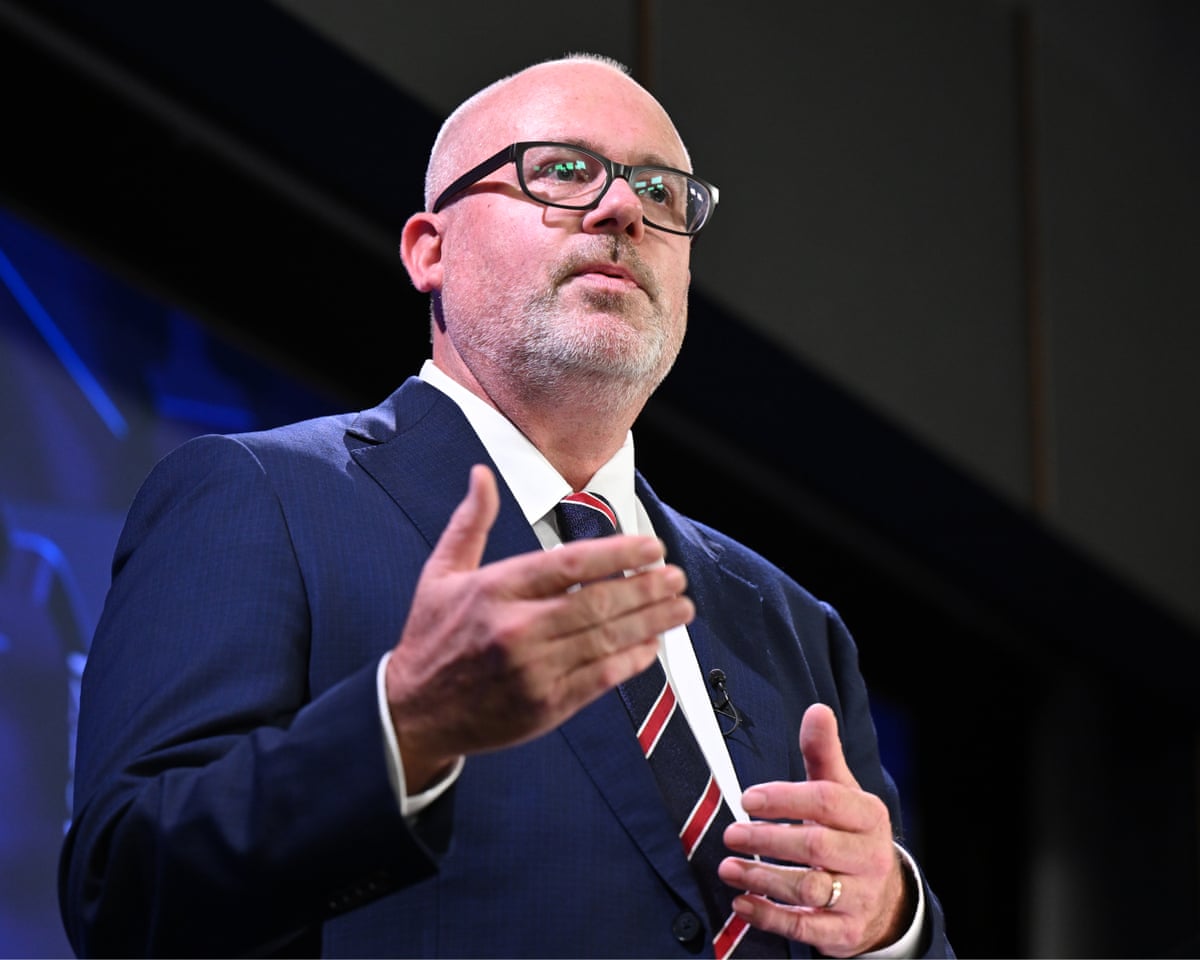
Anthropic, the company behind Claude.ai and one of the world’s largest AI firms, will become the first to sign onto Australia’s national AI plan following a meeting with Prime Minister Anthony Albanese earlier today.
Anthropic will meet with the prime minister, science minister Tim Ayres, and assistant science minister Andrew Charlton to sign a memorandum of understanding (MoU).
The MoU, which is non-binding legally, outlines an agreement to monitor AI developments and
“promote safety, support supply chain security and power Australia’s research, development and innovation sector.”
The Australian government and Anthropic aim to collaborate responsibly on AI to secure investment into Australia’s energy grid, enhance economic resilience, and ensure safety for all Australians.
In-home support for vulnerable Australians at risk due to fuel crisis: Acoss
The Australian Council of Social Services (Acoss) has reported that frontline services are struggling to operate amid the worsening fuel crisis and expressed concern over the potential loss of volunteers.
Services providing in-home support for vulnerable Australians, including aged care, mental health, and disability services, are facing increasing challenges.
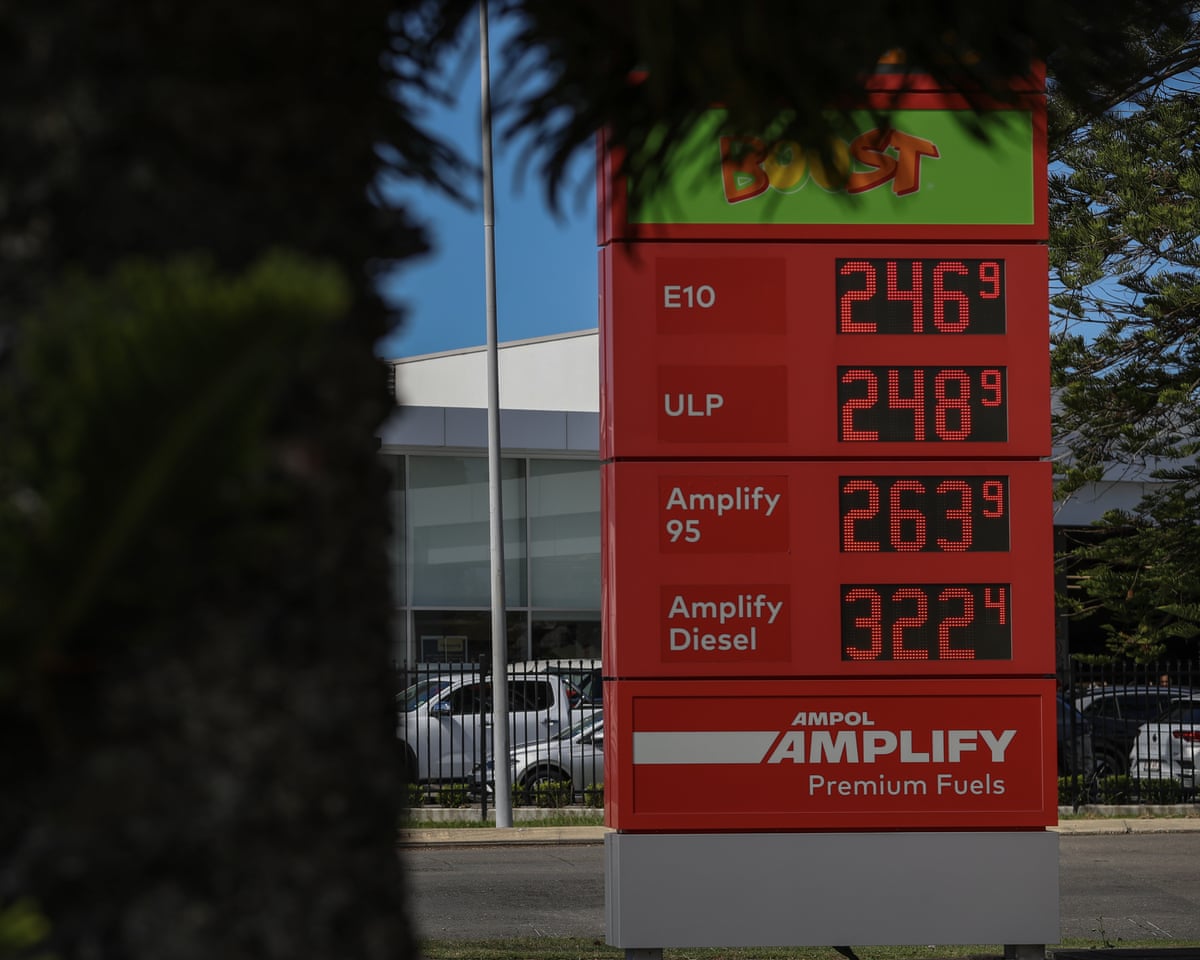
Recent survey data indicates that over 75% of community transport organisations will become financially unviable if diesel prices reach $3.50 per litre.
The government’s fuel excise cut, which reduces prices by 26.3 cents per litre, took effect today.
Acoss highlighted that First Nations Australians in remote communities are particularly affected by the crisis.
Cassandra Goldie, Acoss chief executive, stated,
“Our members are reporting staff who can’t get to clients, volunteers not showing up, and food supply chains breaking down. This is happening while multiple states and territories are simultaneously dealing with extreme weather events.”
Butler tells states to ‘get back around the table’ on fuel GST windfall return to motorists
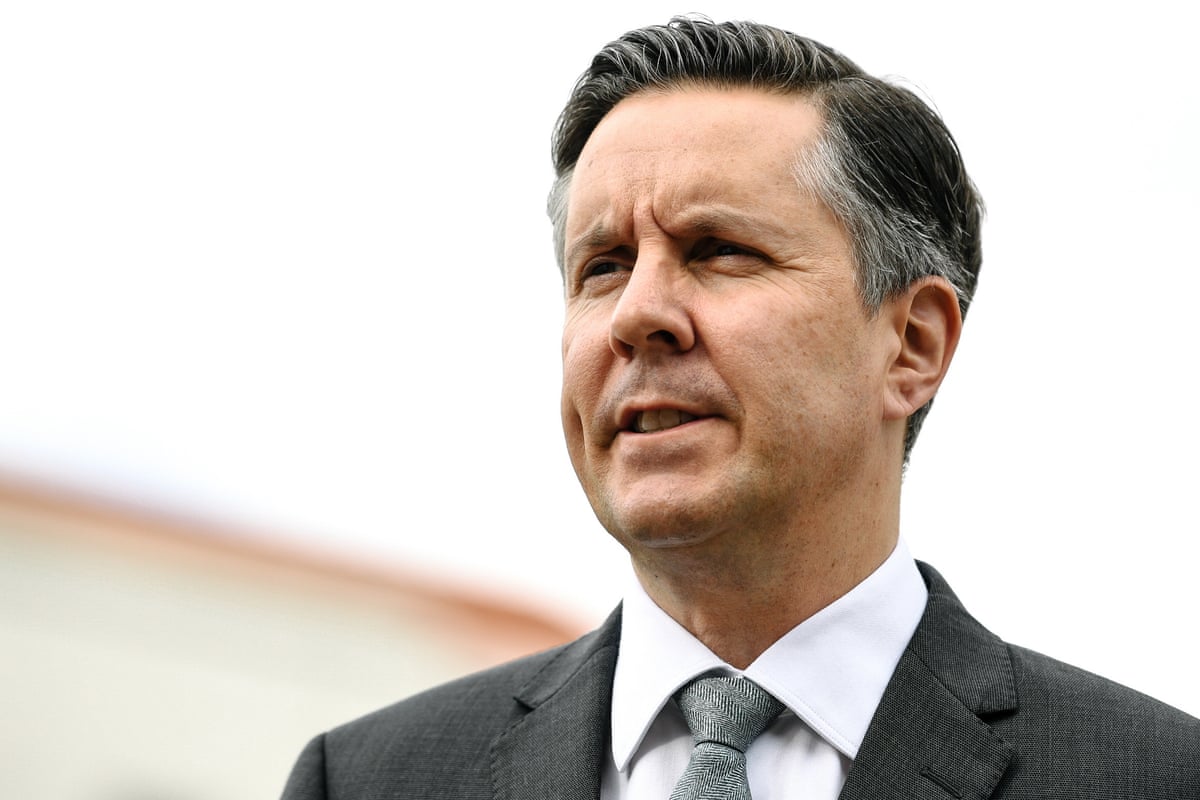
Following a failure to reach an agreement yesterday, Minister Mark Butler urged states to resume discussions on returning part of the GST windfall accrued from higher fuel prices to motorists.
At the national cabinet meeting, states agreed to return some of the GST collected during the fuel crisis. Since GST is a percentage of price, it increases as fuel prices rise.
Butler told the Today show this morning that the federal government is eager for states to finalize an arrangement.
“They did agree at the national cabinet on Monday to pass this windfall gain back to motorists. We wanted that to happen through an arrangement between the commonwealth and the states whereby we’d be able to deliver an additional cut to the fuel excise, which would flow in the same way through to bowsers. But they haven’t yet been able to agree that amongst themselves. We want them to do that. We want them to get back around the table over the course of the next day or so.”
Butler appeared on a panel with Matt Canavan, who accused the Prime Minister of having
“promised” the GST windfall return and has “broken that promise within days.”
‘Nothing particularly out of the ordinary’: Labor minister dismisses Trump's European tirade
While many politicians have refrained from commenting on former US President Donald Trump’s recent social media attack on European allies, Clare O’Neil dismissed it as
“nothing particularly out of the ordinary”from Trump.
Speaking on Sunrise alongside shadow frontbencher Michaelia Cash, O’Neil described Trump’s remarks as
“absolutely inconsistent”with the longstanding partnership between Australia and the US.
“I think in the scale of late night missives from Donald Trump, this is nothing particularly out of the ordinary. When it comes to the conflict in Iran, we have a pretty simple view … we want to see de-escalation of this conflict, not escalation. And we want to see a clear timeframe for how this conflict will be brought to an end.”
Cash emphasized the need for Australia to enhance its fuel security, stating,
“we must be stronger, more focused and more prepared when it comes to our own fuel security here at home.”

She noted that the US has singled out Australia twice and highlighted mixed messaging between the Prime Minister and Deputy Prime Minister regarding US requests for Australian support.
Richard Marles told ABC’s 730 program on 10 March that
“A number of other countries, including the US have made requests which are centred on helping to provide for the defence of the Gulf countries.”Meanwhile, the Prime Minister said,
“there is no request being made to Australia that has not been agreed to.”
Butler also avoids ‘daily commentary’ on Trump
The government reiterated it will not deploy troops to reopen the Strait of Hormuz.
Health Minister Mark Butler told ABC News Breakfast that Australia’s involvement remains limited to a small defensive role, including providing a military aircraft to support the United Arab Emirates.
“We don’t have any plans to do that. I think that’s been made clear by a number of ministers, we are involved in some defensive operations to protect those innocent neighbours, particularly the UAE, where there are many thousands of Australians as expats. We don’t have any plans to participate in military activities in the strait.”
Butler also declined to provide ongoing commentary on Trump’s remarks, expressing confidence in the alliance and Aukus agreement with the US.
“We’re very confident about the future of Aukus, the US, president, the administration, more broadly, the Congress, has made clear its commitment to that important security partnership …
This is why we don’t provide a daily commentary on the remarks made by the US president. We’re focused on the substance of our relationship.”
Similarly, Labor frontbencher Catherine King told RN Breakfast,
“We’ve said right at the start of all of this, we wouldn’t be running a running commentary on everything that President Trump has saying.”
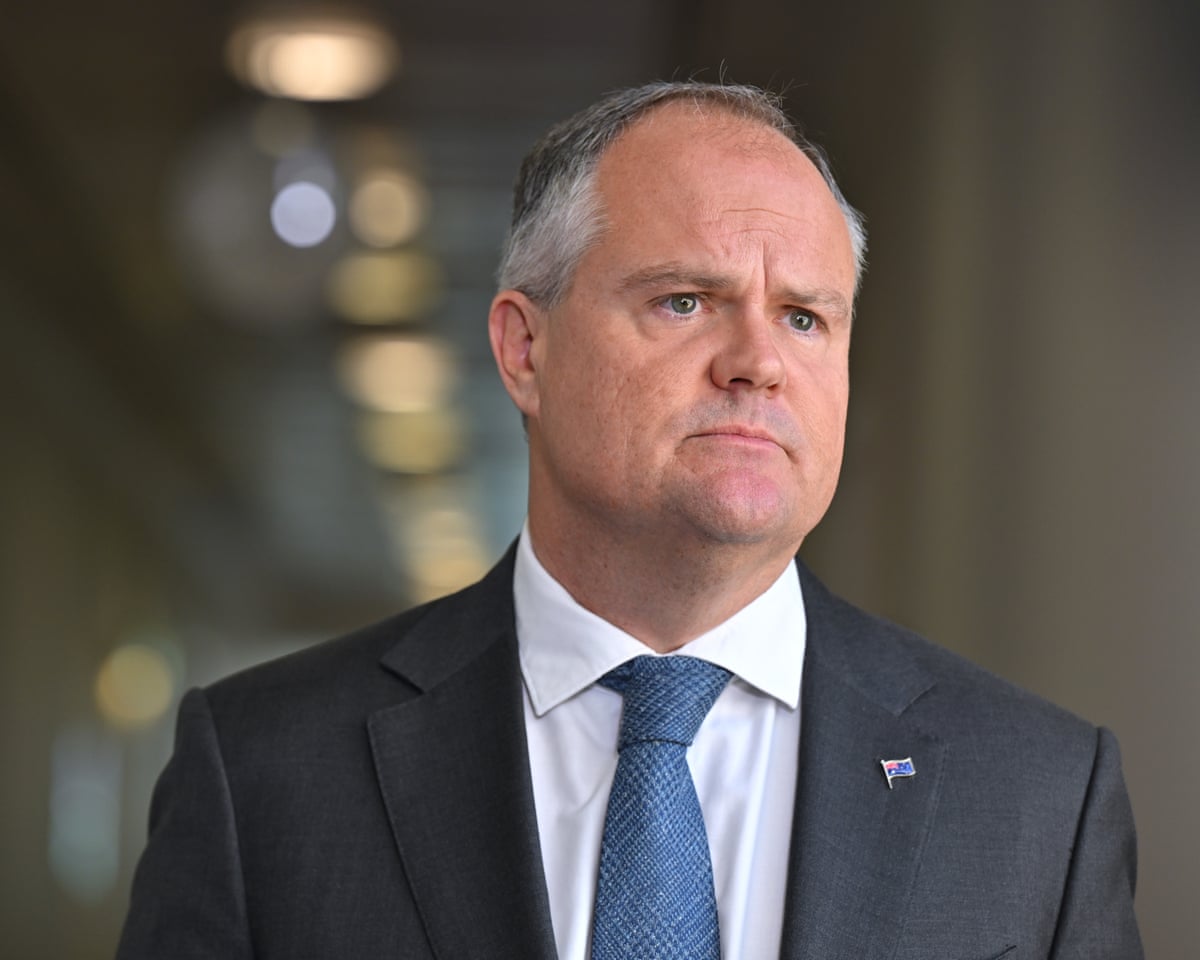
‘I’d be a very busy boy’: O’Brien avoids judgment on Trump’s comments
When asked about Donald Trump’s comments telling European allies to
“get your own oil”, Ted O’Brien declined to comment.
Trump’s remarks on his Truth Social platform urged European governments concerned about fuel prices to forcibly obtain oil from the Gulf, a statement that escalated tensions.
On ABC’s AM program, O’Brien noted that the Strait of Hormuz remains blocked and should be reopened.
“I’ve deliberately avoided making a running commentary on the comments from the president, I’d be a very busy boy if I did otherwise.
I think though, if you look through the language and the tone of the president to the key issue here, we have the strait of Hormuz still effectively blocked. It is in the globe’s interest, indeed, it is in Australia’s national interest for it to be opened.”
Australia contributing to offensive action in strait of Hormuz ‘in national interest’, says shadow foreign minister
The opposition expressed openness to deploying assets and personnel to help open the Strait of Hormuz but questioned Australia’s capacity to contribute materially.
Shadow Foreign Minister Ted O’Brien told ABC’s AM program that supporting efforts to open the strait aligns with Australia’s national interest.
“The key question is, is it in our national interest? And my view is yes, it is. The second question is, what can we contribute in a material sense, that part of the equation we are yet to understand? And I think they’re the two questions that need to be answered … but I believe we should be open to making contribution.”
O’Brien clarified that this would not involve sending
“boots on the ground”into Iran or direct participation in the conflict.
He compared supporting efforts to clear the strait to previous bipartisan-supported deployments, such as the E7-A Wedgetail aircraft and personnel.
Hike in health insurance premiums comes into effect today
The largest increase in private health insurance premiums in nearly a decade takes effect today.
After multiple requests for insurers to resubmit their premium proposals, the government approved an average increase of 4.41% effective from 1 April 2026.
Health Minister Mark Butler explained that the increase reflects rising costs of care and the need to maintain the viability of private hospitals.
However, with premiums rising faster than inflation, many consumers are questioning the value of private health insurance.
For more details on consumer concerns, further reading is available.
Good morning, Krishani Dhanji here with you for the final sitting day of the fortnight.
After a couple of technical glitches, we are here and ready to proceed.
Australians face the biggest rise in insurance premiums in almost 10 years, following government approval of a 4.41% average premium increase effective today.
The government’s fuel excise cut has also come into effect, though Labor advises consumers not to expect immediate savings.
Meanwhile, both major political parties are refraining from commenting on Donald Trump’s recent criticism of European nations, in which he told them to
“get your own oil”after they were perceived as unsupportive of US offensive efforts in the Middle East.
Additionally, Labor’s draft national platform has been released, removing the party’s longstanding opposition to mandatory jail terms and adopting more assertive language regarding China. The full story is available for review.
There is much unfolding, so let us proceed.


