

AI Industry Vindicated in Musk-Altman Trial
The recent courtroom proceedings in California have not only vindicated OpenAI but also underscored the broader AI industry's legitimacy. Despite Elon Musk losing on a technicality, the verdict sends a clear message: generating substantial revenue from AI and engaging in intense competition is a standard business practice.
The AI sector often attempts to present a unified stance, particularly regarding safety, research, and inclusivity. However, this case has revealed that the leading AI companies are not charitable organizations, nor are they obligated to be, even if they previously suggested otherwise.
Previous instances have exposed fractures in the industry's collaborative image purportedly aimed at benefiting humanity.
In February, during a global AI Summit in India, Prime Minister Narendra Modi brought together the world's technology leaders on stage. Sam Altman and Dario Amodei, former colleagues at OpenAI turned rivals, were positioned side-by-side. Yet, they deliberately clenched their fists tightly to avoid physical contact, symbolizing the competitive tensions.
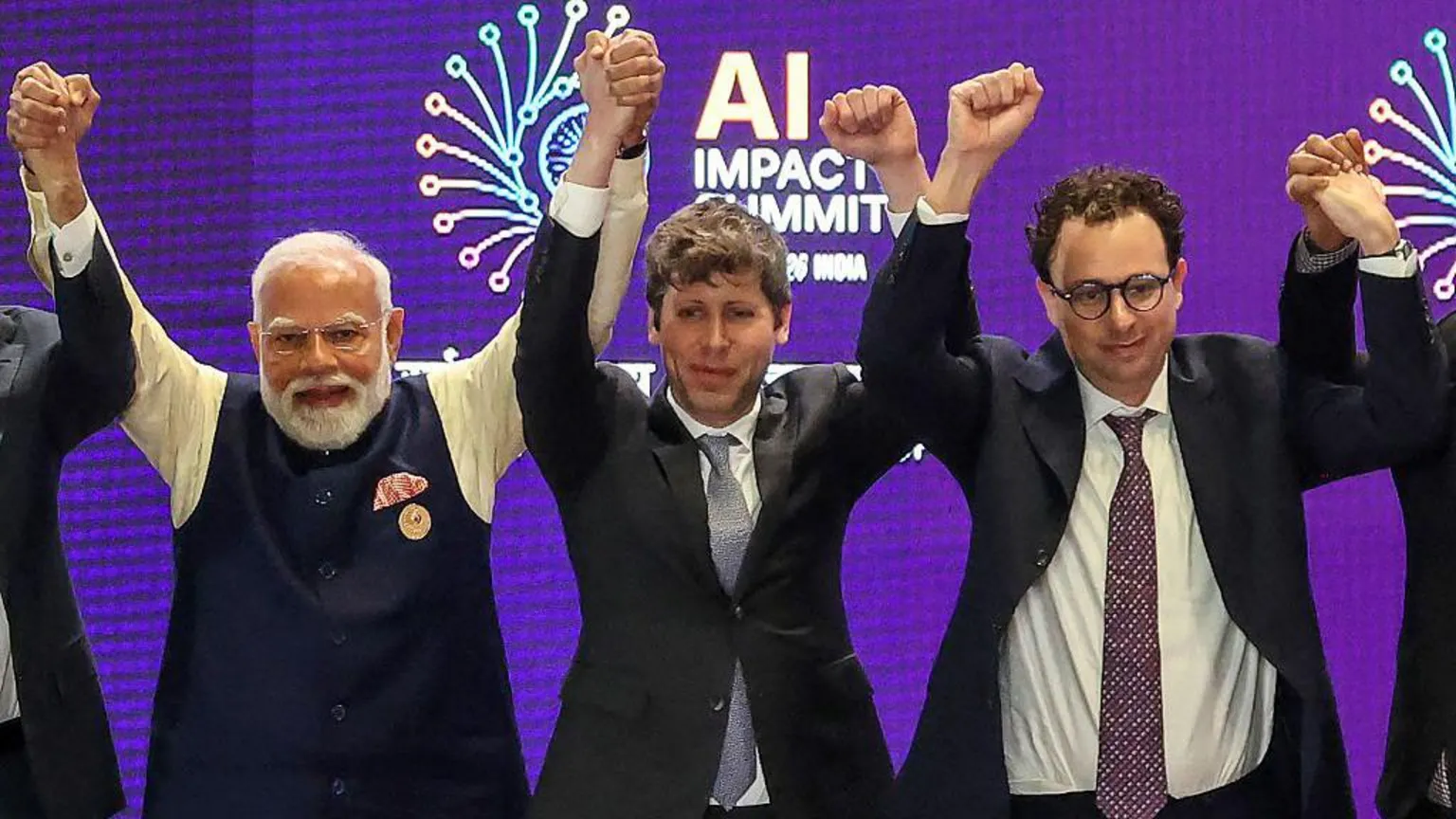
Similarly, the recent trial in Oakland, California, has unveiled the intense personal rivalries and ambitions among key figures in the AI sector, revealing the significant egos driving the quest for financial gain and influence. None of the parties involved emerged as particularly heroic.
Buying Time for the AI Sector
Amid widespread concerns about potential overvaluation and the possibility of a market bubble in AI, the trial's outcome may have provided the industry with additional breathing room. Some analysts speculated that OpenAI could not afford a loss in this case.

The company has expended substantial investor capital and recently appointed a chief revenue officer to assist in raising further funds. Before the verdict, an economist estimated that OpenAI had a 50% chance of bankruptcy by 2027; avoiding a multi-billion-dollar payout to Musk could improve those odds.
Elon Musk is unlikely to suffer significant damage from the verdict. With extensive experience in legal disputes and his status as the world's wealthiest individual, he is expected to continue his vocal criticism of OpenAI, particularly through his social media platform X.
While Musk and Altman have concentrated on proving their respective claims in court, other competitors have advanced rapidly. Anthropic has attracted attention with assertions that its latest model, Claude Mythos, possesses potentially dangerous hacking capabilities. Though some dismiss these claims as exaggerated, others view them as a pivotal development.
Meanwhile, Google, whose AI progress initially motivated Musk, Altman, and others to establish OpenAI, continues to integrate AI technologies extensively across its widely used services.
'Petty' Executives and 'Weird Drama'
Overall, the trial reaffirmed the substantial value inherent in AI technologies but also exposed the considerable egos influencing their development.
"The trial served as a reminder of how much the future of AI still depends on a remarkably small group of powerful tech figures and their personal rivalries," said Sarah Kreps, director of the Tech Policy Institute at Cornell University.
She added its conclusion on a technicality "leaves a lot of questions and debates unresolved," such as how highly capable AI systems are governed and who reaps their economic benefits.
It also highlighted "not just a dispute between Musk and Altman, but a broader disconnect between the people building these systems and many of the people increasingly expected to live and work alongside them," Kreps said.
Tech journalist and podcaster Kara Swisher commented on BBC Radio 4's Today programme that the case has negatively impacted public perception of the AI sector.
"Right now the brand of AI has just been trashed and this certainly doesn't help," she stated, noting widespread mistrust of the technology, especially among younger demographics.
"When you look at these testimonies of people who are very petty, there's a lot of weird drama, obsession with money... someone having two babies with Elon Musk [and] didn't tell the board - the whole thing feels weird and dramatic."
for our Tech Decoded newsletter to follow the world's top tech stories and trends. Outside the UK? here.



