Introduction
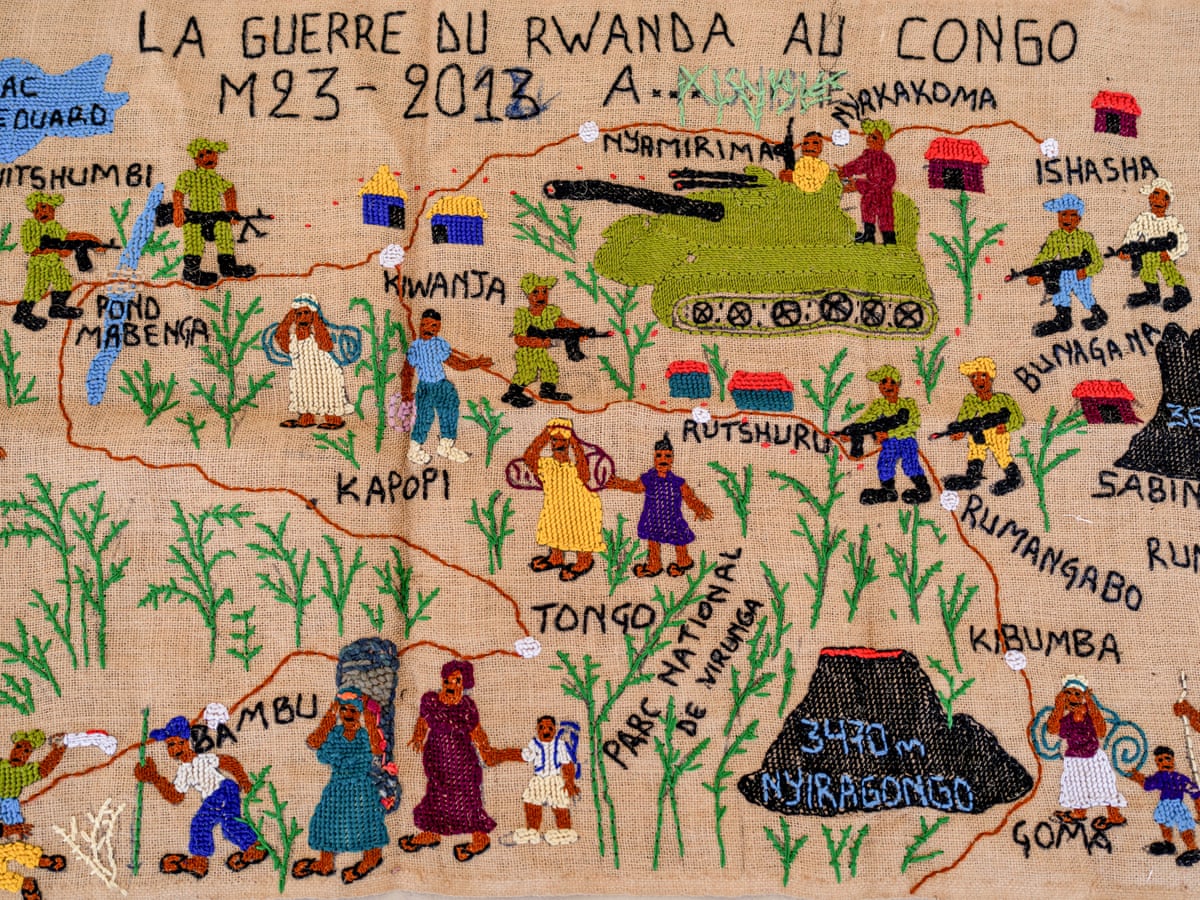
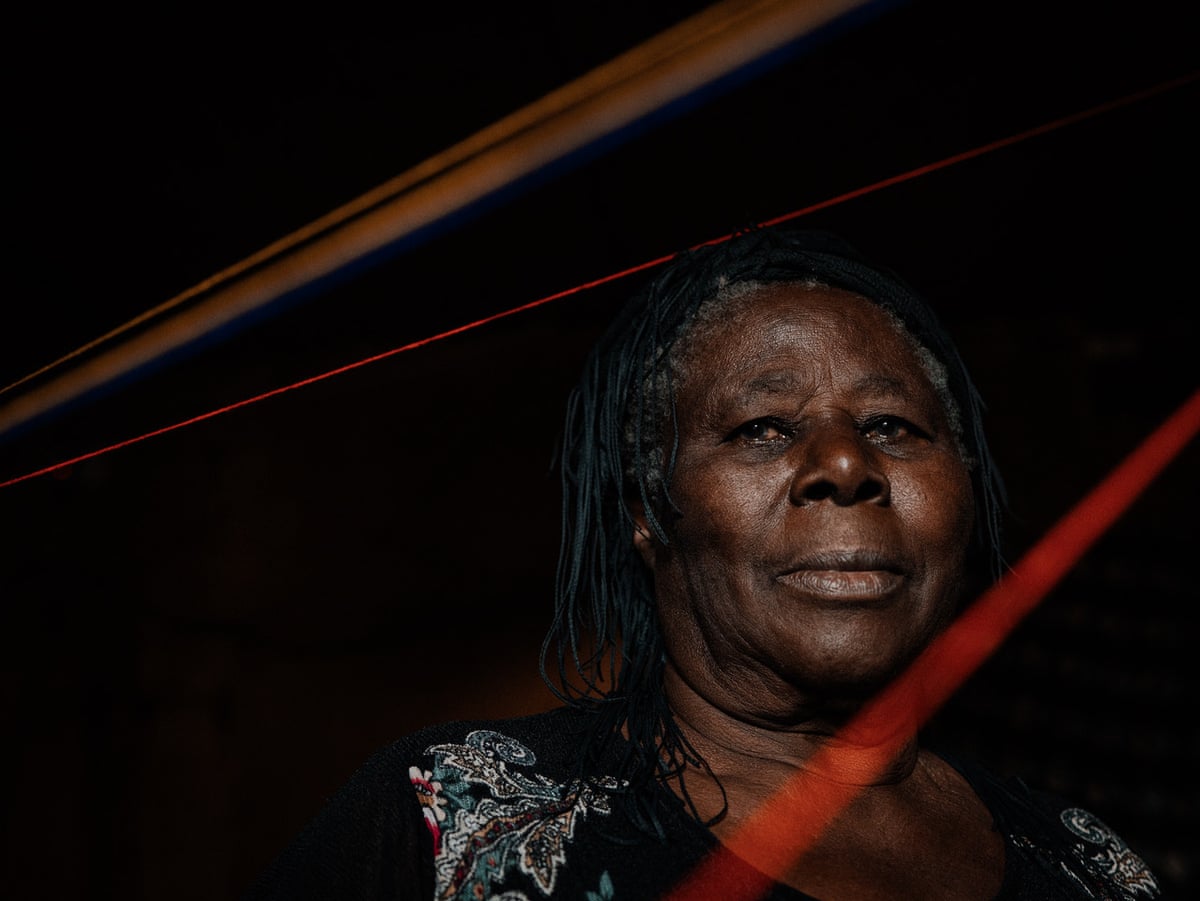
Using handmade needles and thread, Lucie Kamusekera has documented decades of conflict she has experienced in the Democratic Republic of the Congo (DRC).
She recalls hearing the sounds of artillery.
“I have no idea how I am still alive,”says Kamusekera, 82, who was hiding at home when the city of Goma, in eastern DRC, was attacked.
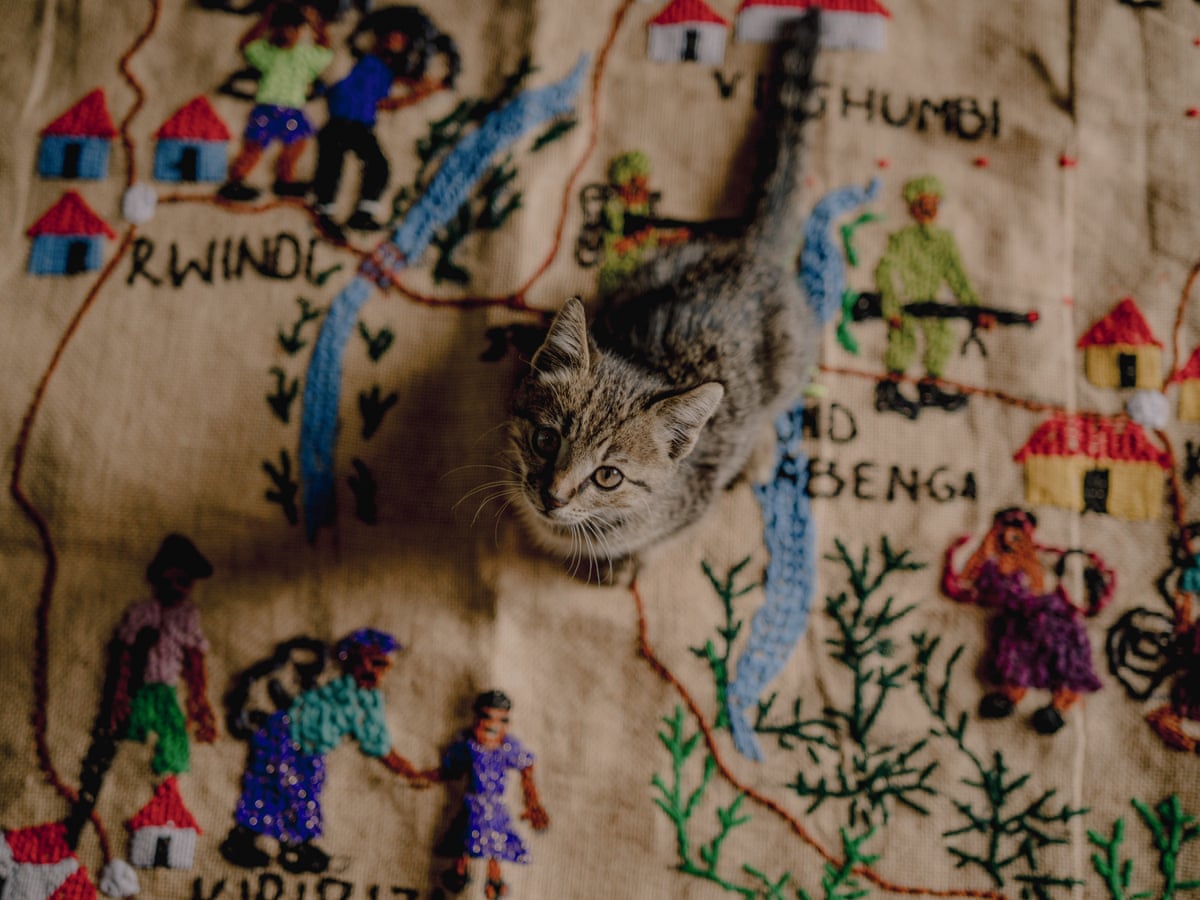
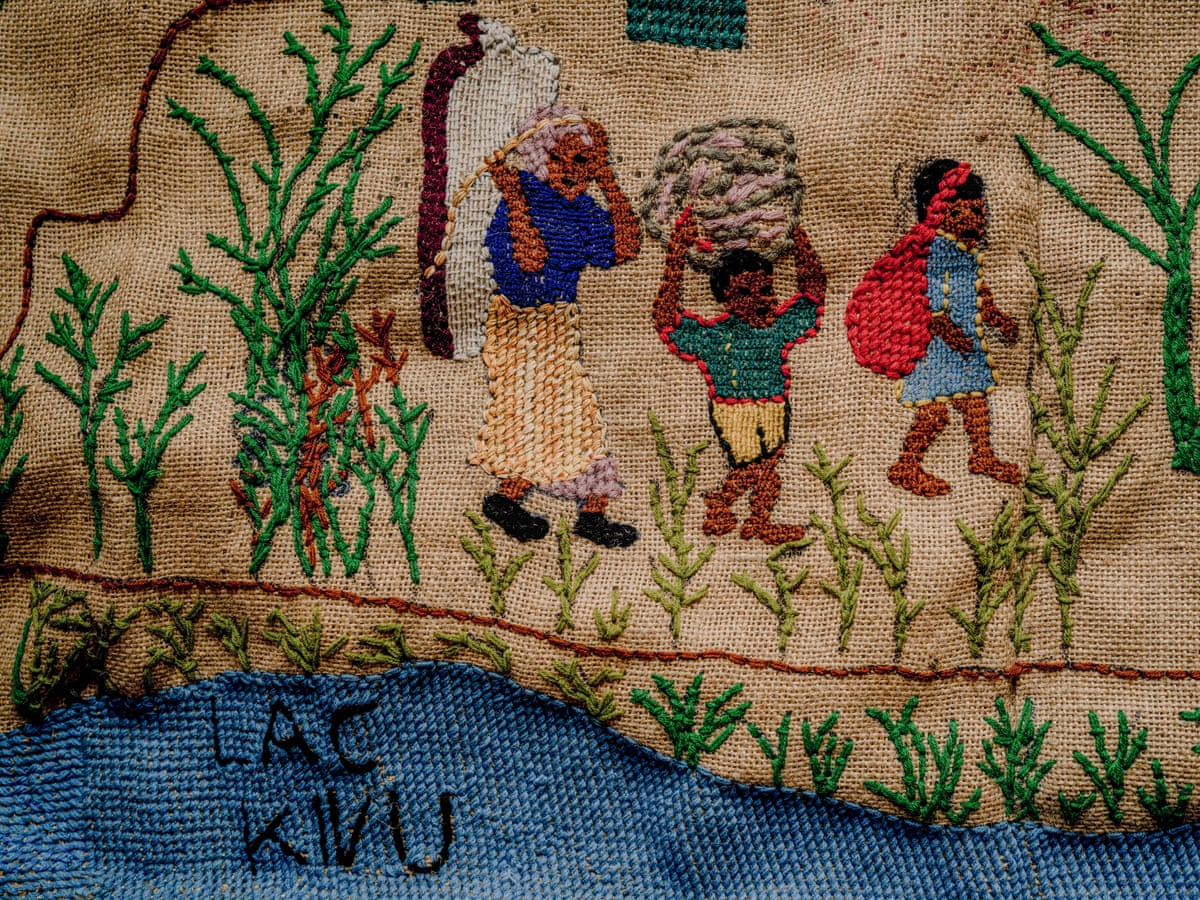
Kamusekera stitches scenes of contemporary Congolese history onto tobacco sacks.
Early Life and Craft Development
Born in 1944 in Lubero, a green, mountainous region in North Kivu province, Kamusekera was taught to sew by Italian nuns at her convent school.
“I wanted to get good to inspire the other students,”she says.
“I started by designing flowers and little gifts for my neighbours.”
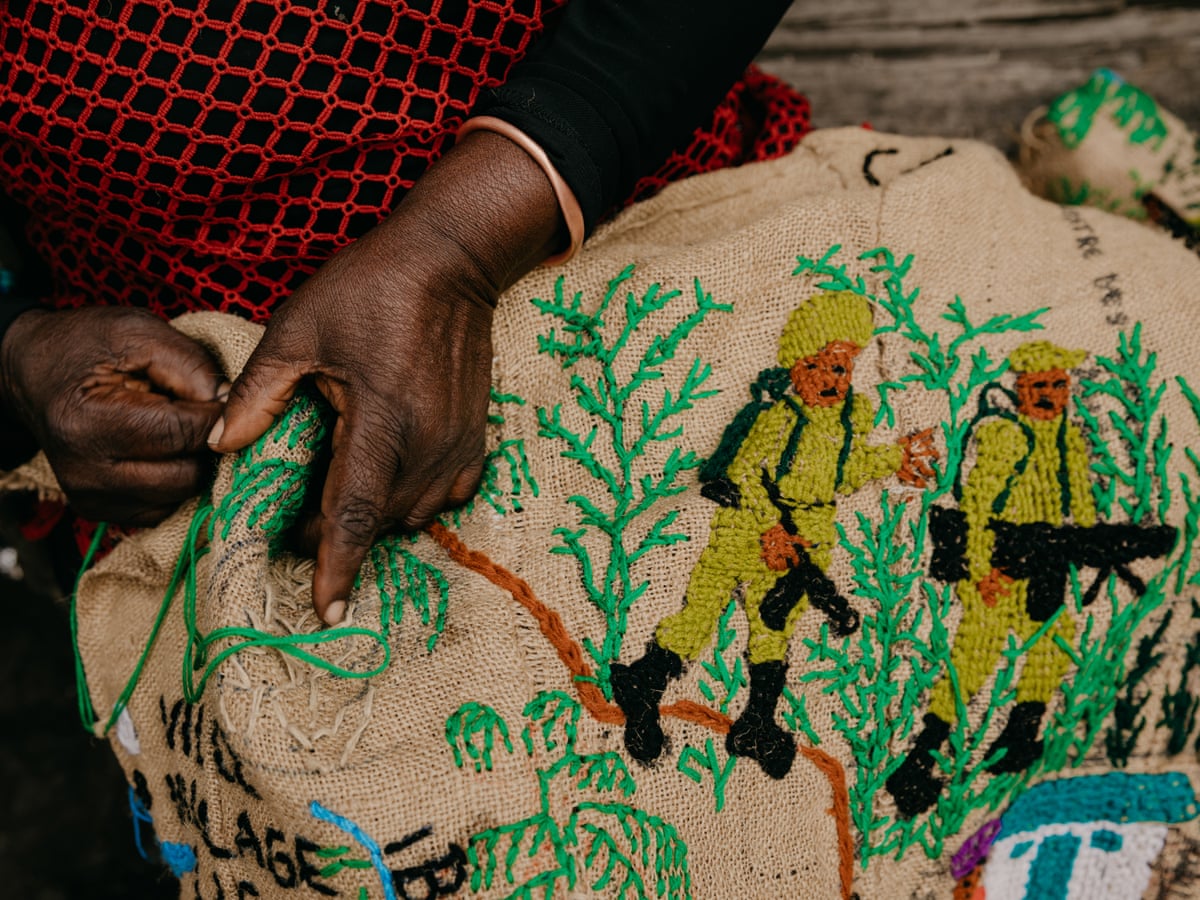
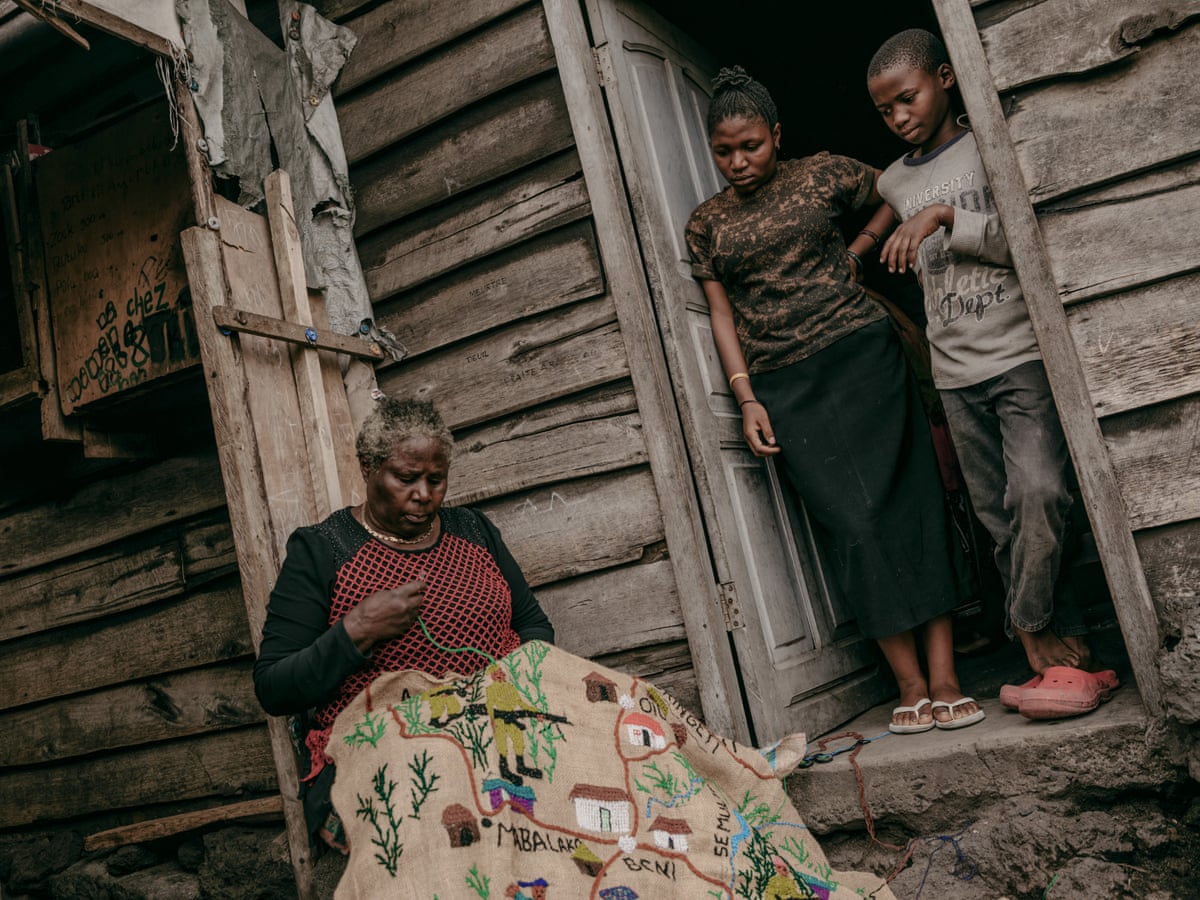
Now, using needles she fashions from scrap metal, Kamusekera meticulously threads some of her country’s most unique artworks: stitching contemporary history onto cloth sacks, creating a record of decades of violence and upheaval.
Artistic Themes and Historical Depictions
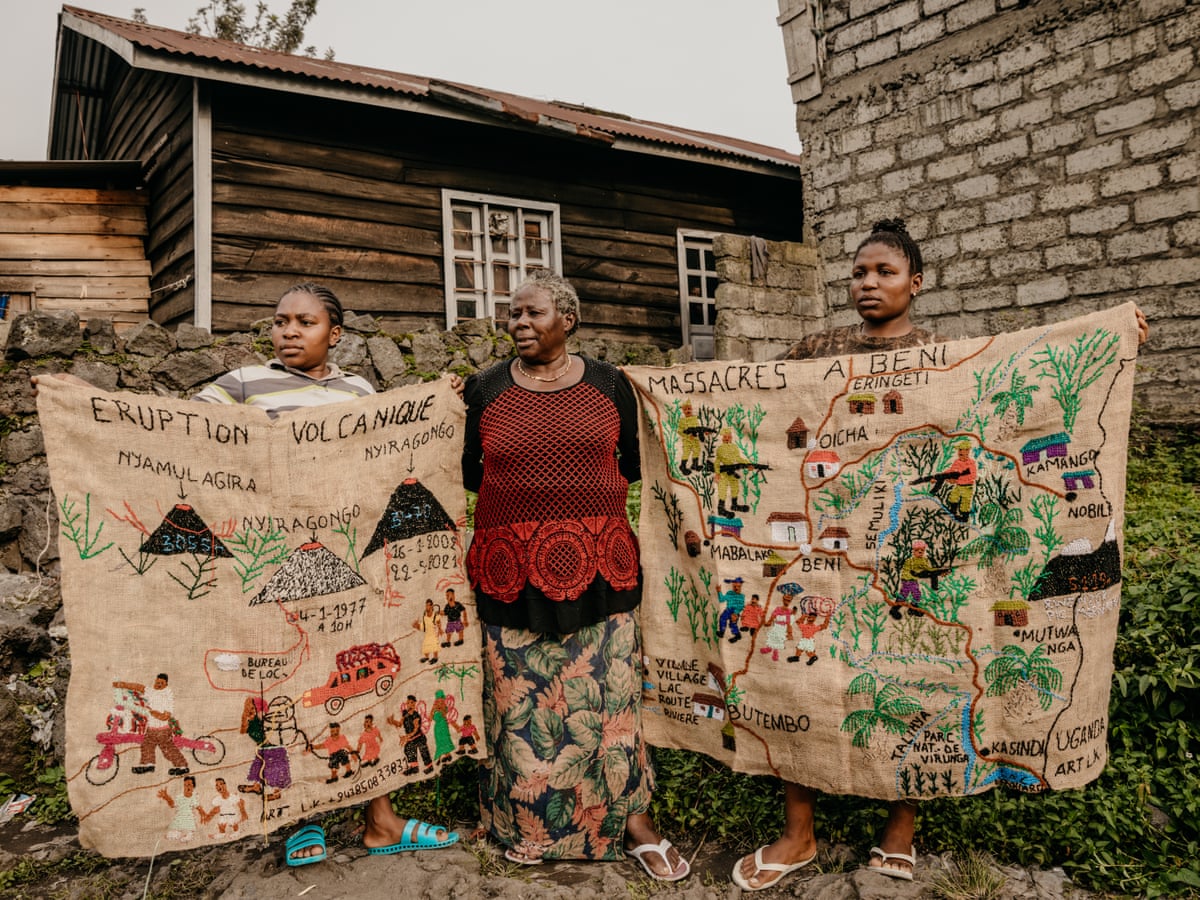
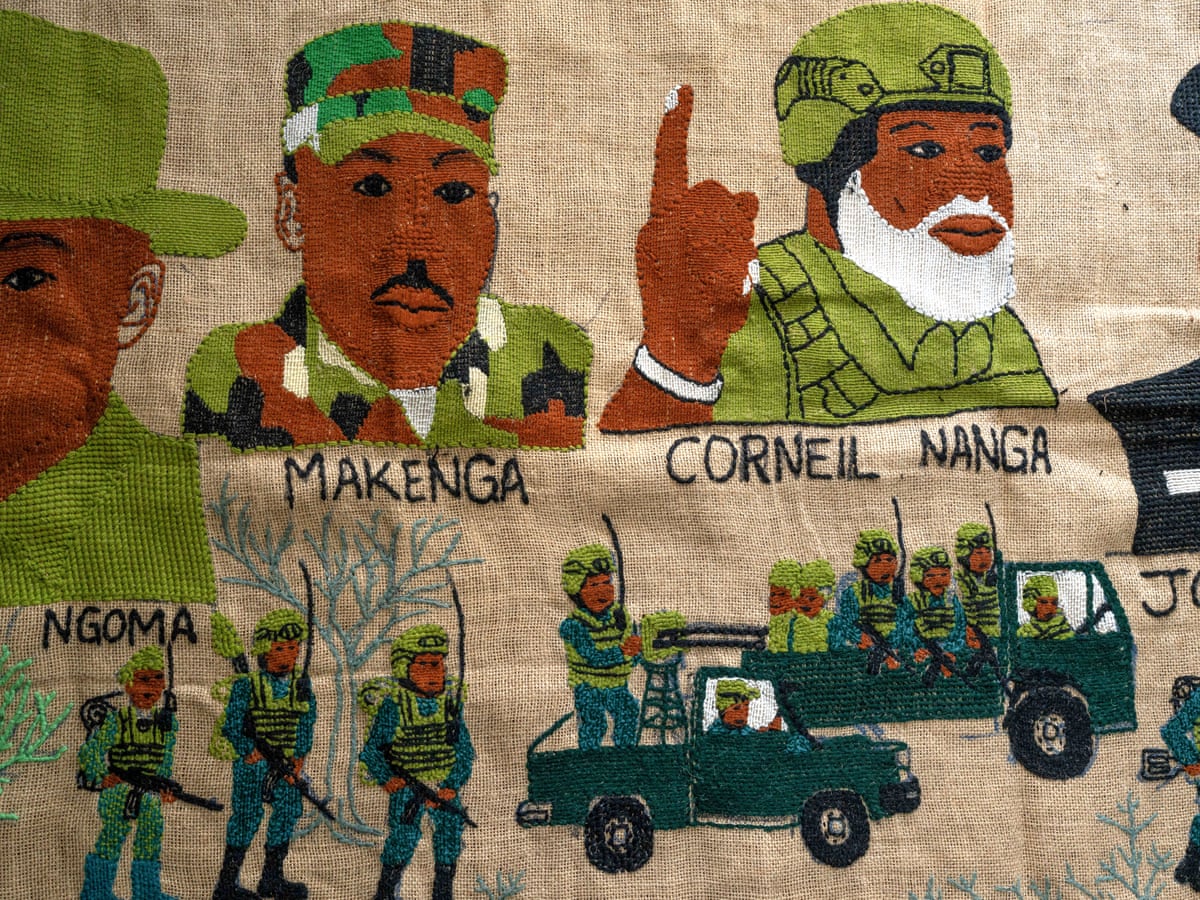
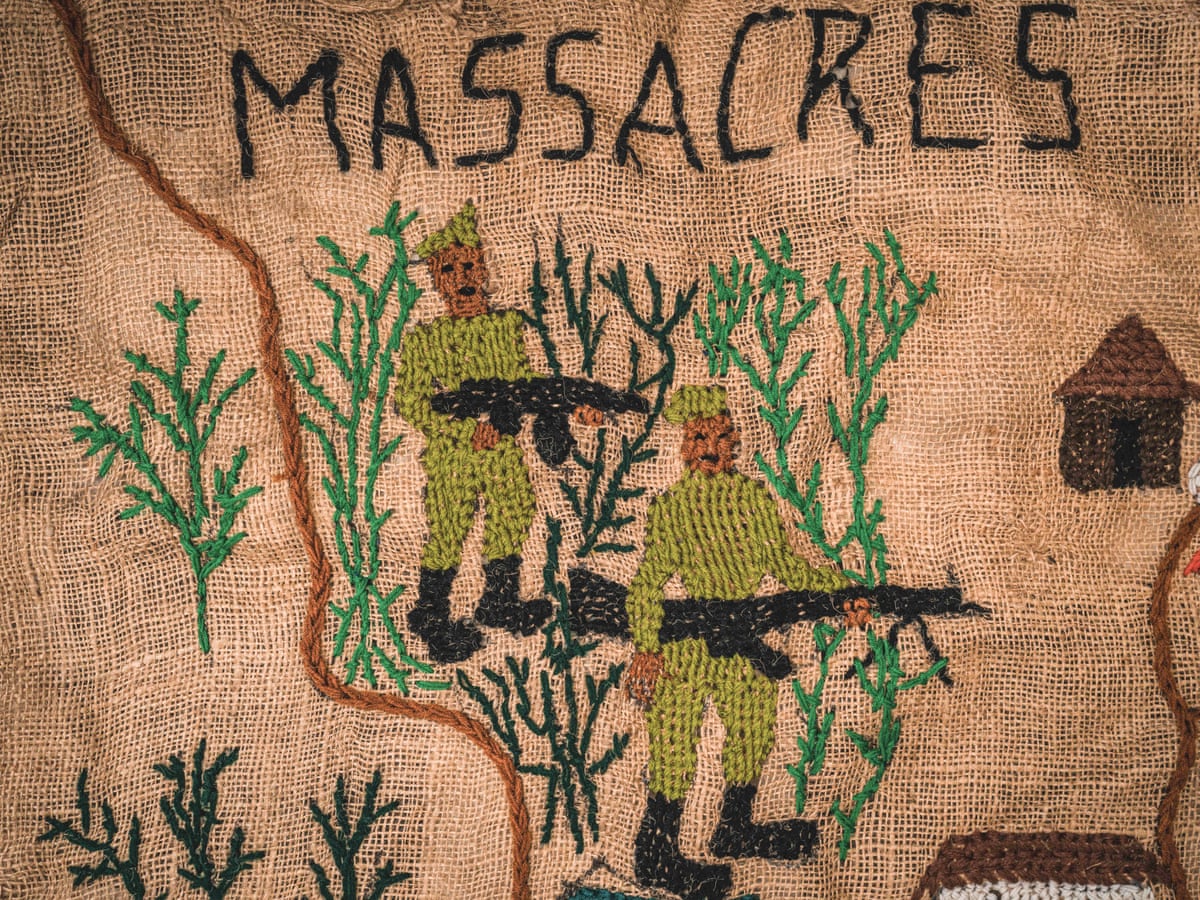
Her archive, consisting of more than 70 pieces in bright primary colours, vividly depicts scenes including the assassination of Patrice Lumumba, the independent DRC’s first prime minister, in a plot led by Belgian officers with support from the CIA and other actors; the brutal colonial era of the Belgian Congo, illustrating forced labour and the cruelty of the military enforcers known as the Force Publique; and conflicts such as the Second Congo War, which resulted in an estimated 5 million civilian deaths between 1998 and 2003.
Kamusekera’s art is deeply personal and reflects the turmoil she has witnessed. Her life story mirrors the displacement and chaos experienced by millions of Congolese due to ongoing wars.
After marrying a trader, she moved to her husband’s village of Kibirizi.
“We had five children, but found little peace there,”she says.
“There has been so much suffering in Congo that I can’t remember which battle forced us to finally leave.”
The family sought refuge in Goma over 20 years ago, where Kamusekera began stitching images of contemporary events.
Motivation and Studio
She recalls a moment when a military truck passed her, not filled with soldiers but with corpses and blood.
“I knew then that I had to record these stories of my country.”
Kamusekera established a small shopfront studio in the Kyeshero neighbourhood of Goma, located on a dusty road covered with volcanic rock. The building adjoins a modest wooden shack that serves as her family home.
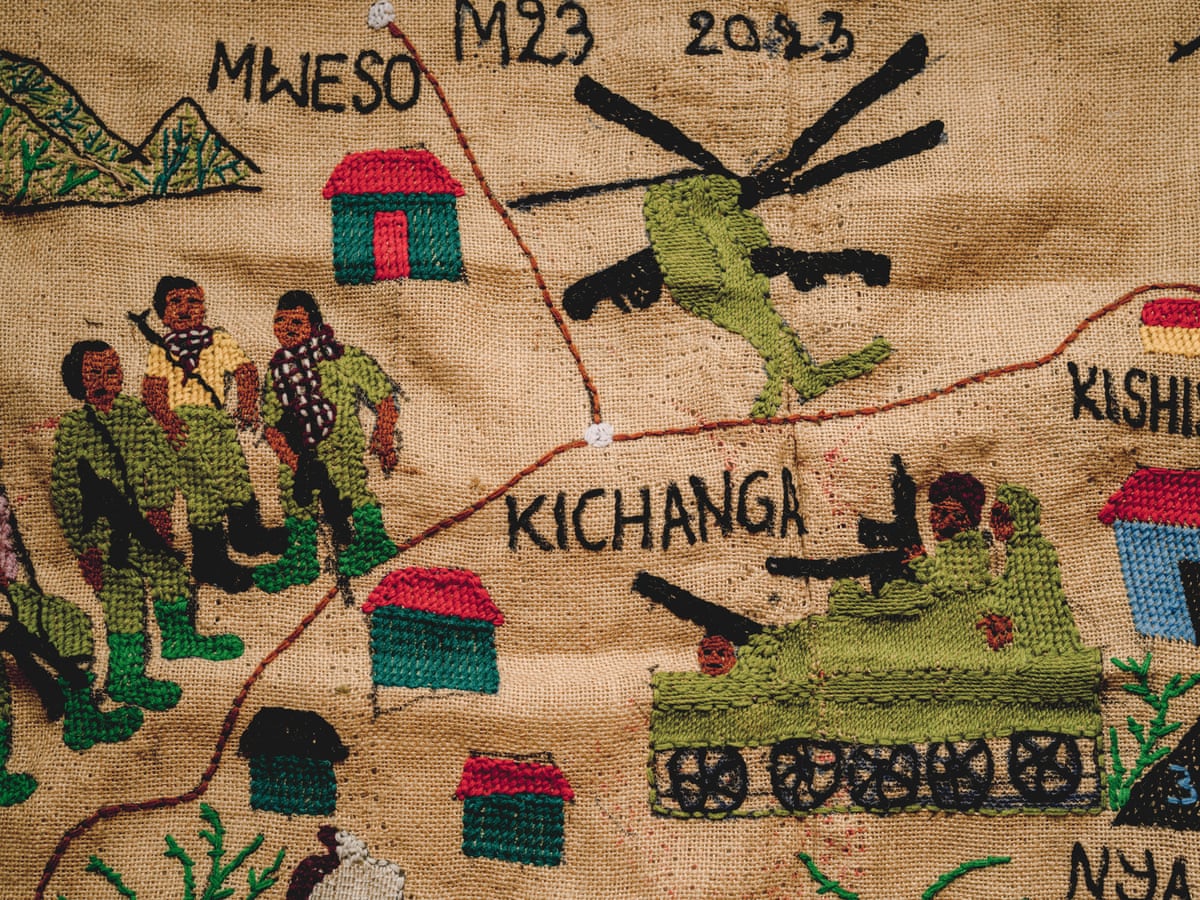
She creates her works on sacks sourced from tobacco factories, using needles made from scrap metal.

Personal Tragedy and Conflict Impact
In the early 2000s, when conflict had disrupted food deliveries to Goma, Kamusekera’s husband returned to Kibirizi to harvest the last crops in their field. There, he was captured by an armed gang from the CNDP, the precursor to the M23 militia that seized Goma in 2023.
“They mocked him by forcing him to set his own house alight, then tortured him and beat him,”Kamusekera recounts. Her husband returned severely injured and died in hospital within a month.
Family Involvement and Legacy
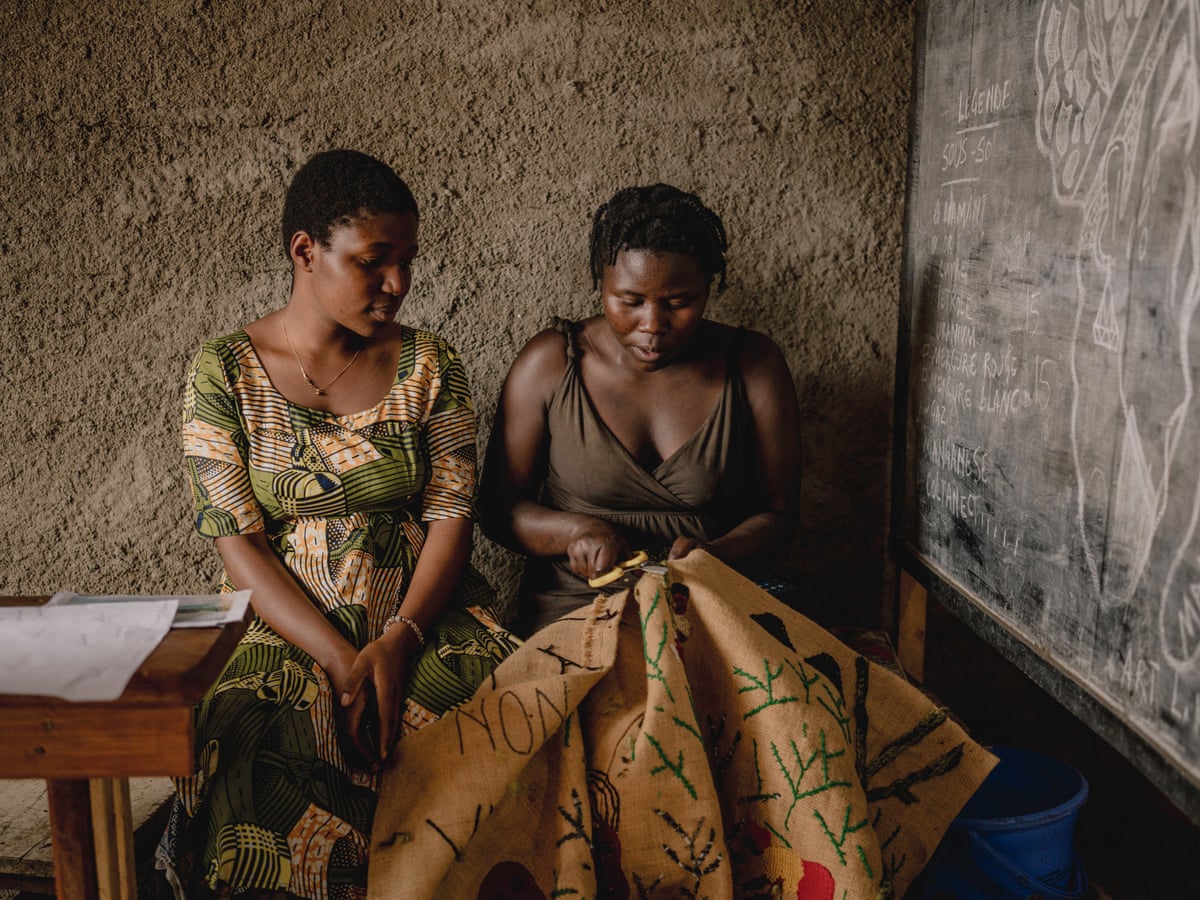
Today, Kamusekera’s family assists her in the studio.
“My children all grew up watching me work all day,”she says.
“They need to know my style; I may die tomorrow, and I would like them to continue.”
Her great-granddaughter, Divine Kyetia, often works alongside her, annotating drafts and negotiating with clients.
“I know many of my stories through having lived through them,”Kamusekera explains,
“but my family are now the most important way I get information about what is happening across the country.”
Current Challenges and Risks
The M23 rebels, backed by Rwanda’s army, have been active in the region. Hundreds of civilians were killed during the M23 occupation of Goma in 2023. More than a year later, areas controlled by the armed group face hardship and economic crisis.
Kamusekera notes that her work has been limited by M23’s occupation.
“I have drawn some dangerous stories in my time, but there are some realities I cannot publish works about because I would fear for my life.”
Preserving History Through Art
Despite the dangers, Kamusekera remains in Goma, committed to transmitting knowledge.
“I imagine a world in which social media and the internet are gone,”she says,
“but the stories will remain on the tapestries and can be shared.”
This perspective is not merely philosophical: as fighting intensified in Goma, phone signals were cut off, isolating the city’s residents from the outside world.
Kamusekera believes her art will endure as a historical account of war in the Congo, providing future generations with lessons from the past.
Ongoing Conflict and Hope for the Future
Peace processes in the DRC have been protracted and largely ineffective. Caught amid numerous warring factions, the population has endured decades of violence.
Nevertheless, Kamusekera is determined to continue her work.
“The next generation must learn the history of Congo,”she says.
“These works will be my legacy.”