Introduction
Before ascending the snow-capped Helvellyn, I look back over Ullswater. The early morning sun illuminates the dark recesses of High Dodd and Sleet Fell, casting a warm glow over the golden bracken and reflecting off the shimmering lake surface.
Further south, remnants of snow cling to steep gullies. The nearby village of Glenridding is barely visible through leafless trees, and the only sound is the gentle flow of a stream. This scene epitomizes the Lake District: steep slopes bordering the water, subtle hues contrasting with rugged rock, creating a landscape that has remained largely unchanged since Romantic poets first admired it.
Our most cherished national parks—the Lake District, Peak District, Eryri (Snowdonia), and Dartmoor—were officially established 75 years ago, in 1951. Their creation followed a lengthy campaign, arguably initiated by Romantic poet William Wordsworth, whose affection for the Lakes inspired him to assert that the area should be “a sort of national property, in which every man has a right and an interest who has an eye to perceive and a heart to enjoy.” Wordsworth, a resident of Grasmere, successfully opposed railway construction that threatened to damage the landscape, highlighting the folly of destroying something precious under the guise of increasing accessibility.
This tension between preservation and development has persisted since, but if Wordsworth were present today, he might initially approve. Unlike some Alpine regions, the parks have avoided high-rise buildings, intrusive sports facilities, and major engineering projects such as tunnels for faster road and rail connections.
Although the planning process is complex and restrictive—down to the choice of paint colors—the national parks endure without losing much of their original allure.
Early Experiences and Dartmoor's Unique Status
In the 1970s, my father began taking me on hiking trips. While I was initially indifferent to the views, I quickly appreciated the thrill of swimming beneath waterfalls, scrambling along ridges, and sitting atop mountains eating salted hard-boiled eggs. He introduced me to all the national parks and their highlights, sparking a lifelong passion for exploration.
Dartmoor, the only area in England and Wales permitting legal wild camping, faces significant threats. A recent report highlighted damage to its sites of special scientific interest (SSSIs), yet it remains in better condition than many other locations. Dartmoor's defining feature is its extensive heathland—over 11,000 hectares of heather, gorse, bilberry, and moor grasses—home to birds, lizards, snakes, and rare butterflies. The red grouse, recently recognized as a distinct species, is the park's emblematic bird and only the second reliably identifiable endemic British bird species.
Dartmoor is also known for more controversial wildlife. On my first visit as a boy, I was reading The Hound of the Baskervilles and following reports of escaped large cats. Passing the infamous prison, my father recounted tales of "" inside, cementing Dartmoor as the most exciting area in Britain in my mind—a view I have never revised.
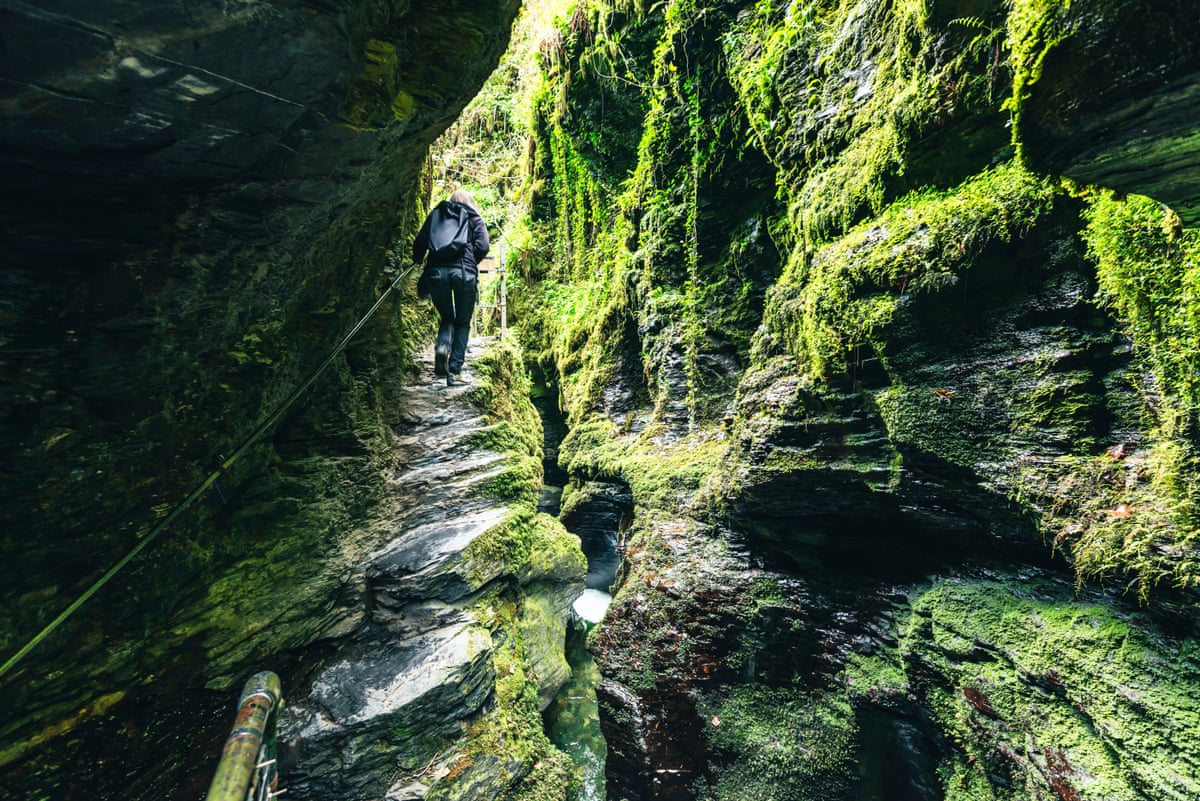
One of Dartmoor's most evocative locations is Wistman’s Wood, accessible from the Two Bridges hotel, though its popularity has diminished its mystery, turning it into an Instagram hotspot. Other notable woodlands include Lydford Gorge near Tavistock and the Bovey Valley near Lustleigh, a village known for its thatched roofs and excellent cream teas at the Primrose Tearooms.
Nearby, Haytor Rocks attracts climbers and visitors alike. While beautiful, it is often crowded. For solitude, the military firing ranges offer a unique experience. The presence of an M115 Howitzer and the need to check live firing schedules deter most hikers, but the ranges provide spectacular viewpoints such as Yes Tor and High Willhays.
Exploring Eryri (Snowdonia)
In Eryri, the key to finding peace is to avoid Yr Wyddfa (Snowdon). Other peaks are comparatively quiet. For those determined to climb Wales’s highest mountain, less-traveled paths like the Watkin or Rhyd Ddu routes are recommended, ideally starting very early, even before dawn. The Ranger Path (Cwellyn) is another option; I recall being blown off my feet by the wind there as a nine-year-old. While these routes may avoid crowds, the weather remains unpredictable.
Yr Wyddfa’s Crib Goch, renowned as one of Britain’s greatest ridge scrambles, can be challenging when crowded. Alternatives include Crib Lem on Carnedd Dafydd, accessible from Bethesda, and the Idwal Staircase, a more demanding climb often undertaken with ropes. Steve Ashton’s book Scrambles in Snowdonia is an essential guide.

A distinctive feature of Eryri is the adaptive reuse of its industrial heritage. The slate quarries and steam railways continue to thrive, with the Ffestiniog Railway currently extending its line into Bala town, a significant development.
Lake District Highlights
The establishment of the first national parks sparked increased interest in hiking and demand for route information. My father, like many others, discovered Alfred Wainwright’s hand-drawn pictorial guides, which remain a valuable resource. Wainwright’s favorite was Haystacks Fell, accessed from Buttermere via Scarth Gap. My own introduction to scrambling began with his routes up Lord’s Rake on Scafell Pike and Jack’s Rake on Pavey Ark, both serious endeavors.
Scrambling, along with fell-running and scree-racing, has a proud tradition in Lakeland. In Wasdale, sheep farmer Billy Bland was an inspiration. As a teenager, I witnessed his fearless approach to scree slopes, transforming them from obstacles into challenges.
Wasdale, home to the historic Wasdale Head Inn, remains a favorite destination. While the trail to Scafell Pike is often busy, classic treks like the Mosedale Horseshoe, which includes Pillar, offer a demanding experience amid swirling clouds. For the sure-footed, the climbers’ trail beneath Napes Needle is a gem. The Needle itself is a rewarding climb with historic significance; early pioneers, the Abraham brothers, were photographed atop it in their 1890s hobnail boots, fueling interest in rock climbing.
To the east, the 17½-mile trek from Pooley Bridge to Troutbeck over High Street offers sustained panoramas on clear days. Another classic is the Kentmere Round, typically starting at St Cuthbert’s church near Staveley. For those who appreciate Cumbrian topographical names, the Kentmere Round is a delight, featuring peaks such as Yoke Fell, Wander Scar, Toadhowe Well, and Shipman Knotts. The best advice is to select a fell with an unfamiliar name, consult an OS map, and plan a route; local knowledge is also invaluable.
After a demanding day of snow and ice on Helvellyn, I followed my own advice. I stayed at the Ullswater Hotel along the lake’s north shore. The lakeside panorama reflects changing times: paddleboards and kayaks share the water; groups embark on wild swims; and a mobile café operates by the shore. David Vaughan, the hotel director and local resident, recommended a favorite walk on nearby Gowbarrow Fell.
The path begins at Aira Force, a well-known attraction with a busy car park. Beyond the falls, the area is quieter. At 481 meters, Gowbarrow summit is modest in height but offers superb views. The highlight is a balcony walk along the contours above the lake.
A kestrel swooped close by, its chestnut feathers ruffled by the wind. Descending into the woods, I encountered a young woman hesitating. Her gear looked brand new.
“Is there any scrambling up there?” she asked nervously.
“No,” I replied, noticing her immaculate nails. “But there’s lots of mud.”
“OK,” she said, taking a deep breath and smiling, then set off.
Joss Naylor, my father, and the Romantic poets would all be proud. Our national parks continue to serve us well.
Accommodation was provided by the Ullswater Hotel, which offers double rooms from £125 B&B. For more information, visit their website.
Conclusion
The UK’s national parks have preserved their natural beauty and character over 75 years, balancing conservation with public enjoyment. From the rugged landscapes of Dartmoor and Eryri to the iconic Lake District, these areas offer opportunities for solitude, adventure, and connection with nature despite increasing popularity.