Auger-Aliassime’s Emotional Response to French Open Defeat
Félix Auger-Aliassime has been recognized as one of the more composed and thoughtful competitors on the ATP Tour. While eager to fulfill his potential, the Canadian player acknowledges that progress in tennis is often gradual and requires patience.
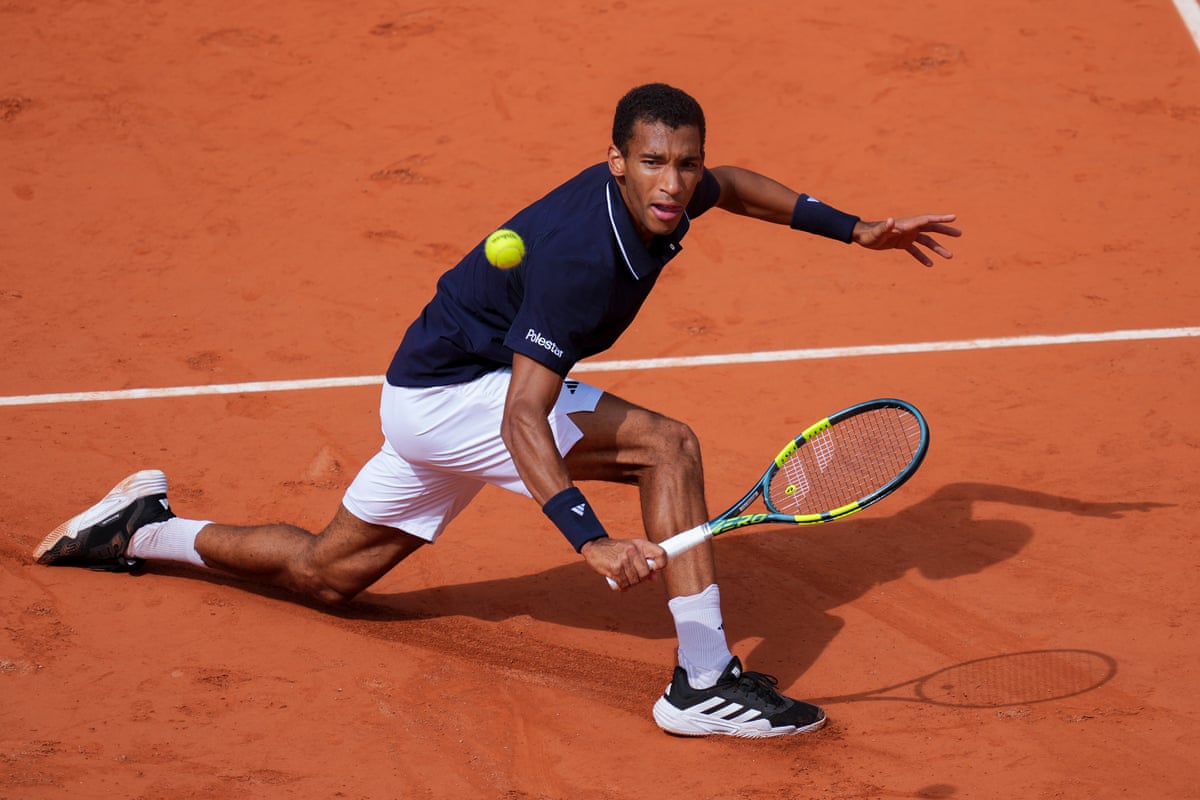
However, his reaction following his loss at the French Open was notably intense. As the fourth seed faced defeat, fully aware that he had missed a significant opportunity in his career, Auger-Aliassime displayed a level of public distress rarely seen from him. His patience appeared to have reached its limit.
“I can’t complain with my life, but I’m in a place right now with my tennis career that it’s tough,” he said. “I’m destroyed today a little bit. It’s tough. I usually handle losses pretty well, I have to say. Like, my whole career, I was going back to training with optimism and positivity. Now I feel as if I’m not the player I want to be, so today is a difficult day.”
A Chaotic Tournament and Zverev’s Triumph
The 2024 Roland Garros hosted one of the most dramatic men’s grand slam tournaments in recent memory, culminating in second seed Alexander Zverev claiming his first major title amid considerable turmoil. Following the event, many leading male players would benefit from reflecting on their inability to position themselves as serious contenders alongside Zverev for the championship.
Prior to Roland Garros, Carlos Alcaraz and Jannik Sinner had dominated, collectively winning nine consecutive grand slam titles, which raised questions about the depth of competition behind them. These concerns have intensified. With Alcaraz, the defending champion, sidelined due to injury and Sinner eliminated in the second round, most top-ranked players failed to make a significant impact. Zverev’s path to the title included facing only one top 20 opponent, Lorenzo Cobolli, ranked world No. 14, across seven matches.
Unexpected Upsets and Emerging Young Talent
The tournament was marked by extraordinary unpredictability. Sinner entered Roland Garros as one of the strongest favorites in recent history, aside from Rafael Nadal’s 2009 campaign, having dominated the clay-court season with victories in Monte Carlo, Madrid, and Rome. However, in a surprising turn, Sinner led Juan Manuel Cerúndolo 6-3, 6-2, 5-1 before losing 18 of the next 20 games, resulting in an early exit.
Sinner’s defeat significantly altered the tournament dynamics. Prior to this, four of the top 12 seeds—Daniil Medvedev, Taylor Fritz, Alexander Bublik, and Jiri Lehecka—had already been eliminated. Fifth seed Ben Shelton was also out by the end of the same day. The following day, 39-year-old Novak Djokovic held a two-set lead over 19-year-old Brazilian João Fonseca before succumbing to defeat.
This tournament also served as a platform for young players to make breakthroughs. Jakub Mensik, aged 20, Rafa Jodar, 19, and João Fonseca, 19, all demonstrated promising performances, though they are still developing their capacity to compete at the highest level.

Intense Matches and Physical Toll on Players
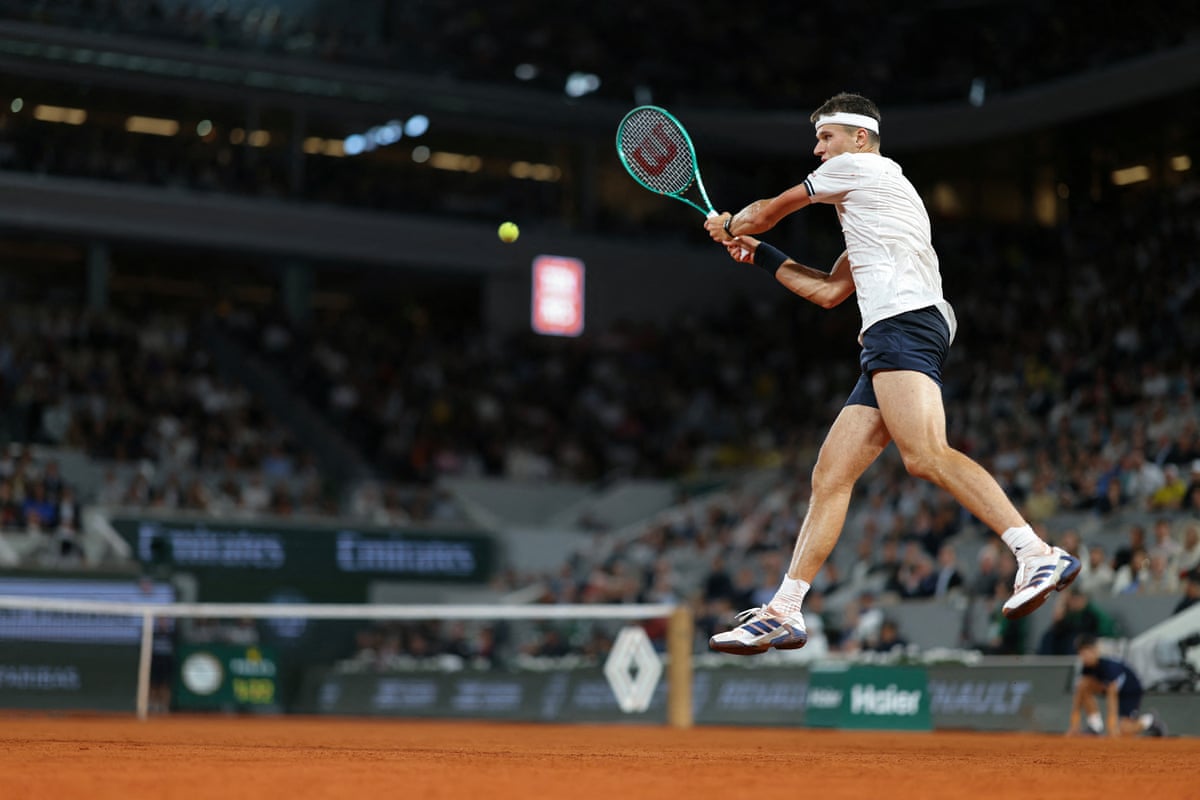
The remainder of the tournament was characterized by intense competition as players sought to capitalize on the opportunity presented by the absence or early elimination of top contenders. The top half of the draw, vacated by Sinner, witnessed an extraordinary day on Saturday, 30 May, with five of eight men’s matches extending to five sets. Notably, Juan Manuel Cerúndolo defeated Martin Landaluce in a five-hour and 58-minute match, the longest five-set match featuring a match tie-break in history.
Further illustrating the physical demands, Matteo Berrettini retired during his quarter-final match against Matteo Arnaldi, who subsequently withdrew from his scheduled semi-final against Cobolli due to a virus. The mental and physical exhaustion among these players was evident.
Impact of Injuries and Absences on Tournament Depth
One of the most concerning aspects of this year’s French Open was the number of top male players who did not participate, many of whom are contemporaries of Alcaraz and Sinner and could have significantly influenced the tournament’s outcome.
On the eve of the event, it was announced that 21-year-old French player Arthur Fils would be unable to compete due to a hip injury. Fils had been among the best performers leading up to Roland Garros, having secured a title in Barcelona and reached the semi-finals in Miami and Madrid. His absence was a considerable disappointment, as it prevented an assessment of his ability to handle the pressures of a grand slam.
Similarly, 24-year-old Lorenzo Musetti, who reached the semi-finals or better at all major clay-court tournaments last year, would have been a strong contender if not for recurring injuries since his retirement in the Paris semi-final last year. Jack Draper, also 24, has struggled with health issues that have limited his participation. Holger Rune, aged 23, remains sidelined due to a torn Achilles tendon sustained last year. Additionally, the timeline for Carlos Alcaraz’s recovery from a right wrist injury is still uncertain.
Men’s Tennis at a Crossroads
With numerous injuries, inconsistent form among some competitors, and others yet to reach the necessary level, men’s tennis finds itself in a complex situation following the second grand slam of the year. The conditions for competition appear likely to remain similar heading into Wimbledon.
Assuming no lasting physical effects from his French Open disappointment, Jannik Sinner is expected to begin Wimbledon as the heavy favorite. However, should he falter again, the tournament could see unexpected outcomes.