Williams’s Wimbledon Return Draws Reverence Amid Defeat by Maya Joint
The shapes and silhouettes remain unchanged. The movements are effortlessly familiar. The way she gathers the ball before serving: not merely bouncing it, but toying with it, batting it around her ankles as if contemplating an appropriate punishment. All of this is as it always was, like the words of a song you know by heart. Yet, why does it still feel so strange?
It is just before half past seven on a warm Wimbledon evening when Serena Williams appears to come back from the dead. Not literally—although she has defied death more than once—but it feels close to that. Some spectators have brought old photos of her, holding them aloft as she walks onto the court, reminiscent of mourners at a vigil. As if they have summoned her through the power of their collective devotion.
Serena devotion has always been distinct from other forms of tennis fandom, balancing between the earthly and the divine. After a four-year absence, it is perhaps unsurprising that the prevailing emotion is not euphoria but disbelief. A four-year hiatus at any level of sport is usually terminal. Four years away at age 40, in grand slam singles tennis, is as close to sporting death as possible.
There is none of the usual tomfoolery and wisecracking typical of Centre Court crowds in the evening. Instead, there is reverence, longing, and perhaps even a moist eye or two. For millennials and younger fans, this moment encapsulates their childhood: a living capsule of memories and time—where they were when they watched her, what they were doing, and who they were with.
Naturally, the game has evolved. None of the 127 other players in the draw have ever faced her in a singles match. The line judges have been removed, and more than once she stares quizzically at a close call. Her opponent, Maya Joint, born in 2006, had already witnessed Williams win seven grand slam titles by then. Joint is 20 years old, as distant in age from Williams as Williams is from Martina Navratilova.

In recent months, when Williams quietly re-entered the drug-testing pool and skillfully avoided direct answers in interviews, she was not being coy. In February, when she contacted her former coach Rennae Stubbs and tentatively began hitting balls in Florida, she remained uncertain. Does it matter whether she can still win? And if not, then what is the purpose?
Williams never pursued tennis for accolades or praise. Not for travel miles or glowing tributes. The record books will not reflect her bravery and resilience here—the way she saved two match points, the screaming winners into the corner, the precise accuracy of her serve, or how Joint, entering this match with one tour win in six months, played her best match of the year. For the ultimate competitor, a loss remains a loss.
There is a moment at 5-5 in the second set when Williams is 0-40 down, wins four consecutive points, holds serve, and lets out a roar. Centre Court roars with her. Novak Djokovic has confided that he has seen her in the gym more during this tournament than in her prime. It becomes clear this comeback was not solely for personal enjoyment, her children, or for fun. This was not a “vanity exercise,” as described by the Spectator, a small magazine for small people. When you are the greatest tennis player in history, you leave the house with a clear purpose.
Perhaps the greatest testament to Williams is the level she inspired in Joint, who, despite low confidence and a declining ranking, is young, hungry, ambitious, and desperate to remain on the tour. Joint’s primary motive is certainly not to "go out there and enjoy herself." She will now forever be able to tell her grandchildren about the day she defeated Serena Williams on Centre Court.
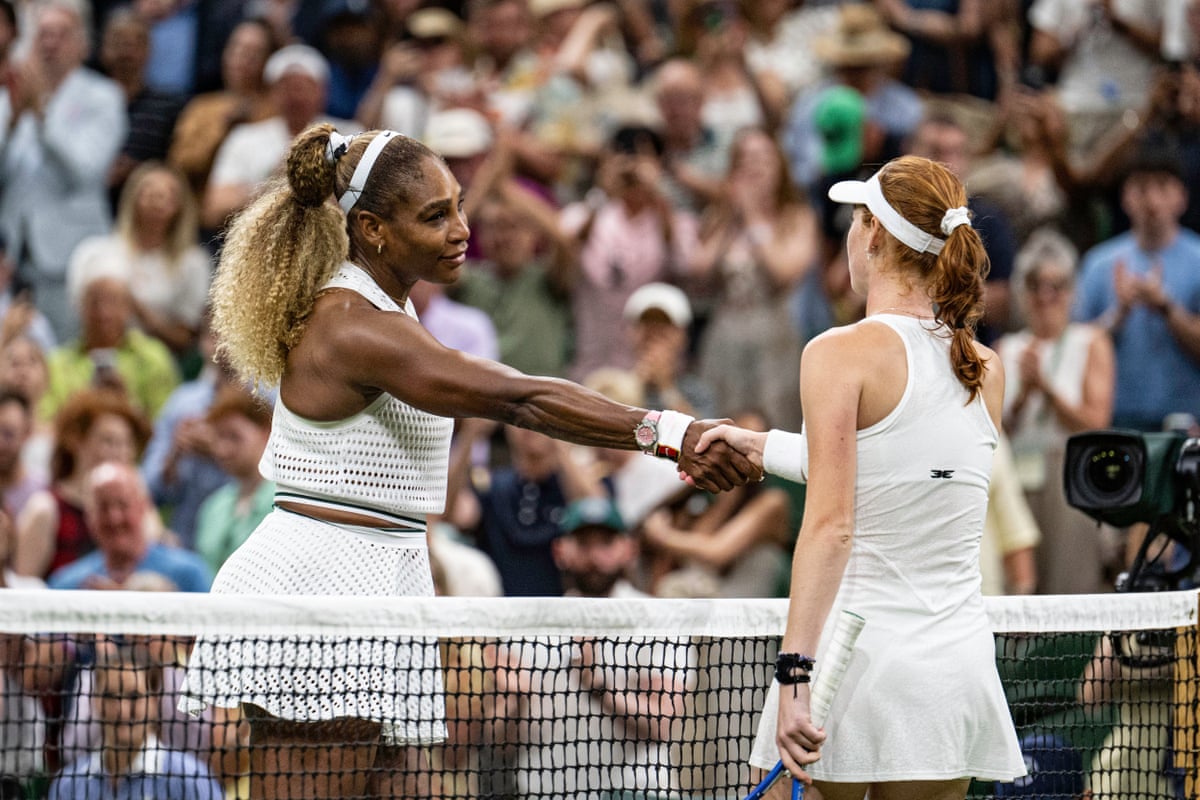
At one point, as the match slips away, Williams emits not a grunt but something closer to a cry—a refusal. Though her losses and suffering are familiar, this moment carries power: a sense of the passage of time, its weakening effect, and the inevitability of things slipping away.
The shapes and silhouettes are familiar, but we are all older now, and there is nothing anyone can do about it.