Swiatek’s Early Exit Guarantees New Champion
Iga Swiatek’s defeat in the fourth round by Marta Kostyuk marked her earliest departure from the French Open since her debut in 2019. With Swiatek out, no previous champions remain in either the men's or women's singles draws at Roland Garros.
This development opens the door for new contenders to claim the prestigious title over the coming week in Paris. The women’s draw still features Grand Slam champions and top-ranked players, led by top seed Aryna Sabalenka, in what was expected to be a highly competitive tournament.
Meanwhile, the men’s draw, initially predicted to be dominated by top seed Jannik Sinner, now guarantees a first-time Grand Slam winner following his unexpected exit.
examines the players who remain in contention to add their names to the distinguished list of Roland Garros champions.
Iga Swiatek, who earned the nickname 'Queen of Clay' after winning three consecutive French Open titles from 2022 to 2024, was defeated in the fourth round by Ukraine’s Marta Kostyuk. This loss came on Swiatek’s 25th birthday and followed a semi-final exit the previous year.
Swiatek, seeded fourth, appeared to struggle with confidence during the match. As Kostyuk increased the pressure and the score shifted, Swiatek’s serve faltered and her returns became erratic.
"I know that I lost because I was tense, and my body couldn't really do the proper things," Swiatek said. "But it's not the first time, as well, so I just need to work on it."
Despite Swiatek’s difficulties, Kostyuk’s performance should not be underestimated. The 23-year-old Ukrainian, who had recently won titles in Rouen and Madrid, played with confidence and tactical intelligence, consistently challenging Swiatek from the baseline.
"Things change in tennis, but I'm much more consistent. I'm the most consistent I have ever been in my career," Kostyuk said. She has won all 16 of her clay-court matches this season and is seeded 15th.
Kostyuk acknowledges she still has progress to make to break into the top five or top ten rankings but has another opportunity to prove herself in an all-Ukrainian quarter-final against seventh seed Elina Svitolina.
The other quarter-final in this section of the draw will feature Sorana Cirstea, a 36-year-old Romanian whose impending retirement has inspired a late-career resurgence, against Russian eighth seed Mirra Andreeva. This guarantees a first-time Grand Slam finalist from this part of the draw.
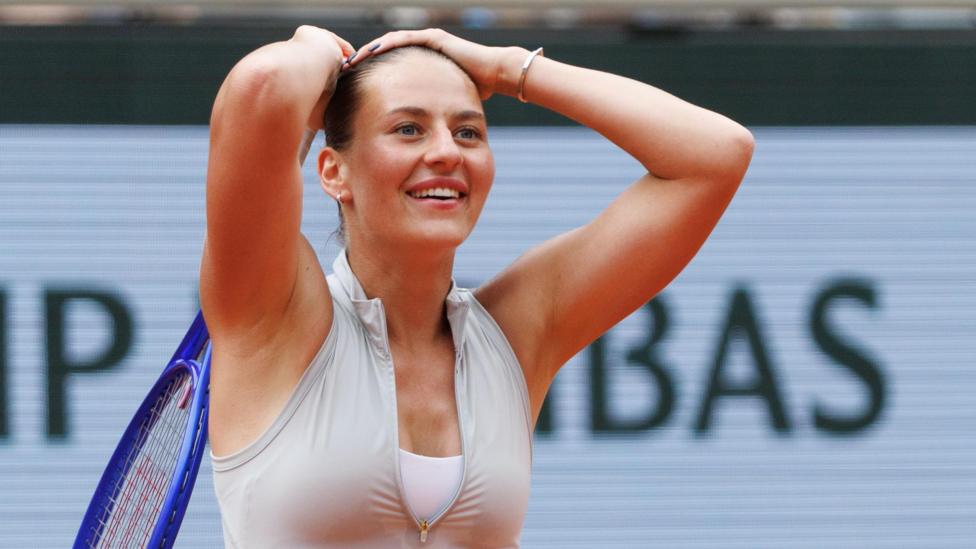
On the opposite side of the women’s draw, Aryna Sabalenka stands out as the leading contender aiming to win the Coupe Suzanne Lenglen for the first time. Naomi Osaka, who has recently adapted well to clay courts, and American 19th seed Madison Keys, the 2025 Australian Open champion, could pose significant challenges in the quarter-finals.
Aside from these three, none of the remaining women in the outstanding fourth-round matches have previously reached a Grand Slam semi-final.

Men’s Top Half Draw Opens Wide After Key Exits
The men’s draw will also see a first-time French Open and Grand Slam winner, as reigning two-time champion Carlos Alcaraz withdrew due to a wrist injury, and top seed Jannik Sinner was eliminated unexpectedly. Novak Djokovic’s earlier exit further ensured a new name will be etched into the record books.
The top half of the men’s draw, where fourth-round matches are scheduled for Monday, has become unpredictable. Italy’s Matteo Berrettini, ranked 105th and the lowest-ranked player remaining, brings valuable experience as a former Wimbledon finalist despite having missed eight Grand Slams in the past five years due to injury.
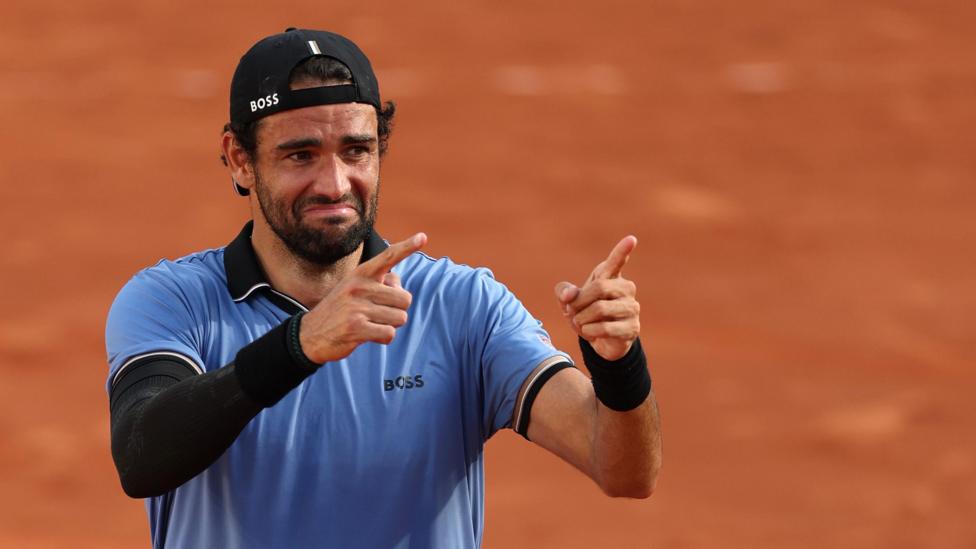
Canada’s fourth seed Felix Auger-Aliassime is the highest-ranked player left in this section, with American 19th seed Frances Tiafoe also possessing notable credentials.
Despite the absence of clear favorites, German second seed Alexander Zverev remains the strong favorite to advance. At 29, Zverev is widely regarded as having his best chance yet to claim his first major title.
Zverev faces challenges ahead, including a quarter-final against Spanish teenager Rafael Jodar, followed by a potential semi-final against either Joao Fonseca, who defeated Djokovic, or Czech 26th seed Jakub Mensik. Additionally, Zverev must manage the psychological and physical demands that have affected him in three previous Grand Slam finals.
With Djokovic and Sinner out of contention, Zverev’s confidence may be bolstered by the knowledge that the primary obstacles have been removed, leaving only himself as a potential impediment to victory.
Factors Contributing to an Open Roland Garros
Several factors have contributed to the openness of this year’s French Open singles draws, including injuries, illnesses, the natural aging of players, and an unusual heatwave in Paris.
The intense heat, which lasted nearly a week, may have had a cumulative physical impact on competitors. It also altered the clay court conditions, making surfaces firmer, increasing ball bounce height, and loosening string tension on rackets.
Another consideration is the psychological pressure associated with the wide-open men’s draw. American Madison Keys commented on this dynamic:
"I do think we're seeing the men deal with it for the first time in a really long time where it feels completely wide open," Keys said. "They should really get their heads around it."
Notably, nine of the 16 men’s third-round matches extended to a deciding fifth set, the first time this has occurred in the Open era. Both Jodar and Mensik required full five-set matches to reach the quarter-finals on Sunday.
Tennis has long been a sport where mental strength is as critical as technical skill. The unpredictability witnessed so far underscores why this French Open is more about mental resilience than any major tournament in recent years.
- Live scores, results and order of play
- Get tennis news sent straight to your phone