The Challenge of the Roland Garros-Wimbledon Double
Achieving the Roland Garros-Wimbledon double in the same summer is widely regarded as one of the most demanding feats in tennis. Since rackets ceased to be made from wood, only three women have accomplished this: Martina Navratilova, Steffi Graf, and Serena Williams. This elite group represents the pinnacle of the sport.
For Mirra Andreeva, the task ahead over the next two weeks is daunting: to emulate these legendary women. Historically, this challenge often ends in defeat. Past champions have struggled to follow up their French Open victories with Wimbledon success. Examples include Garbiñe Muguruza's second-round exit to Jana Cepelova in 2016, Ash Barty's fourth-round loss to Alison Riske in 2019, and Coco Gauff's first-round defeat by Dayana Yastremska last year.
Andreeva’s Youth and Potential
Winning Wimbledon immediately after the French Open is a rare accomplishment, especially for a 19-year-old player like Andreeva, who is still developing her skills and managing emotional fluctuations. Patience and gradual growth are essential. Despite this, Andreeva’s rapid ascent in tennis suggests she might possess qualities that set her apart. While success is not guaranteed, her progress merits close attention.
First Round Victory and Its Significance
On Monday evening, Andreeva defeated veteran world No. 59 Magda Linette of Poland 7-5, 6-4 in her first-round match. This victory represents only the initial step in her Wimbledon campaign, but it was the kind of challenge she needed—a match with enough difficulty to test her abilities and resolve.
The transition from the French Open to Wimbledon is considered one of the most abrupt and challenging in tennis. It involves adapting from the clay courts of Roland Garros to the grass courts of Wimbledon within a three-week period, a change that affects players’ techniques and strategies significantly. For the reigning French Open champion, this transition also brings heightened adrenaline, fatigue, and increased media scrutiny. Iga Swiatek, after three unsuccessful attempts from 2022 to 2024, chose to skip Wimbledon last year and was rewarded for that decision.

Adapting to Grass Courts
Grass courts demand a different style of play compared to clay. While clay courts reward patience and extended rallies, grass courts favor impatience, quick decision-making, and the ability to seize opportunities early. Andreeva demonstrated endurance and resilience in winning at Roland Garros by extending rallies and maintaining composure. However, grass courts require players to shorten points and capitalize on quick opportunities.
During her first-round match, Andreeva faced challenges adapting to the low, lush bounce of the grass surface, which caused her to slip on her right ankle at one point. Linette played a strong match, skillfully varying spin and pace, attacking Andreeva’s second serve, and approaching the net effectively.
Despite committing several errors, Andreeva relied on her powerful first serve, superior anticipation, and strong groundstrokes to regain control and finish points aggressively. This demonstrated a strategic adjustment and an understanding that the tactics successful on clay may not translate directly to grass.
Andreeva’s Reflections and Mental Challenges
After the match, Andreeva candidly discussed the mental pressures she has faced since her French Open victory.
“Of course the feeling [of winning a grand slam] is unbelievable,” she said. “But on the other side, you expect more from yourself, feel more pressure. People expect you to do well. Next time I will try to block out those thoughts, because I was thinking about that a little bit. But a win is a win, even though I was complaining a lot.”
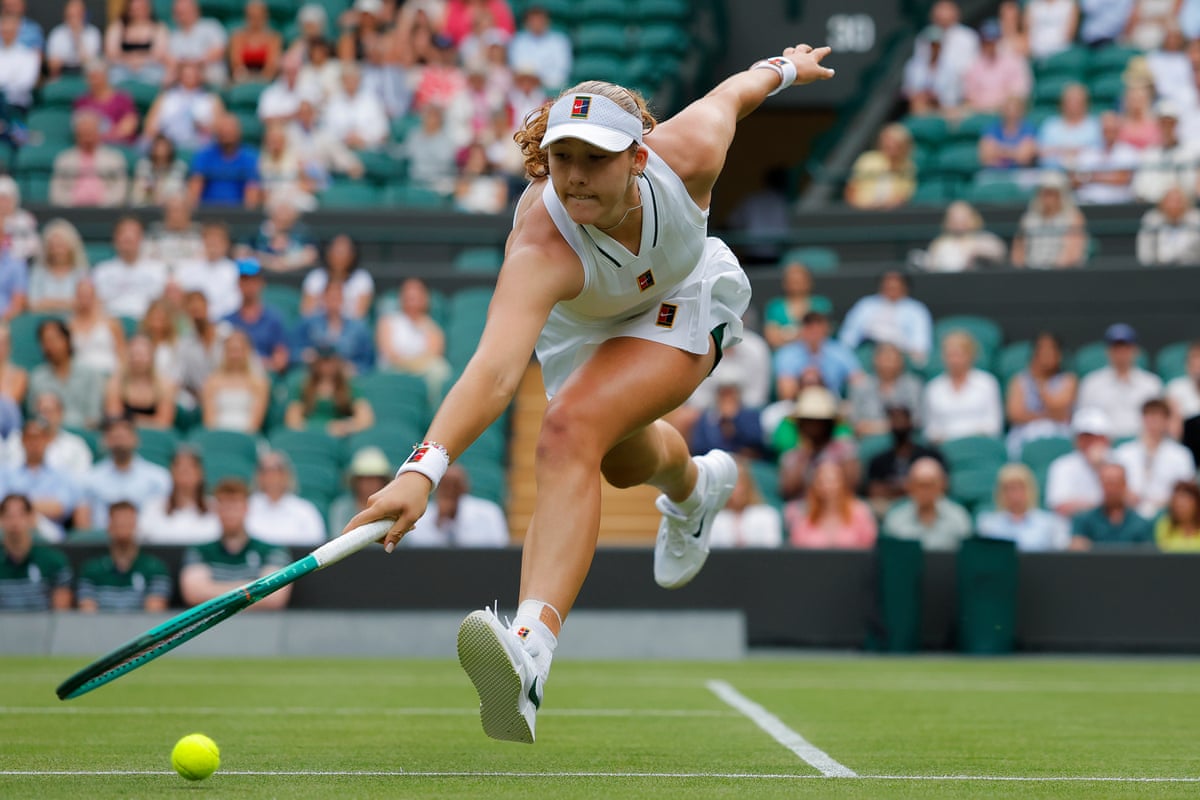
At times, Andreeva’s greatest adversary appears to be herself. Although she has reduced some of her more dramatic on-court reactions, occasional outbursts remain. Her consistency and footwork are still developing. Additionally, as a Russian player, she may not receive widespread support from the Wimbledon crowd. Her upcoming second-round match against Barbora Krejcikova, another player who has struggled to follow up a French Open win with Wimbledon success, will be a significant test.
Outlook and Potential
There are numerous reasons to doubt that Andreeva will complete the Roland Garros-Wimbledon double. However, she has demonstrated an ability to overcome challenges rapidly throughout her career. Currently, no opponent appears beyond her capability. Despite her imperfections, she is only six wins away from achieving a level of greatness that few have reached.