Andreeva Reaches First Grand Slam Final with Convincing Victory
Mirra Andreeva delivered a composed and mature performance to reach her first grand slam final at Roland Garros, defeating Marta Kostyuk 6-1, 6-3. This match marked the most high-profile encounter between a Russian and Ukrainian player since Russia’s invasion of Ukraine four years ago.
Andreeva, just 19 years old, aims to become the third-youngest first-time grand slam champion of the 21st century, following Maria Sharapova and Emma Raducanu. Having competed at the highest level since age 15, Andreeva has recently improved her ability to manage temper, emotions, and pressure, positioning herself as a contender for major titles.
Meanwhile, the women’s draw has opened up following Aryna Sabalenka’s unexpected loss to Diana Shnaider, ensuring a new grand slam champion. Throughout the tournament, the geopolitical context of Russia’s war in Ukraine has remained a significant undercurrent.
Kostyuk Faces Personal Challenges Amid Tournament Run
Kostyuk began her tournament 11 days prior, waking to news that a Russian missile had landed approximately 100 meters from her family home in Ukraine, where her mother, sister, and great aunt reside. After achieving the best grand slam performance of her career, her run ended against one of her prominent Russian rivals.

While Kostyuk did not express her views as forcefully as compatriot Oleksandra Oliynykova—who called for sanctions against Diana Shnaider for competing in a Gazprom-backed St Petersburg exhibition and likened it to playing in Nazi Germany—she made her stance clear before the match:
"I wish there was some more clear stance on what’s going on, especially when your country is killing other people," said Kostyuk. "I don’t know how you can sleep at night peacefully when you know that this is going on, and you have nothing to say about it."
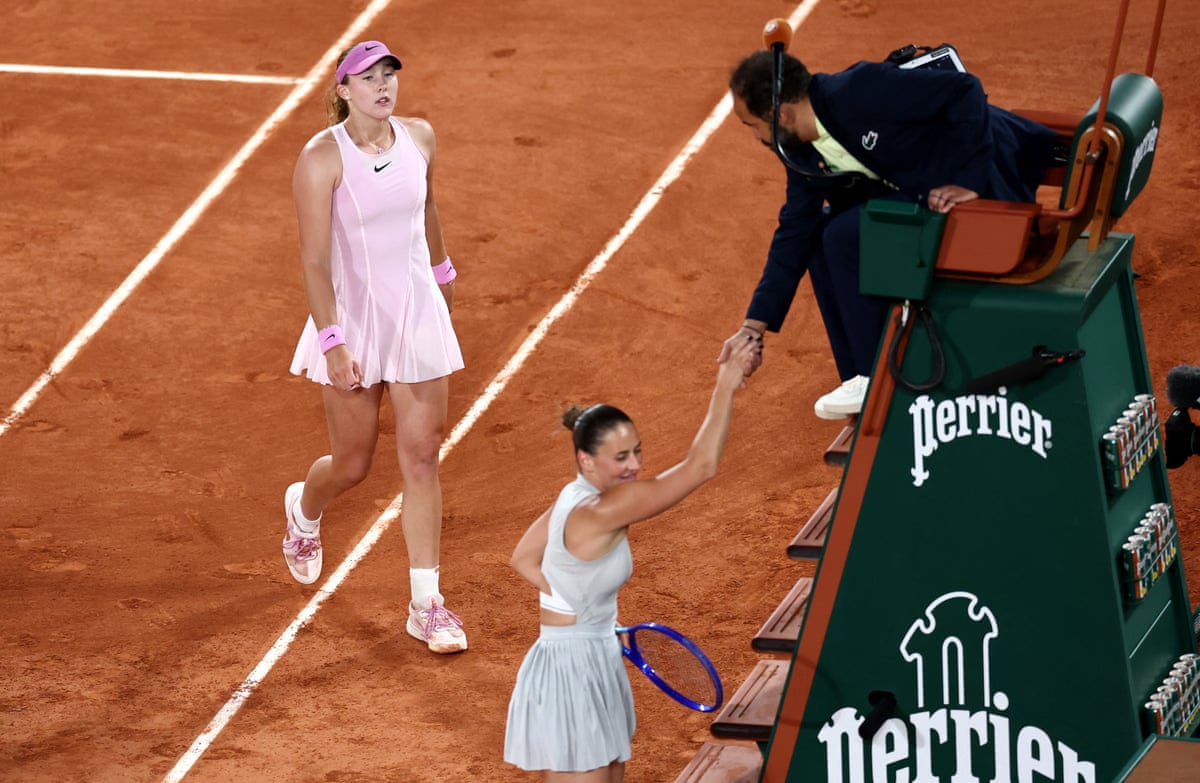
Despite the ongoing conflict, Russian and Ukrainian players have frequently faced each other on the WTA tour over the past four years. Before the match, the two players posed separately with child mascots for the coin toss, and Kostyuk chose not to shake Andreeva’s hand after the match. Andreeva also slowed her walk to the net post-match to avoid a handshake, reflecting the tense atmosphere.
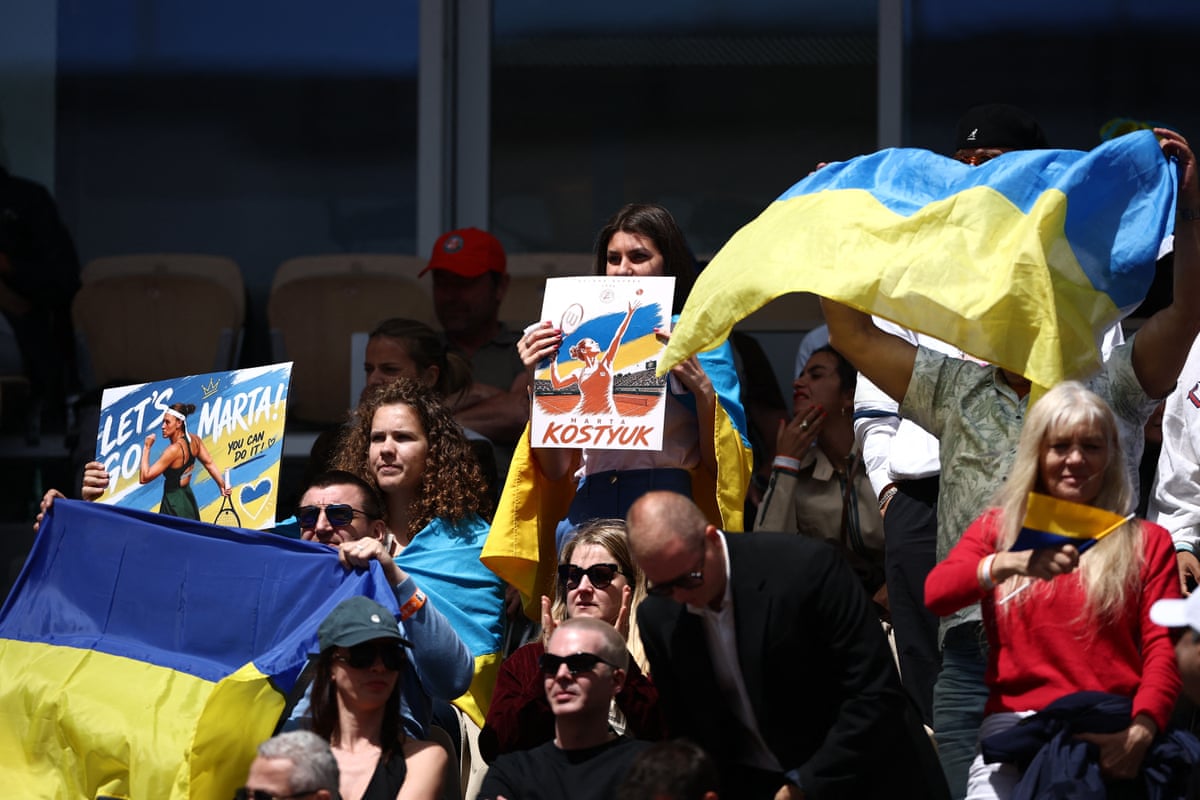
For the duration of the match, lasting one hour and 16 minutes, Kostyuk appeared overwhelmed by the pressure. Although she had been the most in-form player in the draw, with a 17-match winning streak including a straight-sets victory over Andreeva in the Madrid Open final, she was unable to replicate that form on this occasion.
Kostyuk’s aggressive style led to numerous unforced errors early on, resulting in her losing 10 of the first 11 games and falling behind 1-6, 0-3. Although she managed to regain some footing in the second set and hold serve, the confidence she had displayed in recent weeks was absent.
In contrast, Andreeva’s composure throughout the match was notable. Her extensive experience navigating various challenges in her young career was evident as she moved within one match of achieving a milestone long anticipated by observers.