

Malinin's Unexpected Struggles in Men's Figure Skating
Ilia Malinin, who had previously secured team event gold with the USA at Milan-Cortina 2026, entered the men's figure skating competition as the overwhelming favourite for the individual gold medal. However, his performance turned into a nightmare as he fell twice during the free skate and ultimately failed to secure a medal.
The men's free skate was notable for the difficulties faced by many top contenders. Among the final six competitors, five experienced falls during their routines.
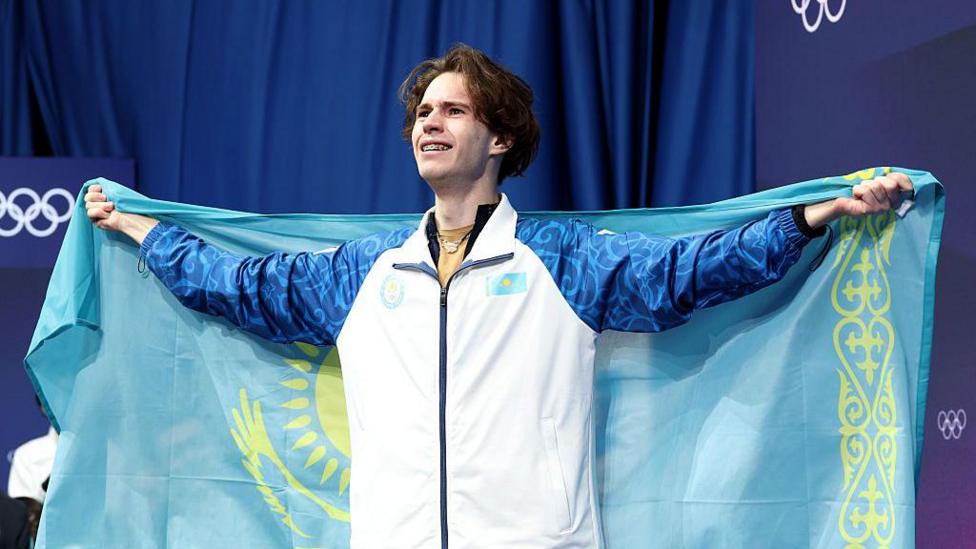
In contrast, Mikhail Shaidorov of Kazakhstan was the sole skater to deliver a clean program, which earned him the gold medal. This victory marked Kazakhstan's first Winter Olympic medal in 32 years.
Yuma Kagiyama of Japan, considered Malinin's closest competitor for gold, fell on a quad flip and settled for the silver medal. The bronze medal was awarded to his fellow Japanese skater, Shun Sato.
Malinin finished in eighth place after a difficult free skate where he visibly struggled under the pressure.
At 21 years old and competing in his first Olympics, Malinin had been nicknamed the 'Quad God' due to his distinction as the only skater to have successfully landed a quadruple axel. This jump involves launching into the air, completing four and a half rotations, and landing cleanly backwards.
Despite this, Malinin did not attempt the quadruple axel during the Games, although it was listed among his planned elements. In the final, he performed only a single axel, which elicited audible disappointment from the audience.
During an attempt at a quad lutz, Malinin fell to the ice, causing a moment of shock throughout the Olympic venue. Unexpectedly, he fell again two elements later.
At the conclusion of his routine, Malinin appeared distraught, grabbing his hair and placing his hands on his knees. As he exited the ice, he shook his head, nearly in tears, illustrating the fallibility of the 'Quad God.'
Day-by-day guide to the Winter Olympics
Full schedule including times of medal events
Winter Olympics 2026 medal table
Shaidorov Maintains Composure to Secure Victory
Mikhail Shaidorov entered the free skate 16 points behind Ilia Malinin following the short program.
Malinin had faced criticism during the Games, particularly regarding his performance in the team event. In that event, he was outscored by Kagiyama in the short program, and errors in the free skate—where he had not initially been expected to compete—nearly allowed Japan to claim gold.

In response to the pressure, Malinin's team removed him from the Olympic bubble to train 35 miles away in Bergamo before the men's individual event, hoping this would help him reset.
His improved performance in the individual short program, where he finished five points ahead of the field, suggested a competitor determined to maintain his two-and-a-half-year unbeaten streak.
His lead going into the free skate was significant, as this segment is where Malinin typically excels. At the Grand Prix Final, he was third after the short program but finished 30 points ahead of the field after the free skate, landing seven quadruple jumps.
Malinin's advantage usually stems from a combination of fearlessness and technical ability. His free skate program carries a higher technical score than his rivals, and judges reward both ambition and higher component scores.
However, in this competition, his routine was notably cautious. The planned quadruple axel was replaced by a single axel, and a quad loop was reduced to a double. His aspirations were effectively shattered.
On the quad salchow attempt, he executed only a double jump and fell. The harsh reality was reflected in his performance and the ice beneath him.
Malinin's free skate ranked 15th best of the night, earning 156.33 points, which was over 40 points behind Shaidorov.
For the crowd's entertainment, he performed a backflip, but it seemed a nostalgic gesture recalling his strong performances just a week prior.
During the team event, Malinin had landed the first legal backflip at the Olympic Games since Terry Kubicka in 1976, after which the move was banned for safety reasons.
Thanks in part to skaters like France's Surya Bonaly, who performed the move illegally but successfully at Nagano 1998, the backflip has since been legalized again.
Malinin was the first to land the backflip at these Games on one foot and repeated the move in the short program.
Despite these feats, none of it influenced the final outcome. After the scores were announced, Malinin approached Shaidorov to offer his congratulations.
This gold medal represents Kazakhstan's first Winter Olympic gold since Lillehammer 1994, when Vladimir Smirnov won the men's 50km cross-country skiing event. That victory occurred a decade before Shaidorov, now 21, was born.
After a minor slip on the quad lutz, Shaidorov maintained his composure while many others faltered, successfully executing two clean quadruple jumps.
Watch two live streams and highlights on BBC (UK only), updates on BBC Radio 5 Live, and live text commentary and video highlights on the website and app.


