The Birth of Super League and Its Impact
The inaugural Super League in 1996 featured 12 clubs, represented by notable players such as Lee Crooks from Castleford, Martin Offiah from Wigan, and Robbie Hunter-Paul from Bradford.
The 1990s marked a period of profound transformation in British sport, and rugby league was significantly affected. Similar to the Premier League's separation from the Football League in 1992, rugby league experienced a major shift in 1996, largely influenced by Rupert Murdoch, owner of Sky TV.
This change brought substantial financial investment, which permanently altered the landscape of northern hemisphere rugby league. The transition from a winter to a summer season introduced a fresh focus, new branding, and a revised calendar.
This era saw the rise of stars like Paul Sculthorpe, Andy Farrell, and Iestyn Harris, who became emblematic of a sport embracing adaptation and evolution. The game became faster, fitter, stronger, and more dynamic, marking the beginning of a new chapter.
"It was quite a pivotal time for the game," former Great Britain and Wales international Iestyn Harris told . "We'd just come into the summer rugby era and the full-time era and you felt the launch of Super League was going to be something special and take the game into the modern day."
Transition to Full-Time Professionalism
Iestyn Harris emerged as one of the standout players of the Super League era, representing Warrington, Leeds, and Bradford during his career.
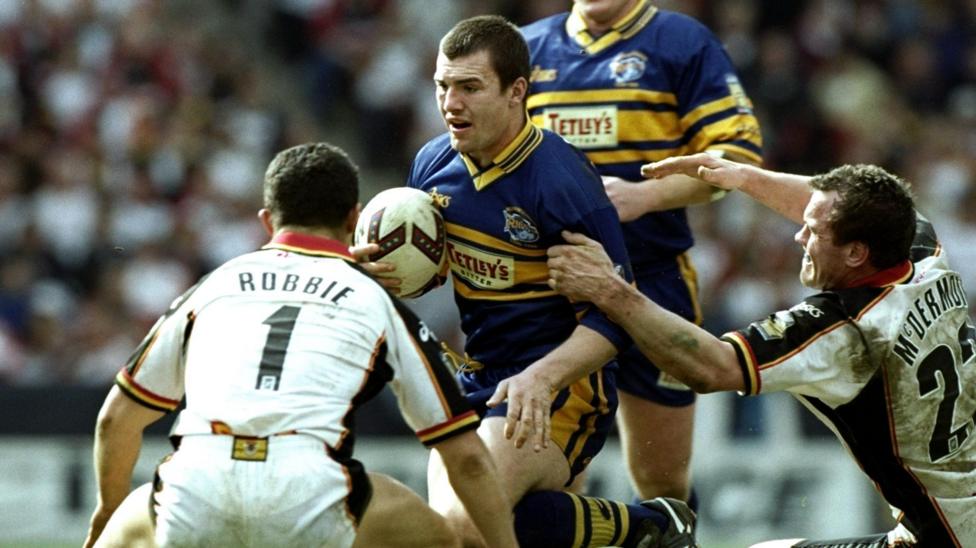
Marking the 30th anniversary of the Super League, a commemorative round of fixtures is scheduled, including a match between Leeds and Warrington at Headingley on Sunday, 29 March, mirroring their encounter that helped inaugurate the Super League era in the mid-1990s.
The rapid pace of change initially shocked players. The 1995-96 season was shortened to prepare for the new league's launch, and preparations for the inaugural campaign began immediately after.
For Harris, then 19 years old, the opportunity to pursue rugby league professionally was almost unimaginable just a few years earlier.
"It was something I was lucky enough to be part of and to play in that very first game for Warrington against Leeds," Harris said. "It was at Headingley, the Rhinos had just been bought by Paul Caddick and Gary Hetherington and they were becoming a very strong side and it was a special time.
"It was a huge change going from a game that was two or three nights a week training with a match on the weekend, conservative contracts with guys who were working jobs alongside that, to suddenly we walk through the door on a Monday morning and 25 guys that were all on a full-time programme.
"It was a huge transition for the game and from that the sport evolved very, very quickly; it got faster, players became more athletic as they had more time to work physically.
"We're seeing the benefits of that 30 years later, with the supreme athletes that we have now, and that comes from decades of full-time professionalism."
The Introduction of the Grand Final and Its Significance
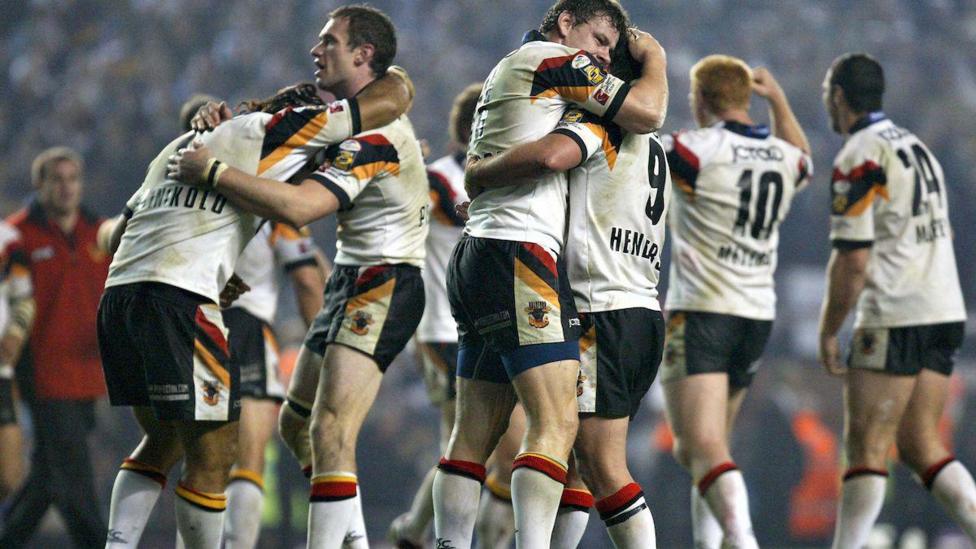
A major innovation introduced by the Super League was the annual Grand Final, which debuted two years after the competition's inception and has since become a key event on the sporting calendar.

Previously, the concept of play-offs and Grand Finals was unfamiliar in a country accustomed to deciding champions based on league standings over the course of a season rather than a knockout format.
Adopting the Australian model brought memorable moments, heightened drama, and a showcase event that expanded rugby league's appeal beyond its traditional audience.
"Creating moments within the season is something they've got right," Harris noted.
"When I first started playing it was first past the post and if you won the league you won everything. The season generally flattened out towards the end because Wigan, at the time, were far superior to everyone else, we were all chasing Wigan.
"It felt like the season was over seven weeks before the end whereas Super League created a Grand Final, a play-off system and created moments in the season that not only the players looked forward to but also the fans."
Throughout the three decades, clubs have demonstrated creativity in generating excitement, from Bradford's early 'Bullmania' spectacle to Catalans and Wigan collaborating to stage a game at Barcelona's Nou Camp stadium.
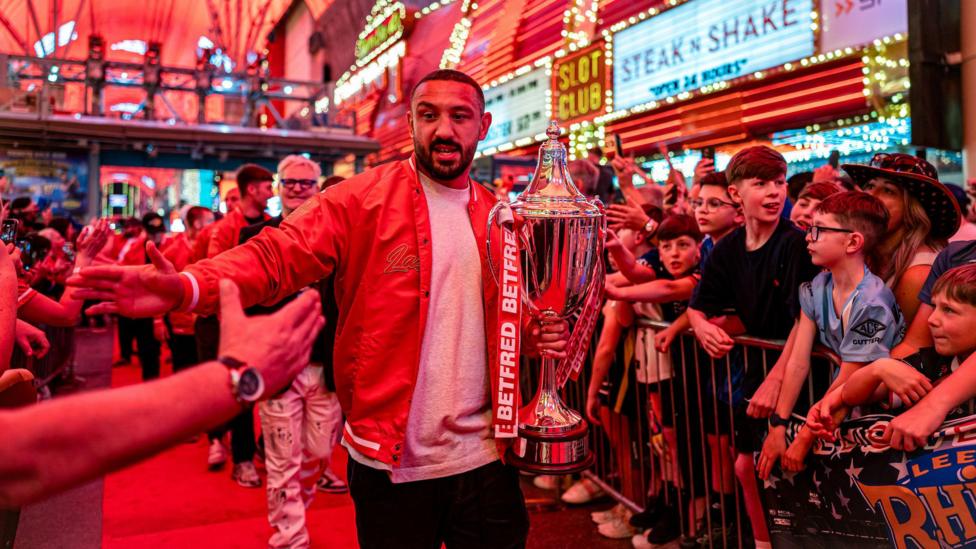
More recently, the league has engaged in a Las Vegas partnership with the Australian National Rugby League (NRL), an initiative driven by Wigan's Kris Radlinski and Warrington's Karl Fitzpatrick to introduce Super League to 'Sin City'.
"The change from winter to summer meant the game could become an occasion rather than just an 80-minute game where people are decked out in hats, gloves and big coats," Harris added.
"Where you look now, we've got families and different varied people watching, but at that time before 1996 it was a generally male-dominated fanbase."
Looking Ahead: Potential New Transformations
Hull KR, alongside Leeds, Wigan, and Warrington, are among the four clubs that have experienced the Las Vegas event both on and off the field.
As Super League enters its 30th year, the sport faces the possibility of another significant transformation.
Given rugby league's strong position in the Australian sports market, the NRL is financially robust and eager to expand its reach.
Relations between Super League and the NRL have been strengthened through the Las Vegas initiative, with Leeds and Hull KR following Wigan and Warrington in playing at Allegiant Stadium in 2026.
Discussions during the previous year's Ashes series between England and Australia involved NRL chief Peter V'landys and European officials exploring potential future NRL involvement in the competition.
"The game has come a long way in a very short space of time, the potential NRL involvement is exciting, and I think it's time to take the game to a larger audience," Harris commented on these prospects.
"I was lucky enough to go over to Las Vegas earlier this year to witness the three games that were played in America - to take the sport to places like Vegas, and there's talk of games in other places across the world, it's an evolvement of the game.
"People talk about an M62 corridor sport but we're breaking the back of that and starting to expand, and I feel as though we're on the brink of something quite special."
Having reached the 30-year milestone, the next three decades may prove crucial for the future of rugby league as it continues to evolve.