

England's Intensity Sets the Tone
England displayed exceptional intensity from the outset of their Six Nations clash against Wales, a performance highlighted by head coach Steve Borthwick. As Wales' replacements entered the field for the second half, the Allianz Stadium DJ played the Kaiser Chiefs' 2000s anthem 'I Predict a Riot,' a fitting soundtrack given England's commanding 29-0 lead at that point.
Despite the early dominance, Wales demonstrated resilience and quality, preventing England from replicating the level of humiliation inflicted in Cardiff the previous March. Nonetheless, England's 48-7 victory was emphatic by any standard.
England's ball-carrying statistics were impressive, covering nearly twice the metres of their opponents. Wales' defense was under constant pressure, chasing back after 16 line-breaks, while managing only six in return. England controlled almost 60% of the territory, and by 25 minutes, Wales' chances of a comeback were minimal.
Borthwick Reflects on Performance and Areas for Improvement
"I thought we defended exceptionally well, we kicked really well and we scored some nice tries, but I think we left a lot out there on the grass,"
Borthwick told BBC Radio 5 Live.
"We'll review this game and say there's a load of things we could do a lot better. Those are the things we need to step up next week. Second half we were in the 22 a lot but didn't come away with points on as many occasions as we'd have liked."
England's victory places them at the top of the Six Nations table after the opening round. However, Borthwick emphasized that the key focus is on learning from the match, acknowledging the quality of the opposition as a factor in assessing the team's performance.
Henry Arundell's Impactful Performance
Henry Arundell, known for his combination of power and speed, was a standout, scoring a first-half hat-trick. The 23-year-old, who scored a try with his first touch in Test rugby as a teenager, continues to maintain an impressive international try-scoring rate. While this statistic is boosted by five tries against Chile in the last Rugby World Cup, his ability to convert breaks into points remains invaluable.
One notable moment was when Fraser Dingwall passed to Arundell for England's fourth try, where Arundell swiftly outpaced the cover defense. His improved skills under the high ball and defensive capabilities have been developed through coaching, but his innate fast-twitch physicality is a natural asset.
Given the frequency of kick-chase and broken-field situations in modern rugby, Arundell's abilities are increasingly vital.
England's Strong Start and Team Contributions
England's ability to start strongly was evident throughout the match, with Arundell's hat-trick contributing significantly to their dominance.

While Ollie Chessum may not have garnered headlines, his performance as a second-row player was marked by notable endurance and commitment, especially with Maro Itoje beginning the game on the bench.
Ben Earl continues to excel in the number eight position despite not being a natural fit. The 28-year-old, who has experience as an open-side flanker, made 17 carries covering 78 metres, matched the top tackle count alongside Guy Pepper, and secured a turnover.
Henry Pollock's energetic introduction in the second half was well received. His pace and breakdown skills raise questions about whether he might start future games, given his impact off the bench in six appearances.
Tommy Freeman's Role and Future Considerations
Tommy Freeman's performance was notable for his physicality and pace at outside centre, where he formed a strong partnership with Northampton teammate Fraser Dingwall. Freeman led England in metres gained by a significant margin.
However, transitioning from wing to centre has presented challenges, including occasional awkwardness in wide channels. For instance, teammate Tom Roebuck was left waiting for a pass that did not materialize. Freeman had a try disallowed earlier due to a neck roll by a teammate at a previous clearout before scoring a try late in the game.
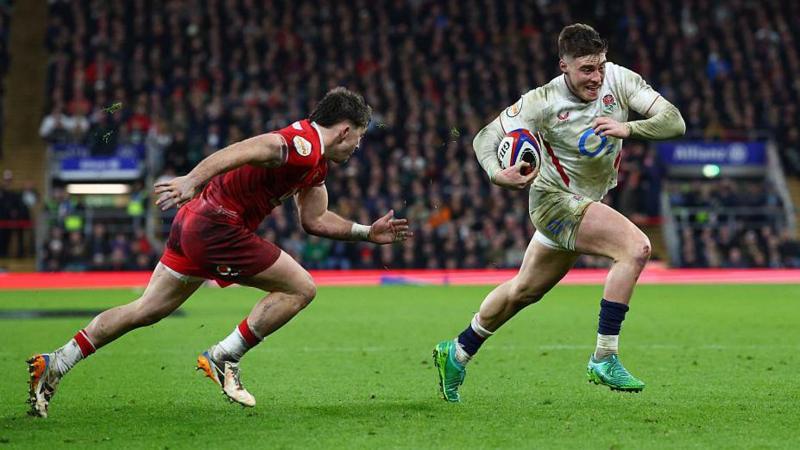
Freeman's aerial skills are less advantageous in midfield, but his finishing ability was evident when he was moved back to the wing late in the match, scoring England's seventh and final try by breaking through tackles.
The decision to move Freeman to centre was initially driven by limited options. With Ollie Lawrence returning from an Achilles tendon injury, Dingwall's continued strong performances at 12, and players like Max Ojomoh, Seb Atkinson, Joe Marchant, and Benhard Janse van Rensburg becoming available, England's centre options are expanding.
Balancing courage to maintain a plan with the wisdom to adapt is crucial. Freeman's role at centre appears worth preserving for now, but with flexibility.
Looking Ahead to France
Borthwick is aware that with France, who recently achieved an unprecedented level by defeating Ireland, awaiting in the final round, precise adjustments and strategic decisions will be essential for England to reach their desired goals.


