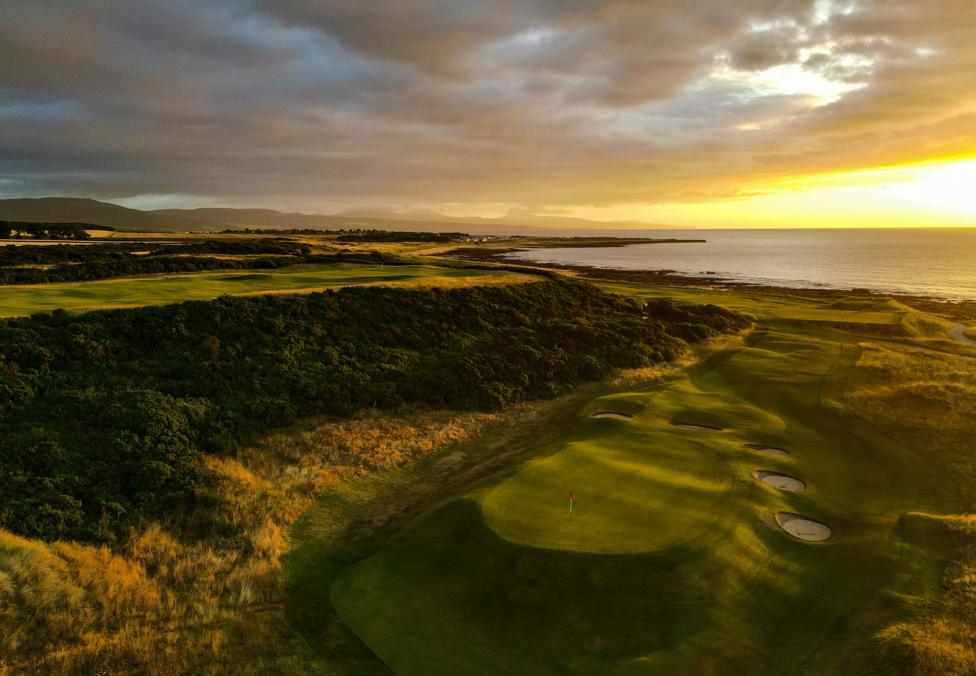
Seve's celebration
Spanish great Seve Ballesteros won the second of his three Open titles at St Andrews in 1984.
This photograph was taken at my first major championship in 1984 and became a highly influential image. I was covering the final day for the Observer newspaper and captured perhaps the most iconic moment of Seve Ballesteros' career—widely regarded as a favourite picture from modern golf.
Only a few photographers caught this split-second moment where all elements aligned perfectly: the position of his right arm, the angle of the putter, his legs, and his facial expression.
While luck plays a role in every great photograph, I had been photographing sporting events for about a decade by then, giving me experience in positioning and anticipating moments.
I knew from previous celebrations that Seve would be animated and emotional, but timing was crucial.
The newspaper did not require the image until Tuesday for the following Sunday's edition, so I drove overnight to my lab in Hemel Hempstead. The photo was taken with a manually focused lens, so it was a relief to see it was in focus.
The image was published by several magazines across Europe and Japan and continues to sell today.
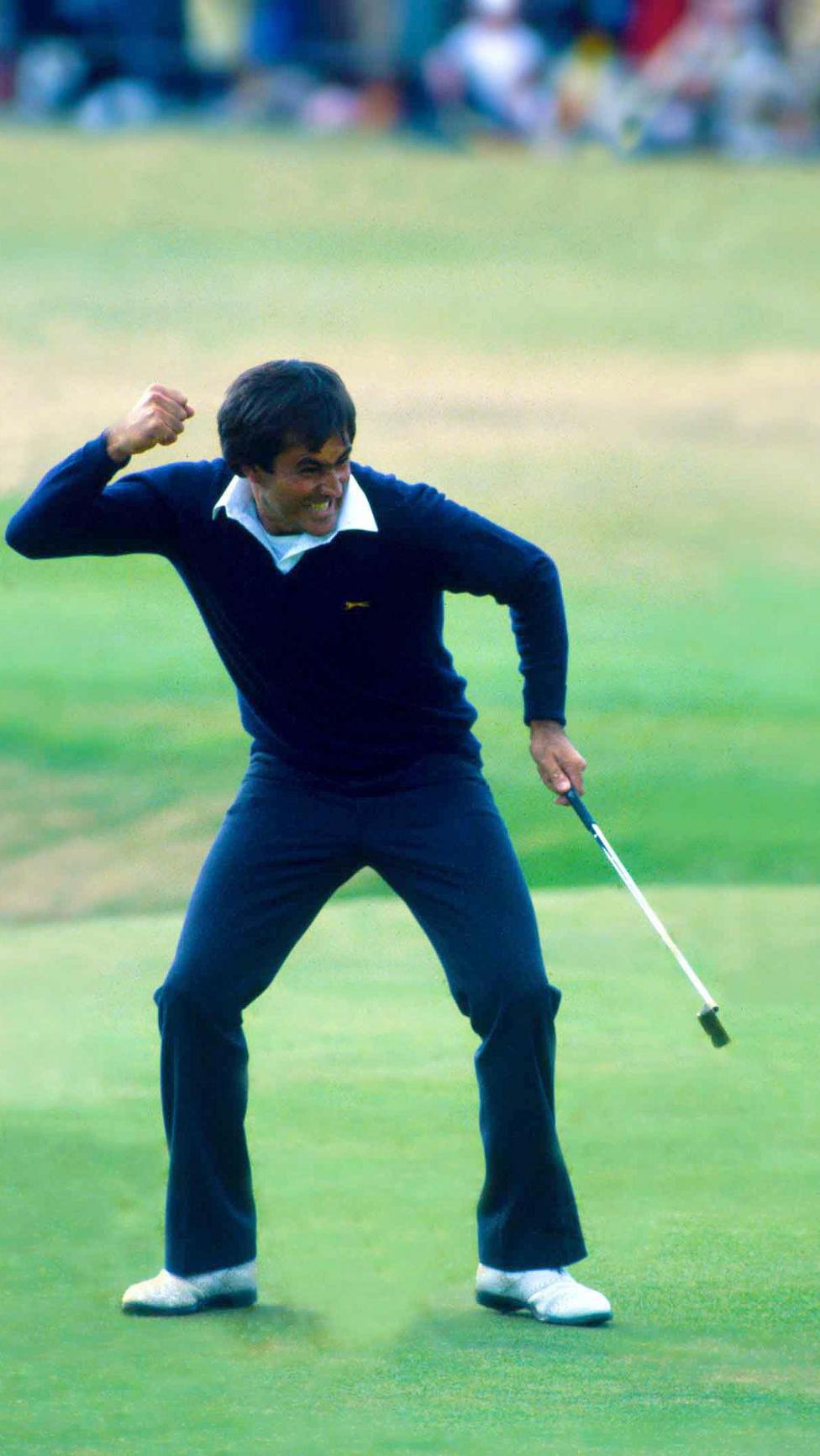
Tiger's tiger
Tiger Woods is one of the most photographed golfers of all time, making it challenging to find a unique angle.
With Tiger, the approach was to shoot from every possible angle. Some athletes are instantly recognizable even in silhouette, and Tiger is certainly one of those.
I had been trying for many months, even years, to capture this particular image.
I wanted a sharp picture focusing on his well-known tiger headcover, with Tiger himself appearing abstract rather than standing beside it.
Photographers often communicate with caddies to position bags or clubs to help get the best shot. The caddies are insightful and supportive, like part of a travelling circus.
I knew Tiger's caddie Stevie Williams well, and although he helped with some shots, he was not involved in this particular one.
This opportunity arose at the Dubai Desert Classic in 2001 when Tiger bent down to pick grass to check the wind direction for his second shot to the 18th green.
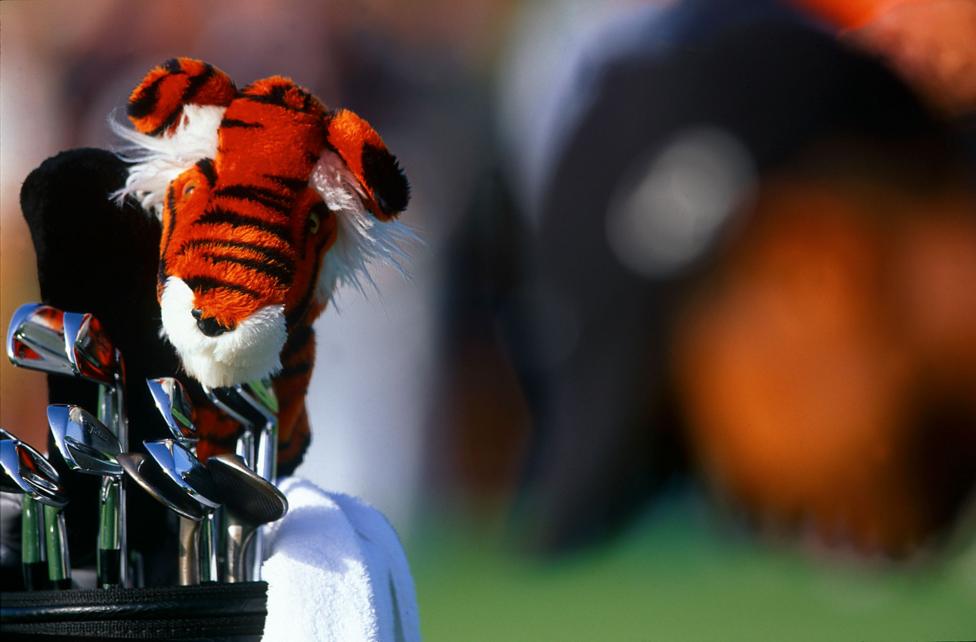
Faldo's first
Nick Faldo won the first of his three Open titles and six major championships at Muirfield in 1987.
This photograph gained significance after Sir Nick Faldo completed a grinding round of 18 pars to win his first major at the 1987 Open Championship.
Faldo himself called it a key shot - "a fantastic 35-yard shot I knocked to three feet" - as it helped him record an eighth par at Muirfield to maintain momentum during his unusual round.
I have taken many other photos of Faldo, but this one captures a moment where things could have gone wrong. It shows his focus, determination, and what winning entails.
He maintained this composure throughout the day, overcoming a three-shot deficit on the back nine to defeat Paul Azinger.
Rory's roar
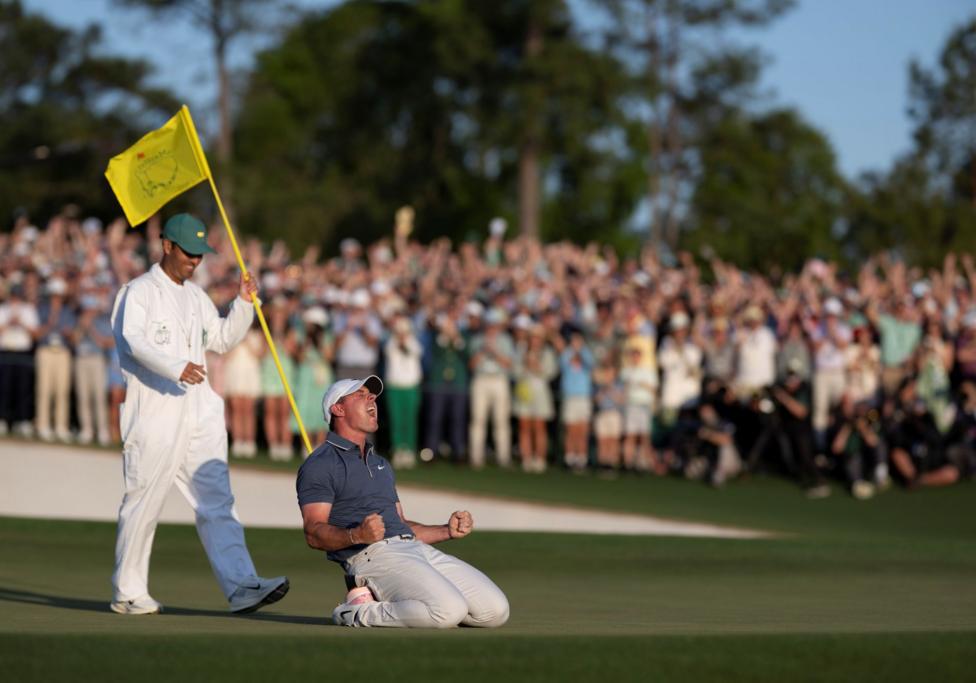
Rory McIlroy became just the sixth player to complete the career Grand Slam with his victory at the 2025 Masters.
I arrived early to capture Rory McIlroy joining golf's most exclusive club by winning the Masters at Augusta National in 2025.
Since there is no inside-the-ropes access for media and photographers at Augusta, I arrived at 06:15—about 12 hours before the winning moment—to queue and place a chair among patrons beside the 18th green.
Augusta traditions allow placing a chair greenside and then leaving for the day, confident no one will take your spot.
I had to trust that this location would be ideal to capture history, though years of experience helped me learn the best vantage points.
Each visit requires scouting for changes, such as added trees, which might affect shadows and shot composition.
I had decided to follow Rory for as much of the final round as possible. Having known him well since meeting him at a Faldo Series event when he was about 13, capturing his winning putt felt like witnessing a family member achieve the Grand Slam.
Both Rory and his caddie Harry Diamond have a large print of this. I try to maintain a professional relationship with players but offer major winners copies of photos from their winning moments.
Bethpage bonus
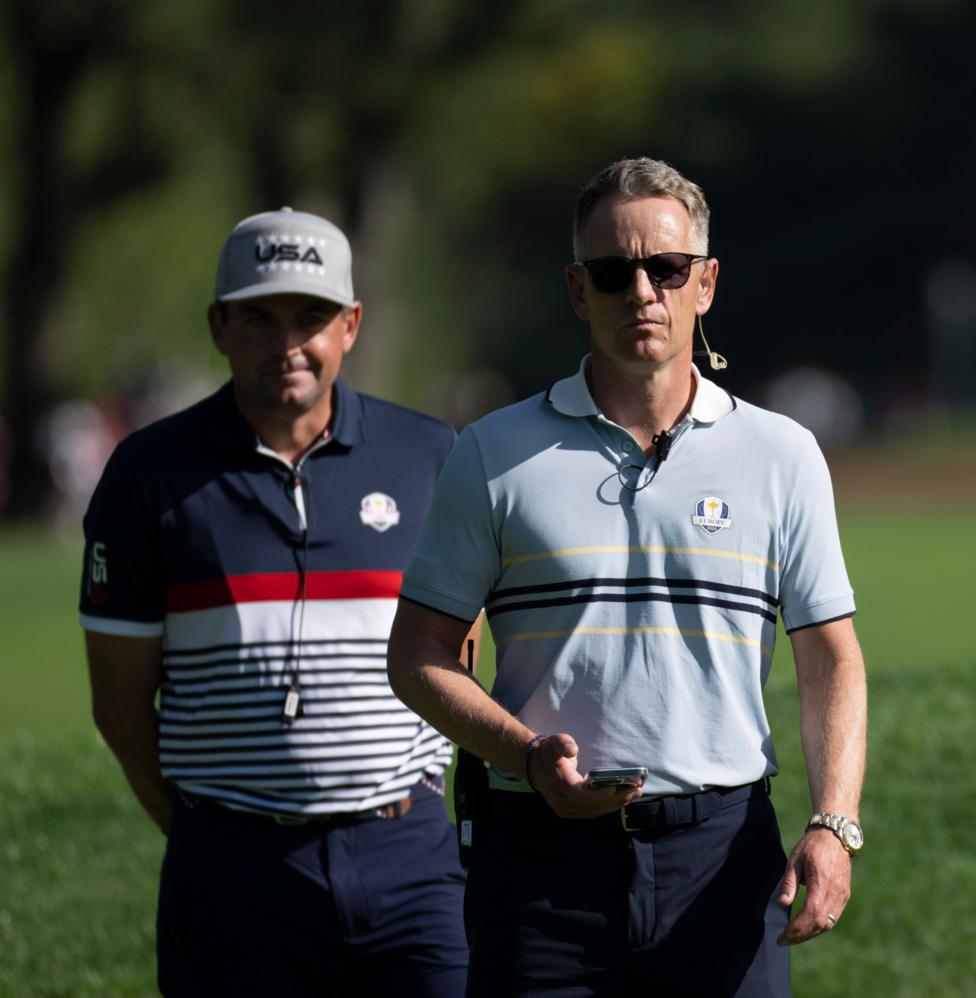
European captain Luke Donald led his team to their first away Ryder Cup win since 2012, despite a spirited comeback from Keegan Bradley's US team on the final day at Bethpage, New York.
Body language can reveal much in a still image.
I aim to capture this image at every Ryder Cup. Although it is challenging to photograph captains together during matches, this shot was taken on the opening morning of Europe's 2025 victory at Bethpage.
Luke Donald appears cool, calm, and controlled, while his US counterpart Keegan Bradley displays nervousness. I appreciate that Luke is walking ahead and Keegan is slightly out of focus, mirroring the Ryder Cup's outcome that week.

When I noticed them, I focused solely on capturing this moment rather than the match they were watching.
The captains set the tone, and I would rank Bradley among the top five most passionate captains I've seen—though perhaps he wanted the win too much.
Sarazen's stories
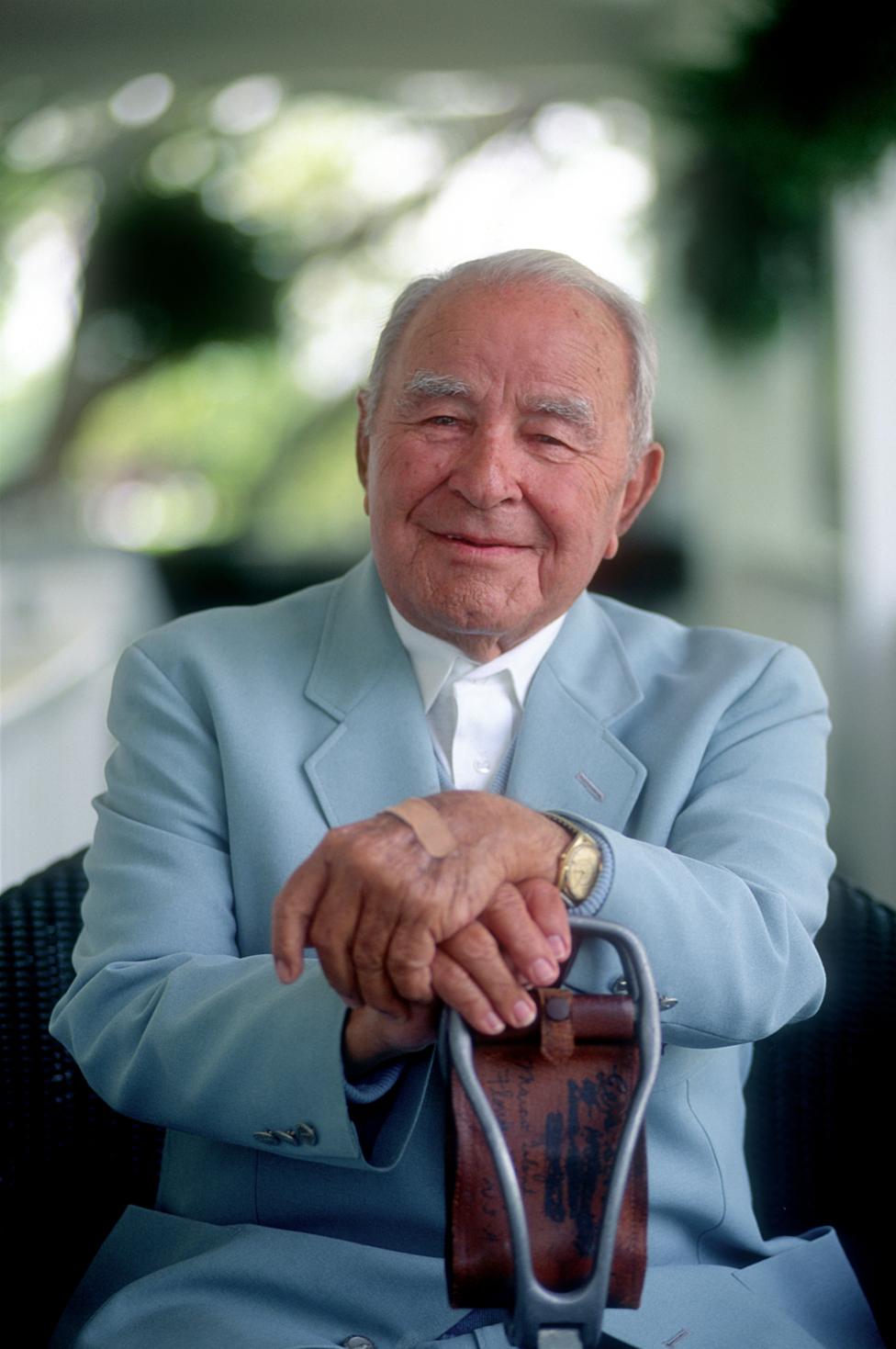
Gene Sarazen's victory at the 1935 Masters made him the first player to complete what became known as the career Grand Slam, having already won three US PGA Championships, two US Opens, and the 1932 Open Championship.
I vividly remember spending time with 1935 Masters champion Gene Sarazen on the Augusta National clubhouse balcony in 1994.
The seven-time major winner and founding member of the six-strong Grand Slam club was in his 90s at the time.
We spent an hour discussing how he invented the modern sand wedge and about my golfing hero Walter Hagen, a contemporary of his. He shared many wonderful stories from their early years on tour.
I wanted to take him to the 15th fairway where he hit the 'shot heard around the world'—his second shot on the par-five hole that picked up three shots and helped him win the tournament's second staging—but it was not possible.
Instead, we talked, which relaxed him for the photographs. I ended up with a cool portrait and priceless memories.
Wondrous Woods
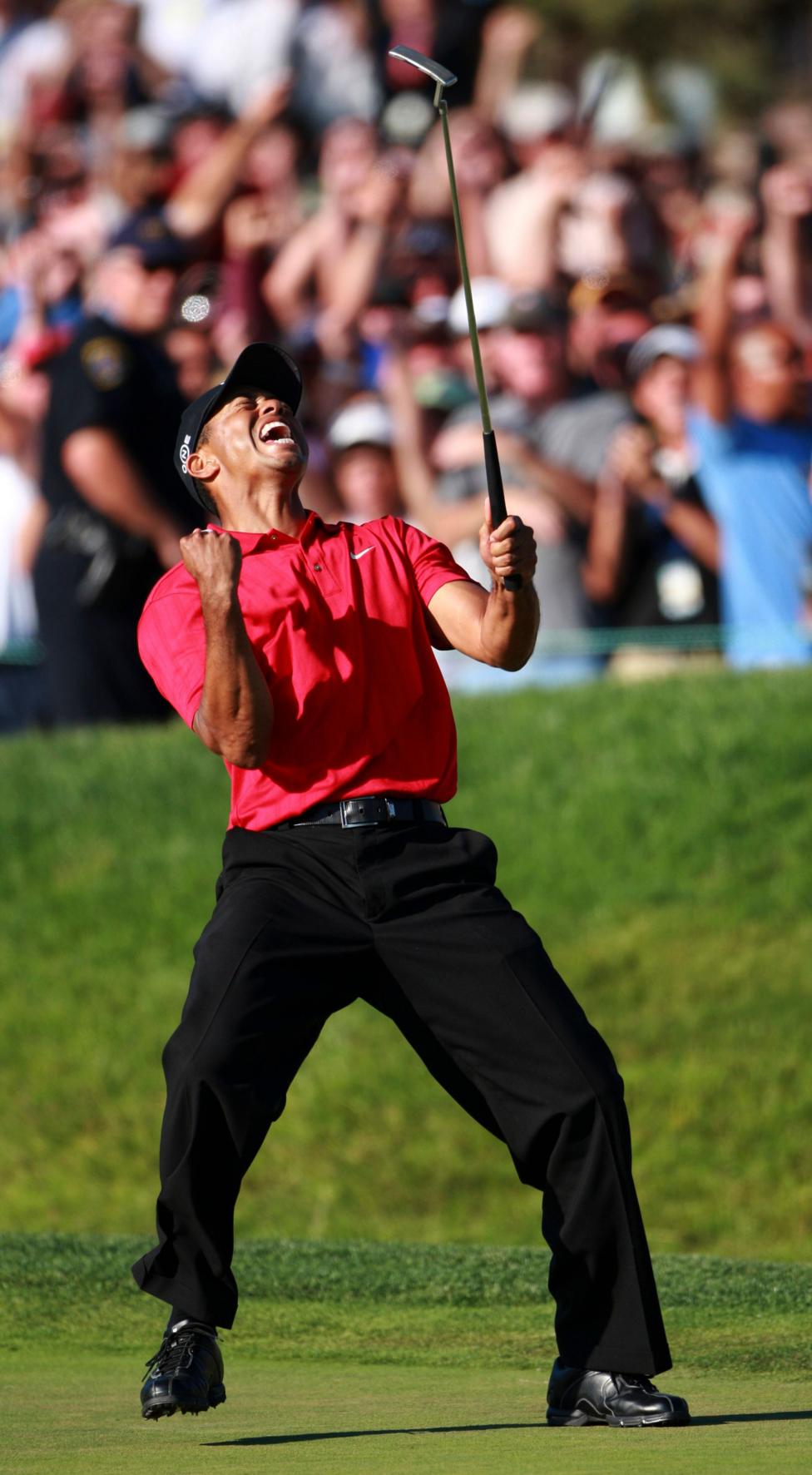
Tiger Woods' victory at the 2008 US Open was his 14th major triumph, following his first in 1997. His 15th major would not come for another 11 years.
While Tiger's comeback win at the 2019 Masters was extraordinary, his 2008 US Open victory was the most epic major win of his career.
We knew he was badly injured, but learning later the extent of his pain—he had surgery and missed the rest of the season—makes this win stand out.
This image captures his reaction after holing a 12-foot birdie putt on the 18th hole to force an 18-hole playoff with Rocco Mediate.
Inside-the-ropes access at the US Open allowed me to follow Tiger for several holes and position myself to capture this moment.
Lee Westwood, playing with Tiger, missed a 15-foot putt that would have also gotten him into the playoff.
Tiger went on to win the playoff on Monday, but few would have predicted that the 32-year-old with 14 majors would not surpass Jack Nicklaus' record of 18.
Happy Harrington
Padraig Harrington has won three senior majors in addition to his three major championships.
Throughout my career, photographing players in the heat of competition has not always been the focus.
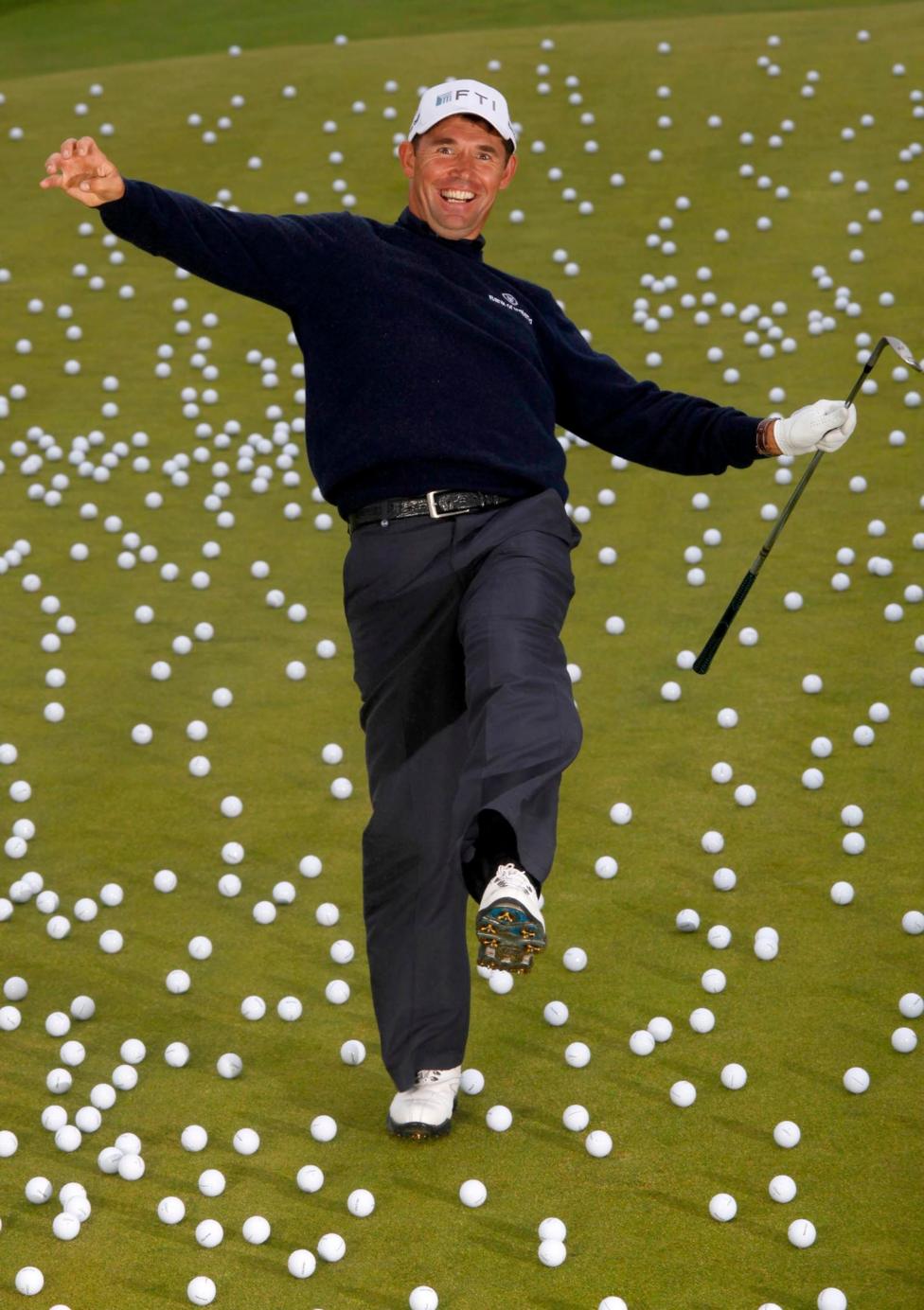
I have enjoyed feature sessions with players at their peak, such as this 2009 shoot with three-time major winner Padraig Harrington. The year before, he had won the US PGA Championship and his second consecutive Open Championship.
He was initially unaware of my plan when I placed around 1,000 golf balls on the green, but after discussing his practice routine, he understood and embraced the concept.
Conducting this session near his home in Ireland at The European Club helped create the right atmosphere for this photograph.
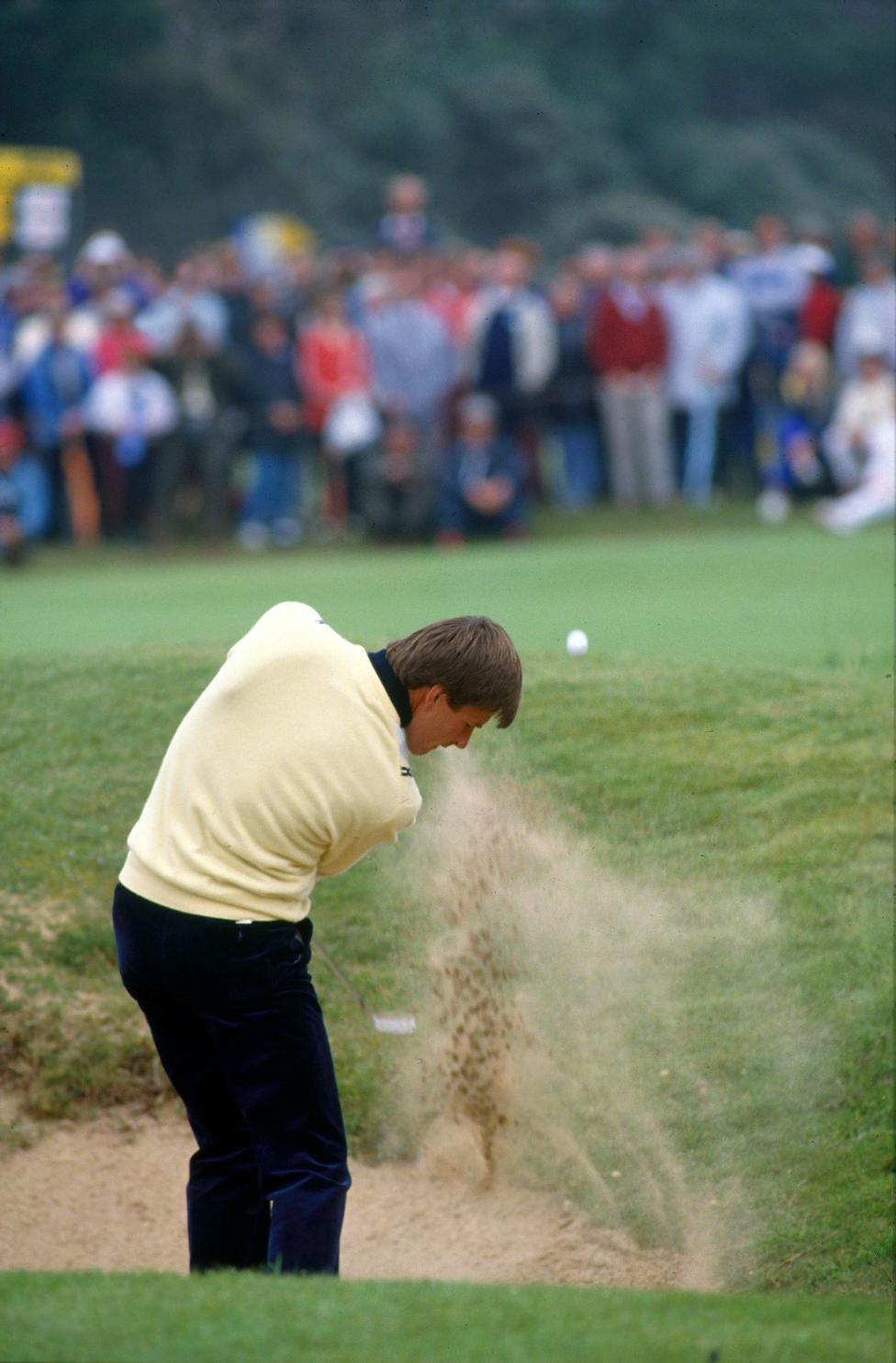
Dornoch drone
Royal Dornoch is regarded as one of the finest links courses in the world by many rankings.
I wanted to include a final image of a golf course close to my heart, showcasing drone photography, which is now integral to my workflow.
The skill required was greater when I started 50 years ago without autofocus and with limited film. However, drone photography still demands skill.
Flying a drone does not guarantee a good photo. The camera is how you visualize the image. Background, lighting, and composition must all be near perfect.
This picture of Royal Dornoch in northern Scotland was taken at sunrise. I live in the town, and it's a great place to return to after the intensity of a major.
It is difficult to select a favourite photo from the hundreds of thousands I have taken.
As one of the few remaining independent golf photographers, I have built one of the most comprehensive private collections in the sport.
While nothing beats that first major and capturing Seve's winning moment, photographing Rory's emotions at Augusta near the end of my career and documenting every one of Tiger's 15 major wins in between has been an immense joy and privilege.
This week, as I cover my 151st major championship—along with every Ryder Cup since 1985—I am honoured to receive the PGA of America Lifetime Achievement Award in Photojournalism.
Though some days are long and stressful, I love my work. I will know when to step away—but that time is not yet.