

Time to Address a Complex Safety Issue
Formula One has five weeks before the next race in Miami, and every moment will be crucial to address a highly complex safety problem highlighted by Oliver Bearman’s recent incident.
Bearman’s escape from a severe crash was considered fortunate. The sport must view this as a narrow avoidance of disaster and use the month ahead to determine how to prevent similar occurrences. The challenge is intricate and demands thorough attention.
The Incident at Suzuka
Bearman’s Haas car was traveling at 307km/h (191mph) when he encountered the slower Alpine car of Franco Colapinto. The closing speed between the two was approximately 50km/h, creating a dangerous situation early in the season. The speed differential was largely due to the deployment of electrical energy, an integral part of F1’s current regulations. Bearman was using his boost mode, while Colapinto was recovering energy, resulting in the significant speed gap.
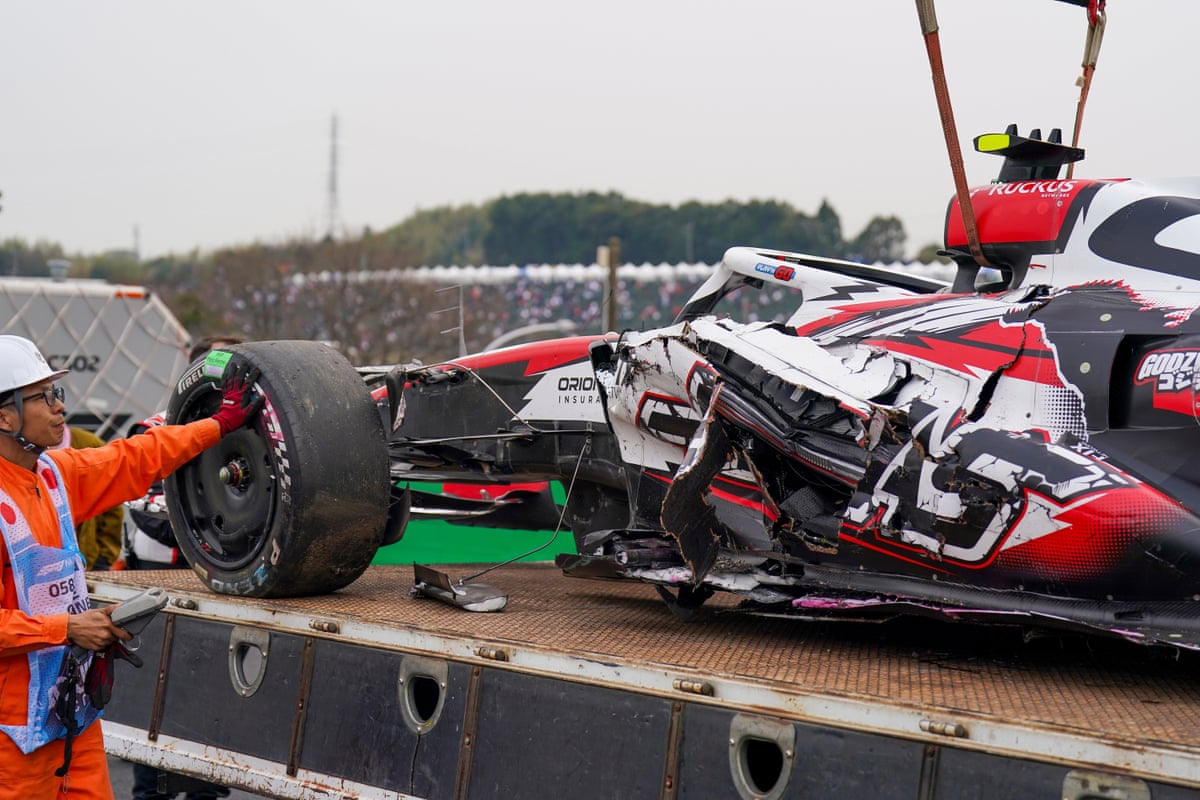
There was no foul play involved. Colapinto maintained a defensive line approaching the right-hand curve leading to Spoon corner without cutting across Bearman. However, Bearman approached so rapidly that he had to veer off the track to avoid a collision. He then crashed into the barriers with a 50G impact, from which he emerged with only bruises, though his car was destroyed.
Reactions and Safety Concerns
Ayao Komatsu, Bearman’s team principal, described the incident as a lucky escape. He emphasized that had Bearman collided with the rear of Colapinto’s car, the consequences could have been far worse, potentially launching Bearman’s car into the air and causing a more severe crash, also endangering Colapinto.
Williams driver Carlos Sainz highlighted the fortunate circumstances of the crash occurring at Suzuka, which offers wide run-off areas. He questioned the potential outcomes if such an incident happened on high-speed circuits like Baku, Singapore, or Las Vegas, where barriers are much closer to the track.
Sainz’s concerns reflect a recurring criticism this season. The FIA has acknowledged these issues and is closely monitoring the impact of new regulations on safety, which remains the governing body’s top priority. The first three races have been carefully assessed, with ongoing discussions expected following the initial events.
Collaboration and Time for Solutions
With a five-week gap before the Miami race, there is an opportunity for all stakeholders—the FIA, F1 management, teams, engine manufacturers, and drivers—to focus on resolving this issue.

The task is formidable. Andrea Stella, McLaren’s team principal, summarized the challenge succinctly:
“I don’t think a simple solution exists.”
Similarly, Komatsu expressed a measured approach:
“I don’t know what the solution is just yet, but we just have to be calm and discuss it all together as an F1 community.”
Technical Complexities
The complexity arises because no element of the new engine regulations operates independently. Adjustments in one area influence others, and each engine manufacturer has vested interests, though safety concerns would likely override these.
The core issue involves the use of electrical energy, which has divided opinion within the sport, alongside the intricate data analysis it requires. Proposals to alter the amount of energy recoverable during super-clipping—charging the battery at full throttle—have been suggested, but such changes could reduce car speeds.
The recovery rate was initially set lower to minimize speed differentials. However, some argue that increasing the rate during super-clipping might eliminate the need for drivers to lift and coast, which currently exacerbates speed differences between cars deploying energy and those recovering it.
The cause-and-effect relationships are highly complex, especially as teams adopt varied strategies for energy management. Additionally, increasing internal combustion engine power to reduce hybrid energy reliance is not a straightforward option.
Altering the power split from approximately 50-50 to, for example, 70-30 would necessitate higher fuel flow and larger fuel tanks, leading to car redesigns. Such changes would also conflict with the formula designed to attract manufacturers like Audi and Honda back to the sport. If pursued, these adjustments would likely not take effect before the next season.
Commitment to Safety and Ongoing Challenges
There is a genuine consensus and determination to address the safety concerns, especially following Bearman’s crash. The involvement of many knowledgeable individuals focused on this issue is a positive development in the competitive environment of F1.
The challenge remains that F1 is evolving throughout the season, with each race presenting new tests. The pressure to find effective solutions is high, as the sport cannot rely on fortunate escapes to avoid future incidents.


