Since 1954, Scotland’s World Cup Struggles
Since their inaugural World Cup appearance in 1954, Scotland has consistently faced misfortune at the tournament. Their inability to progress beyond the group stage has manifested through various challenges including poor management, bad luck, and psychological setbacks.
Throughout these campaigns, several key figures—often unfamiliar to Scottish fans before their impactful moments—have emerged as bogeymen, disrupting Scotland’s World Cup dreams.
Carlos Borges - A Hero and Scotland’s First World Cup Bogeyman
The earliest of these figures was Carlos Borges, a dynamic winger and prolific scorer from Uruguay. A product of the Penarol academy in Montevideo, Borges was playing senior football by age 14.
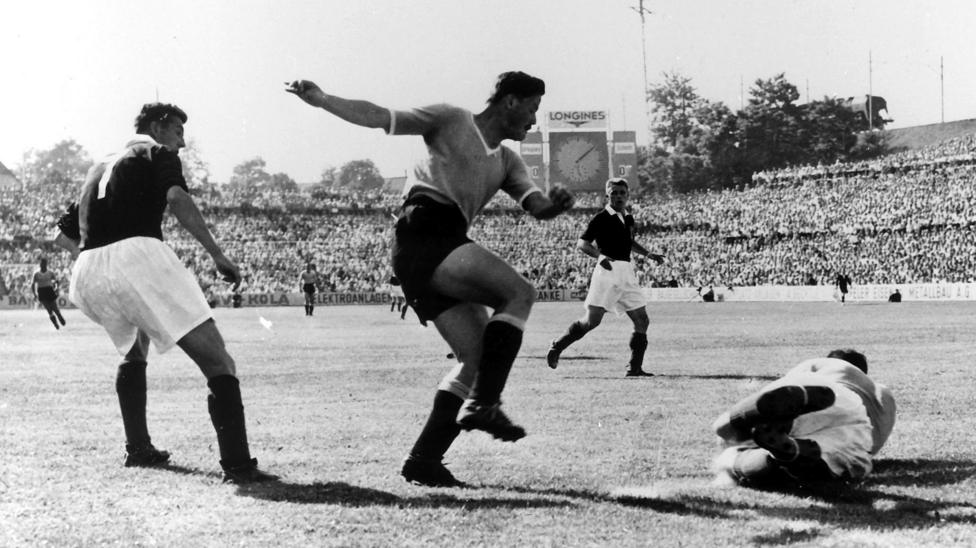
On June 19, 1954, during Scotland’s second match of their first World Cup in Basel, Borges scored a hat-trick in Uruguay’s 7-0 rout of Scotland. This remains Scotland’s heaviest defeat in international football.
Preparation for the match was severely lacking. In the intense heat, Scotland wore outdated boots and heavy cotton kits unsuitable for the conditions.
"It was a shambles," recalled Tommy Docherty, a Scotland player that day. "I was marking Juan Schiaffino, a player I knew virtually nothing about. Nobody told me how good he was."
Had Scotland researched better, they would have known Uruguay were reigning world champions, with Schiaffino a key figure who scored in the 1950 final against Brazil.
Borges was the standout player in that match, relentless and two-footed, scoring his hat-trick within an hour. He also scored in Uruguay’s 4-2 victory over England, featuring stars like Stanley Matthews, Nat Lofthouse, and Tom Finney.
He later won the Copa America in 1956 and the inaugural Copa Libertadores in 1960, scoring the competition’s first-ever goal. Beyond football, Borges is remembered as a hero in Uruguay for a remarkable act of bravery.
In July 1963, Borges was aboard the steamship Ciudad de Asuncion, built in Scotland in 1929, which traveled daily between Montevideo and Buenos Aires. On the foggy night of July 10, the ship collided with a sunken Greek freighter, caught fire, and began sinking.
As passengers jumped into the river, Borges was on deck when a woman recognized him and threw her three-year-old son into his arms before she perished, urging him to save the boy.
Borges clung to a piece of wood with the child for 11 hours until rescued by an Argentine ship. The following day, he witnessed the reunion of the boy with his father. The woman was among 70 fatalities.
"Save him for me," she shouted.
Haunted by the tragedy, Borges, aged 31, retired from football shortly afterward.
Iraj Danaeifard - Iran’s Historic Scorer
At the 1978 World Cup, Scotland faced Iran in Cordoba before a sparse but hostile crowd of 7,938. Still recovering from a heavy defeat by Peru, Scotland’s manager Ally MacLeod underestimated Iran, ignoring their three Asian Cup titles in 1968, 1972, and 1976.
Iran had lost their opener 3-0 to the Netherlands but attributed it to being overwhelmed by the Dutch team. They were not intimidated by Scotland.
Scotland initially led 1-0 via an own goal, but on the hour mark, Iraj Danaeifard dribbled past Archie Gemmill and scored past Alan Rough at the near post, marking Iran’s first-ever World Cup goal.
"An all-time low," said Rough later, reflecting on his misjudgment.
Failing to beat Iran was a major embarrassment for MacLeod, damaging his reputation and leaving Scotland needing a near miracle against the Netherlands, which they nearly achieved.
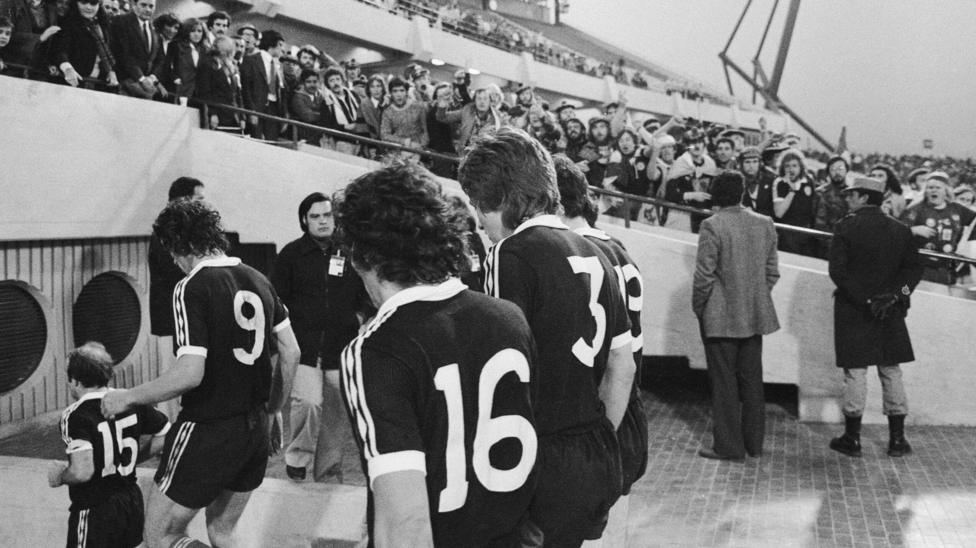
Danaeifard, a defender for Taj Tehran, had earned his first cap just a year earlier. The Iranian team played amid political turmoil, with riots destabilizing the country and security forces cracking down on protestors.
The national team was seen as a symbol of the Shah’s regime, which supported them as propaganda. Danaeifard and teammates reportedly faced death threats from radicals demanding to know their political loyalties.

He suspected the Shah’s secret police infiltrated their World Cup delegation and feared speaking openly.
After the tournament, Danaeifard returned to Tehran during the Islamic Revolution. The new regime viewed football as a symbol of Western imperialism, leading to the sport’s decline in Iran.
Danaeifard moved to the United States, playing four years for the Tulsa Roughnecks. While there, he learned of the death of former teammate and Iran captain Habib Khabiri, who was arrested, tortured, and executed at age 29 for supporting resistance movements.
Danaeifard’s story and the context of Iranian football at that time provide perspective on Scotland’s 1978 World Cup disappointment.
Omar Borras - Uruguay’s Ruthless Tactician in 1986
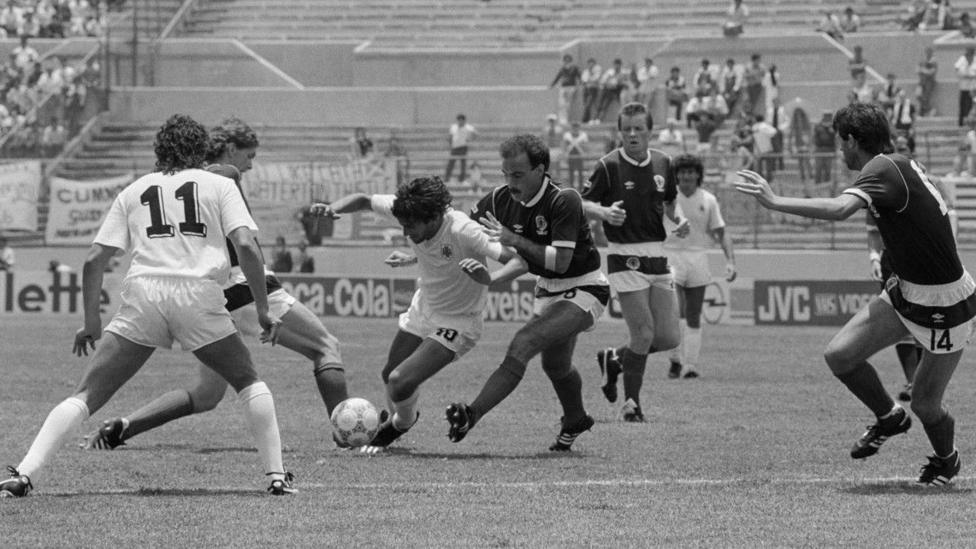
In the 1986 World Cup, Scotland faced Uruguay needing a win to advance. The match is remembered for Uruguay’s brutality and the early red card shown to Jose Batista after just 52 seconds.
The match ended in a 0-0 draw, enough for Uruguay to progress but sending Scotland home.
Uruguay’s manager Omar Borras, known as “The Professor,” prioritized grit over flair. Despite having talented players like Enzo Francescoli, Borras’s team employed aggressive tactics, earning widespread condemnation.
Following a 6-1 loss to Denmark five days earlier, Borras’s home was placed under armed guard due to death threats. His main objective was to avoid defeat against Scotland by any means.
The match’s aftermath was intense. Ernie Walker, Scottish FA secretary, labeled Uruguay “cheats and cowards” and “the scum of world football.” Scotland manager Alex Ferguson called them a disgrace.
Borras criticized referee Joel Quiniou for sending off Batista, calling the official a "murderer" for the decision.
FIFA banned Borras from Uruguay’s last-16 game against Argentina, which Uruguay lost 1-0. The media and fans condemned his anti-football tactics.
Francescoli expressed personal shame, saying he was ordered to chase long balls and fight aerial duels despite being a creative player.
Borras was sacked, becoming an anti-hero in Uruguay football history, though his actions did little to ease Scotland’s heartbreak.
Juan Cayasso - Costa Rica’s Iconic Scorer in 1990
Costa Rica qualified for their first World Cup in 1990 with relative ease, defeating Panama 3-1 on aggregate and advancing after Mexico was disqualified for age rule violations.
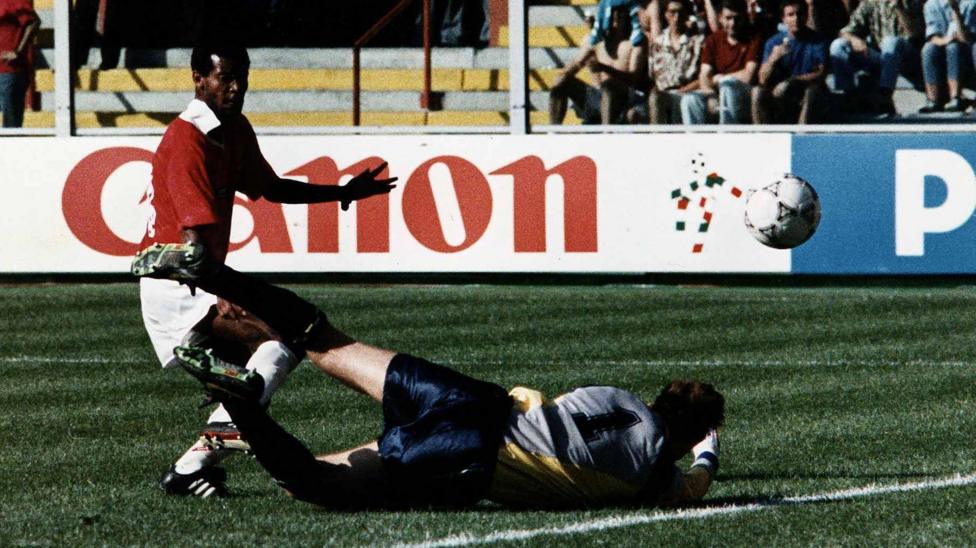
Juan Cayasso became a national hero by scoring Costa Rica’s first-ever World Cup goal against Scotland on June 11, 1990, at Stadio Luigi Ferraris.
His goal secured a shock victory, eliminating Scotland early once again.
"Children stop me in the street to greet me and say, 'you're Cayasso, the one my dad told me scored a goal in 1990'," he said.
Cayasso described the goal as destined, recalling the poor performance of his team before the tournament and Scotland’s familiar collapse.
"I don't know if I remember it because I always see it on video," he said. "My teammate Claudio Jara knocked the ball to me – we call it a taquito here. I was close to him, stepped back, and when he did the taquito I read it. At first, I was frightened. But then I had to react; the ball was at my foot. Jimmy (Leighton) was out. Then it hit his belly and went over him. I looked at the referee, who was going to the centre of the field. First I was frightened, then I didn't believe it, then, 'yes, goal'. I had gone far away in that moment. My mind was all about Costa Rica. I wrote a book called 'The Goal from Italia 90: Destiny, Luck or Chance'. It was so crazy."
The goal helped Costa Rica reach the knockout stage, where they lost 4-1 to Czechoslovakia. The country’s president rewarded the team with Toyota Corollas.
Cayasso’s performance earned him a move to Germany’s Stuttgart Kickers, where he won promotion to the Bundesliga.
He earned 49 caps for Costa Rica, but this goal remains his defining moment, remembered vividly in both Costa Rica and Scotland for very different reasons.