

Match Kickoff in East Rutherford
The game has started in East Rutherford, with both Group I teams from Pots 2 and 3 eager to make their mark. The atmosphere promises to be vibrant, with one fanbase rallying behind their Viking heritage and the other ensuring a lively presence.
Much of Norway's strength lies through the center of the pitch, driven by Ødegaard's playmaking and the scoring threat posed by Haaland and Sørloth. Attention should also be given to Norway's left wing, where Antonio Nusa aims to challenge Senegal's offensively minded right-back Krépin Diatta.
Nusa faced difficulties dribbling past Iraq's defense earlier, often operating nearer to the center line than inside the opponent's box. However, he completed five passes into the final third and was dispossessed only once. His involvement in build-up play could disrupt Senegal's midfield and create more space for Ødegaard.
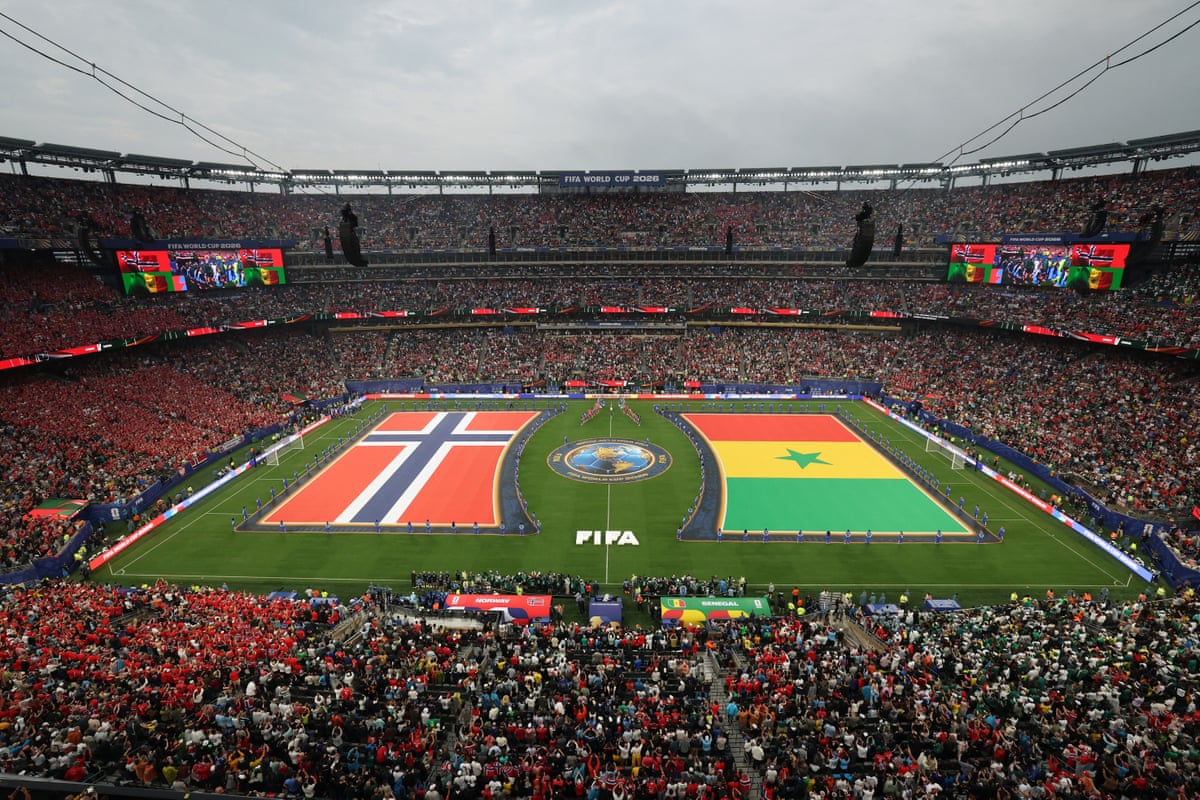
Historical Context of Norway vs Senegal
This encounter marks only the second meeting between Norway and Senegal, occurring more than twenty years after their first match. On 1 March 2006, as part of preparations for the 2006 World Cup in Germany, Senegal defeated Norway 2-1 at Stade Léopold Sédar Senghor, their national stadium. The goalscorers in that match were Moussa N’Diaye and Babacar Guèye for Senegal, with Erik Hagen scoring for Norway.
Weather and Match Status
Weather conditions appear to be the only potential hindrance for France in Group I, with their match against Iraq currently delayed as players remain on the pitch in Philadelphia. In contrast, conditions in East Rutherford are clear, and the Norway versus Senegal match is underway.

Significance of Confederation Matchups
Matches between teams from different confederations have grown increasingly intriguing. For Senegal, coming off a tumultuous Africa Cup of Nations final, this game presents an opportunity to make a statement by defeating a rising UEFA side. Norway aims to demonstrate collective strength beyond reliance on their star players: Erling Haaland, who scored twice in their opening match against Iraq, alongside Martin Ødegaard and Alexander Sørloth.
A victory would secure Norway's progression to the knockout stage, while Senegal's result today will neither eliminate nor advance them. The encounter promises to be engaging.
Expert Commentary on African Teams' World Cup Prospects
Jeff will join the coverage shortly. Meanwhile, here is Jonathan Wilson's analysis of the significance of this tournament for African teams:
On Monday evening local time at New York New Jersey Stadium, Senegal will face Norway in a game that is not only crucial in terms of who qualifies from Group I, but will go a long way in determining how African performance at this World Cup is viewed. This is not entirely fair – nobody can seriously doubt that Senegal are an extremely adept side, and it may be that the court of arbitration for sport decides that they are indeed – but there is a sense that Africa could do with a big performance.
No region benefited as much from the expansion of the World Cup as Africa. In Qatar in 2022, five of the 32 slots (16% of the field) went to the Confederation of African Football (CAF). Of the 48 slots this time around, nine went automatically to CAF, and they secured a 10th when DR Congo beat Jamaica in an interconfederational playoff in March. CAF had lobbied for years for more representation, arguing it was unfair that it had only five slots for its 54 members, while CONMEBOL, the South American confederation, had four plus a playoff for 10 members (21% of the field). The response was that CONMEBOL sides had won the World Cup nine times, while CAF sides had only made the quarter-finals on three occasions. By the end of the last World Cup, CONMEBOL were up to 10 victories and CAF had its first semi-finalist.
You can read the rest of the article below:


