Infantino Opens Door to 64-Team World Cup
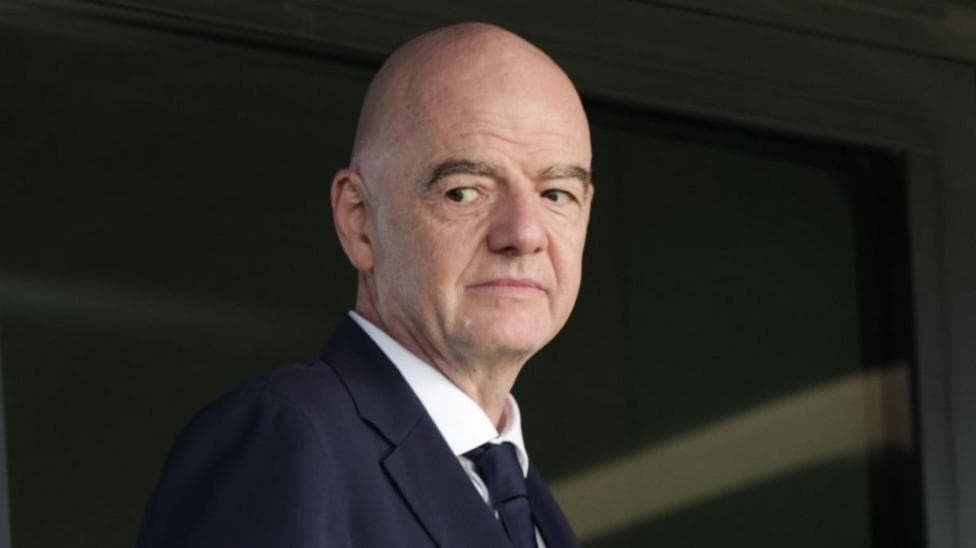
Gianni Infantino, who has served as Fifa president since 2016, has indicated that plans for a 64-team men's World Cup will be examined in detail following the 2026 tournament. Infantino emphasized the importance of making football accessible globally.
The idea of expanding the World Cup to 64 teams was initially proposed last year. Infantino noted that the success of the upcoming 48-team tournament supports exploring how a 64-team format could be implemented.
"That's definitely an issue that will be examined and discussed in the relevant committees after this World Cup," Infantino told Swiss broadcaster Blue Sport when asked about the possibility of expanding the tournament to 64 teams.
"When organizing a World Cup, it's important to organize it for the whole world - not just Europe and South America, but effectively the entire world. Every nation should be allowed to dream of participating in the World Cup.
You can see that the quality of the teams is extremely high, and it's getting higher and higher, all over the world. If you don't give smaller countries a chance to participate in the World Cup, they'll lack the incentive to keep improving."
Infantino highlighted the success of the first 48-team World Cup, citing the advancement of nine out of ten African teams to the knockout stages as an example.
"At the last World Cup, there were only five teams from Africa. That just goes to show how important it is to include all teams - to give them this opportunity to participate."
The Fifa Council approved expanding the World Cup from 32 to 48 teams in 2017. In April 2025, the South American football governing body, Conmebol, officially proposed expanding the 2030 World Cup to 64 teams, though no decision has yet been made.
The 2030 World Cup will be co-hosted by Spain, Portugal, and Morocco, with the opening three matches hosted by Argentina, Uruguay, and Paraguay to commemorate the centenary of the competition.
However, the proposal has faced criticism. UEFA president Aleksander Ceferin described the idea as "a bad idea" for both the tournament and the qualification process. Similarly, Asian Football Confederation (AFC) president Sheikh Salman bin Ibrahim Al Khalifa warned that further expansion could cause "chaos."
Victor Montagliani, president of the Confederation of North, Central America and Caribbean Association Football (Concacaf), expressed concerns that the expansion "doesn't feel right" and could harm "the broader football ecosystem."

Conversely, Andrew Giuliani, executive director of the White House's World Cup task force, stated that the United States might consider bidding to host the 2038 World Cup and could "handle it" if the tournament expanded to 64 teams.
Fifa maintains that it will discuss expansion proposals with stakeholders and is obligated to consider suggestions from council members. The Fifa Council will make the final decision, but no immediate decision is anticipated.
Expansion Would Pose Challenges for Hosts
When Infantino was elected in 2016, his manifesto included increasing the World Cup size from 32 to 40 teams. Within a year, this target rose to 48 teams and was approved by the Fifa Council for implementation starting with the 2026 finals.
Since then, speculation has persisted that Fifa aims to expand the tournament further and more rapidly.
Although a 48-team World Cup for 2022 was discussed, it was acknowledged that Qatar could not host such a large event alone.
This highlights a key issue: as the World Cup grows, hosting becomes increasingly complex.
The 2026 tournament will be held across three countries spanning a vast area. The 2030 edition will take place in six countries—Morocco, Portugal, Spain, and the centenary hosts Argentina, Paraguay, and Uruguay.
How Saudi Arabia would manage hosting a 64-team tournament with 128 matches in 2034 remains uncertain.
Nevertheless, expanding the tournament is a popular move for Infantino for two main reasons.
First, it allows more countries the opportunity to compete at the World Cup. A 64-team World Cup would enable nearly one-third of the 211 Fifa-affiliated nations to qualify.
Second, a larger World Cup generates increased revenue, which can be distributed among member associations.
- When the World Cup finishes, the football continues on
- How to watch the World Cup on the BBC and ITV
- 'Every idea is a good idea' - how would 64-team World Cup look?