Adopting Other Nations in the Absence of Home Teams
On 17 June, a packed crowd in Dhaka erupted in celebration as Argentina's Lionel Messi scored his first goal of the 2026 FIFA World Cup, calmly placing the ball past the Algerian goalkeeper. Yet, not a single Argentine was present among the fans. Instead, the crowd, many donning Argentina's iconic albiceleste (white and sky blue) jersey, were local supporters gathered at one of the numerous open-air watch parties in Bangladesh’s capital.
Similar fervent street gatherings have been witnessed in cities across India and Indonesia. Fans in these countries have 'adopted' teams like Argentina partly because their own nations have consistently failed to qualify for the World Cup.
Among the world’s ten most populous countries, only two— the United States and Brazil—are participating in the current tournament. Russia and Nigeria have featured in several past World Cups. China and Indonesia have each appeared only once in the tournament’s history.
India, the world’s most populous nation, along with Bangladesh, Ethiopia, and Pakistan, have yet to join the World Cup stage. India technically qualified for the 1950 World Cup in Brazil but withdrew less than a month before the tournament began.
"It is simply unacceptable that a country with millions of football fans should lag so far behind in football,"
renowned Bangladeshi actor, writer and football fan Audite Karim told the BBC.
This raises the question: why does population size not reliably predict footballing success?
Does Size Really Matter?
In theory, a larger population offers a greater pool of potential athletes. Seven of the eight nations to have won the World Cup—Argentina, Brazil, England, France, Germany, Italy, and Spain—have relatively large populations. The sole exception is Uruguay, which will be discussed later.
However, population is only one factor among many. British academic and economist Stefan Szymanski explains that football parallels national economies: success requires people, capital, and infrastructure.
"Football is very similar to how national economies work. For them to thrive, you need people. But then you also need capital and infrastructure,"
said Szymanski, co-author of Soccernomics, a best-selling book analyzing sporting success and failure.
In football terms, capital and infrastructure translate to training facilities and talent identification systems.
Szymanski notes that most successful football nations share another trait: wealth. In Soccernomics, he and co-author Simon Kuper found that countries typically require a minimum annual average income per capita of $15,000 to win major tournaments.
Brazil and Argentina, however, have won eight World Cup titles combined despite average incomes below this threshold. This highlights the importance of a third factor: know-how.
"And that comes with experience. The nations that have ever won the World Cup are the ones that were dominant in playing the game 100 years ago, before colonialism ended."
A Game of Catch-Up
Successful football nations, particularly those regularly participating in tournaments like the World Cup, have played more matches historically, especially in highly competitive regions such as South America and Europe.
This explains why Uruguay, a South American country with a population of 3.5 million, won two World Cups (1930 and 1950). Uruguay’s first international match—a 6-0 loss to Argentina—occurred in 1902, twelve years before Brazil played its first representative game.
African and South Asian nations, many of which have existed for a shorter time or where football developed later, have had to strive to catch up.
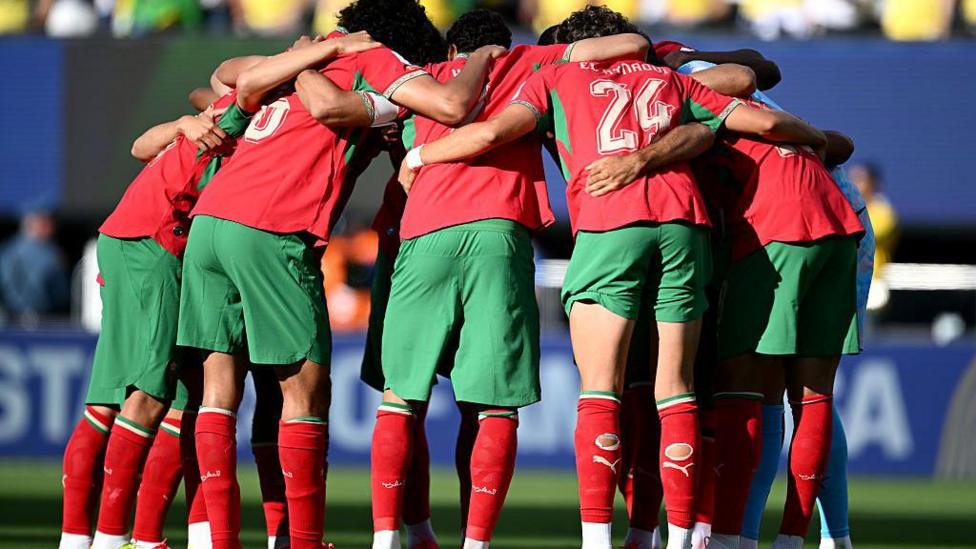
Some have made notable progress: Morocco, which gained independence from Spain and France in 1956, became the only African nation to reach a World Cup semi-final in Qatar 2022. South Korea is the only Asian nation to finish in the top four, achieving this as co-host in 2002.
However, other countries such as Indonesia, India, and Bangladesh have not made similar advances.

"But then we see other countries like Indonesia, India, Bangladesh, and so forth, which are not catching up,"
Szymanski observed.
He attributes this to a lack of resources and capabilities, and even with increased investment, these countries would face challenges due to insufficient know-how.
Ethiopia's Woes
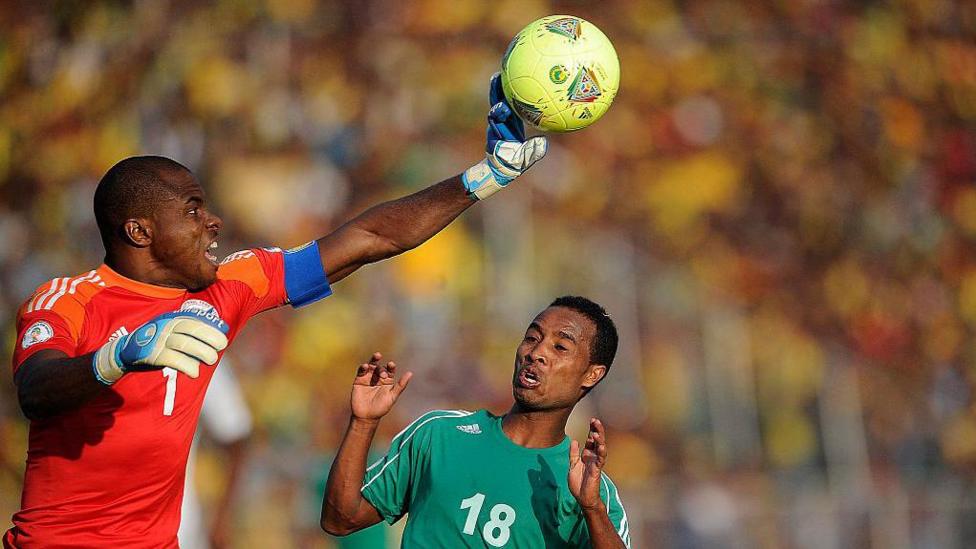
Ethiopia has never qualified for the World Cup. The nation won the African Cup of Nations in 1962, but its closest chance to reach the World Cup came during the 2014 African qualifiers, when Ethiopia reached the final qualifying round but lost to Nigeria over two legs.
Currently, Ethiopian football suffers from acute underinvestment. Local media report that the ongoing season of the Ethiopian Premier League has been affected by a shortage of suitable stadiums.
"This season, we have staged more than 380 matches using only three approved stadiums,"
said Kifle Seife, Ethiopian Premier League Chief Executive Officer, to The Reporter newspaper on 27 June.
The shortage also impacted the men’s national team, which had to play its home matches in the African qualifiers in Morocco.
Cricket: An Obstacle or an Excuse in South Asia?
Some in South Asia believe cricket’s popularity hinders football development. India is a dominant cricket nation, with the Indian Premier League (IPL) being the world’s richest professional league.
Former India international Shyam Thapa explained that the IPL’s success has led middle-class and upper-middle-class parents to steer their children away from football towards cricket.
"They [the parents] need to understand that there can be good money if they can make a career in football too,"
Thapa told .
Audite Karim counters this by pointing out that Australia and New Zealand are advancing in football and qualifying for the World Cup despite being cricket powerhouses.
"The popularity of cricket is purely an excuse,"
she said regarding Bangladesh, which also adores cricket.
"We simply do not have the preparation and structural framework required for a country to play in the [football] World Cup."

Is China a Sleeping Giant?
China’s case is puzzling. Despite becoming one of the most successful countries in Olympic history, its men’s football team has not achieved similar success.
Mark Dreyer, a Beijing-based Chinese football expert, believes China has the potential to produce world-class footballers.
"There's no reason [in theory] why China can't produce world-class footballers,"
Dreyer said.
He attributes China’s underperformance to excessive state control and political interference in football decisions.
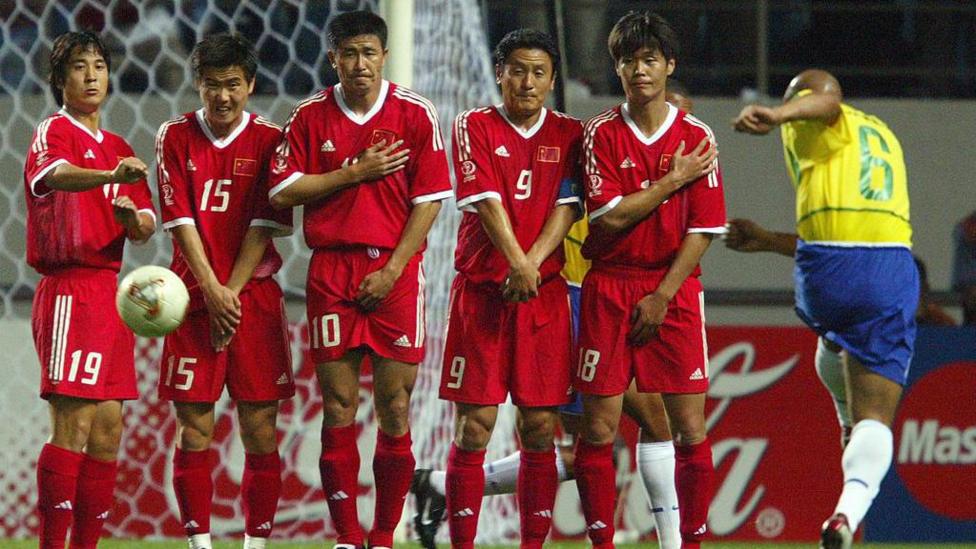
China has not qualified for the World Cup since 2002, despite heavy investment since the 2010s, including recruiting high-profile South American and European players to raise league standards.
Like China, Indonesia has appeared once in the World Cup—in 1938 as the Dutch East Indies, a Dutch colony. Indonesia performed well in 2026, reaching the final qualifying round, largely due to recruiting European players of Indonesian heritage rather than relying solely on homegrown talent.
"At times there were eight or nine European-born players in Indonesia's starting XI,"
said Jerome Wirawan, News Editor at the BBC's Indonesian service.
Pakistan and Bangladesh exited the Asian qualifiers at the group stage without any wins in six matches. Pakistan was banned from international football three times by FIFA between 2017 and 2025 due to political infighting within its governing body.
Enjoying the Party—One Way or Another
For football fans in many countries, World Cup glory remains distant. In the meantime, Audite Karim suggests the consolation is to enjoy the tournament experience.
"In light of reality, I do not see any possibility of seeing Bangladesh play a World Cup in my lifetime,"
she said.
"But Bangladeshi football fans will still want to experience every bit of the joy of the tournament."