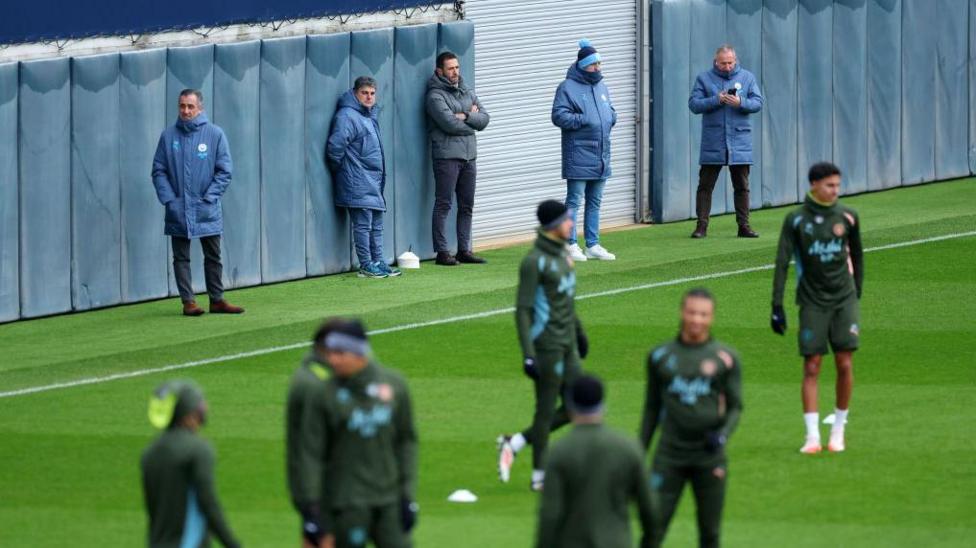
Investigation Launched into Alleged Spying Incident Before Championship Play-Offs
The English Football League (EFL) has initiated an inquiry following allegations that Southampton engaged in spying on Middlesbrough prior to their Championship play-off semi-final first-leg match at Riverside Stadium on Saturday.
Reports of football clubs spying on opponents often evoke images of covert operations involving secretive surveillance. However, Middlesbrough's recent experience suggests such activities can sometimes be straightforward.
Southampton has been charged by the EFL for allegedly observing Middlesbrough's training session 48 hours before their crucial match, recalling the 2019 incident when Leeds United's manager Marcelo Bielsa admitted to sending staff to monitor every opponent's training sessions during that season.
Details of the Alleged Incident
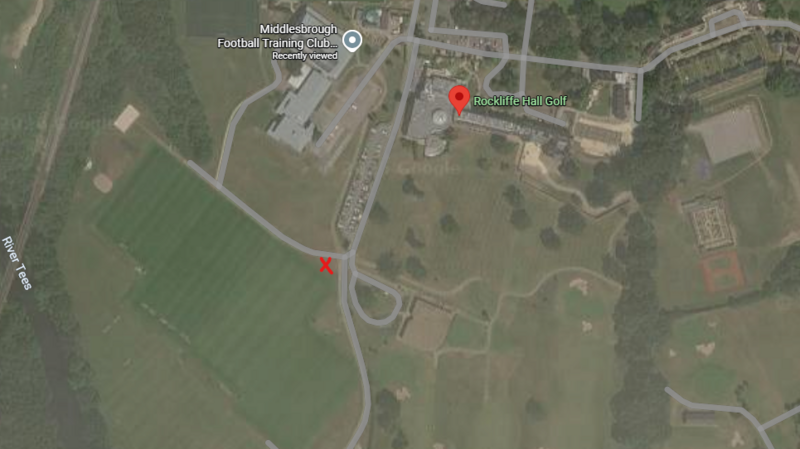
Middlesbrough conduct their training at Rockliffe Hall in Hurworth-on-Tees, near Darlington. Unlike typical secluded training grounds, Rockliffe Hall is a luxury hotel, spa, and golf resort owned by Middlesbrough chairman Steve Gibson and is accessible to the public.
This openness reportedly made it relatively easy for the alleged spying to occur. According to BBC sources, on a Thursday morning, an individual, believed to be a Southampton analyst, parked at the golf club and walked approximately a couple of hundred yards to a small hill overlooking Middlesbrough's training pitches. The training fields and golf course are adjacent, separated only by a hedgerow.
Contrary to some reports suggesting the individual was hiding in bushes, sources indicate he stood openly at the top of the hill, which offers a clear vantage point over the training area. The individual was allegedly seen pointing a mobile phone at the training session while wearing in-ear headphones, leading Middlesbrough staff to suspect he was live-streaming the session.
The situation escalated when a Middlesbrough staff member approached the person, who refused to identify himself. The individual then deleted some content from his phone and fled back toward the golf club, where he reportedly changed clothes in the restroom before leaving the premises.
Middlesbrough's photographer captured images of the person, who was subsequently identified through the Southampton website and CCTV footage. The club's staff reported the incident to the EFL promptly.
Southampton's first-team squad was scheduled to travel to the north-east the following day, suggesting the alleged spying was an early reconnaissance effort. Both clubs have been contacted for comment, but Southampton has not issued a public statement.
Potential Sanctions for Southampton
Incidents of spying in football are rare and have only recently been addressed explicitly by regulations. Before 2019, there was no specific rule prohibiting clubs from observing opponents’ training sessions.
That year, Leeds United was fined £200,000 by the EFL for "not acting in good faith" after Marcelo Bielsa admitted to sending staff to watch opponents train. Following this, the EFL introduced rule 127, which prohibits clubs from observing or attempting to observe another club’s training session within 72 hours before a match.
On Friday evening, Southampton was charged with breaching rule 127 as well as rule 3.4, which mandates clubs to "act towards each other with the utmost good faith." Normally, clubs have 14 days to respond to such charges, but the EFL has requested the independent disciplinary commission to expedite the process.
The exact disciplinary measures remain unclear if Southampton is found guilty. The precedent set by Leeds’ fine exists, but that case predated the specific regulation. The EFL has not commented on the ongoing case, and there is currently no indication that Southampton will be excluded from the play-offs.
One of football’s most notable recent spying cases occurred at the 2024 Paris Olympics, where New Zealand’s women’s team detected a drone over their training session before their opening game against Canada. French police traced the drone operator to a member of the Canadian team’s staff. As a result, Canada’s head coach Bev Priestman was suspended, two staff members were sent home, and FIFA deducted six points from Canada, imposing a fine of 200,000 Swiss francs (£189,000). Priestman and the two staff members received one-year bans from football.
Measures to Protect Training Grounds
Security at training facilities varies widely depending on the club and location. Middlesbrough’s Rockliffe Hall, due to its public leisure amenities and open surroundings, presents challenges in maintaining privacy during training sessions.
In contrast, top Premier League clubs employ extensive security measures to prevent unauthorized observation. For example, Manchester United’s Carrington training ground features large fences, bushes, ditches, and upgraded security following anti-Glazer protests in 2021. The club also prohibits drones near the facility, which it uses for its own filming purposes.
Chelsea’s Cobham training ground is secured with electric gates, fencing, thick hedges, and a fabric screen that obstructs views from a nearby railway station. Despite these precautions, trespassing incidents were reported as recently as May 2025.
Arsenal’s training ground has manned entrances, security personnel, high fences, and bushes shielding the pitches. Manchester City’s Etihad Campus training facility is enclosed by 3,000 metres of security fencing and walls, preventing any unauthorized viewing unless escorted by security.
Liverpool’s AXA Training Centre in Kirkby also employs specialized fencing to ensure privacy. Teams training in open areas, especially during international duty, often use screens to block views. For instance, England raised the height of steel security fences at their 2018 World Cup base in Russia from 6ft to 13ft to deter observers.
As Middlesbrough’s case illustrates, the effectiveness of such measures is often limited by the physical environment surrounding the training ground.