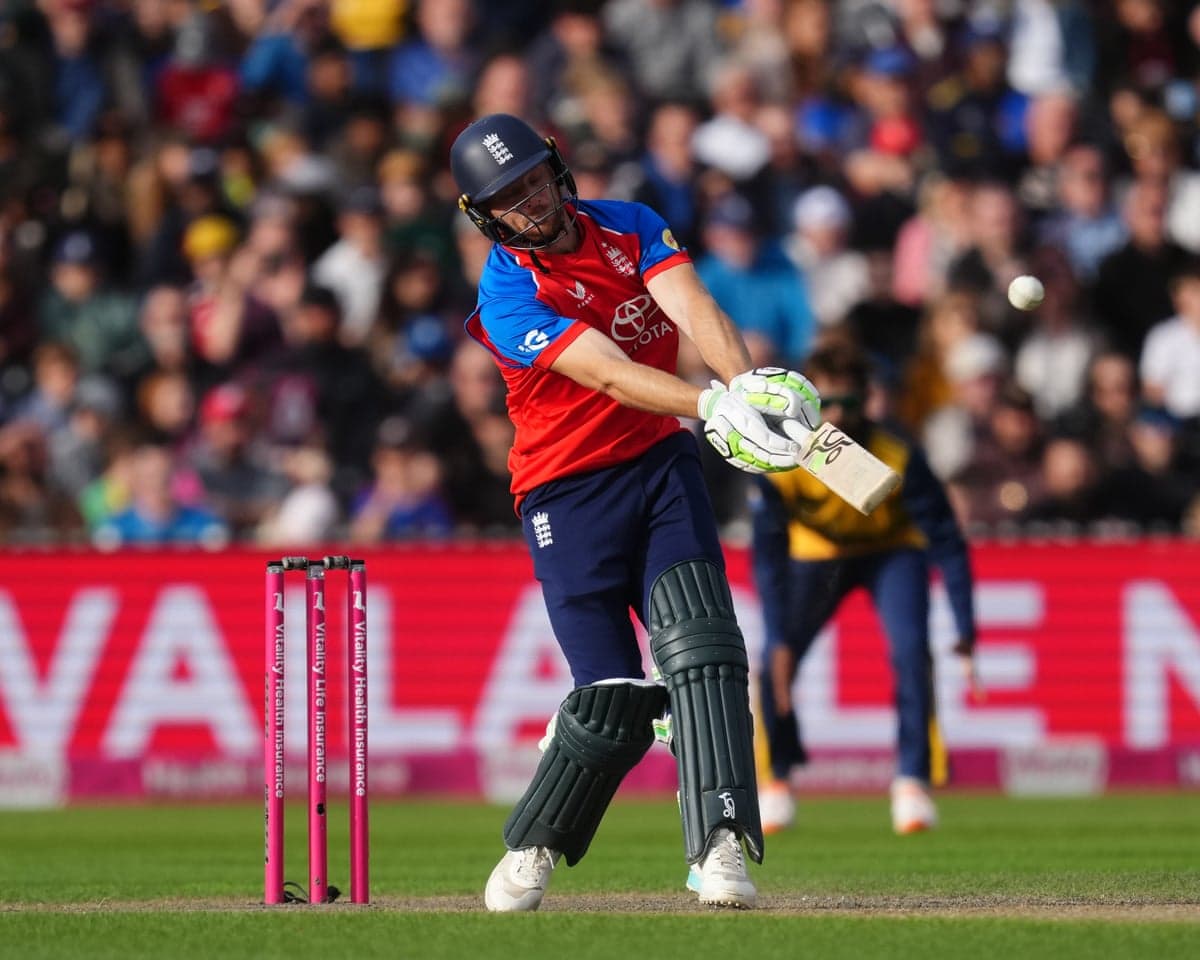
Group B: England Defeat New Zealand by Nine Wickets
England secured a commanding nine-wicket victory over New Zealand at the Oval on Saturday night, finishing on 164 for 1 against New Zealand’s 163 for 6. The match featured an unbeaten 89-run innings from opener Danni Wyatt-Hodge, who played a pivotal role in ousting the defending champions from the Women’s T20 World Cup.
The crowd of 21,018 set a record for a Women’s T20 World Cup group stage match, underscoring the growing popularity of the tournament.
With this win, England topped Group B and are poised to face either India or South Africa in the semi-finals next week, contingent on the outcome of the Group A match between Australia and India scheduled for Sunday. The result also confirmed West Indies’ qualification for the semi-finals, eliminating New Zealand from the competition.
New Zealand Batting Performance and Fielding Impact
New Zealand elected to bat first but were restricted to 163 for 6, largely due to England’s sharp fielding efforts. Charlie Dean’s direct hit from extra cover resulted in the run out of Brooke Halliday, exemplifying England’s defensive intensity.
The reigning champions exhibited moments of strong play but suffered significant setbacks as wickets fell in quick succession. They collapsed from 70 without loss to 70 for 3 within four deliveries. Further losses of Halliday and Sophie Devine in the 16th over impeded their momentum.
England’s Chase and Key Partnerships
In response, Wyatt-Hodge maintained her excellent form, scoring an unbeaten 89 and bringing her tournament total to 282 runs. Sophia Dunkley, who continued to fill in for the injured Nat Sciver-Brunt, contributed significantly with the bat, creating a 128-run partnership with Wyatt-Hodge that effectively sealed the match.

England’s head coach, Charlotte Edwards, faces a selection dilemma ahead of the semi-finals, as Dunkley’s consistent performances raise questions about reinstating Sciver-Brunt, who is expected to return.
A brief rain shower interrupted play seven overs into England’s run chase, with the team well ahead on the Duckworth-Lewis-Stern (DLS) method. The delay lasted 15 minutes, after which England resumed and completed the chase with 16 balls remaining.
New Zealand’s Disappointment and Historic Context
For New Zealand, the defeat was a significant disappointment. Earlier in the day, Ireland secured their first-ever T20 World Cup victory by defeating West Indies at Bristol. This result had offered New Zealand a lifeline, as a win against England would have allowed them to advance to the semi-finals. The New Zealand team briefly celebrated having their fate back in their hands during warm-up but were unable to capitalize.
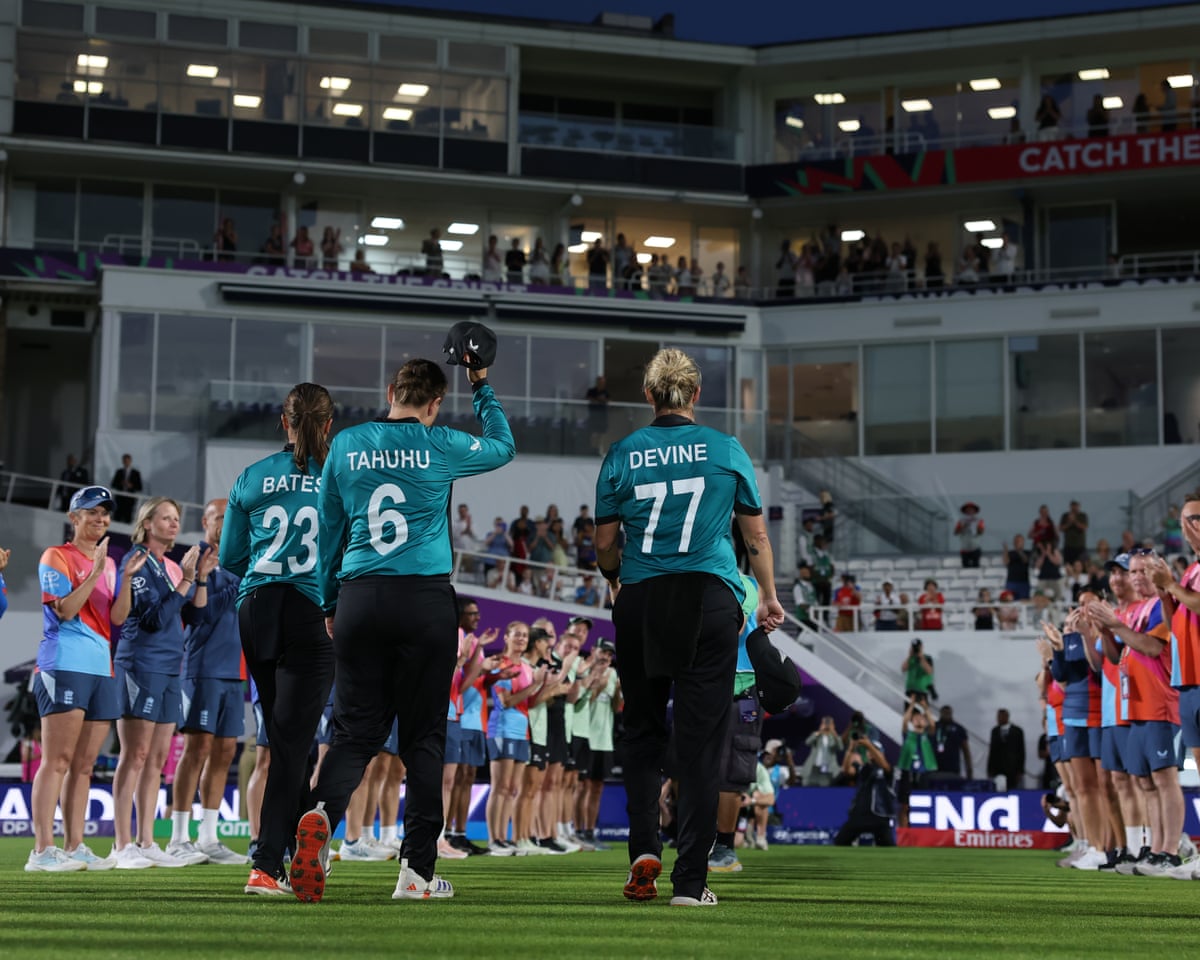
Adding to the poignancy of the occasion, this match marked the final T20 World Cup appearances for three distinguished New Zealand players: Sophie Devine, Suzie Bates, and Lea Tahuhu, all of whom have announced their retirements following the tournament.
Devine, at 36, demonstrated her enduring power-hitting capabilities by striking three sixes and scoring 30 runs off 14 balls. Bates, who had been moved down to number seven in the batting order and was not a guaranteed selection throughout the tournament, provided crucial late-innings acceleration by scoring 15 runs off Freya Kemp’s 18th over. Bates was then run out by Amy Jones on the final ball of the innings.
However, Devine’s bowling did not mirror her batting success, as she bowled deliveries that were short and wide, allowing Dunkley and Wyatt-Hodge to capitalize. Bates, whose slow off-spin had been effective against Ireland earlier in the tournament, was not called upon to bowl during this match. Tahuhu, a veteran with 100 T20 international wickets, concluded her New Zealand career by bowling a leg-side wide.
At the conclusion of the match, England players formed a guard of honour on the Oval outfield to acknowledge the contributions of the three New Zealand veterans. Despite the ceremonial farewell, the outcome was not the ideal conclusion to the era of these prominent New Zealand cricketers, often affectionately referred to as the Kiwi “grandmas.”