

1. Lintott on a Trot
When I first saw Jake Lintott bowl, television commentators emphasized his status as a part-time player with a school job, evoking the image of a 1950s gentleman cricketer or a determined qualifier who starts strong but fades. However, the visuals told a different story. His left-arm wrist spin displayed creativity and confidence, qualities that are quite rare in England. His demeanor reflected the resilience that often comes from a late start and multiple setbacks. While formal pathways are important, they do not suit everyone, especially those committed to mastering cricket's most challenging discipline.
I was surprised Warwickshire released him to Kent, a team that has recently made many astute decisions. Their choice to sign Lintott has already paid dividends; his three wickets reduced Surrey from 44-2 to 53-5, a crucial mid-innings collapse in the Blast. This season, Lintott has taken five wickets and boasts the best economy rate nationally – a testament to the difficulty batsmen face against him.
Surrey had no way back after that collapse, allowing Kent to surpass them and move to second place in the South Group.
2. Vince Says Vincerò, and He Does
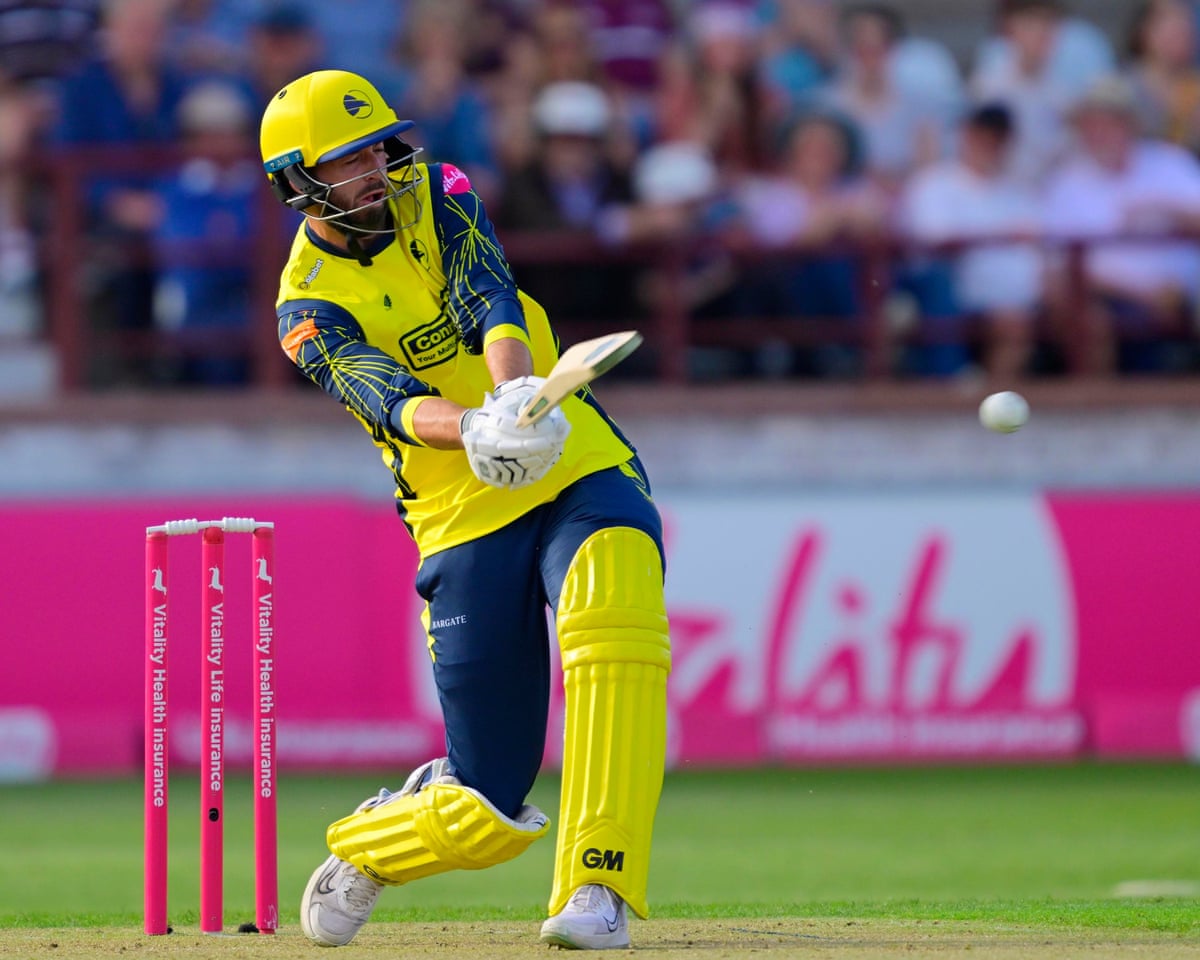
Hampshire are having a challenging Championship season but dominated Middlesex to complete a hat-trick of wins in the Blast. The squads differ between formats, which complicates narrative building but offers counties a chance to rejuvenate their campaigns.
Liam Dawson has returned to availability, but arguably the greatest boost has come from James Vince’s comeback. However, it is not just experienced players making an impact; Manny Lumsden, a promising 17-year-old, has featured in three of Hampshire’s four matches, consistently delivering fast, intimidating bowling.
3. Steelbacks Backing Their Aussie
In the aptly named Central and West Group, the Northamptonshire Steelbacks hold the only perfect winning record in the Blast.
While it was not exactly “Our Aussie against your Aussie,” Beau Webster and Chris Lynn dominated the crease for 39 of the match’s 40 overs. Webster, recovering from a comical runout two days earlier for which he was fully responsible, responded constructively by scoring 97 runs, lifting Warwickshire to a formidable 208/7. Such a total demands aggressive batting during the powerplay and sustained momentum thereafter.
Lynn, drawing on experience from 309 prior T20 matches, delivered his highest score—an unbeaten 115—in his 310th game. In earlier eras, chasing a target in the final over might have indicated a close contest, but with wickets in hand, it is less tense nowadays. The match provided good entertainment, though the EdgBLASTon crowd likely hoped for their team’s first win of the season.
4. Crane Good Again for High-Flying Glamorgan
Glamorgan, a standout team in the Championship this year, have lost a couple of close Blast matches but began their campaign emphatically by chasing down Somerset’s 172-run target.

Tom Banton led Glamorgan’s innings with 59 runs before falling at the end of the seventh over. Nathan McAndrew and Mason Crane, enjoying an excellent spring, then effectively contained Somerset’s batting.
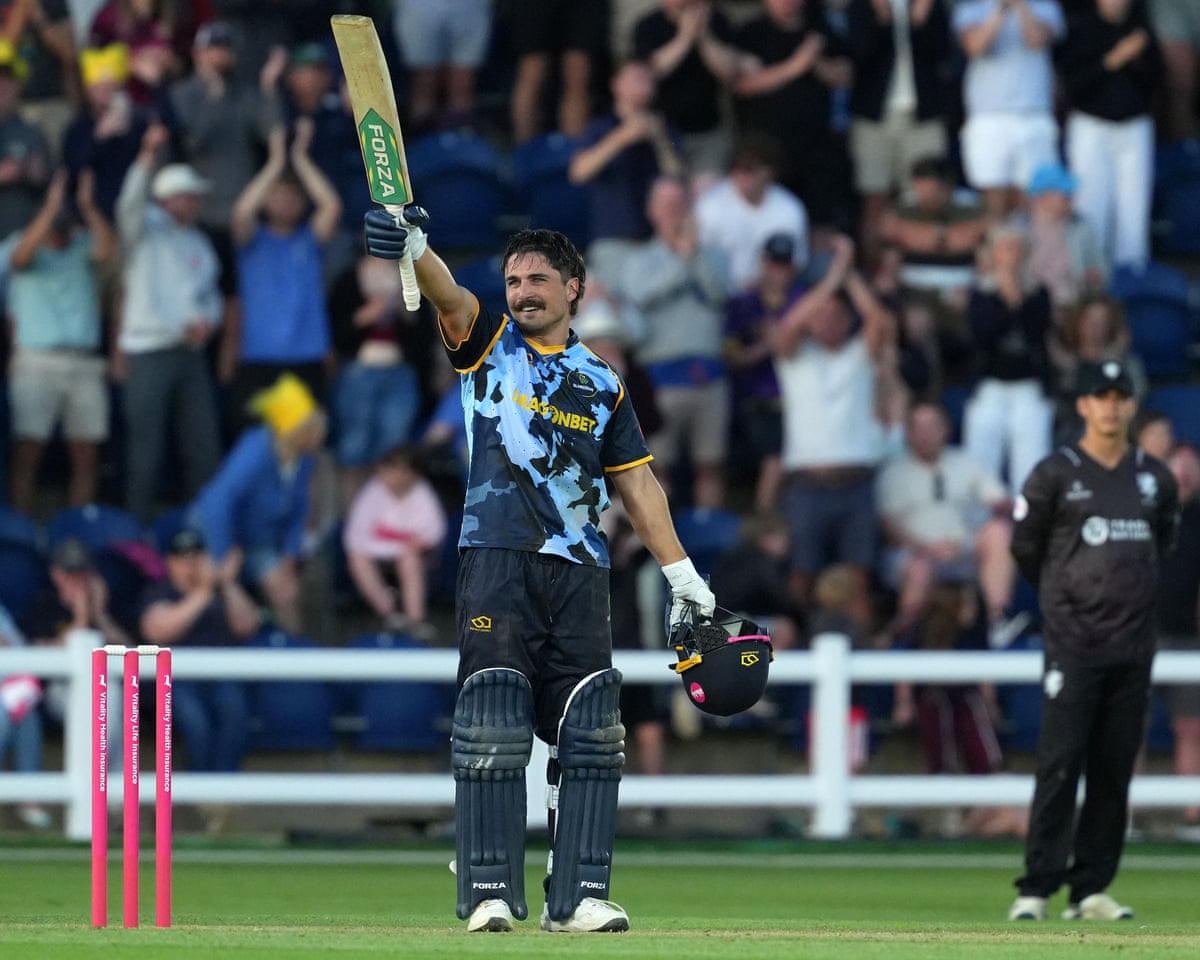
Kiran Carlson, though fortunate at times, made full contact with the ball and was dismissed for 109 in the 12th over, sealing the match. His fearless approach echoes the remarkable Vaibhav Sooryavanshi, whose innovative hitting for Rajasthan Royals has been widely noted. Carlson, batting at the top of the order and serving as captain, takes full responsibility for his aggressive style, which can lead to spectacular success or failure.
“No fear” is too small a phrase to describe his attitude and slogging is too crude to describe the shots – well, some of them.
It may seem unusual to suggest professional cricketers emulate a 15-year-old, but just as players have adopted techniques pioneered by Steven Smith or Graham Gooch, we may see more openers attempt Carlson’s style. Achieving this consistently, however, is a significant challenge.
5. Role Models Roll Durham
Yorkshire lead the North Group after a 69-run partnership between Jonny Bairstow and James Wharton took them to 151/9, a total often described as giving bowlers something to defend, though with skepticism.
With women’s matches played earlier, it was clear that Chester-le-Street is a challenging ground for quick scoring. Yorkshire’s spinners effectively strangled Durham’s chase, who were bowled out for 93 in the 17th over, with a few run outs compounding their difficulties.
What is noteworthy, given Yorkshire’s history, is the composition of their XI. Four bowlers—Hasan Ali, Farheem Ashraf, Moeen Ali, and Jafer Chohan—are of South Asian heritage. This representation provides role models for young players from Bradford, Leeds, and other areas in Yorkshire, illustrating what they can aspire to.
Yorkshire have secured three consecutive wins and, if this form continues, will be a strong contender for Finals Day.
6. The Other Andersson Shines
Derbyshire are Yorkshire’s closest challengers after two wins in a week, including a remarkable individual performance by Martin Andersson, a standout player this season.
Previously considered a useful player at Middlesex, Andersson was unlikely to match Ryan Higgins’ wicket-taking or run-scoring. At 29, moving to Derbyshire was a strategic decision. He began the Championship campaign with a maiden double century and continued his impact in the Blast against Leicestershire.
Opening the batting, he scored 57 runs off 29 balls and then, bowling as fourth change, took six wickets, including two caught by himself. Unsurprisingly, he was named player of the match.


