

Democratic Targets Begin to Take Shape
Voters in Tuesday’s primary elections across the US selected candidates who could potentially flip critical districts in the US House and Senate this November, setting the stage for high-stakes general election contests in a midterm year anticipated to favor Democrats.
Among the most closely watched races are a Democrat aiming to unseat a Republican incumbent who has been absent due to a mysterious medical issue for months; several Iowa Democrats seeking to flip their traditionally red-leaning state; and California’s redrawn maps that have provided Democrats with an advantage in the heavily blue state.
Other significant contests, including the governor’s race, remained undecided as of Tuesday night. In Los Angeles, Democratic mayor Karen Bass secured one of two spots to advance to the November general election, while her opponents remained in a tight race, according to the Associated Press.
The results, spanning from California to New Jersey, highlighted many of the dynamics shaping the 2026 midterms: Democrats’ desire for change following the party’s significant losses to Donald Trump in 2024, Trump’s continued influence over Republican voters despite declining approval ratings, and voters’ negative perceptions of the US economy.
The night’s victories did not reflect a clear win for either progressive insurgents or moderates but rather a combination of both, tailored to appeal to voters in diverse areas—from deep-blue districts to red states where Democrats hope to outperform expectations after a series of unexpected wins in special elections since Trump’s return to the White House.
Democratic targets begin to take shape
Several crucial races to flip are now set for November, with significant spending expected in contests viewed as toss-ups, although some are still rated to lean Republican given the national challenges facing the party in power.
In New Jersey, Democrats nominated former healthcare executive and US Navy veteran Rebecca Bennett after a crowded primary to challenge Republican Congressman Tom Kean Jr., who ran unopposed, in a suburban swing district narrowly carried by Trump last year. The race gained renewed attention recently as constituents and colleagues questioned Kean’s whereabouts following a mysterious three-month absence from Congress.
In Iowa, where Democrats plan substantial spending, rematches were established in districts that produced some of the closest House races two years ago. Additionally, a moderate candidate running on a "prairie populism" platform gave Democrats hope of winning the US Senate seat open after incumbent Joni Ernst decided not to seek re-election.
Josh Turek, representing a Trump-friendly legislative district, defeated State Senator Zach Wahls, who ran a more anti-establishment campaign, and will face former broadcaster Ashley Hinson this fall.
Following Turek’s victory, the Cook Political Report changed the race rating from "likely Republican" to "lean Republican," citing Turek’s compelling life story—born with spina bifida due to his father’s exposure to Agent Orange in Vietnam, a wheelchair user, and a Paralympic gold medalist—and his moderate appeal as factors that could attract voters despite a challenging environment for Republicans.
"I will be a real fighter for Iowans, the middle class and our working families. So from now until November, I welcome all Iowans – Democrats, Republicans, and Independents alike – to join our team," Turek said in a statement after his win.
In Iowa’s House contests, Republicans re-nominated US Representatives Mariannette Miller-Meeks of the first district and Zach Nunn of the third district—both vulnerable to Democratic challenges and tests of their ability to regain support among working-class voters.
Former State Representative Christina Bohannan, who narrowly lost to Miller-Meeks by 800 votes, secured the Democratic nomination. Nunn and his Democratic opponent, State Senator Sarah Trone Garriott, both ran unopposed for their respective party nominations.
Governor races shape up
Gubernatorial elections, particularly significant amid Washington’s gridlock, saw Democrats strengthen their prospects in one state and increase potential in another, while a Republican incumbent faced a difficult path.
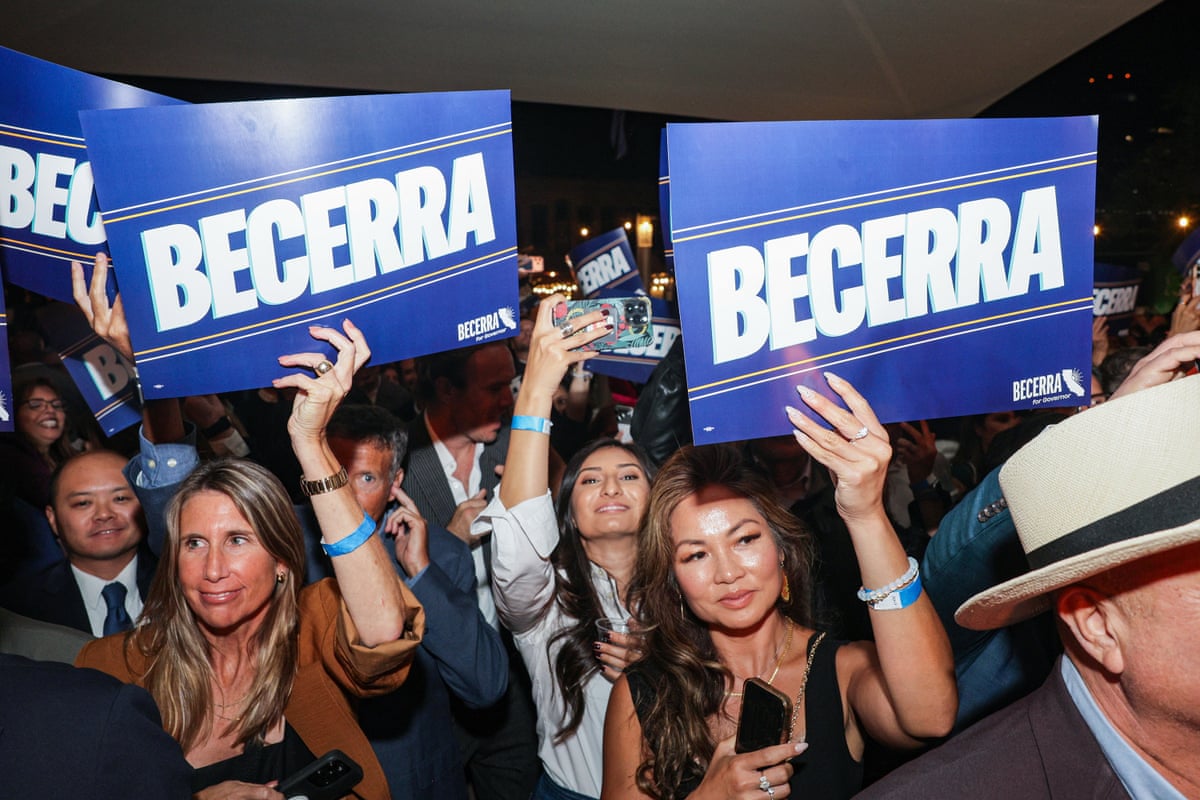
In California, early results indicated a close race for governor, led by Democrat Xavier Becerra, a former Biden administration official, and Republican Steve Hilton, the British-born former Fox News personality endorsed by Trump. Billionaire Tom Steyer, running as a progressive, trailed in third place according to preliminary results.
Meanwhile, in Los Angeles, former reality TV star Spencer Pratt and progressive City Council member Nithya Raman were engaged in a tight contest for the chance to face Bass in November. Under California’s nonpartisan primary system, the top two vote-getters advance regardless of party affiliation.
In Iowa, Democrats view Rob Sand, a state auditor who has positioned himself as both a populist and moderate, as a strong candidate to win the governorship following Republican Kim Reynolds’ retirement.

In South Dakota, the Republican gubernatorial contest headed toward a runoff, with businessman Toby Doeden advancing while incumbent Governor Larry Rhoden, who replaced Kristi Noem after she joined the Trump administration, competed for the second spot.
In New Mexico, former Interior Secretary Deb Haaland secured the Democratic nomination for governor. She is favored to win the general election in the blue-leaning state and would become the country’s first female Native American governor.
Test of new maps in California
This year’s highly political redistricting battle intensified an already polarized political environment, with states rushing to redraw districts to favor their parties.
Trump has advocated for redrawn congressional maps in several Republican-led states to protect the party’s slim House majority. A Supreme Court ruling that significantly weakened the Voting Rights Act paved the way for several southern states to attempt to reconfigure their maps.
Tuesday’s primary tested California voters’ decision to redraw lines potentially aiding Democrats in gaining five seats, as a response to GOP efforts in Texas.
Internal Democratic party debates—on ideology, economic populism, strategies to confront Trump, and differing views on whether Israel committed genocide in Gaza—played a role in several races.
Scott Wiener, a Democratic state senator known for championing housing and LGBTQ+ legislation, won the highly sought seat to succeed former House Speaker Nancy Pelosi, who is retiring at the end of her term. It remained unclear whether he would face a San Francisco supervisor endorsed by Pelosi or Saikat Chakrabarti, a former tech executive who served as Congresswoman Alexandria Ocasio-Cortez’s first chief of staff.
Republican inroads
While Democrats aim to capitalize on Trump’s low approval ratings, some Republican contests could challenge their efforts.
In New Mexico, Republican Greg Cunningham faced no formal opposition in the primary to challenge Congressman Gabe Vasquez, a Democrat. This seat is one of only 13 congressional districts that voted for Trump in 2024 while electing a Democrat to the House. On Tuesday, the Democratic Congressional Campaign Committee described Cunningham as "another rubber stamp for an extreme agenda that’s crushing New Mexico," while Vasquez was called a "trusted leader."
In Montana, a traditionally red state that had a Democratic senator until 2024, Republicans rallied behind Aaron Flint, Trump’s preferred candidate to succeed Representative Ryan Zinke in the state’s lone congressional district. Although election analysts rate the race as "likely Republican," Democrats see an opportunity fueled by Trump’s declining popularity.
Flint, a talk radio host and former staffer in Zinke’s congressional office, received endorsements from Zinke, the president, Republican Senator Tim Sheehy, and Governor Greg Gianforte. The Democratic field included former gubernatorial candidate Ryan Busse and union organizer Sam Forstag, though the race remained undecided as of Tuesday night.
Kurt Alme emerged as the leading Republican candidate in Montana’s open Senate seat race but faces a strong challenge from independent Seth Bodnar in November. Republicans attempted to boost a Democrat in the primary to split votes away from Bodnar. It remains uncertain if the Democratic primary winner, Alani Bankhead, will withdraw to allow a two-way contest, similar to a strategy in Nebraska.
In South Dakota, with Dusty Johnson running for governor, State Attorney General Marty Jackley won the Republican primary to replace Johnson. With Trump’s endorsement, Jackley defeated Republican James Bialota for the nomination, positioning him well to become the reliably Republican state’s sole representative in Congress.
Tuesday’s results carry significant implications for the direction of both parties and highlight some of the issues voters are confronting since 2024.
In New Jersey’s 12th congressional district, Adam Hamawy, a plastic surgeon and army veteran who participated in a medical mission in 2024, secured the nomination to succeed retiring Congresswoman Bonnie Watson Coleman.
Hamawy, a progressive known for his criticism of Israel, won against nearly a dozen Democratic challengers in the safely blue district, making him likely to win the general election in November and become the first Muslim lawmaker to represent New Jersey nationally.


