US and Canadian Authorities Charge Indian Gang in Sikh Activist Murder
Lawrence Bishnoi, currently imprisoned in India, has been charged by US authorities for orchestrating the assassination of Canadian Sikh activist Hardeep Singh Nijjar in 2023. US and Canadian officials announced they have dismantled the leadership of a notorious Indian criminal organization, charging dozens of operatives responsible for various crimes globally, including this high-profile murder that strained diplomatic ties between Canada and India.
At a joint press conference on Tuesday, representatives from the FBI and Canada’s Royal Canadian Mounted Police (RCMP) detailed Operation Hard Ball, a multi-year federal investigation targeting murder-for-hire schemes, shootings, extortion, and drug trafficking. The operation has resulted in charges against 37 individuals, some already in custody. Authorities continue to seek seven fugitives in the US, two in India, and one in Europe.
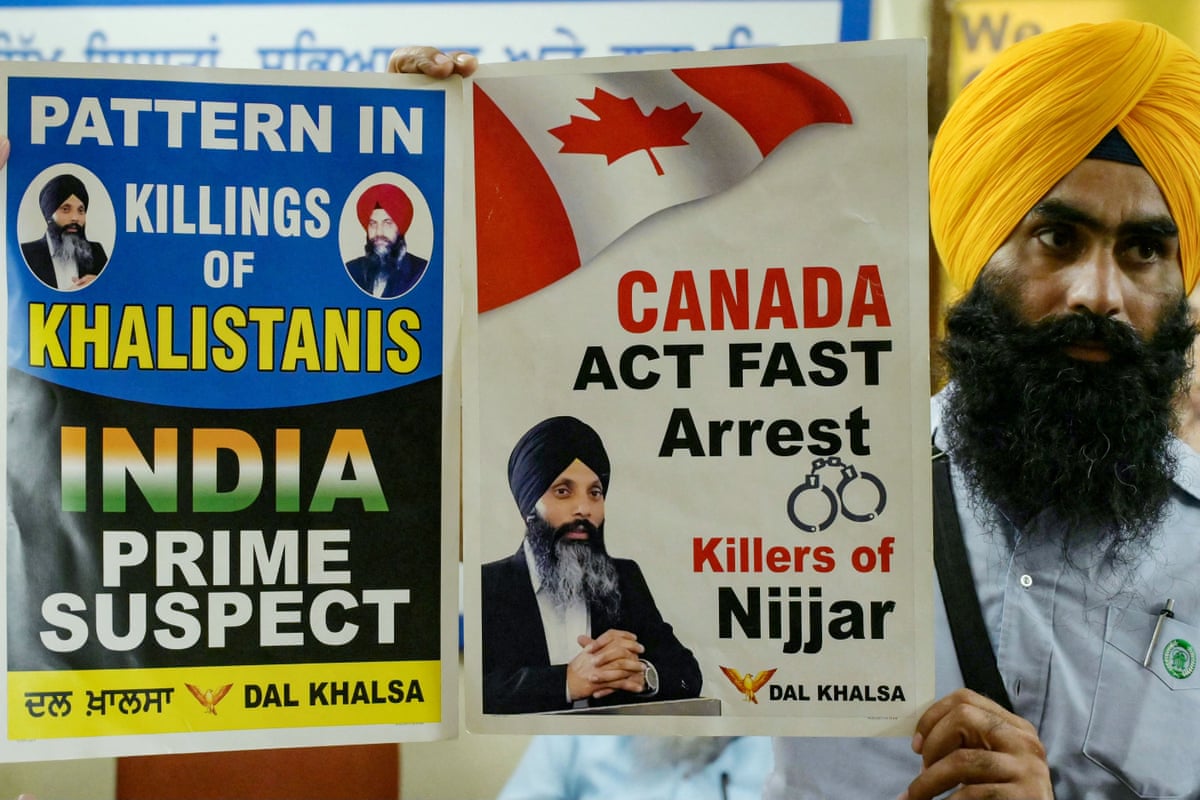
The most prominent indictment is against Lawrence Bishnoi, the incarcerated leader of an Indian criminal gang, accused of orchestrating the killing of Hardeep Singh Nijjar from his prison cell in Delhi.
Hardeep Singh Nijjar was fatally shot in 2023 outside a temple in Canada where he served as president. Police have also charged Satinderjeet Singh, Nijjar’s childhood friend, for his involvement in the murder. Singh, also known as Goldy Brar, is currently a fugitive in the US.
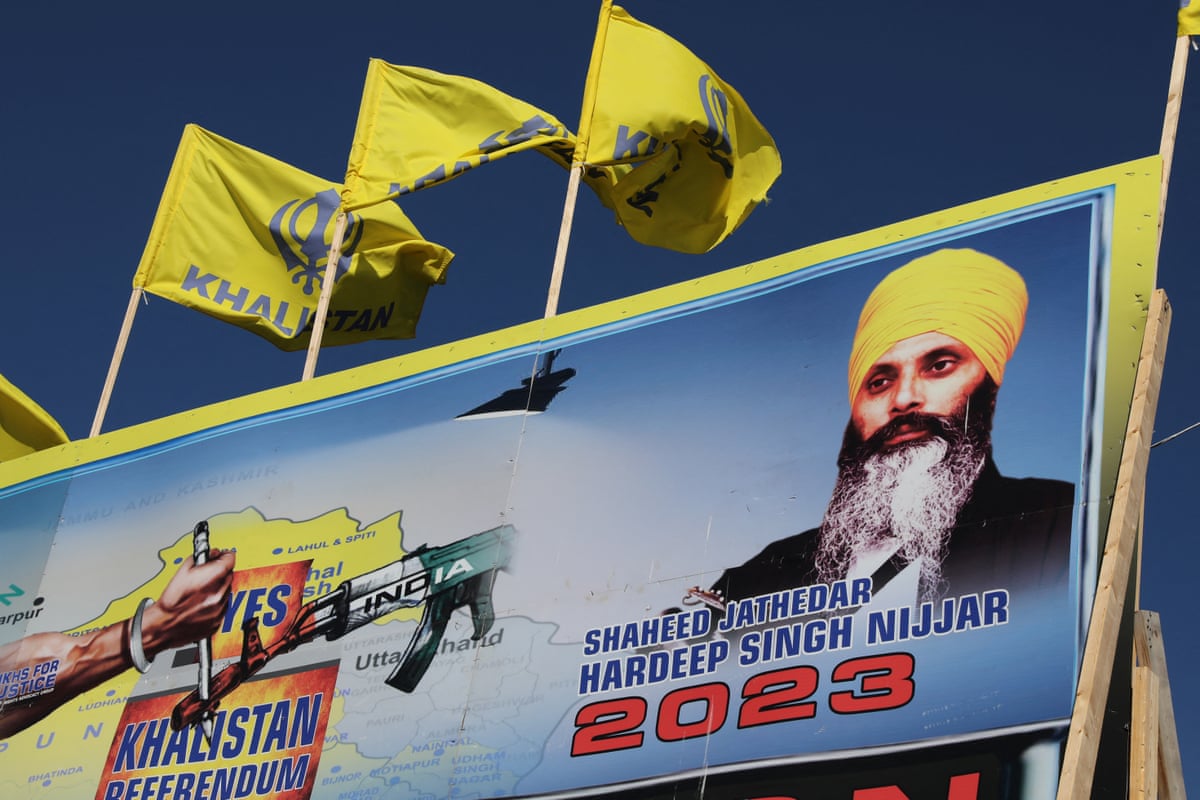
Bishnoi allegedly directed the assassination using smuggled mobile phones and provided a co-conspirator with photographs of Nijjar and his known addresses to facilitate the attack.
The daylight shooting of Nijjar occurred after then Canadian Prime Minister Justin Trudeau stated there were "credible allegations" implicating the Indian government in Nijjar’s death.
Nijjar was a prominent figure advocating for an independent Sikh homeland called Khalistan. Born in India and a Canadian citizen, he was labeled a terrorist by Indian authorities, who had offered a reward for information leading to his arrest.
Sikh diaspora activism has been a contentious issue for years. Canada hosts the largest Sikh population outside India, and India has repeatedly accused Canada of harboring "terrorists and extremists."
Canada has designated the Bishnoi gang as a terrorist entity.
Moninder Singh, a friend of Nijjar and fellow activist who has faced multiple death threats, stated in an interview that the charges send a strong message regarding public safety. He expressed concern that the lack of action against state-level actors like India has emboldened efforts to suppress dissent.
"The omission of state-level actors like India [from investigation by Canada] suggests that bilateral trade deals and geopolitical partnerships are being prioritised over the uniform protection of Canadian citizens from foreign interference and transnational repression," he said.
Singh reported receiving four warnings of "imminent assassination by India and its proxies" from Canadian police, including threats to his wife and two children. He warned that excluding India from the investigation effectively grants permission to continue targeting Sikh activists advocating for Khalistan.

India’s envoy to Ottawa, Dinesh Patnaik, has denied any foreign interference in Canada. However, questions remain about India’s role in the 2023 assassination following reports that a Vancouver consulate official supplied information on Nijjar. Canadian police believe this consular employee was also an intelligence officer with India’s external intelligence agency.
In June, Canada’s intelligence agency described Nijjar’s murder as a "significant escalation in India’s repression efforts," reflecting a broader transnational campaign by Delhi to threaten dissidents.
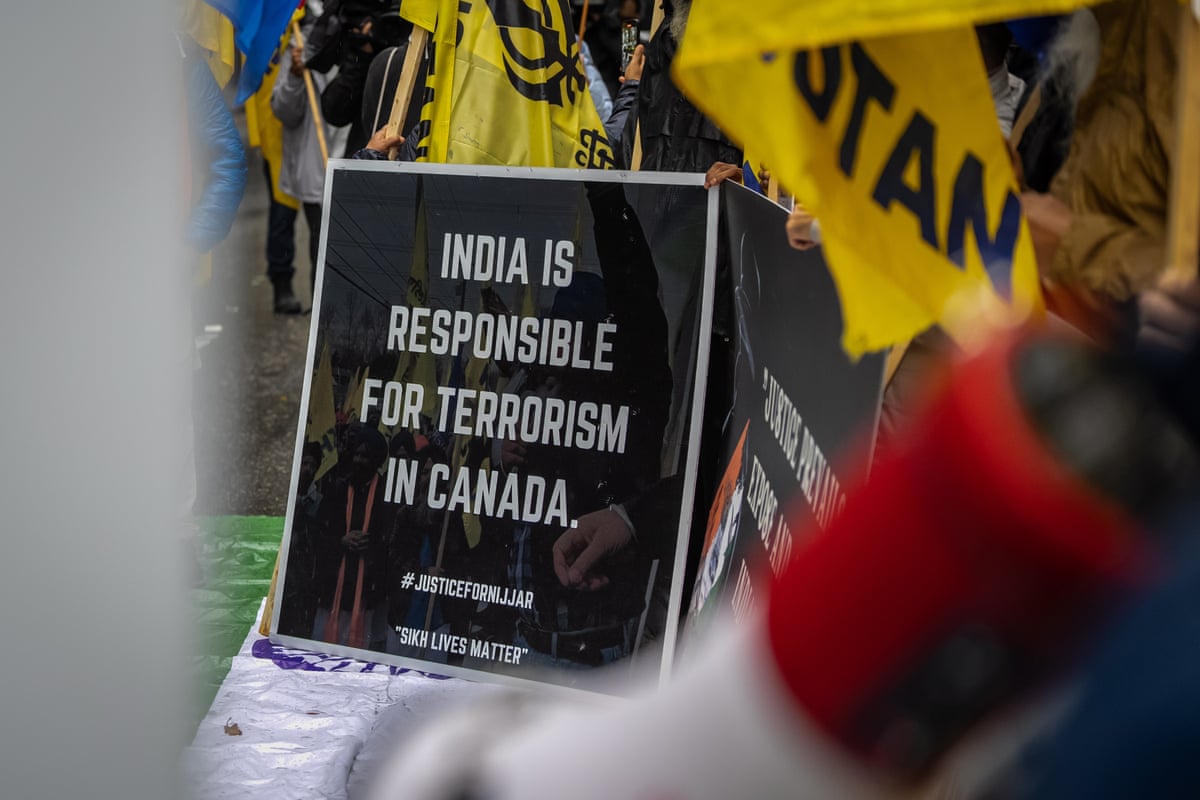
India and Canada previously expelled diplomats amid the diplomatic dispute. In May 2025, four Indian nationals were charged with murder and conspiracy related to Nijjar’s killing. The case is currently before the British Columbia Supreme Court.
Michael Duheme, RCMP commissioner, called the charges "a big moment for the RCMP and for public safety in Canada, the United States and around the world," emphasizing that law enforcement is confronting criminals in their operational areas, targeting leadership structures, and ending their capacity to terrorize and extort.
"Bishnoi and his co-conspirators were some of the most cruel and wide-reaching criminals," Duheme said, "engaged in murder, kidnapping, extortion, and arson – all fueled by a sprawling drug-trafficking network."
As part of the operation, authorities seized approximately 1,000 kilograms of cocaine and a dozen firearms.
The indictment also states that Bishnoi claimed responsibility for a separate shooting at the Vancouver home of a prominent Indian actor and singer, issuing a warning in Punjabi on Facebook that "no one can save you from us."
On Wednesday, Canada’s Justice Minister Sean Fraser expressed hope that the Operation Hard Ball arrests would mark a turning point for communities in Canada facing increased shootings and violent extortions.
"The magnitude of today’s news cannot be overstated," Fraser said.
Speaking alongside Fraser, Brenda Locke, mayor of Surrey, British Columbia, described the city as having "felt like it had been under siege for some time." Local police reported 131 extortion cases in 2026, 20 incidents involving shots fired, and two arsons.
Another individual targeted by a murder plot, according to US authorities, stated the charges "cannot be viewed in isolation" and represent a broader strategy targeting Sikh dissidents, exposing a "lethal … transnational assassination apparatus" operated by the Indian government. The US Department of Justice has sought to extradite this individual, but Indian officials claim they cannot locate him.
"The Indian BJP government deployed two distinct operational methods to achieve the same state-sanctioned objective – the elimination of leaders of the Khalistan Referendum movement," said Pannun. "Different tactics, but the same masterminds."
Authorities also named two other criminal organizations implicated in similar charges during the two-year investigation. These transnational groups have members in the US, New Zealand, Australia, Portugal, and the UK. Members are accused of stealing large quantities of drugs from other criminal organizations in California and distributing the illicit products across the US and Canada.
The indictments indicate that some defendants exploited relationships with corrupt local officials in India to persecute rivals or individuals cooperating with law enforcement. At least one defendant is accused of orchestrating criminal activities while detained at an immigration and customs enforcement facility, though details on how communication was maintained undetected remain unclear.