

Trump Revives Greenland Acquisition Bid and Threatens Troop Pullout
President Donald Trump has renewed his proposal for the United States to acquire Greenland, while also threatening to withdraw all American military forces from Europe amid ongoing resistance from European nations.
Arriving at the NATO summit in Ankara on Tuesday, Trump indicated that his commitment to defending allies had been influenced by political decisions made by European leaders concerning immigration and energy policies.
Keir Starmer and European partners have sought to avoid a public confrontation with Trump over defense spending following a challenging year for NATO, during which the conflict involving Iran once again exposed divisions within the alliance.
The United Kingdom has already contested US criticism that some allies are "lagging behind" in defense funding. Trump has criticized several countries, including the UK, for insufficient progress toward the target of allocating 3.5% of GDP to defense by 2035.
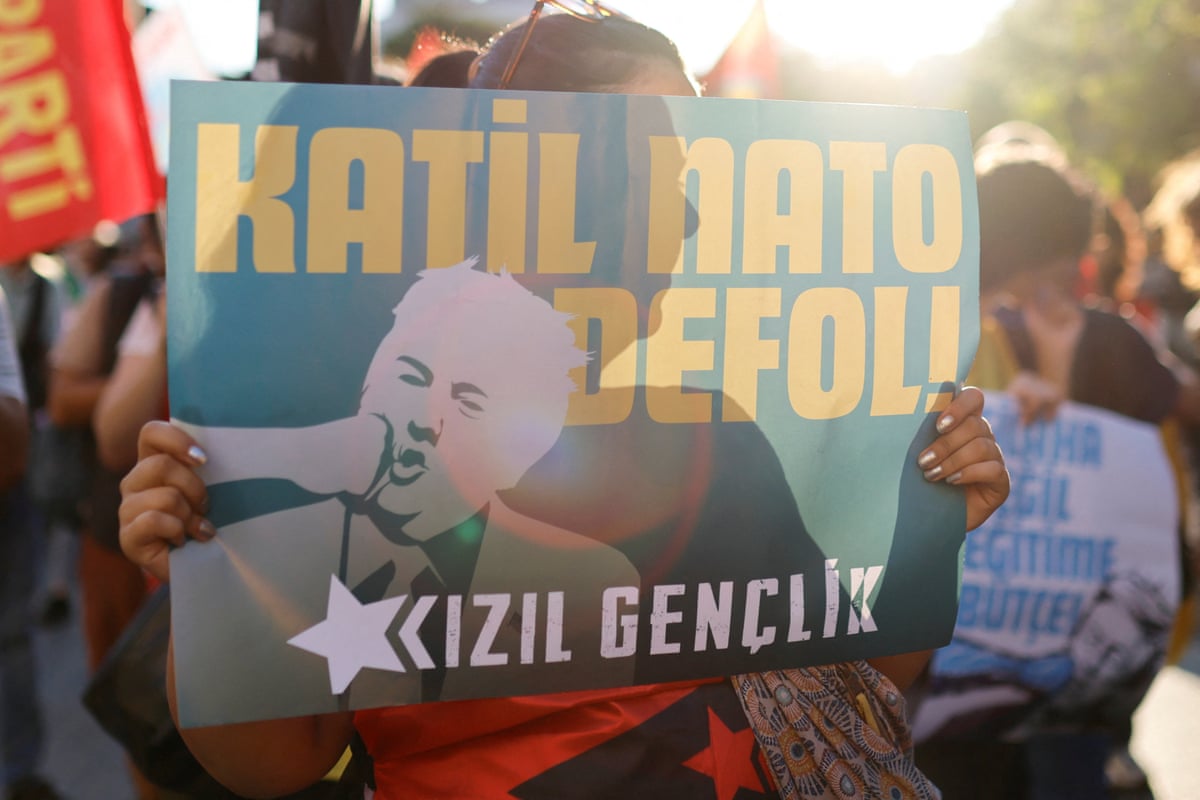
Trump Criticizes UK Leadership and NATO's Stance on Iran
Upon his arrival in Ankara, Trump suggested that Starmer's decision to abstain from involvement in the Iran conflict contributed to his political decline, despite the prime minister's position being popular among the British public.

"I was very disappointed with . We weren’t treated well because we did something in Iran. We don’t need anybody’s help, but before I asked they said they wouldn’t be there," the US president told reporters.
"In the case of the United Kingdom, the prime minister, I guess he’s no longer there, maybe because of this, it was a very unpopular thing he did. He said: ‘No, we’ll help after the war is over.’ I said: ‘We don’t need that kind of help.’"
Greenland Ownership Dispute Strains NATO Relations
Reigniting a previous dispute, Trump asserted that disagreements over Greenland's ownership—part of Denmark, a NATO member—have negatively impacted his relationship with the alliance.
"Denmark doesn’t spend money to really help Greenland, but it’s an important part for the US, and it’s surrounded by China ships and Russian ships … [It] should be controlled by the US, not by . And when they wouldn’t go along with it, and with all the money we spend to help them with Russia," he said.
"We don’t have to spend any money; we could remove all of our soldiers out of Europe because, as you probably noticed, Europe’s a very different place than it was 20 years ago … they better be careful with immigration and energy. If they’re not careful with those two things, you’re not going to have a Europe any more."
In response, the UK chancellor stated:
"The future of Greenland is up to the people of Greenland and of Denmark, and not up to the US president. I’ve been very clear about that ever since it was first suggested."
Ongoing Criticism of NATO Defense Spending
Trump reiterated his criticism that NATO allies do not allocate sufficient funds to defense and rely excessively on the United States. European members are attempting to address these concerns by announcing multi-billion-pound defense collaborations.
"Why are we spending hundreds of billions of dollars and they’re not there for us? We’ve always been there for them," he said, although NATO’s mutual defense clause has only been invoked once, following the September 11 attacks, when allies joined US forces in Afghanistan.
UK Defense Funding Challenges and Potential Canadian Collaboration
As the Labour party faces difficulties in financing a significant increase in defense spending to meet NATO targets, Labour’s Reeves suggested for the first time that the "multilateral defense mechanism" of off-balance sheet financing could be integrated with Canada’s Defence, Security and Resilience Bank initiative.
Proponents argue that the Canadian-led scheme, previously supported by John Healey during his tenure as defense secretary but opposed by the Treasury, would provide the UK access to a bank with £86 billion in lending capacity for defense projects, for a UK subscription fee of £900 million.


