

Trump Arrives at Supreme Court Ahead of Oral Arguments in Birthright Citizenship Case
Photographs are emerging from outside the Supreme Court as oral arguments commence in the case Trump v Barbara, which will determine the constitutionality of the administration's efforts to limit birthright citizenship.
Donald Trump has just arrived at the court and intends to listen to the arguments, marking the first time a sitting president has attended Supreme Court oral arguments.
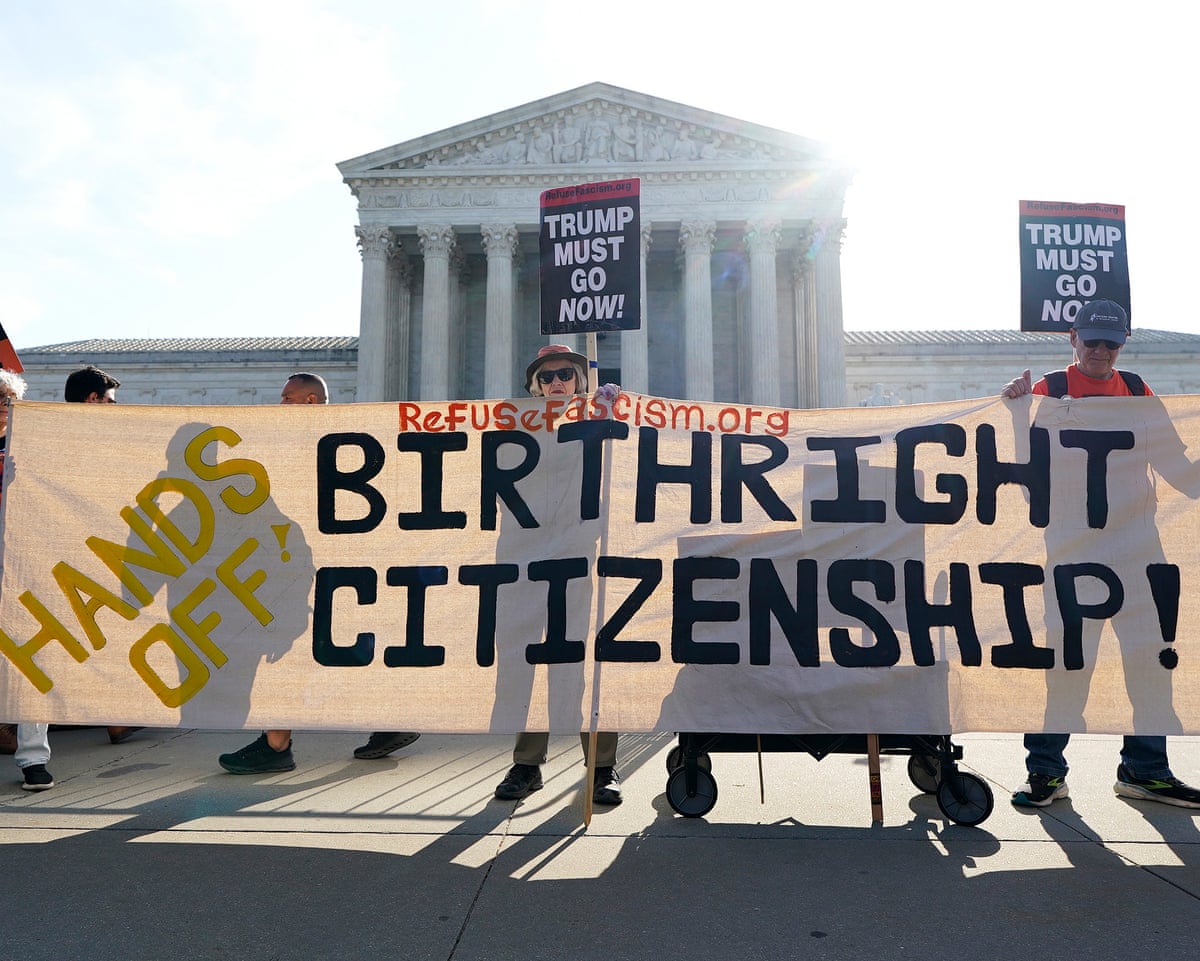
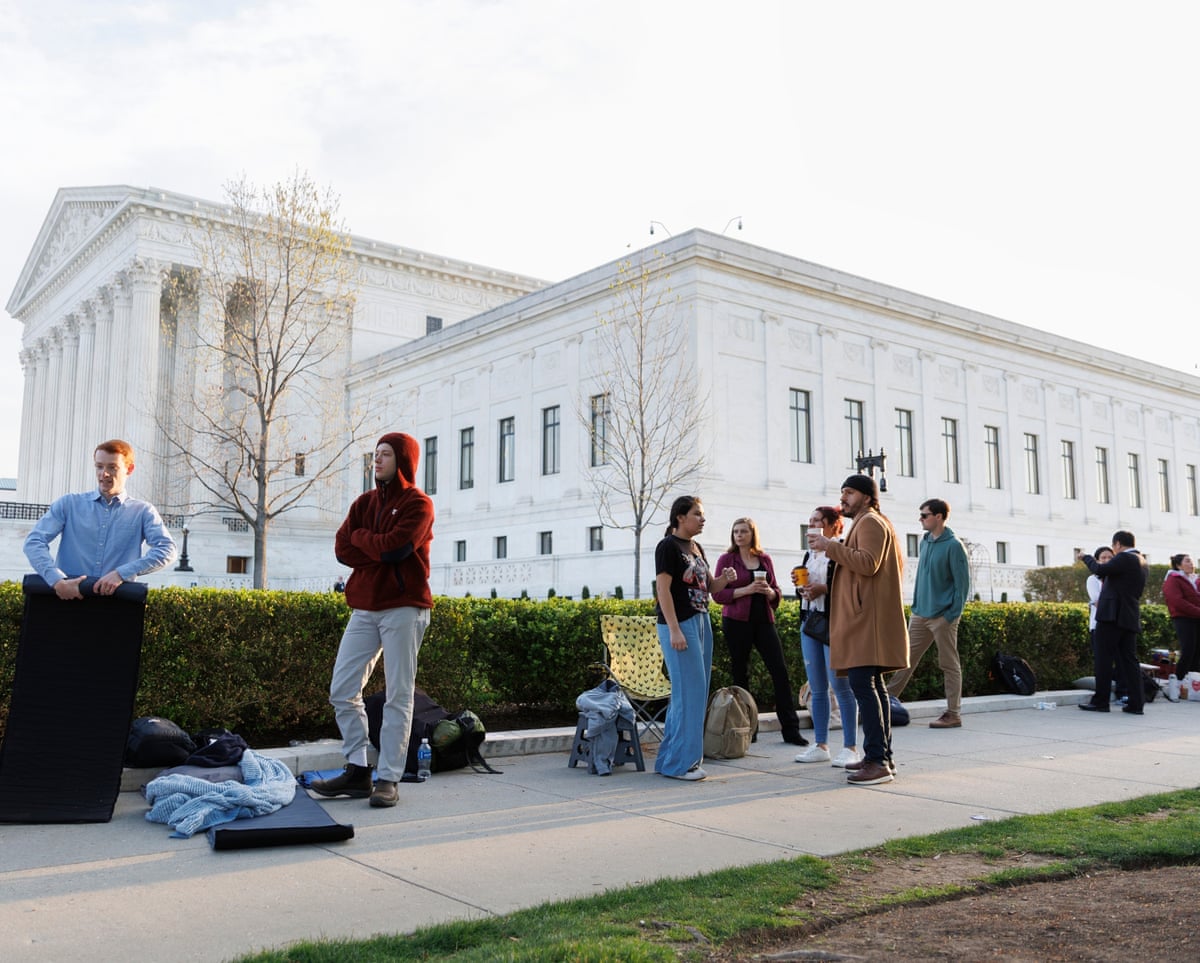
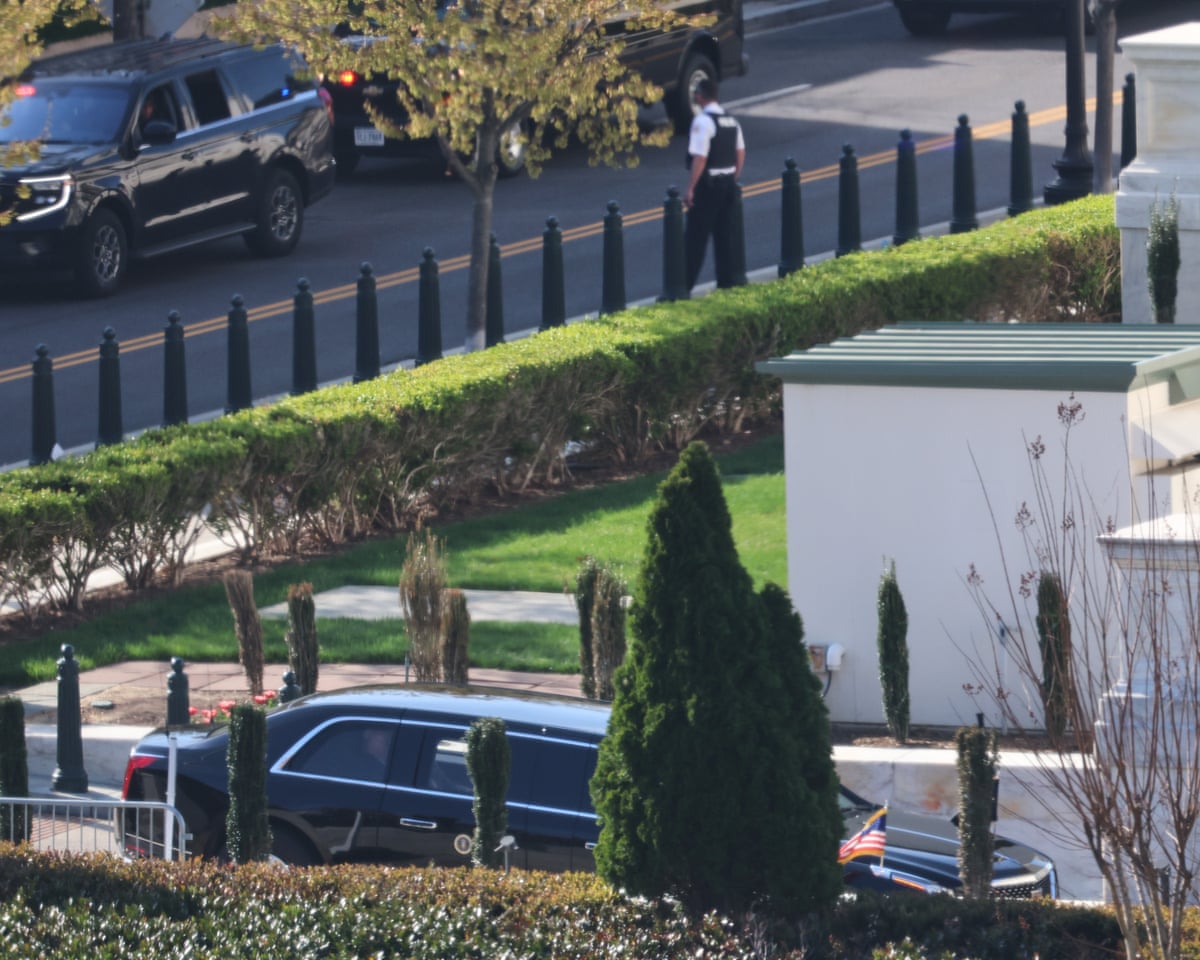
Oral Arguments Begin in Case Challenging Trump's Attempts to Restrict Birthright Citizenship
Oral arguments have started, with Solicitor General D. John Sauer representing the administration. Sauer opened by stating that the citizenship clause, which challengers argue Trump's executive order violates, "does not extend citizenship to the children of temporary visa holders or illegal aliens."
"Unrestricted birthright citizenship demeans the priceless and profound gift of American citizenship," Sauer said, suggesting it acts as "a powerful pull factor for illegal immigration and rewards illegal aliens who not only violate the immigration laws, but also jump in front of those who follow the rules."
He further argued that the established precedent of birthright citizenship has "spawned a sprawling industry of birth tourism" and created "a whole generation of American citizens abroad with no meaningful ties" to the United States.
Before the oral arguments today, it is important to consider the historical context of birthright citizenship, which grants citizenship to children born on U.S. soil.
In Trump v Barbara, challengers contend that the president's efforts violate the Citizenship Clause of the Fourteenth Amendment, ratified after the Civil War to overturn the Supreme Court's 1857 Dred Scott decision. That ruling declared enslaved people were not U.S. citizens and thus were not entitled to federal protection.
The Trump administration maintains that it is not seeking to eliminate birthright citizenship broadly, but rather to restore the original meaning of the Citizenship Clause, excluding "the children of aliens who are temporarily present in the United States."
Trump Says Iranian Regime Has Asked for Ceasefire
Donald Trump claimed that the president of Iran's new regime, whom he described as "much less Radicalized and far more intelligent than his predecessors," has requested a ceasefire with the United States.
However, Trump stated he would only consider the offer when the Strait of Hormuz is "open, free and, clear."
"Until then, we are blasting Iran into oblivion or, as they say, back to the Stone Ages!!!" the president added.
For ongoing updates on the conflict in the Middle East, readers can follow the live blog covering the crisis.
Trump also expressed skepticism about NATO in an interview with The Telegraph, saying,
"I would say [it’s] beyond reconsideration. I was never swayed by NATO. I always knew they were a paper tiger, and Putin knows that too, by the way."
The president has criticized allies recently for not assisting in reopening the Strait of Hormuz, which has been effectively closed amid the Middle East war.
After attending the oral arguments in the birthright citizenship case, Trump will return to the White House for closed-door meetings. He is scheduled to address the nation at 9 p.m. ET with "an important update" on the war with Iran.
Former Infowars Employee Reflects on Work with Far-Right Media
Josh Owens, a former video editor and field producer for Alex Jones's Infowars, described his work for the controversial media outlet as "nonsense" and "lies." He remained with the company for four years in his twenties due to the founder's magnetic presence and the financial benefits.
Owens shared these insights in an NPR interview promoting his memoir, recounting his role in fabricating a video that purported to show an Islamic State operative crossing from Mexico into the U.S. after a beheading.
"In Jones’s world, it was all about making things look cinematic," Owens said. "We would go out there, we would shoot videos … like we were in the weeds, we were showing what was really going on. But it was nonsense. It was lies."
He recalled being sent to El Paso, Texas, after a conservative website claimed that IS had established a training base just across the U.S.-Mexico border in Ciudad Juárez, Chihuahua.
Legal Context of Birthright Citizenship and the Administration's Position
President Trump cannot unilaterally overturn a constitutional amendment; such a change requires congressional action. However, the administration argues it is not overturning the amendment but interpreting it according to its original intent.
The administration seeks a Supreme Court reinterpretation of the Fourteenth Amendment to allow enforcement of the executive order, which would override over 125 years of legal precedent.
The landmark 1898 decision United States v. Wong Kim Ark established that a child born in the U.S. to parents of Chinese descent with permanent domicile is a U.S. citizen by birth under the Fourteenth Amendment.
The Trump administration emphasizes the term "domicile," meaning permanent residence, as critical to interpretation, despite the word not appearing in the amendment itself.
"Birthright Citizenship was not meant for people taking vacations to become permanent Citizens of the United States of America, and bringing their families with them, all the time laughing at the ‘SUCKERS’ that we are!" the president wrote on Truth Social last year.
The Supreme Court is expected to issue its ruling by the end of June.

Last year, the Court granted Trump an initial victory by restricting federal judges' power to block presidential policies nationwide in the birthright citizenship context. However, this ruling did not resolve the legality of the executive order.
The Court, with a 6-3 conservative majority, has supported Trump on other significant immigration policies since his return to the presidency. It allowed the expansion of mass deportation measures on an interim basis amid ongoing legal challenges, including ending humanitarian protections for migrants and permitting deportations to countries where migrants have no ties.
The administration argues that granting citizenship to nearly anyone born on U.S. soil incentivizes illegal immigration and has led to "birth tourism," where foreigners travel to the U.S. to give birth and secure citizenship for their children.
An eventual Supreme Court ruling endorsing the administration's view could affect the legal status of up to 250,000 babies born annually, according to some estimates, and require millions of families to prove their newborns' citizenship status, reported.
The Fourteenth Amendment was ratified in 1868 after the Civil War, which ended slavery in the United States, overturning the 1857 Supreme Court decision that declared people of African descent could never be U.S. citizens. In July of last year, U.S. District Judge Joseph Laplante of Concord, New Hampshire, allowed the challenge to Trump’s order to proceed as a class action, blocking the policy nationwide.
Challengers argue the Supreme Court settled the birthright citizenship question in United States v. Wong Kim Ark, which recognized that the Fourteenth Amendment grants citizenship by birth on U.S. soil, including to children of foreign nationals.
The administration contends that the 1898 precedent supports Trump’s order because Wong Kim Ark’s parents had permanent domicile and residence in the United States at his birth.
Trump Expected to Attend Supreme Court Arguments on Birthright Citizenship
President Donald Trump is expected to attend the Supreme Court hearing today on the landmark case weighing the constitutionality of his bid to end birthright citizenship, an extraordinary and potentially unprecedented move for a sitting president.
Trump signed an executive order upon returning to the White House declaring that children born to parents in the U.S. illegally or on temporary visas would not automatically be U.S. citizens.
Lower courts blocked the order as unconstitutional, ruling that under the Citizenship Clause of the Fourteenth Amendment, nearly everyone born on U.S. soil is a citizen.
"All persons born or naturalized in the United States, and subject to the jurisdiction thereof, are citizens of the United States," the amendment states. It excludes persons not subject to U.S. jurisdiction, such as foreign diplomats and sovereign Native American tribes.
When asked about attending the Supreme Court hearing, Trump said,
"I’m going."He had previously attended the investiture ceremony of his first Supreme Court nominee, Neil Gorsuch, in 2017, months into his first term.
However, attending oral arguments in a case actively argued by the administration would be an exceptional milestone for a sitting president.
The administration argues that the Fourteenth Amendment, passed after the Civil War, addresses citizenship rights of former slaves and not children of undocumented migrants or temporary visitors.
Trump’s executive order is based on the premise that individuals in the U.S. illegally or on visas are not "subject to the jurisdiction" of the country and thus excluded from automatic citizenship.
Trump will attend the Supreme Court hearing from 10 a.m. ET today and is scheduled to deliver a national address at 9 p.m. ET with an update on the war in Iran.
Additional Political Actions and Reactions
Trump also signed an executive order seeking to restrict mail-in voting nationwide by imposing new requirements, including establishing a national voter list.
Experts have described this move as unprecedented and likely unconstitutional. The Brennan Center responded,
"He has no lawful authority to write the rules that govern our elections. He tried a year ago; we sued him; we won. A year later, he has tried again. He can expect the same result."
Several states and Democratic officials criticized the order as an illegal attack amounting to voter suppression ahead of the midterm elections and announced plans to take legal action, including California.
Trump also expressed frustration over a recent U.S. judge's ruling halting construction of his $400 million White House ballroom, criticizing the decision during a press briefing and on social media.
Additionally, Pete Hegseth lifted the suspension of the military helicopter crew that hovered near singer Kid Rock's home and stated there would be no investigation.


