

Supreme Court to Weigh Trump's Authority to Limit Asylum Processing
The US Supreme Court is scheduled to hear arguments on Tuesday regarding the Trump administration's defense of the government's authority to refuse asylum seekers when US-Mexico border crossings are deemed too overwhelmed to process additional claims, according to .
The legal dispute focuses on a policy known as "metering," which the Trump administration may attempt to reinstate after it was discontinued by President Joe Biden's administration. This policy permitted US immigration officials to halt asylum seekers at the border and indefinitely delay processing their claims.
The Trump administration has appealed a lower court ruling that found the policy violated federal law. This policy is distinct from the broader asylum ban at the border announced by Trump after his return to the presidency last year, which is also subject to ongoing legal challenges.
Under US law, migrants who "arrive in the United States" have the right to apply for asylum and must be inspected by a federal immigration official. The central legal question in this case is whether asylum seekers stopped on the Mexican side of the border are considered to have arrived in the United States.
US Democracy Stabilizes at a Lower Level, Experts Find
According to a new survey released Tuesday, the state of American democracy has stabilized after a sharp decline last year but remains significantly below any levels recorded before the start of Donald Trump's second term. The findings come from a nonpartisan democracy-tracking project that surveys hundreds of US scholars at American colleges and universities.
The survey indicates that the erosion of democratic norms observed after Trump's return to the White House has solidified into a new baseline. Public opinion also reflects a pessimistic view of American democracy, with sharp partisan divisions regarding the system's functionality.
The report is based on two waves of surveys. The first was conducted in late December and early January, a period marked by the Trump administration's intensified immigration crackdown in Minnesota and US military actions against Venezuela, including the capture of Nicolás Maduro.
Due to the significance of these events, researchers conducted a second survey in February and early March to capture any shifts in perceptions rather than releasing potentially outdated results.
In the initial survey, experts rated US democracy at 60 on a 100-point scale, an increase from a record low of 53 during the early months of Trump's second term. Researchers attribute this rise to Democratic successes in off-year elections, suggesting that "the playing field had not been tilted against the opposition and that free and fair elections were still possible," according to the report.
Following Maduro's ousting, expert ratings declined to previous levels—56—and remained steady at 57 in the second survey.
Rubio to Testify in Former Congressman’s Venezuela Foreign Agent Trial
Secretary of State Marco Rubio is expected to testify on Tuesday in the criminal trial of former Congressman David Rivera, who faces charges of acting as an unregistered agent for the government of ousted Venezuelan president Nicolás Maduro.
Rubio’s testimony will briefly take him from Washington, where he has been involved in high-level diplomacy related to President Donald Trump’s war in Iran, to the federal courthouse in downtown Miami, his hometown and the starting point of his political career, reported.

Prosecutors allege that Rivera, who served in the House of Representatives representing southern Florida from 2011 to 2013, lobbied politicians in 2017 to ease pressure on Maduro without disclosing he was paid $20 million by a subsidiary of a Venezuelan state-owned company, violating the Foreign Agents Registration Act.
Among the politicians Rivera met with, according to both prosecutors and his defense lawyers, was Rubio, his former roommate and then a Florida senator.
Both Rubio and Rivera are Cuban-American and have been vocal critics of left-wing governments in Cuba and Venezuela throughout their careers.
Former White House Strategist Steve Bannon Calls ICE Airport Presence a 'Test Run' for Polling Station Deployment
Welcome to the live blog.
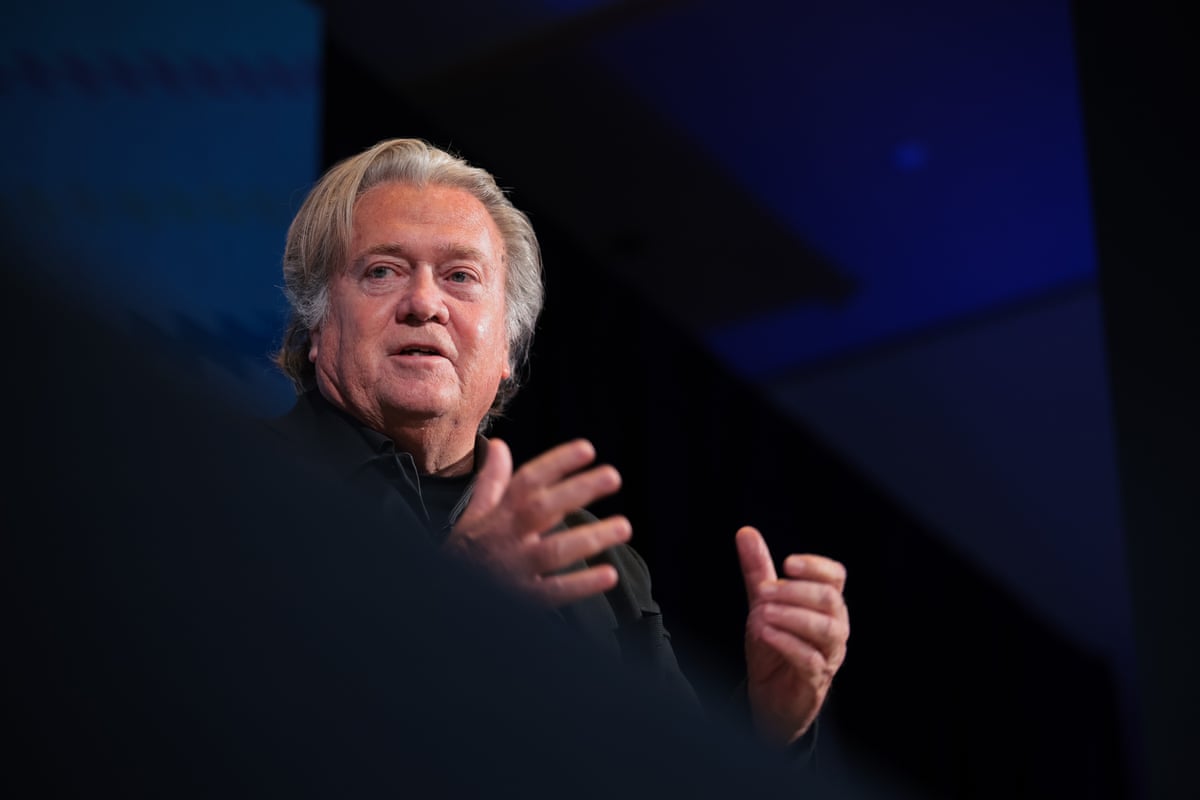
Former White House strategist and podcaster Steve Bannon has suggested that the deployment of Immigration and Customs Enforcement (ICE) officers at airports serves as a "test run" for their potential use at polling stations during the midterm elections later this year.
Speaking with conservative lawyer Mike Davis on his ‘War Room’ podcast, Bannon asked:
"We can use what’s happening with these ICE [officers] helping out at the airports, we can use this as a test run, as a test case to really perfect ICE’s involvement in the 2026 midterm elections, sir?"
"Yeah, I think we should have ICE agents at the polling places, because if you’re an illegal alien you can’t vote, right? It’s against the law, it’s a federal crime for you to vote in federal elections.
And so, if you’re an American citizen, you should be happy that ICE is there, because you’re not going to have illegal aliens canceling out your vote.
Pick ‘em out of line starting today, and maybe the lines will get shorter," Bannon added, as reported last night by.
On Monday, security lines at US airports stretched for hours as unpaid Transportation Security Administration (TSA) screening agents refused to report for duty. ICE agents were reportedly deployed in a dozen cities to assist.
ICE officers were observed at airports including Atlanta, Newark, New Orleans, and New York’s John F. Kennedy International Airport. CNN reported ICE presence at nine additional airports.
The US Senate confirmed Markwayne Mullin as Secretary of the Department of Homeland Security, elevating the Republican senator to a prominent role in Donald Trump’s crackdown on undocumented immigrants. The Republican-controlled chamber confirmed Mullin largely along party lines with a 54-45 vote.
Donald Trump has claimed that talks between the US and Iran over the past day have yielded "major points of agreement," potentially averting a severe escalation of the conflict. Tehran denied these claims, with Iran’s foreign ministry spokesperson stating no talks have occurred since the bombing campaign began 24 days ago.
The US Supreme Court appeared inclined to restrict how mail-in ballots can be counted if they arrive after election day, affecting laws in over a dozen states during a midterm election year. The justices are considering Watson v Republican National Committee, a challenge to a Mississippi state law enacted in 2024 by the Republican party.
California Attorney General Rob Bonta announced a lawsuit against the US Energy Department to prevent it from using a Cold War-era law to restart the disputed Sable Offshore pipeline system, which links the Santa Ynez offshore platform to California refineries. Energy Secretary Chris Wright recently restarted the pipelines under powers granted by an executive order from Donald Trump invoking the Defense Production Act to override state laws.
Prediction markets are facing renewed bipartisan scrutiny in the US Senate as companies like Kalshi and Polymarket continue to contest state-led efforts to regulate online betting. A bill introduced on Monday would ban federally regulated platforms from accepting wagers on sporting events, threatening marketplaces where billions have been traded on major events such as the Super Bowl and NCAA March Madness.


