

Trump's 'disappointment' with NATO to be addressed at pivotal Ankara summit, Rubio says
Senator Marco Rubio opened by expressing gratitude to Sweden for hosting the NATO ministerial meeting. However, he quickly shifted focus to the upcoming summit in Ankara, describing it as "one of the more important leaders’ summits in the history of NATO." Rubio emphasized that the summit will need to address former President Donald Trump’s "disappointment" with the alliance’s response to U.S. operations in the Middle East.
"That will have to be addressed, that won’t be solved or addressed today. That’s something for the leaders level to discuss."
Rubio acknowledged the recent U.S. announcement regarding Poland but clarified that the United States maintains global commitments requiring ongoing reassessment of troop deployments.
"This is not a punitive thing, it’s just something that’s ongoing, and it was pre-existing,"he stated, adding there remains significant opportunity to collaborate with NATO on strengthening the defense industrial base.
US troop adjustments in Europe expected, Rubio says
When questioned about potential future U.S. military adjustments in Europe, Rubio remarked:
"I think what’s happening now is that any decision that’s announced or made is viewed through the broader context of some of the frictions that we’ve had in recent months, but at the end of the day, I think it’s well understood in the alliance that the United States troop presence in Europe is going to be adjusted, that that work was already ongoing, and it’s been done in coordination with our allies.
I’m not saying they’re going to be thrilled about it, but they certainly are aware of it. You know, we have obligations in the Indo-Pacific, we have obligations in the Middle East, we have obligations in the western Hemisphere, so this has been an ongoing process, it shouldn’t be a surprise to anybody."
Rubio briefs press after NATO talks
Following the day’s discussions, Rubio briefed the media. When asked about possible further reductions in U.S. troops in Europe, citing Italy as an example, Dutch Prime Minister Mark Rutte emphasized the importance of a structured and gradual U.S. military pivot.
"The overall deterrence and defence in Europe has to stay the same, because we are facing the Russian threat, we all acknowledge this,"Rutte stressed.
He declined to provide detailed information, citing the U.S. decision-making process, and described other responses as general.
Regarding Russian "shadow fleet" vessels, Rutte said details remain confidential but noted the renewed efforts to counter these fleets serve as a significant deterrent to Russia.
On whether Rubio left Sweden less disappointed about NATO’s response to the Iran war, Rutte acknowledged U.S. frustrations but insisted most concerns have been addressed and heard by European allies.
When questioned about potential changes to U.S. readiness contributions to NATO’s Force Model, Rutte gave a complex response, indicating ongoing policy-level discussions but no public details.
"What is playing out now, at the moment, at the level of policy directors, is US contribution to the Nato Force Model, so that is a process now ongoing, but hey, we are prepared for this,"he said.
He added that the U.S. must ensure key capabilities are positioned where needed, allowing European and Canadian allies to assume greater roles.
"This is highly classified, because we don’t want to make anyone any wiser. This is nothing new. Everybody knew this was happening, and it has nothing to do with the fact that the US wants to equalise the burden. It has to do with the fact that they cannot be everywhere at the same time."
Pressed further, Rutte reiterated the classification of the matter and declined to confirm specifics.
Zelenskyy invited to NATO summit in Ankara, Rutte confirms
Regarding Ukraine, Rutte praised Ukrainian resistance against Russia and noted reports indicating Ukraine is regaining territory, albeit modestly.
"I would not be too happy if I was Putin today – I would never be happy if I was Putin - but particularly not the last couple of weeks, because things are not going in the right direction."
He confirmed that Ukrainian President Volodymyr Zelenskyy has been invited to the Ankara summit.
"I invited him already … He will be there, like in The Hague."
On the nature of the recent meeting, Rutte described it as "a very good meeting," acknowledging ongoing debates as inherent to a democratic alliance.
"The difference is huge"he said, comparing NATO’s current state to two years prior, while emphasizing the need for continued evolution and effective outcomes from the Ankara summit.
Responding to whether Europe should prepare to defend itself without U.S. support, Rutte rejected the premise, reiterating the importance of a stronger European role within a firmly anchored transatlantic relationship.
"What you will see over the coming years is a more equal, as a shift, a credible shift, where the Europeans take this bigger responsibility with the United States firmly anchored in the transatlantic relationship,"he said.
On Ukraine, Rutte reiterated the importance of continued support and funding through the Prioritised Ukraine Requirements List.
Regarding Iran, he criticized Tehran’s actions in the Strait of Hormuz, echoing Rubio’s call for all nations to oppose attempts to restrict freedom of navigation.
NATO's commitment to Article 5 'ironclad,' Rutte asserts
Rutte reiterated NATO’s commitment to defense investment and capability development, emphasizing that increased defense spending is a means to an end rather than an end itself.
He stressed the importance of building industrial defense capacity to strengthen armed forces and ensure adequate equipment for deterrence and defense.

Turning to alliance fairness, Rutte highlighted the need for Europe to assume greater responsibility for its defense.
"I know some have been questioning that [transatlantic] bond, and perhaps even questioning the resolve of this alliance to remain united in the face of an adversary, so let me be crystal clear.
Allies’ commitment to Article Five is ironclad. Our resolve and ability to defend every ally is absolute. Were anyone to be foolish as to attack us, the response would be devastating."
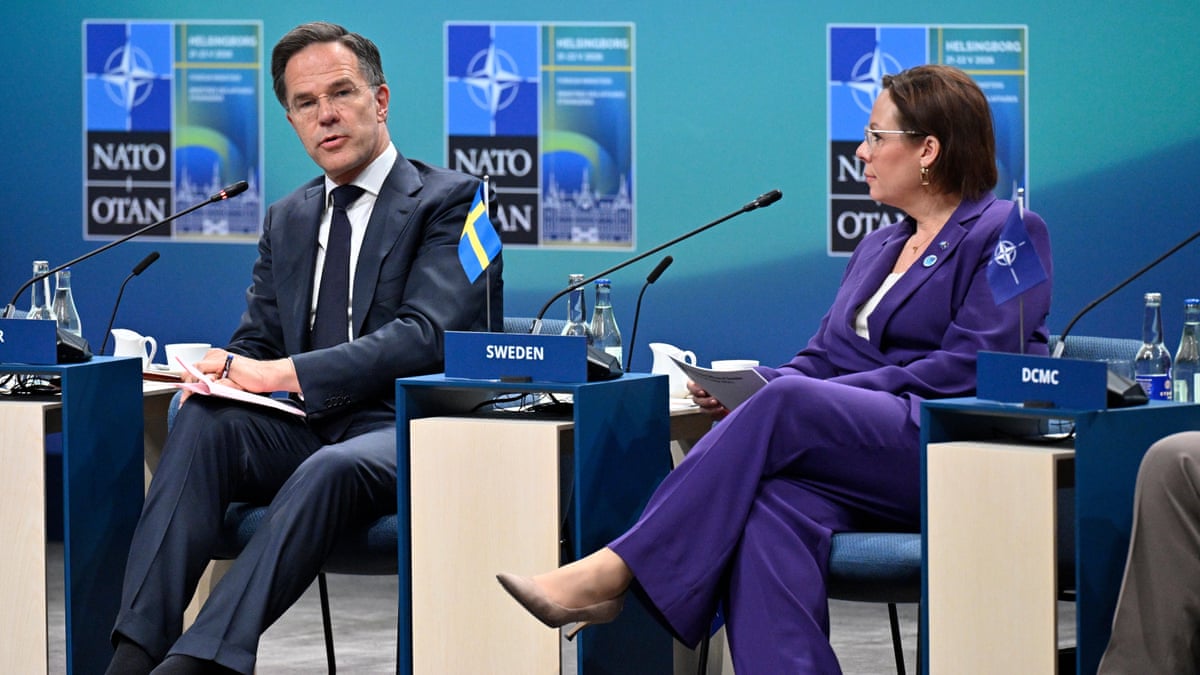
Rutte briefs media after NATO talks in Sweden
Mark Rutte delivered remarks following the NATO foreign ministers’ meeting in Helsingborg, addressing key topics from the discussions.
Western Europe braces for record-breaking May heatwave
A significant heat event is forecast across western Europe, with temperatures expected to exceed 30°C (86°F) in Portugal, Spain, France, and the UK, reaching up to 38°C in parts of Spain.
French meteorologists predict new May temperature records, with some cities potentially exceeding previous highs by three to four degrees due to a heat dome trapping hot air from Morocco under a powerful anticyclone.
Climate experts warn that Europe, as the world’s fastest-warming continent, will likely experience such intense and premature heat events more frequently.

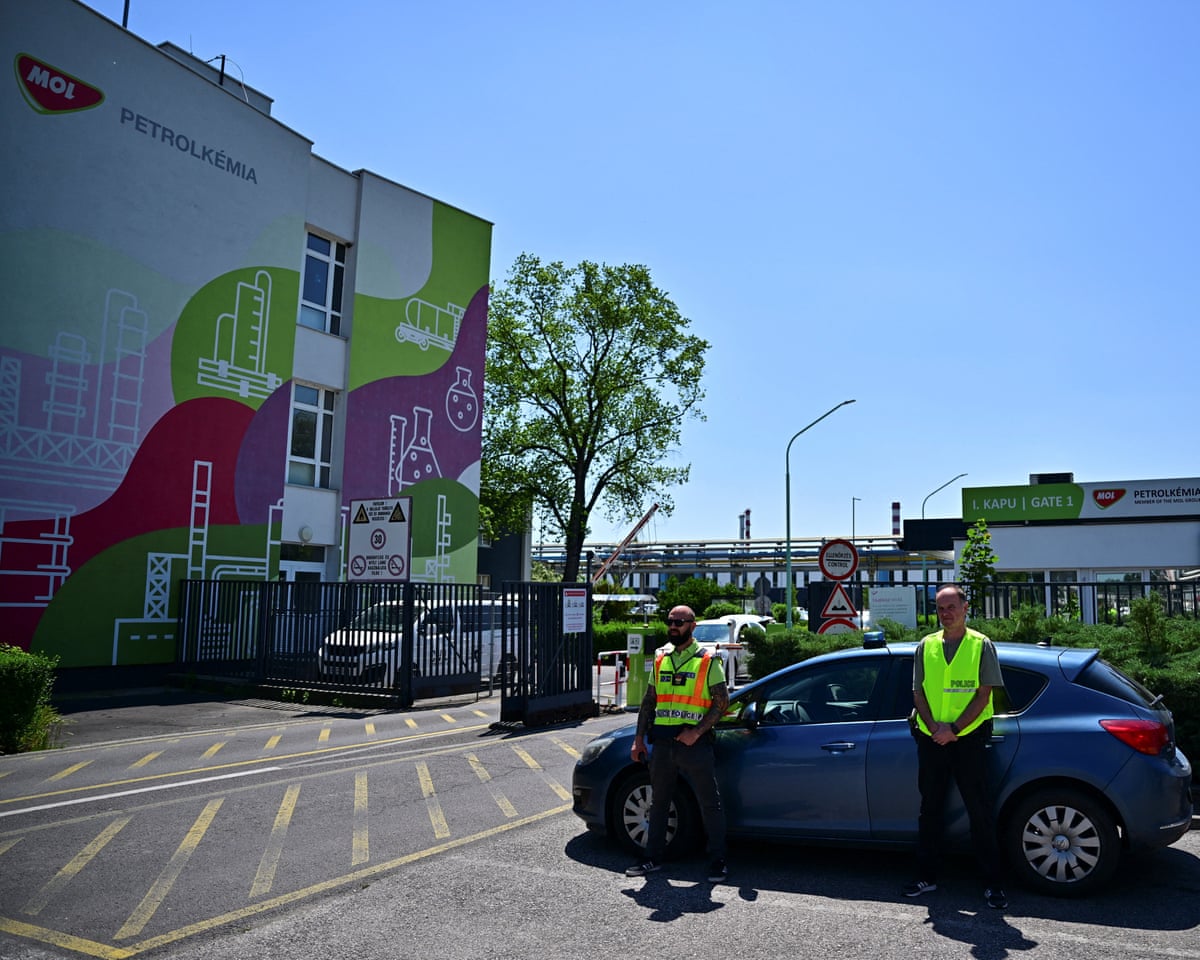
Explosion at MOL petrochemical plant in Hungary kills one, injures nine
Hungary’s Health Minister Zsolt Hegedűs confirmed that an explosion at the MOL petrochemical plant in Tiszaújváros resulted in one fatality and nine injuries, two of which are serious.
Authorities reported no release of toxic substances and no broader public threat.
Protests erupt at new US consulate opening in Greenland
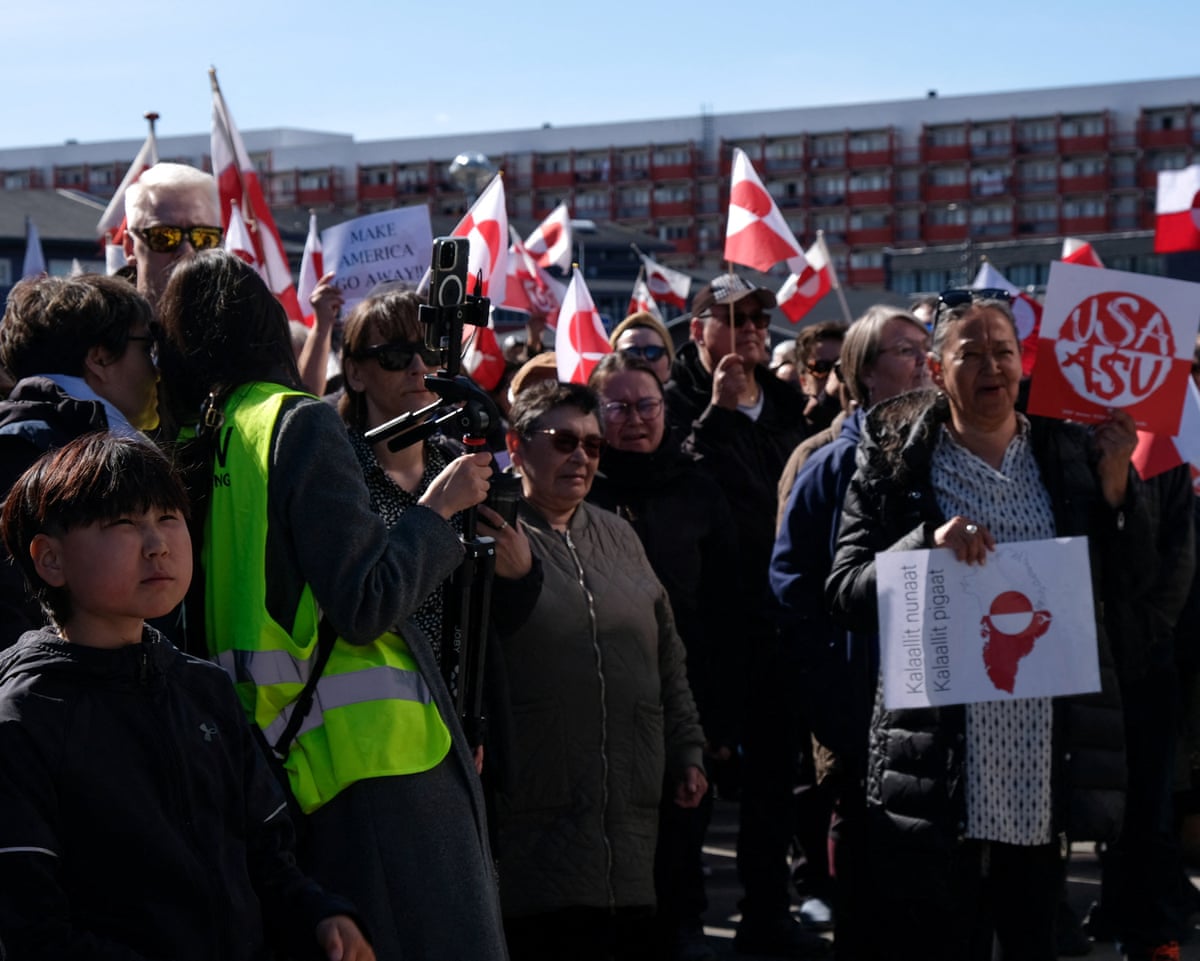
Hundreds protested the opening of a new U.S. consulate in Nuuk, Greenland, following remarks by U.S. Special Envoy Jeff Landry advocating for increased American presence in the Arctic territory.
Greenlandic politicians, including the prime minister, boycotted the official opening. Protesters carried Greenlandic flags and signs reading "USA Asu" (Stop USA) and chanted "Greenland belongs to Greenlanders" and "go home."
Landry visited Nuuk uninvited with a delegation, including a doctor purportedly assessing medical needs, and briefly attended a business conference with the U.S. ambassador to Denmark before departing.
"Greenland needs the US. I think that you’re seeing the president talk about increasing national security operations and repopulating certain bases in Greenland."
Negotiations between the U.S., Greenland, and Denmark continue despite Denmark’s ongoing government formation challenges. Greenland’s prime minister reiterated that Greenland is not for sale but acknowledged the need to find a solution with the U.S.
Drone downing over Estonia signals NATO resolve, Romanian minister says
Romanian Deputy Defence Minister Sorin Moldovan stated at the Globsec Forum in Prague that NATO’s shooting down of a drone in Estonian airspace sends a clear message to Russia that violations will not be tolerated.
German Foreign Minister Johann Wadephul announced Germany will spend over 4% of GDP on defense this year, progressing toward a 5% target, and proposed intensified defense cooperation with Ukraine to accelerate production.
Rubio’s remarks suggest intense discussions on Trump’s NATO concerns in Ankara
Rubio’s comments on Trump’s disappointment with NATO indicate that the issue will be a significant topic at the Ankara summit, which he described as "one of the most important summits in the history of NATO," signaling potential intense debates.
‘Some slight progress’ in Iran talks, Rubio reports
Rubio provided an update on negotiations with Iran, noting slight progress but emphasizing that fundamental issues remain unresolved.
"I don’t want to exaggerate it, but there’s been a little bit of movement, and that’s good. The fundamentals remain the same. Iran can never have a nuclear weapon, it just cannot."
He stressed the need to address highly enriched uranium and restore freedom of navigation in the Strait of Hormuz, condemning Iran’s attempts to impose a tolling system on an international waterway.
"There is not a country in the world that should accept that."
Rubio mentioned a draft UN resolution co-sponsored by Bahrain and the highest number of countries ever before the Security Council, though some members are considering vetoing it.
"Unfortunately, a couple of countries on the Security Council are thinking about vetoing it. That would be lamentable. We are doing everything we can, though, to achieve the sort of global consensus that’s necessary to prevent this from happening, and we’re trying to use the United Nations. Let’s see if the United Nations still works."
He noted that nearly every country represented at the meeting has co-sponsored the resolution and expressed hope the remaining few will join soon.
Rubio concluded on an optimistic note, anticipating a productive meeting to lay the groundwork for the leaders’ summit in approximately six weeks.
"I am hoping for a good meeting today to set the groundwork for the leaders to meet in about six weeks."


