

Avalanche Incidents Highlight Winter Risks
It is common for avalanches to be reported in the northern hemisphere during this period, coinciding with the peak ski season.
However, Tuesday's fatal avalanche in California, which claimed the lives of eight skiers and left one missing, alongside a challenging situation in much of the Alps—where fatalities have exceeded usual numbers this year—has brought renewed attention to avalanche risks and preparedness for winter sports participants.
The circumstances in California and Europe appear distinct. California is emerging from a so-called snow drought, and experts do not regard the recent snowfall as extraordinary.
Nevertheless, droughts followed by intense snowfall can create instability; new snow may fail to bond with the underlying old snow, which can be either very hard or absent, resulting in loose snow layers.
In contrast, Europe has experienced two major storms within a week, depositing heavy snow combined with strong winds. This has led to elevated avalanche warnings across an unusually extensive area of the Alps. Among the dozens of fatalities this season, three Britons have been reported.
One Alpine resort has suggested that current conditions might be the worst experienced there this century.
Recent snowfall has also prompted evacuations in several communities across Switzerland and northern Italy, caused power outages, and led to a train derailment at Goppenstein in the southwestern Swiss canton of Valais.
But is there a connection between the events in Europe and California?
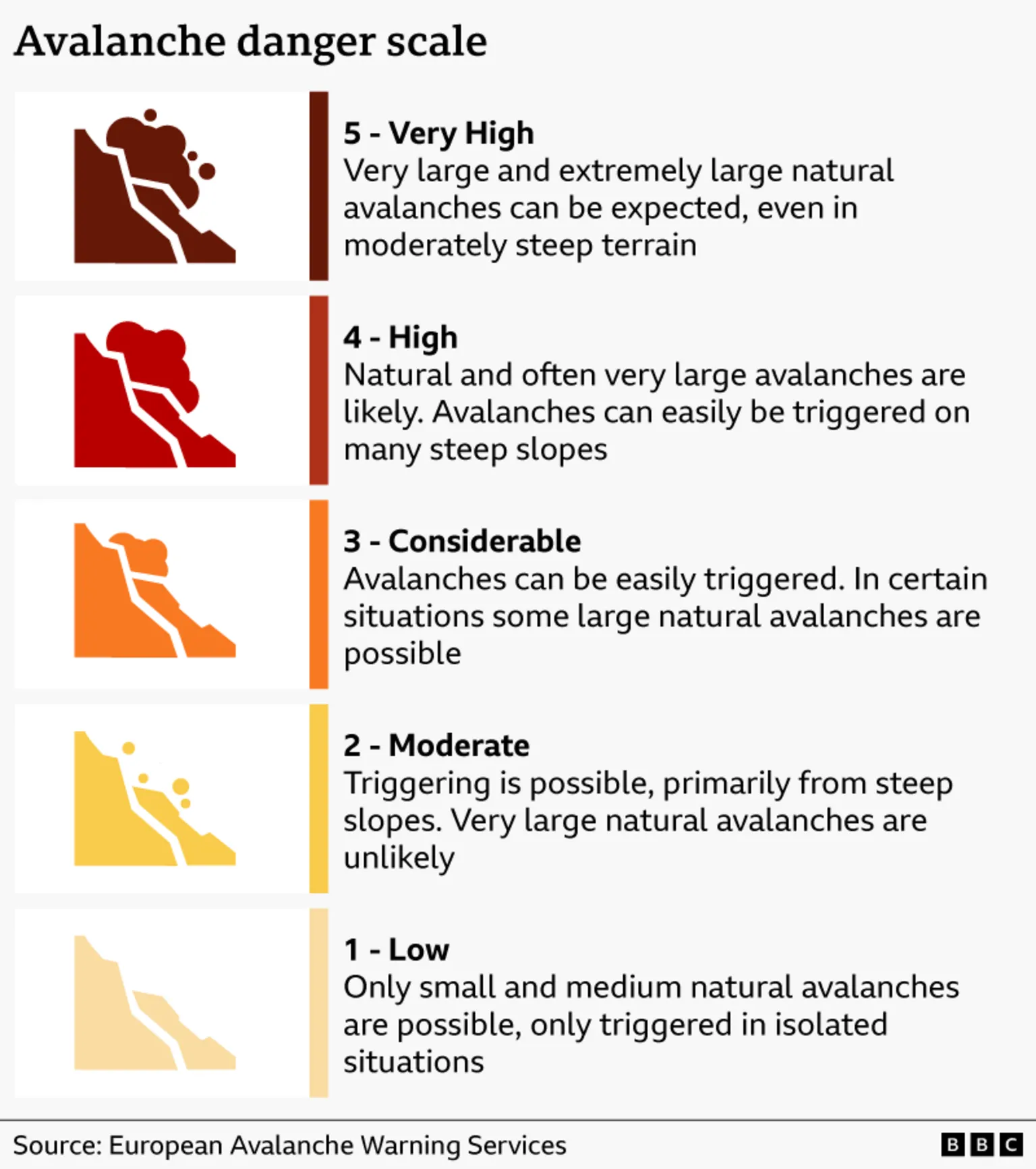
Is Climate Change a Factor?
Climate change might appear to be an obvious explanation for the unstable weather patterns contributing to these events.
"There is evidence that climate change will lead to sharper, more intense precipitation followed by long periods without," Simon Mason, senior scientist at SEI US, told the BBC.
This pattern seems evident in Europe, which has recently experienced several seasons with below-average snowfall and dry spells early in this season.
"However, since many factors control avalanche risk and precipitation is only one controlling influence, it is difficult to conclude how risks may evolve with future climate change," Mason added.
Climatologist Christoph Marthy told Swiss outlet SRF that the current Alpine winter—with weather until recently dominated by high pressure and extended dry periods—is actually the opposite of a typical climate change winter.
Benjamin Zweifel, of the Swiss Federal Institute for Snow and Avalanche Research, told the BBC that the storms were "only one piece of the puzzle".
"The main challenge this winter was a very weak snowpack [an accumulation of snow that compresses and melts seasonally] with very persistent weak layers, caused by long periods without new snow and low temperatures," he explained.
While global warming influences weather patterns, temperature changes may also directly impact avalanche behavior. According to the US Northern Rocky Mountain Science Center, wet snow avalanches—which are expected to become more frequent as temperatures rise—are dangerous, difficult to predict, and less understood compared to dry snow avalanches.
"Wet snow avalanches are caused by weakening in the strength of the snowpack, often triggered by rain, abundant sunshine, or warm temperatures," the centre states in an article on wet snow avalanche research, noting their frequency is expected to increase with changing temperatures.
A 2021 research paper published in the journal Frontiers in Physiology suggests that wetter and warmer snow may reduce a person's chances of surviving an avalanche, while thinner snow cover could increase the risk of blunt trauma injuries.
Overall, four destabilizing factors appear to be altering avalanche dynamics: alternating droughts and heavy precipitation, the nature of precipitation itself, wetter snow, and snow that is melting.

Resort Measures to Mitigate Avalanche Risk
Blaise Agresti, a high-mountain guide at Chamonix, told France's Sud radio that another significant factor in Europe's rise in avalanche fatalities is changing skier behavior and increased risk-taking.
"People are increasingly practising off-piste skiing. Among skiers, 25% go off-piste," he said.
Marked pistes are generally protected by pre-emptive avalanche blasting, and their snow is flattened and compacted to reduce risk. If avalanche danger persists, pistes may be closed, as has occurred during recent warnings.
Despite improvements in forecasting and blasting techniques, avalanches can still occur on pistes deemed safe. Zero risk does not exist, and caution is advised, especially on slopes beneath powdery snow.
Sometimes resorts detect broader threats. The French resorts of Tignes and Val d'Isere imposed lockdowns due to avalanche risk, requiring residents and tourists to stay indoors.
Generally, resorts do not restrict off-piste skiing but provide guidance. For example, La Plagne advises skiers to obtain condition information, carry essential safety equipment—avalanche transceiver, shovel, and probe—know how to use them, always ski with a professional guide, and never alone.
La Plagne, which has one of the world's largest off-piste areas, holds weekly safety days during peak season and recently invested in a drone equipped with a thermal camera for avalanche detection and rescue operations.
Thomas Hager, a ski guide in the Zell am See region of the Austrian Alps, told the BBC World Service's Outside Source programme that complacency among snow sports enthusiasts can be a concern.
"Snow looks so calm. It's comparable to water," he said. "In an ocean you don't see undercurrents but local people know where the undercurrents are and where avalanches go off frequently. So please always talk with local people and listen to the avalanche forecast."
He also recommended carrying an air-bag, which, although not legally required, can help keep avalanche victims near the snow surface.
Although the recent increase in avalanche deaths in Europe is concerning, it is not unprecedented. According to European Avalanche Warning Services, 95 people have died so far this season, compared to 70 in the entire 2024-25 season and 87 in 2023-24. The 2020-21 season, with 131 deaths, and 2017-18, with 147, are comparable.
Could the Situation Have Been Worse?
Weather experts offer a different perspective on the situation. Meteo France's team in Bourg-Saint-Maurice near the Italian border told the BBC that the region shifted from below-average snowfall to "remarkable" above-average snowfall in under 10 days.
"Statistically speaking, we experience a situation like this once every eight years. This means a very significant avalanche risk," they said.
Meanwhile, the Val d'Isere resort, in its Thursday weather bulletin, warned that a third wave of 30-50 cm (12-20 in) of snow following two storms must be taken seriously and requires "certain precautions".
"The situation has not been seen for a long time (perhaps since February 1999)," it added.
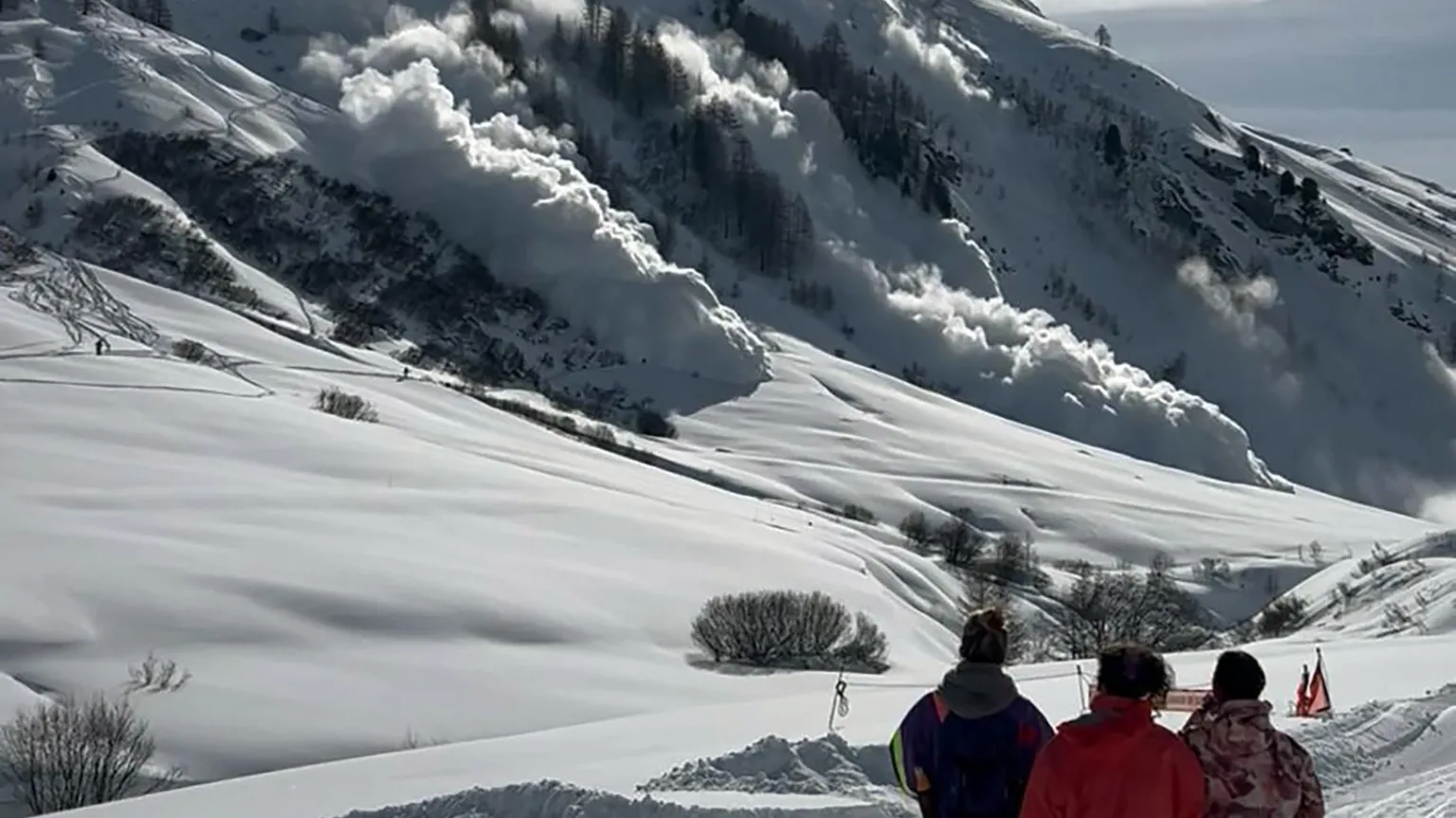
Have modern avalanche warning systems and safety measures implemented by resorts in recent years helped keep casualty numbers lower?
Benjamin Zweifel believes the situation could be much worse without these measures and observes a "big effect," at least in Switzerland.
He notes, however, that France and Italy have experienced higher fatalities—25 in each country compared to Switzerland's 13—which may relate to "even more challenging conditions" in the western and southern Alps.
The worst may be over, as weather is expected to improve from Friday, allowing resorts to conduct additional safety work and enabling the snowpack to stabilize.
However, sunny, south-facing slopes are likely to lose some snow, potentially increasing risks for off-piste skiers.


