

NSA Detects Unusual Call Linked to Trump Associate
Last spring, the National Security Agency (NSA) identified an unusual phone call involving an individual connected to foreign intelligence and a person close to former President Donald Trump, according to a whistleblower’s attorney who was briefed on the call’s existence.
The sensitive communication, which has been the subject of recent scrutiny, was brought to the attention of the director of national intelligence (DNI), Tulsi Gabbard. Instead of permitting NSA officials to disseminate the information through standard channels, Gabbard reportedly took a paper copy of the intelligence directly to the president’s chief of staff, Susie Wiles, according to attorney Andrew Bakaj.
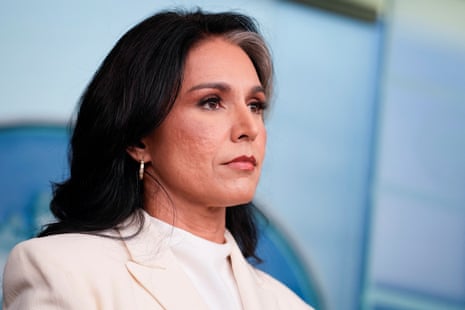
One day after meeting with Wiles, Gabbard instructed the NSA not to publish the intelligence report. Instead, she directed NSA officials to send the highly classified details exclusively to her office.
Details of this interaction between Gabbard and the NSA were shared exclusively with and have not been previously disclosed. Additionally, Wiles’ receipt of the intelligence report had not been reported before.
ODNI Response and Whistleblower Complaint
The office of the director of national intelligence (ODNI) did not immediately respond to inquiries regarding the NSA-detected call or Gabbard’s handling of the intelligence.
On April 17, a whistleblower contacted the office of the inspector general alleging that Gabbard had obstructed the routine dispatch of highly classified intelligence, according to Bakaj, who has been briefed on the details surrounding the flagged phone call. The whistleblower submitted a formal complaint about Gabbard’s actions on May 21.
For eight months, the intelligence report has remained secured, even after the whistleblower sought to disclose details to congressional intelligence committees.
Acting inspector general Tamara A Johnson dismissed the complaint following a 14-day review, stating in a June 6 letter to the whistleblower that “the Inspector General could not determine if the allegations appear credible.”
The letter advised the whistleblower that they could escalate their concerns to Congress, but only after receiving guidance from the DNI on how to proceed, given the complaint’s sensitive nature.
Concerns Over Inspector General’s Independence
Lawmakers have expressed concerns about the potential compromise of the watchdog’s independence after Gabbard appointed one of her top advisers, Dennis Kirk, to the inspector general’s office on May 9, two weeks after the whistleblower first contacted the inspector general’s hotline.
Gabbard’s office publicly acknowledged the sensitive complaint in a letter to lawmakers on Tuesday, one day after the Wall Street Journal reported on the classified brief. The letter was posted to the ODNI’s X account and included claims that the inspector general had not informed Gabbard of her obligations to transmit the complaint to Congress.
Bakaj stated that the ODNI cited multiple reasons for the delay in intelligence sharing, including the complaint’s top-secret classification, the fall government shutdown, and the intelligence community inspector general’s failure to notify Gabbard of her reporting requirements.
Expert Opinions and Congressional Reactions
Two attorneys and two former intelligence professionals who reviewed the incident and subsequent complaint shared with identified several procedural anomalies, raising questions about Gabbard’s handling of national intelligence and the whistleblower disclosure, which was reported to the inspector general as a matter of “urgent concern.”
Members of the “gang of eight,” a group of Senate and House leaders with access to classified executive branch information, received a heavily redacted version of the report for review on Tuesday night. They have expressed differing opinions regarding the legality of Gabbard’s conduct and the whistleblower complaint’s credibility.

Two Republican lawmakers dismissed the complaint’s credibility and supported Gabbard’s actions. Arkansas Senator Tom Cotton stated in a tweet that “the DNI took the necessary steps to ensure the material has handled and transmitted appropriately in accordance with law.”
However, Democrats have questioned the delay. Senator Mark Warner of Virginia, the senior Democrat on the Senate intelligence committee, said during a Thursday press conference,
“The law is clear: when a whistleblower makes a complaint and wants to get it before Congress the agency has 21 days to relay it. This whistleblower complaint was issued in May. We didn’t receive it until February.”
Warner added that the prolonged delay appeared to be an attempt to “bury the complaint.”
Whistleblower Complaint Details and Executive Privilege
The contents of the whistleblower complaint remain largely undisclosed. Bakaj, the whistleblower’s attorney, noted that Gabbard’s office redacted much of the complaint released to intelligence committee members on Tuesday, citing executive privilege.
He said,
“I don’t know the contents of the complaint, but by exercising executive privilege they are flagging that it involves presidential action.”
On February 3, Bakaj requested guidance from Gabbard’s office on how to share the whistleblower’s full report while ensuring appropriate precautions.
He stated,
“As you are well aware, our client’s disclosure directly impacts our national security and the American people. This means that our client’s complete whistleblower disclosure must be transmitted to Congress, and that we, as their counsel, speak with members and cleared staff.”
Bakaj indicated that the DNI’s office did not respond by the Friday deadline. He plans to contact members of the Senate and House intelligence committees on Monday to arrange an unclassified briefing on Gabbard’s conduct and the underlying intelligence concerns.
Congressional Requests and Oversight Concerns
Members of the gang of eight have contacted the NSA to request the underlying intelligence that the whistleblower alleges Gabbard blocked, according to staff in Senator Warner’s office.
Lawmakers can request classified information directly from intelligence agencies such as the NSA, bypassing the ODNI and the inspector general’s office.
Stephen F Lynch, the leading Democrat on the House oversight committee, wrote to acting inspector general Johnson warning that the integrity of the watchdog office could be compromised by Kirk’s May appointment.
Lynch noted that Kirk served in the first Trump administration and co-authored Project 2025, a policy roadmap for restructuring the federal government.
He wrote,
“The appointment of a highly partisan advocate for prioritizing personal loyalty to President Trump above independence and professionalism in the federal government – and one who apparently answers to DNI Gabbard rather than to you – in a senior role within [the intelligence community inspector general’s office] raises troubling questions about the independence of the IC IG.”
Johnson did not respond to requests for comment related to this story. She was replaced as intelligence community inspector general in October by Christopher Fox.


