

Artemis II Mission Launch Timeline
NASA has announced it remains on schedule to launch the Artemis II mission in early April. This mission will mark the first time in over 50 years that astronauts will fly around the Moon.
The launch was initially planned for March; however, a helium leak was detected, prompting the rocket's return to the Vehicle Assembly Building in Cape Canaveral, Florida, for necessary repairs.
NASA officials have expressed confidence that the issue has been resolved and intend to move the rocket back to the launchpad on 19 March. The earliest feasible launch date is now set for 1 April.
Mission Risks and Crew Details
During a press briefing, NASA leadership highlighted the inherent risks associated with the mission.
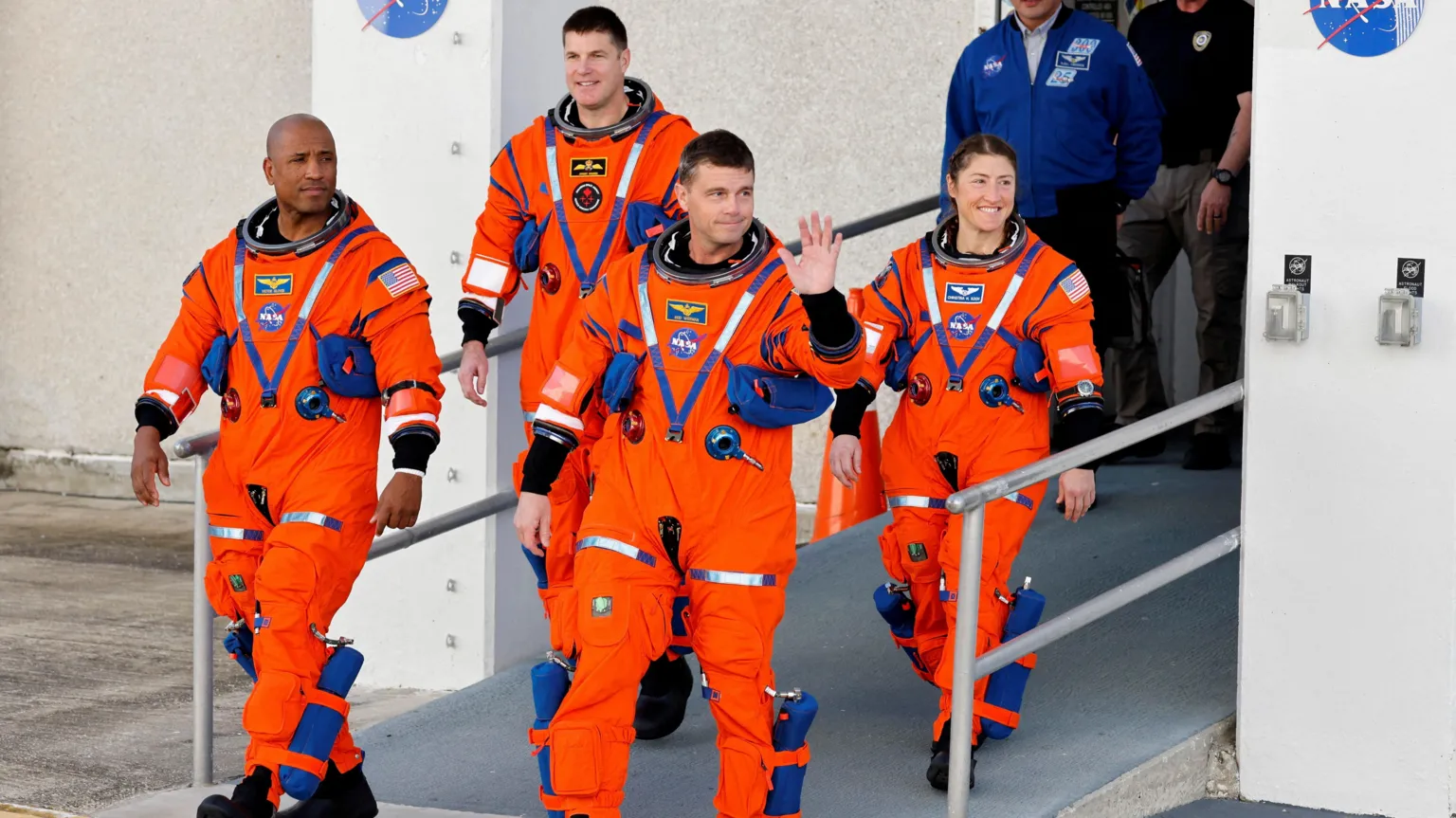
The Artemis II crew consists of three American astronauts—Reid Wiseman, Victor Glover, and Christina Koch—and Canadian astronaut Jeremy Hansen.

They will be the first humans to travel aboard NASA's Space Launch System (SLS), the agency's mega Moon rocket, and the Orion spacecraft.
Throughout the 10-day mission, the crew is scheduled to orbit the far side of the Moon—the hemisphere never visible from Earth—and then return to Earth.
"We want to be sure that we're thinking about everything that can possibly go wrong, and have we assessed and adjudicated all the risks to put us in the best posture to be successful," said John Honeycutt, chair of the Artemis II Mission Management Team.
"If you look at the data over time, over the lifespan of building new rockets, the data would show you that one out of two is successful. You're only successful 50% of the time. I think we're in a much better position than that," he said.
"We do an outstanding job of understanding the risk, buying down the risk, mitigating the risk, and putting together controls to manage the risk."
Testing and Launch Preparations
NASA has decided not to conduct another "wet dress rehearsal" after the rocket is rolled out to the launchpad. This test involves fueling the rocket and simulating the countdown sequence.
"There's not a lot more to be gained from that," said Lori Glaze, acting associate administrator of the Exploration Systems Development Mission Directorate.
"The next time we tank the vehicle will be when we're attempting to launch."
Glaze also noted that additional work remains before a definitive launch date can be confirmed.
"I am comfortable and the agency is comfortable with targeting April 1 as our first opportunity, just keep in mind we still have work to go," she said.
"There are still things that need to be done within the Vehicle Assembly Building and out at the pad, and as always, we'll always be guided by what the hardware is telling us, and we will launch when we're ready."
Mission Delays and Deadlines
NASA faces pressure to proceed with the Artemis II mission, which has already experienced a two-year delay due to issues with the heat shield on Artemis I. That mission involved the Space Launch System and Orion capsule flying to the Moon without a crew onboard.
In December 2024, NASA established a deadline to launch Artemis II before the end of April 2026.
"At this point, we're very focused on April," said Glaze.


