

Ken Paxton Wins Texas Senate GOP Runoff Over Incumbent John Cornyn
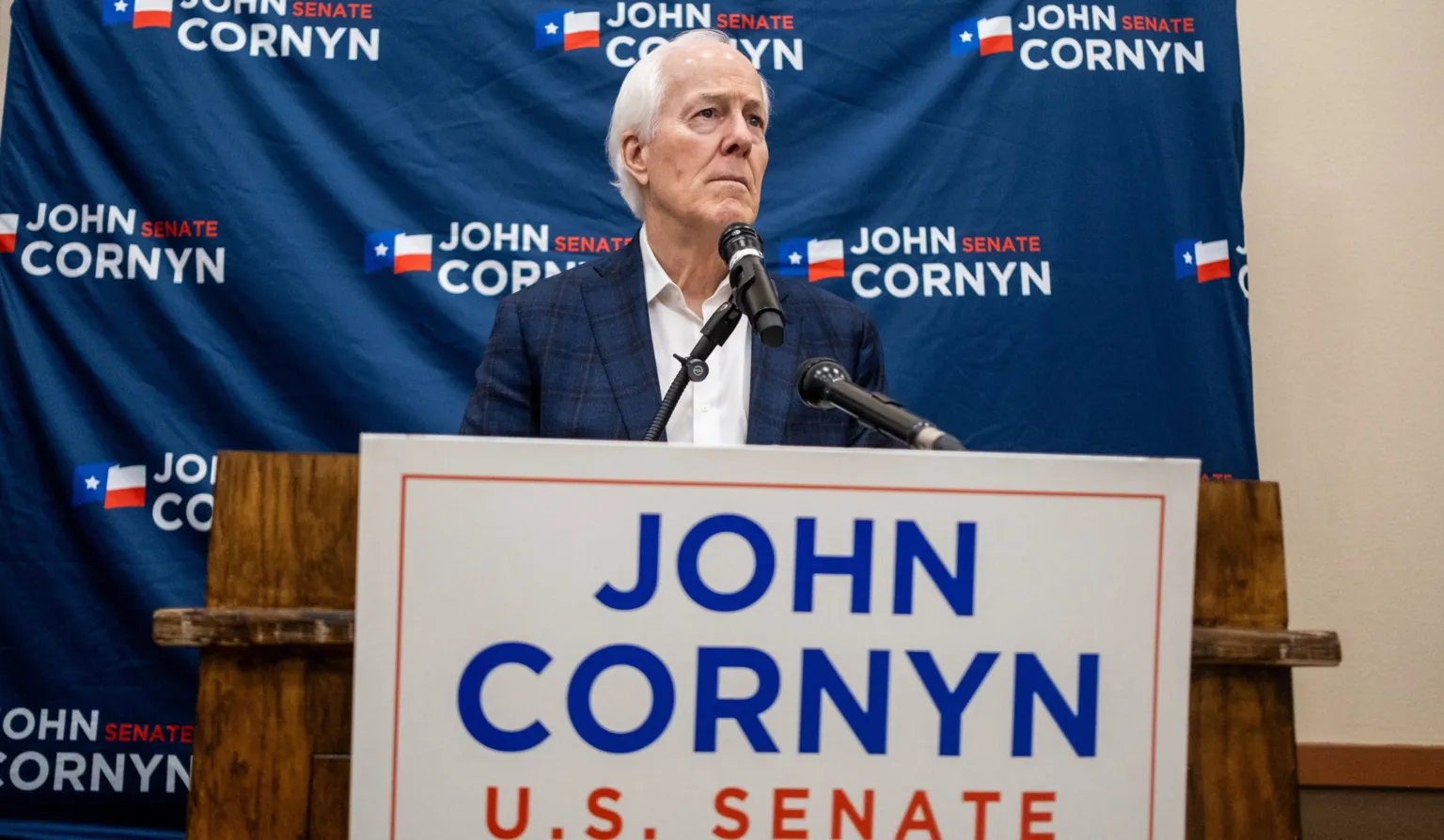
Texas Attorney General Ken Paxton decisively defeated Senator John Cornyn in the Republican runoff primary held Tuesday night.
Although the result had been anticipated for weeks, it represents a significant loss for Cornyn, a veteran legislator who served 23 years in Congress, including 12 years as a senior member of the Senate Republican leadership.
The intense primary battle set a record as the most expensive Senate primary campaign in United States history.
This victory positions Paxton for a highly scrutinized general election contest in November against Democratic state legislator James Talarico.
The outcome of this race will influence whether Democrats can regain control of the U.S. Senate during the final two years of former President Donald Trump's administration. Many Democrats perceive Paxton as the weaker candidate compared to Cornyn and view this as an opportunity to flip a traditionally Republican Senate seat in Texas.
Confident in his primary success, Paxton, 62, has already begun focusing on the general election, airing television advertisements in recent days that portray his opponent as a left-wing extremist.
Polling data indicates a competitive race in a state that has not elected a Democrat to the Senate since 1988.
It has been 46 years since two incumbent senators were defeated by voters within their own party during the same election cycle. Just ten days prior, Louisiana Senator Bill Cassidy failed to advance to his party's runoff primary, finishing behind two Republican challengers — a rare political occurrence.
Both Cornyn and Cassidy faced challengers endorsed by former President Trump, but their situations diverged in key respects.
Unlike Cassidy, who voted to convict Trump during the 2021 Senate impeachment trial, Cornyn was a loyal party member who emphasized his connections to the former president. Although he was slow to endorse Trump's 2024 re-election bid, Cornyn consistently aligned with the Republican agenda throughout his Senate tenure.
In the initial round of voting in March, Cornyn narrowly led Paxton with 42.5% to 40.8%, but failed to secure the 50% threshold to avoid a runoff.
Following that vote, speculation arose that Trump might endorse Cornyn, a well-regarded figure among Senate Republicans due to his fundraising prowess and prior leadership roles.
However, that endorsement did not materialize. Despite personal and political controversies, Paxton maintained strong support among Trump's populist base in Texas. He campaigned against the 74-year-old Cornyn, criticizing him as too old, too cautious, too entrenched in the political establishment, and disconnected from Texas conservatives.
Last week, as Paxton's victory appeared increasingly likely despite being outspent by a 9-to-1 margin, Trump endorsed Paxton. Trump publicly accused Cornyn of being
"very disloyal"on social media, asserting that Cornyn did not sufficiently support Trump's voting reform legislation.
Paxton's win may be seen as another example of the influence of Trump's endorsement. Trump has successfully backed several Republicans who defeated his critics in primaries, including Cassidy in Louisiana and Representative Thomas Massie in Kentucky.
However, Tuesday's outcome suggests Trump is responding to his base's preferences — which in Texas remain strongly aligned with populist conservative candidates and skeptical of long-serving Washington politicians.
If Cassidy's defeat demonstrated Trump's sway over Republican voters, the Texas contest indicates that the motivations of Trump's base can sometimes surpass his own influence.

Other Notable Texas Republican Primary Contests
While the Republican Senate runoff was the headline race in Texas, several other significant contests were also held.
In the race for the Republican nomination to succeed Paxton as attorney general, Congressman Chip Roy, a small-government conservative occasionally at odds with Trump, was defeated by state Senator Mayes Middleton.
Unlike the Senate primary, Trump did not endorse any candidate in this race, despite previously calling for Roy to be challenged for his congressional seat in 2023.
Trump's endorsement influence was evident further down the Republican ballot. In the strongly conservative 9th District, Trump-backed Army veteran Alex Mealer defeated state Representative Briscoe Cain, who had the endorsement of Texas Governor Greg Abbott. Similarly, in the 35th District, Trump's candidate Carlos De La Cruz prevailed over Abbott's choice, John Lujan.
Democratic Primary Runoffs and Controversies
In the Democratic runoff for the 35th House district, which extends southeast from the outskirts of San Antonio, sheriff's deputy Johnny Garcia defeated sex therapist Maureen Galindo.
Galindo, a relatively unknown candidate, had narrowly led in the March primary but became a national controversy after suggesting that American Zionists should be placed in immigration detention camps.
Her campaign appeared to receive funding from a conservative-affiliated group and drew condemnation from Democrats across the political spectrum. Two House Democrats, Josh Gottheimer of New Jersey and Jared Moskowitz of Florida, pledged to force daily votes to expel her from Congress if elected.
Garcia's victory allowed Democrats to avoid nominating a divisive candidate in a district that, while leaning Republican, could be competitive for the party.
Several other Democratic runoff contests featured current and former members of Congress competing against each other, reflecting the scramble caused by the Republican-controlled state legislature's redistricting last year, which aimed to secure more House seats for Republicans.
In the Houston-centered 18th District, 38-year-old one-term Congressman Christian Menefee defeated 78-year-old Al Green, who had served since 2005.
Green was known as a liberal firebrand, having been removed from Trump's past two congressional addresses for protesting and frequently introducing articles of impeachment against Republican presidents.
Green was targeted by Fairshake, a cryptocurrency-backed group that spent approximately $6 million to unseat him. Green had been a critic of the cryptocurrency industry.
In the 33rd District near Dallas, former Congressman Colin Allred, the Democratic nominee for Senate in 2024, defeated current Congresswoman Julie Johnson.
This result was seen as a form of political retribution for Congresswoman Jasmine Crockett, who lost the Democratic Senate nomination to Talarico in March. Crockett had supported Allred, while Johnson was Talarico's preferred candidate.
Implications for the November General Election
Democrats may find encouragement in Paxton's primary victory, viewing his history of scandals as a vulnerability compared to the well-funded Cornyn. However, Texas remains a reliably Republican state, and Democrats will need to mobilize quickly if Talarico hopes to secure a win in November.
Madeline Halpert contributed to this report.


