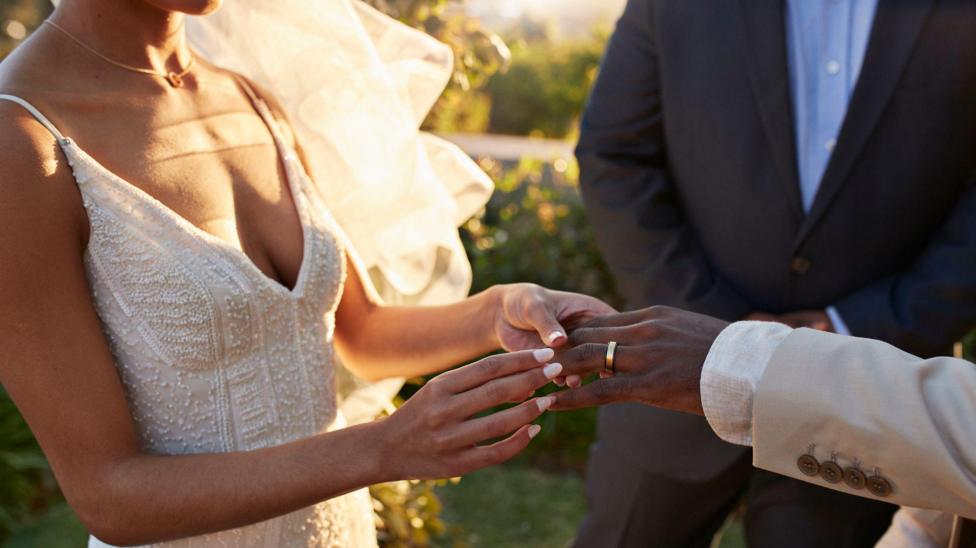
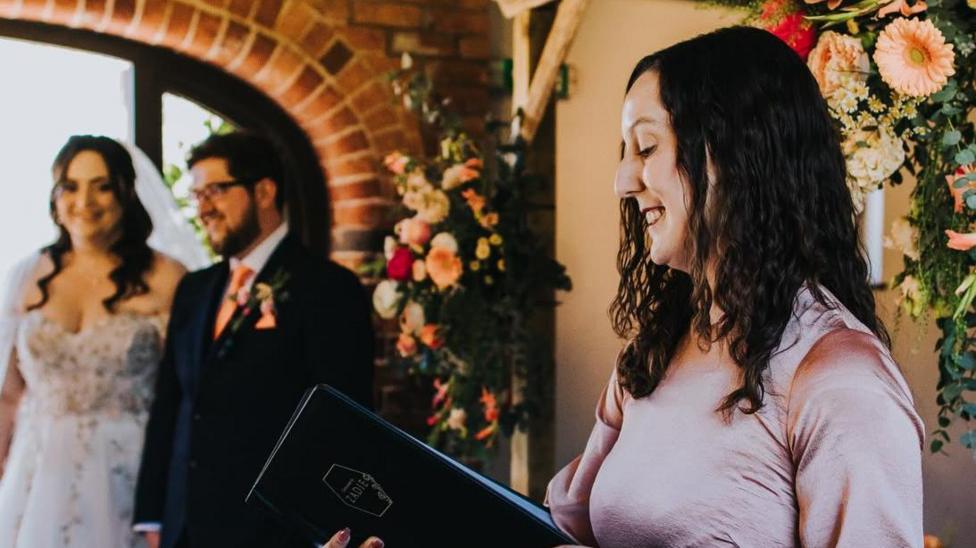
Courtney and Sam Scholey held their dream wedding day at a venue in the Oxfordshire countryside, but it was not legally binding in England and Wales. The couple later paid hundreds of pounds in April to quietly sign papers at a library in Buckingham, after a bespoke ceremony led by a celebrant who knew them.
Their experience reflects growing frustration among couples who say current wedding rules are stressful, costly and restrictive. The government has proposed a major overhaul that would allow official marriage ceremonies in a wider range of locations, from forests to beaches, if the site is approved by a registered officiant.
For Courtney Scholey, the legal part of the day felt almost meaningless.
“For us, that day was as insignificant as possible,”
“It was just the words we had to say to make it legally binding.”
Supporters of the proposals include Nicky Brown, who wants to marry in a scenic part of Wales with only her mum and her partner's mum as witnesses.
“I'd be quite happy to get married in a field full of sheep,”
But critics argue that the sacred tradition of marriage is being undermined.
What are the current wedding rules?
Wedding rules in England and Wales date back to the 18th and 19th Centuries. At present, a marriage or civil partnership ceremony must take place at an approved venue to be legally binding, and many venues control elements such as vows, guest numbers and music.
There are also strict rules about who can officiate and where. Authorised religious figures can conduct weddings, but with few exceptions only in places of worship. Registrars can officiate, but cannot include any religious content. Celebrants cannot legally marry people at all.
“complicated, inefficient, unfair and needlessly restrictive”
A Law Commission report in 2022 used those words to describe the marriage laws, which it said date back to the 18th and 19th Centuries.
David Lammy, then deputy prime minister, said marriage laws in England and Wales had not kept pace with modern Britain.
“not kept pace with the social and cultural changes that have shaped modern Britain”
“Some feel forced to pay for two different ceremonies, one legal and one belief based. Some enter into a marriage that isn't legally recognised. Others feel they have little choice but to marry in a way which doesn't reflect their beliefs, marring what should be a joyous occasion.”
Scotland and Northern Ireland relaxed their rules years ago.
The exact form of the new rules is still under public consultation until September, but the plan is to move from a “buildings based” system to an “officiant based” one.
The proposal would let couples hold legally recognised weddings in more unconventional places, provided the location is approved by the officiant.
“The laws are now, what, 200 years out of date?”
Brown said she and her partner had delayed getting married because there was no legal and affordable wedding that reflected them. She said she did not want extra frills or even a wedding dress, only someone to marry them in a beautiful setting that would not cost a fortune.
“I just want somebody to marry us and in a beautiful setting that isn't just going to cost the earth.”
She also said she had been worried that her mother, who is 86 and unwell, might miss her wedding day, and that the proposed changes had given her hope.
Miranda Allard, 66, also said reform was long overdue. When she married 40 years ago, she had to jump through hoops to get permission for an interfaith ceremony in her parents' garden, and she said she finds it astonishing that couples still face similar obstacles.
Simon and Miranda Allard had to get permission to hold an interfaith ceremony in her parent's garden when they got married 40 years ago...
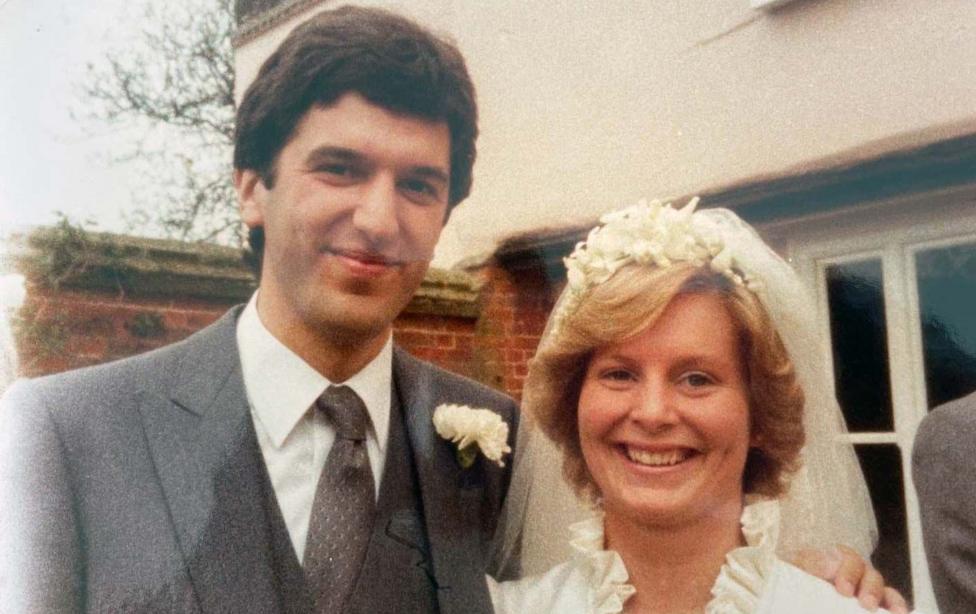
She said the couple applied for a special licence and explained that they did not want to put her Jewish mother-in-law through a church wedding.
“We applied for a special licence... [and] explained how we did not want to put my Jewish mother-in-law through a church wedding,”
“I, on the other hand, was brought up in a Christian family and would not 'feel married' if doing so in a registry office.”
It took letters from the couple, their parents, the local bishop, the village vicar and others to persuade the authorities to allow the ceremony.
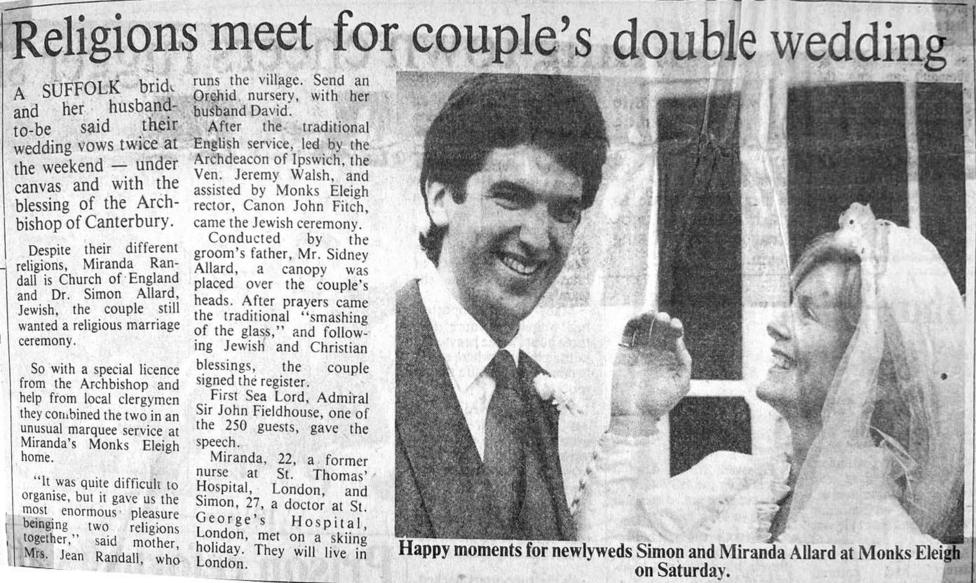
The couple combined their legal Christian service with Jewish prayers and tradition, including breaking the glass, which she said was unheard of at the time. Their wedding even made the paper.

... their nuptials even made the paper
Who else wants the rules changed?
Father John, who did not give his last name, wrote to BBC Your Voice to say he would like to perform ceremonies like this too.
“Marriage is about the lifelong commitment made before God for me, and for some couples the setting can make that sacred moment even more personal and memorable.”
Brian Bracher, 65, from Chichester in West Sussex, said he could not believe the UK was still debating the changes.
“It is ridiculous that, in this modern era, a small minority are still trying to exert control and make decisions about what is frivolous and not acceptable. Just let people, that love each other, marry in a way that suits them.”
Isabel Sinagola, 33, said the proposals would especially help Christians from the LGBT community.
“[They] currently cannot have the wedding they might want, as they cannot marry in the Church of England, but also cannot have religious content in the only option available to them: a civil ceremony.”
She said the changes could give such couples a meaningful option they do not currently have.
Some people also hope the reforms will create more affordable wedding options.
Will the changes make weddings cheaper?
Carl Jones said he and his partner of 20 years have not married because even the simplest weddings cost too much.
“We want to get married but won't, as it costs too much. It's cheaper if we just have two witnesses, but why should our [12-year-old] daughter not be allowed to attend... It's wrong.”
But sceptics say the proposals will do little to cut costs, even though wedding planner app Hitched says the average wedding has risen to £21,990.
Reverend Tom Kennar said the wedding itself is not the expensive part.
“[It] is the costs of the reception, vehicles, booze, photographers, clothing, food, cars etc,”
Other critics fear the changes would weaken the significance of marriage.
“Marriage is a gift from God to secure society. Not an opportunity to set new standards and styles,”
Donald Tosh, from Glasgow, wrote that view to BBC Your Voice.
“It's now not a life decision, it's a temporary decision. And now with this, a very temporary frivolous decision,”
Oliver, from Kent, also criticised the proposal.
Celebrant Zadie Ward said the changes could instead deepen the meaning of a wedding for many couples.
“[Critics] are saying it's a solemn promise and it's about the serious commitment, but how can you ask someone to make a serious commitment in words that mean nothing to them and ways that are meaningless to them?”
Why do supporters say modern ceremonies matter?
Ward said traditional weddings would still be available for those who want them, while other couples would gain more choice. She pointed to blended families, mixed cultures and traditions that have changed within cultures over time.
“Modern relationships deserve modern ceremonies.”
The government says safeguards will remain in place to protect the dignity of marriage. Ceremonies considered gimmicks that trivialise the legal act would not be allowed, and activities such as skydiving, white-water rafting, roller coasters or other amusement rides would fall short of the standard.
“Every couple deserves to start their journey together with an unforgettable day that reflects their beliefs, their personalities and the lives they plan to build together,”
“This Government's changes will bring weddings law into the twenty-first century.”
Additional reporting by Mary Litchfield and Rozina Sini
Key Facts
- Courtney and Sam Scholey had a dream ceremony in the Oxfordshire countryside, but it was not legally binding in England and Wales.
- The government has proposed a public consultation until September on moving from a “buildings based” to an “officiant based” system.
- The current laws date back to the 18th and 19th Centuries, and Scotland and Northern Ireland already have relaxed rules.
- Wedding planner app Hitched says the average wedding cost has risen to £21,990.
- The government says gimmick ceremonies such as skydiving or roller coasters would not be allowed.