

Introduction to the "Great British People" Facebook Page
The "Great British People" Facebook page, which claims to originate from Yorkshire, has recently garnered 1.3 million views for its latest video featuring an elderly white British man expressing distress over his pension. Other videos on the page include reporters discussing "the overwhelming scale of mass immigration" and posing questions to viewers about whether they miss "the Britain we used to know."
However, the authenticity of the creator's connection to the UK is questionable: the account is actually operated by an individual based in Sri Lanka.
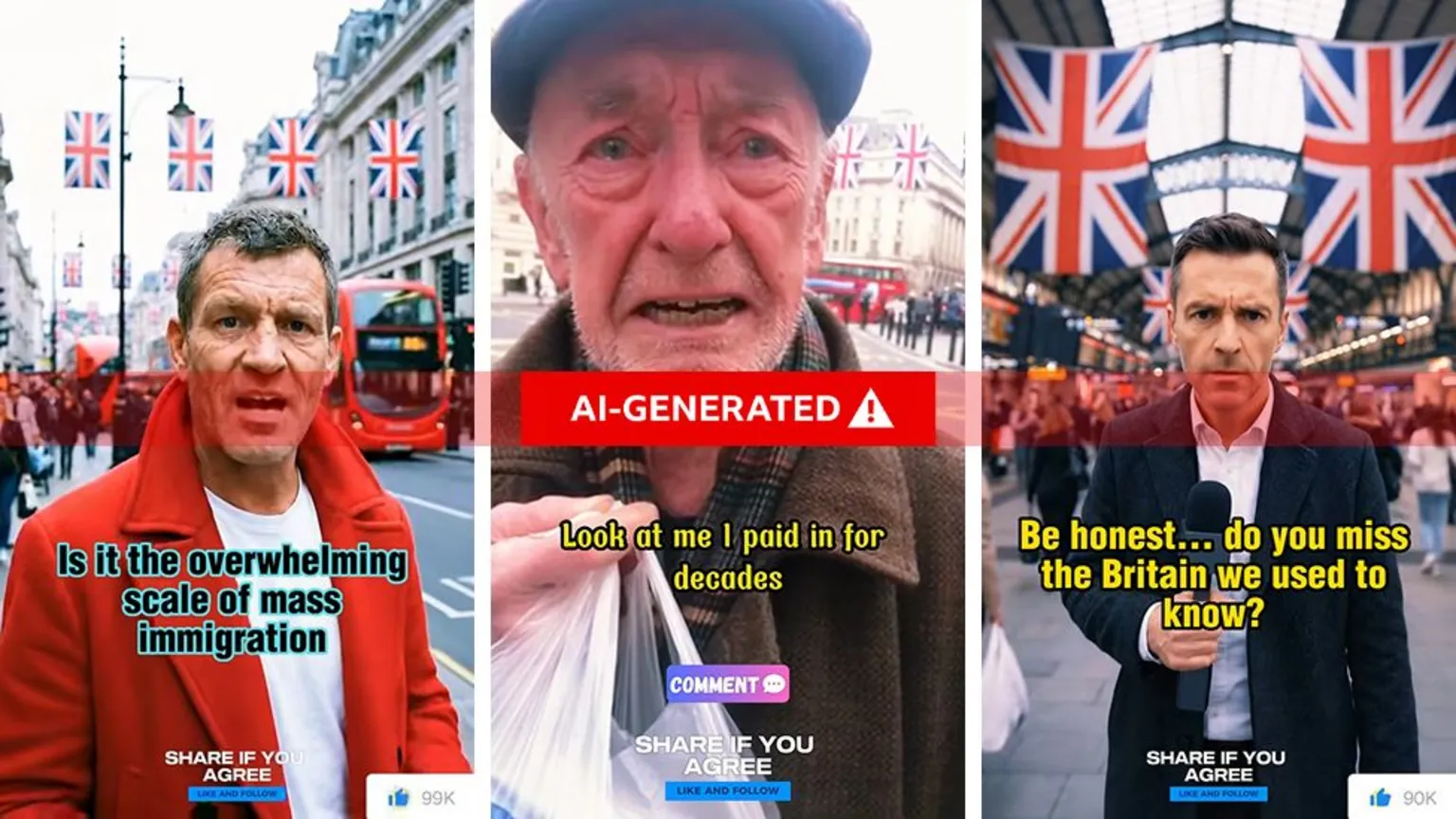
Network of Anti-Immigration Accounts Across Multiple Countries
This account is part of a larger network of interconnected Facebook and Instagram profiles identified by BBC Panorama and the Top Comment podcast. These accounts produce and disseminate anti-immigration AI-generated content targeting UK audiences but are often managed from locations hundreds or thousands of miles away.
Many of these accounts are operated from Sri Lanka, the United States, and various European countries. Others are based in Vietnam and the Maldives, or have links to Iran and the United Arab Emirates. This information was gathered through Facebook's transparency tools, interviews with content creators, and social media indicators such as spelling patterns and the accounts they follow.
Expert Insights on AI-Generated Content and Public Perception
An expert interviewed by the BBC noted that research indicates people are less adept at detecting AI-generated fakes than they believe. Furthermore, increased exposure to AI content tends to heighten skepticism toward authentic material.
Concerns Raised by London Mayor Sir Sadiq Khan
London Mayor Sir Sadiq Khan, who has commissioned research into AI-generated images depicting the capital in decline, expressed concerns that such content damages the city's reputation internationally. He stated that while some individuals behind these accounts are motivated purely by financial gain, others receive backing from hostile states such as Russia and Iran.
Although direct state involvement is difficult to verify, some accounts share posts sympathetic to the Russian and Iranian governments. Attempts by the BBC to contact the account owners were unsuccessful.
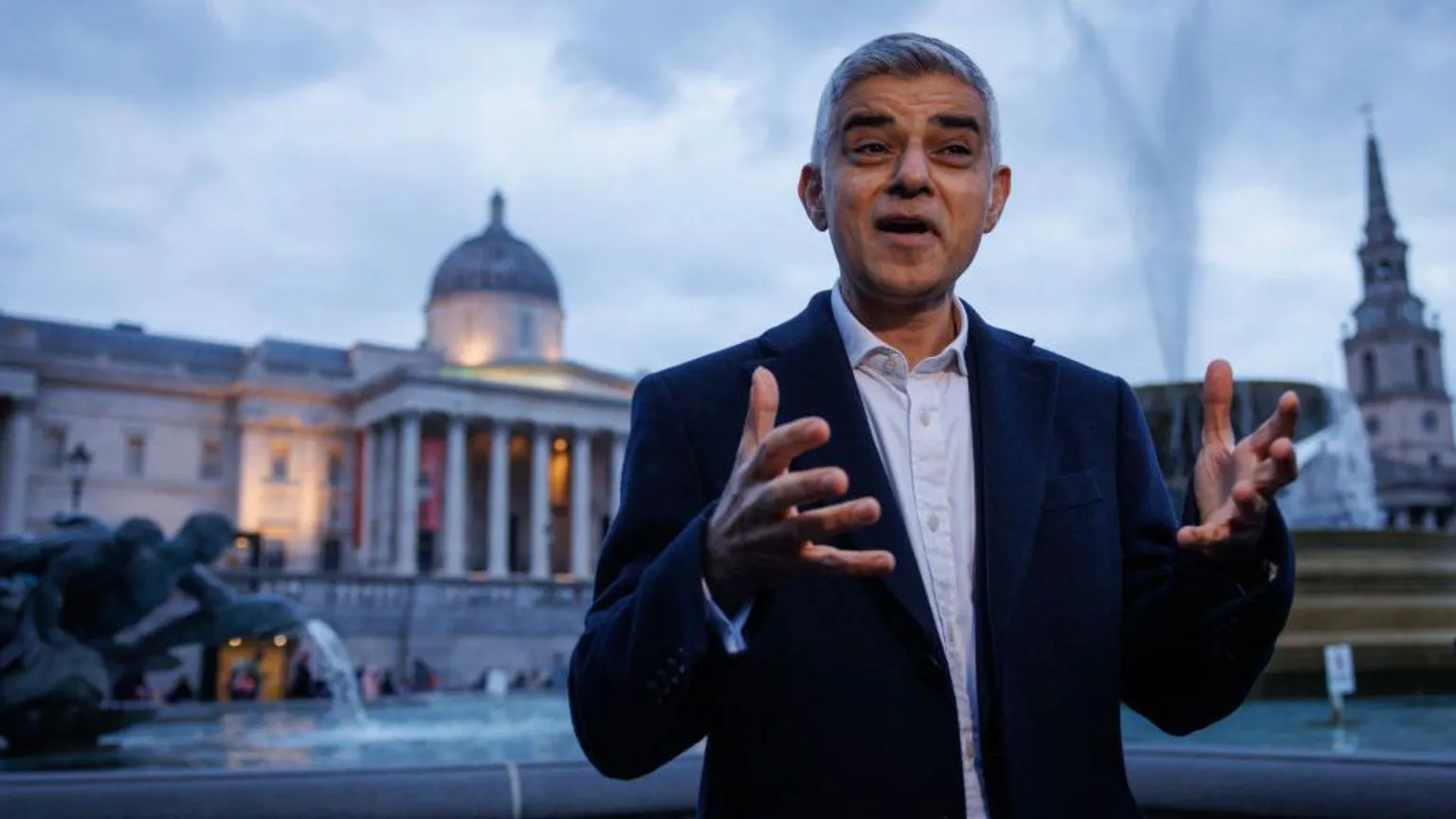
Content Evolution and Motivations Behind the Accounts
Several accounts have repurposed their pages to increase engagement, shifting from themes like "Make America Great Again" and "Life in the USA" to AI-driven anti-immigration narratives. Occasionally, these accounts have also experimented with content sympathetic to migrants.
According to Professor Sander van der Linden, a social psychologist at the University of Cambridge, states and other groups are attempting to manipulate public opinion through such fake AI accounts, describing them as "a new evolution of influence operations." He noted that it is relatively inexpensive for AI content creators overseas to pose as British nationals online by purchasing social media accounts originally established in the UK.
Examples of AI-Generated Videos and Their Narratives
The accounts have amassed hundreds of thousands of views with AI-generated videos depicting fabricated scenes, such as the House of Commons filled with men in traditional Arab attire imposing Sharia law. Other videos feature fabricated interviews with women wearing hijabs discussing the need for the UK to become more Islamic.
The portrayal of the UK in these videos is often contradictory. Some widely shared content links societal decline to Muslim immigration, while other videos from the same creators depict Islamic countries as idyllic by comparison.
Creators Behind the Content and Their Perspectives
BBC Panorama spoke with two individuals responsible for an account that has accumulated over 20 million views. This account features AI-generated videos from the perspective of people walking through various British cities in 2050.
Cities such as Liverpool, London, Birmingham, and other unnamed locations in England are depicted as dirty, littered, and populated by people dressed in traditional Islamic clothing and hijabs lining the streets. Market stalls display "Halal" signs, and bunting featuring Arabic script is visible. Scenes also include fires and chaos.
Foreign cities including New York, Washington DC, and some European capitals are portrayed similarly.
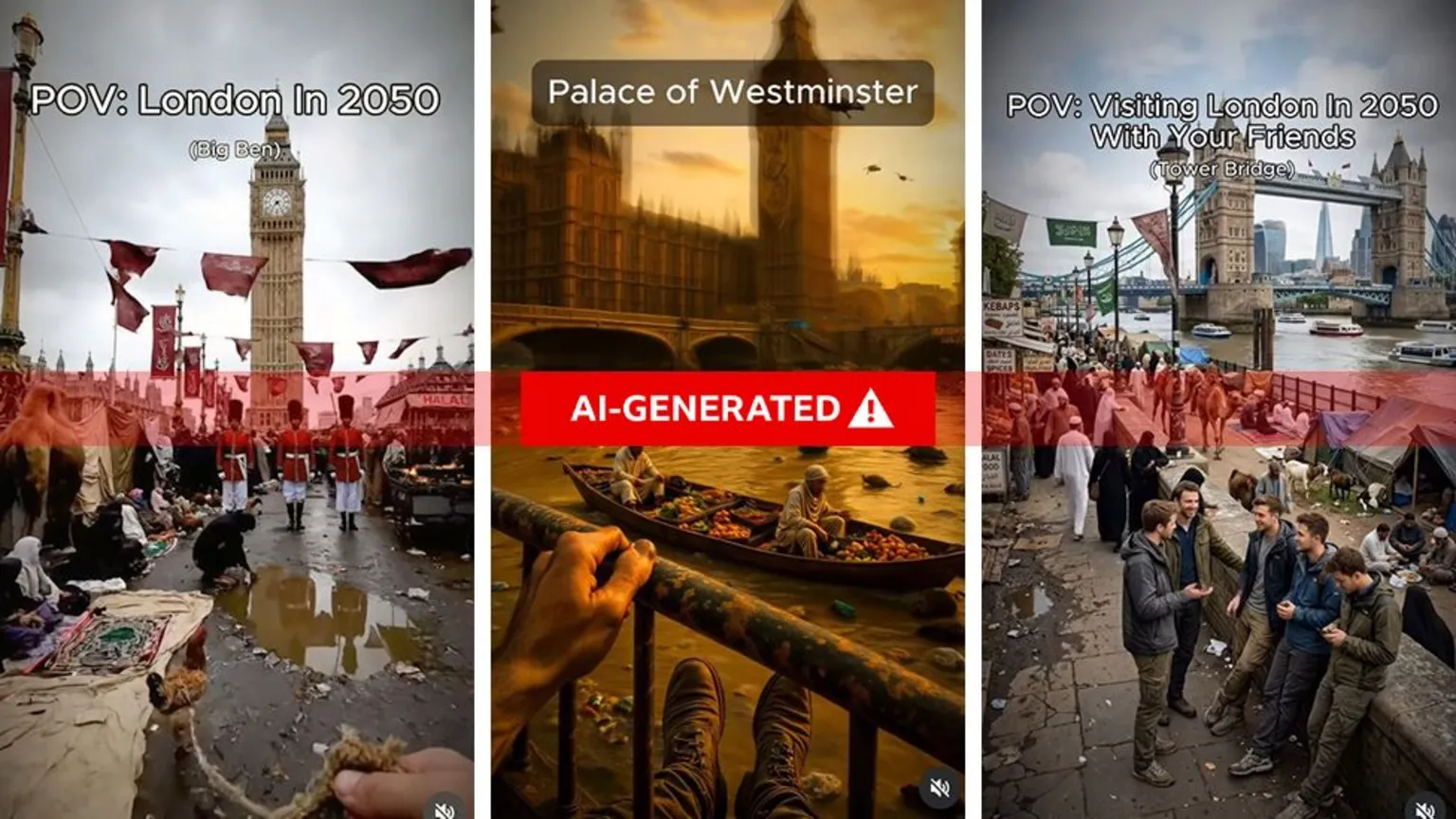
When questioned about the potentially divisive nature of their content, the creators stated:
"Our content has a clear purpose: we aim to inform people and voters about what we believe could happen in the coming decades if current social and cultural trends continue."
They acknowledged being located far from the cities depicted in their videos and described themselves as operating from a European country where "a sense of insecurity has become more noticeable."
The creators said they portray countries like Iran in an idealized manner to "provoke thought and discussion about political and cultural evolution."
They denied financial motivation, stating they do not monetize their account. They also claimed to be in contact with "various politicians" supportive of their content but declined to reveal their identities.
Research Findings and Motives Behind AI-Generated Content
Research conducted by London's City Hall identified a sharp increase in social media posts of this nature over the past two years and outlined two primary motives.
"You've got state actors," London Mayor Sir Sadiq Khan told the BBC. He mentioned evidence of activity from Russia and China, as well as from "extreme right-wing" supporters of the Make America Great Again (MAGA) movement in the US.
"Secondly, we've seen individuals and companies trying to monetise and make profit from division."
Mayor Khan acknowledged the city faces challenges but emphasized that these "AI-generated lies" have tangible effects, deterring visitors, overseas students, and investors.
"My anxiety is, decent people start believing these lies, this dystopian image of London being in decline, that we're a dangerous city, that there is no law and order," he said.
He urged social media companies to enhance efforts to combat misinformation by "amending their algorithms to make sure they're not rewarding poison and division" and by clearly labeling AI-generated content.
Responses from Social Media Platforms
Meta, the parent company of Facebook and Instagram, stated it takes "co-ordinated inauthentic behaviour seriously" and employs "specialised global teams constantly working to identify and disrupt this type of activity."
A Meta spokesperson added:
"We will take action on any content or accounts which violate our Community Standards, which apply to all content, regardless of whether it is created by AI or by a person."
Monetization and Coordination Among Account Operators
BBC Panorama also engaged with individuals behind several accounts that cross-promote or interact with the 2050 point-of-view videos, corroborating City Hall's conclusion that some operators are motivated by clicks and profit.
One individual stated:
"I mostly post to get a reaction for the sake of engagement which boosts my followers and money,"
explaining that they receive payment through Instagram's monetization scheme based on advertisements shown to viewers.
Another operator mentioned coordinating with accounts "raising voice against similar issues" but asserted their activity is "not politically motivated in any way." Their goal is for other accounts to promote their content "to get as much attention as possible."
Some individuals running accounts with similar content and engaging with the "fake" British patriot profiles are based in the UK.
One person managing a profile from the West Midlands, which posts about "the restoration of Britain's former greatness," reported coordinating with other accounts to advance the same political objectives. They described a group chat on Instagram used to decide what to post and when.
The accounts they collaborate with are located in India, Pakistan, Singapore, Australia, and New Zealand.
Academic Perspectives on Disinformation and Public Trust
Professor van der Linden from the University of Cambridge described the "disinformation-for-hire industry" as expanding, involving "paid actors and influencers pretending to be ordinary citizens to manufacture support for an agenda," often utilizing AI content and bots to drive traffic.
Research indicates that the public's ability to detect fake content is limited, with an accuracy rate of approximately 55%, according to Professor Yvonne McDermott Rees, a law professor at Queen's University Belfast who studies the impact of deepfakes on trust.
She also noted that people generally overestimate their ability to identify fakes.
Comments on the AI-generated videos suggest some real viewers are being deceived. One woman wrote "keep going," while another commented "Never Back Down. Stand Up and Do What You Have to Do" in response to an AI-generated video showing a man protesting to "Stop the Boats" bringing in migrants.
This video is posted on the "Britain Today" Facebook page, which Meta's transparency tools indicate is based in Sri Lanka.
"The more that people see AI content, the less able that they are to discern fact from fiction, then the more likely they're going to be to distrust real content,"
said McDermott Rees.
"It shouldn't fall on just the ordinary person to have to try and figure out what's real and what isn't."
However, Professor van der Linden warned that research also suggests many individuals do not mind whether content is AI-generated.
"As long as it resonates with their identity and world-view they will often still endorse the content and share it with others because it signals agreement with a larger agenda,"
he said.
As one commenter on the "Great British People" Facebook page remarked:
"It's probably AI but the fact is that he is right about everything."


