

Swinney Addresses Food Prices Policy
SNP leader John Swinney has rejected claims that his food prices policy is intended to provoke a confrontation with the UK government.
Speaking on the BBC's Today programme prior to his expected re-election as first minister, Swinney explained that his proposal to legally cap the prices of certain supermarket food items is a response to the ongoing cost of living crisis.
"People are struggling to afford a very basic shop,"he said, adding that he has a
"public health responsibility"to ensure access to an affordable and nutritious diet.
Under the SNP manifesto commitment, major supermarkets would be required to limit the prices of up to 50 essential products, including milk, eggs, cheese, and rice.
The party has also pledged to cap bus fares at £2 and to expand childcare services.
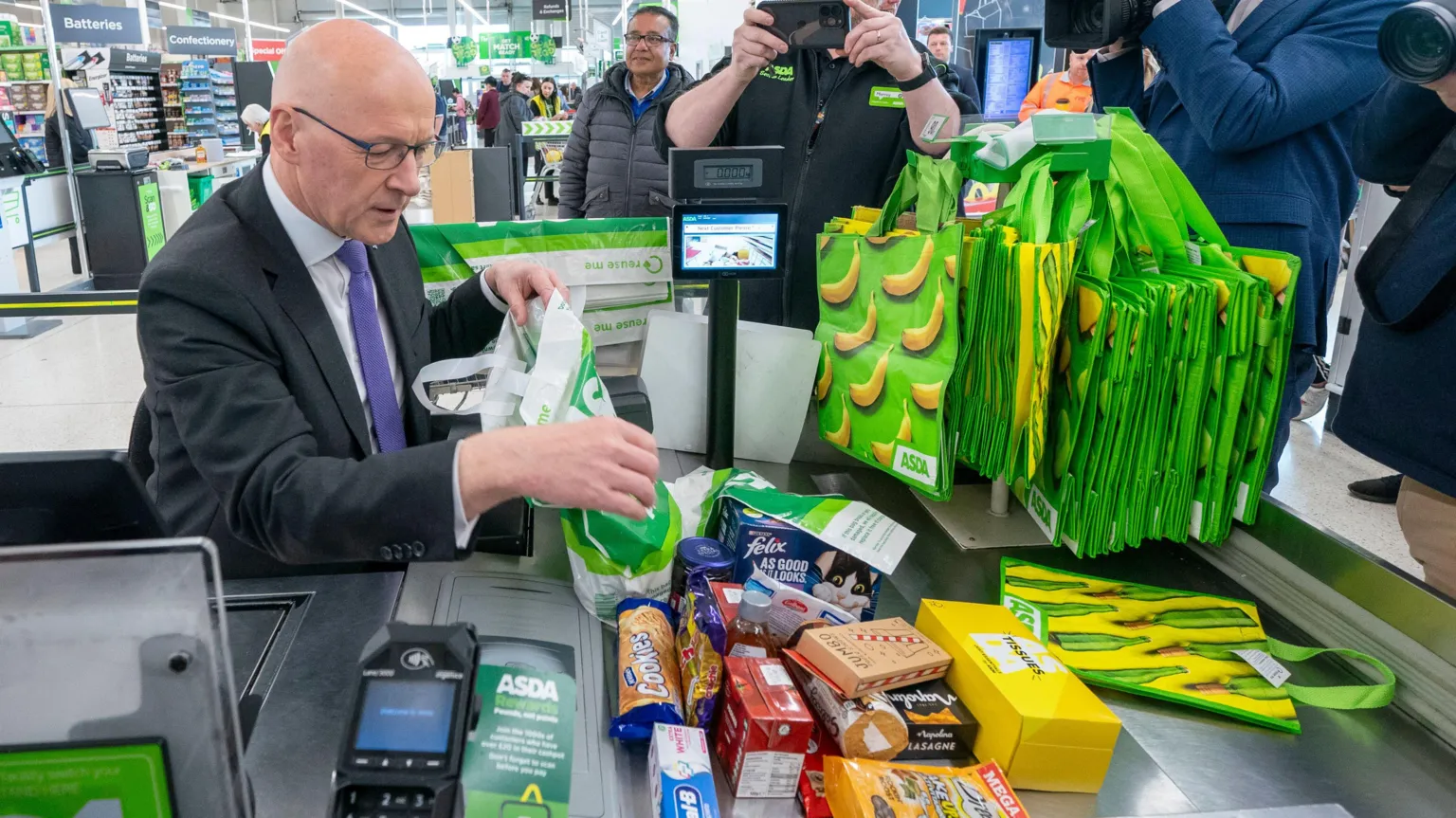
The food price policy has faced criticism from various quarters, including the Scottish Retail Consortium (SRC), a trade association that dismissed it as a
"gimmick."
SRC representative Ewan MacDonald-Russell told the programme that the policy could render small shops, which would not be subject to the proposed legislation, less competitive.
Swinney emphasized that
"engagement"with producers and retailers would be
"crucial to get it right,"but stressed the urgency of addressing the difficulties faced by the public.
The proposed legislation is believed to require amendments to the UK Internal Markets Act 2020, enacted post-Brexit to prevent trade barriers and regulatory divergence among the UK's constituent nations as powers returned from the EU.
Swinney acknowledged that, having fallen short of an SNP majority in the recent election, he would need to collaborate with other parties in Holyrood as well as UK ministers to implement the policy.
When asked if he sought a
"punch-up"with Westminster to advance the independence cause, Swinney responded:
"What I'm doing is trying to help people who are struggling with the cost of their shopping.
There are procedures I have got to go through to make that happen.
I enter these discussions from a spirit of wanting to find a solution that will work for people who are struggling to afford their shopping in Scotland today."
First Minister Vote and Parliamentary Context
Later on Tuesday, Swinney will stand for election as first minister in a vote by Members of the Scottish Parliament (MSPs).
All six parties represented in the Scottish Parliament have nominated their leaders for the position, but Swinney's reappointment is considered almost certain following the SNP's decisive victory in the 7 May election.
The SNP secured 58 seats, while its closest competitors, Labour and Reform UK, each won 17 seats.
This distribution means opposition parties would need to unite behind an alternative candidate to defeat Swinney, a scenario deemed highly unlikely.
If elected by MSPs—or more precisely, selected as their nominee for first minister—Swinney's appointment will be formalized by royal warrant before he is sworn in at the Court of Session in Edinburgh on Wednesday.
Following his appointment, the new first minister is expected to commence the process of forming his cabinet.
In the election, the SNP fell seven seats short of an outright majority in Holyrood, where the electoral system typically results in minority or coalition governments.
This outcome means Swinney will require support from other parties to pass legislation.
Swinney has indicated willingness to cooperate with all opposition parties except Reform UK, led in Scotland by former Conservative peer Malcolm Offord.
He stated that Nigel Farage's party holds
"completely different values"from his own, a stance that Lord Offord described as
"arrogant, petty and deeply undemocratic."
Pro-Independence Parliament
Swinney also told the Today programme that the new Scottish Parliament supports independence and that he must
"find a means of ensuring that the democratic wishes of the people of Scotland take effect."
There is a pro-independence majority at Holyrood when combining SNP and Scottish Green MSPs, although Swinney campaigned on the premise that an SNP majority alone was necessary to advance the cause of a second independence referendum.
In the election, the SNP's constituency vote share declined by 9.5 percentage points to 38.2% compared to 2021, while its regional vote share dropped by 13.3 points to 27.2%.
In the 2014 referendum, Scotland voted 55% to 45% to remain part of the United Kingdom.
The authority to hold a referendum rests with Westminster, and the UK Labour government has clearly stated it has no intention of permitting a second vote on independence.


