

Mancester's Heron House is the initial home of No 10 North. Senior ministers and aides close to Andy Burnham are expecting to regularly work from the new branch of Downing Street, which the prime minister has said will be the "dominant driver of the UK's economy".
Education Secretary Lucy Powell, Housing Secretary Angela Rayner, and Louise Haigh, who is overseeing No 10 North in her role as Chancellor of the Duchy of Lancaster, are likely to work there with Burnham. The new branch of Downing Street is currently operating from Heron House in Manchester city centre, whilst a brownfield site is redeveloped.
A blueprint for No 10 North produced by the think tank Re:State recommends a workforce of as many as 300 staff within 18 months.
Burnham aims to base himself at No 10 North at least one day a week and is expected to start work there for the first time in coming days. He will be joined by his closest adviser, Kevin Lee, the director of his mayoral office, who will move to No 10 North after next week's Greater Manchester mayoral election.
Lee is one of at least seven Greater Manchester Combined Authority (GMCA) employees, including four senior managers, to have been recruited by Burnham and are already moving into No 10 North. Chief executive Caroline Simpson, who is moving to become Downing Street Deputy Chief of Staff based at No 10 North, as well as directors John Wrathmell and Claire Norman will also move across.
Some London-based civil servants have voiced concerns about the uncertainty surrounding the plans, with most details expected to be announced in the weeks ahead. In the weeks before Burnham became prime minister, the BBC has been told that senior officials were summoned to calls informing them that a significant programme to move staff out of London was being developed.
Those who were on leave were told the plans would already be under way by the time they returned, according to a senior civil servant familiar with the discussions.
Dave Penman, general secretary of the FDA union which represents senior civil servants, welcomed the changes to the structure of government but cautioned that relocation was a big decision for staff.
"Those considering a move out of London have the added concern that a return would be difficult given the disparity in house prices," he said, adding a major consideration would be "whether it feels like a permanent reorganisation or something that could change quickly with a future government".
Burnham has told cabinet members No 10 North is not a gimmick in a bid to reassure critics and civil servants whose careers may be reshaped by the plan, who say it still has to prove it can make a lasting difference.
Dr Simon Kaye, author of the Re:State report – which Burnham was involved with during his time as mayor of Greater Manchester – told the BBC that No 10 North had to be big enough to outlast the Burnham administration.
"That means reaching a critical mass of people, establishing a genuine sense of shared purpose, and getting to a place where No 10 North feels different enough and vital enough that it can persist, no matter who the prime minister is," he said.
While civil servants who spoke to the BBC largely welcomed the idea of a No 10 North, some doubted whether it would feel substantially different from existing regional government offices while the majority of ministers and political journalists, as well as many business leaders, continue to be based in London.
Some civil servants based in northern England believe they should have been given the opportunity to apply for jobs at No 10 North before discussions began about potentially lucrative relocation packages for staff moving from London.
One official, speaking anonymously due to the Civil Service Code, told the BBC:
"I've built my career here and seen first-hand that the North is home to exceptional talent.
"No 10 North needs to make the best use of all talent and create opportunities for people to build careers close to the communities they serve."
Northern Powerhouse Partnership chief executive Henri Murison said the government had been moving civil servants out of London for several years, including to the new Darlington Economic Campus, adding:

"This has seen a number of senior civil servants be based from here but only rarely ministers."
Where will No 10 North operate from?
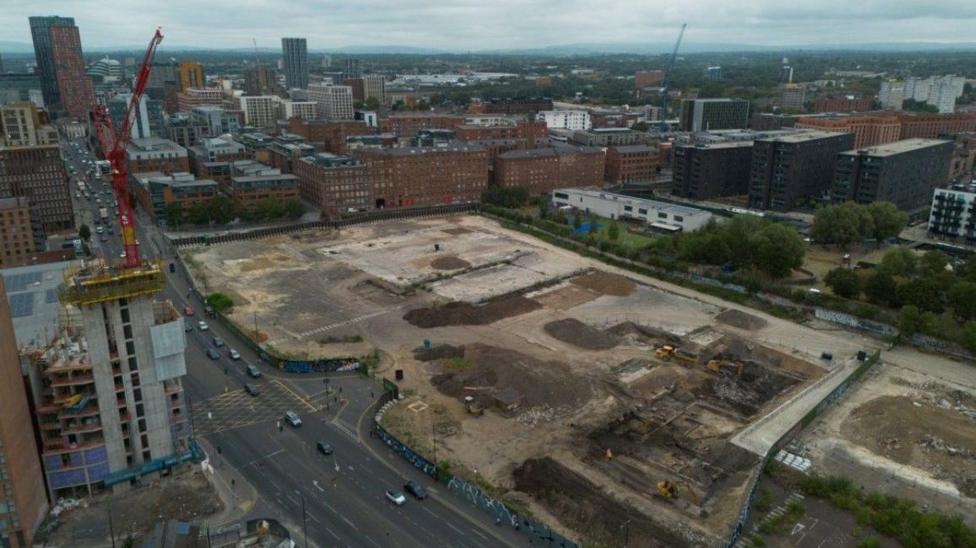
The new branch of Downing Street is currently operating from Heron House in Manchester city centre while a brownfield site is redeveloped. This brownfield construction site will become the Manchester Digital Campus, a civil service hub that will house No 10 North.
How is the government planning the move?
A blueprint for No 10 North produced by the think tank Re:State recommends a workforce of as many as 300 staff within 18 months. Burnham aims to base himself there at least one day a week and is expected to start work there for the first time in coming days.
He will be joined by Kevin Lee, the director of his mayoral office, after next week's Greater Manchester mayoral election. Lee is one of at least seven GMCA employees, including four senior managers, already moving into No 10 North, alongside Caroline Simpson, John Wrathmell and Claire Norman.
Why are some civil servants uneasy?
Some London-based civil servants have voiced concerns about uncertainty surrounding the plans, with most details expected in the weeks ahead. Before Burnham became prime minister, senior officials were summoned to calls saying a significant programme to move staff out of London was being developed, and those on leave were told the plans would already be under way when they returned.
Dave Penman of the FDA welcomed changes to the structure of government but said relocation was a major decision for staff. He said the added concern was the difficulty of returning to London because of house-price differences, and questioned whether the move would feel permanent or could change quickly under a future government.
What concerns have been raised about the wider plan?
Burnham has told cabinet members No 10 North is not a gimmick, but critics say it still has to prove it can make a lasting difference. Dr Simon Kaye said it must be large enough to survive beyond the Burnham administration by creating a critical mass of people and a genuine shared purpose.
While civil servants largely welcomed the idea, some doubted whether it would feel substantially different from existing regional government offices while most ministers and political journalists, and many business leaders, remain in London.
Some civil servants in northern England said they should have been allowed to apply for No 10 North jobs before discussions began about potentially lucrative relocation packages for staff moving from London. One anonymous official said the North had exceptional talent and that No 10 North needed to use all talent and create opportunities for people to build careers close to the communities they serve.
Henri Murison said civil servants had already been moved out of London for years, including to the Darlington Economic Campus, but that ministers had only rarely been based there.
Related coverage
Whitehall officials offered move to No 10 North in Manchester
How can 'King of the North' Burnham help the South?
New 'No 10 North' plan will rebalance power in Britain, Burnham promises
for our Politics Essential newsletter to read top political analysis, gain insight from across the UK and stay up to speed with the big moments. It'll be delivered straight to your inbox every weekday.



