

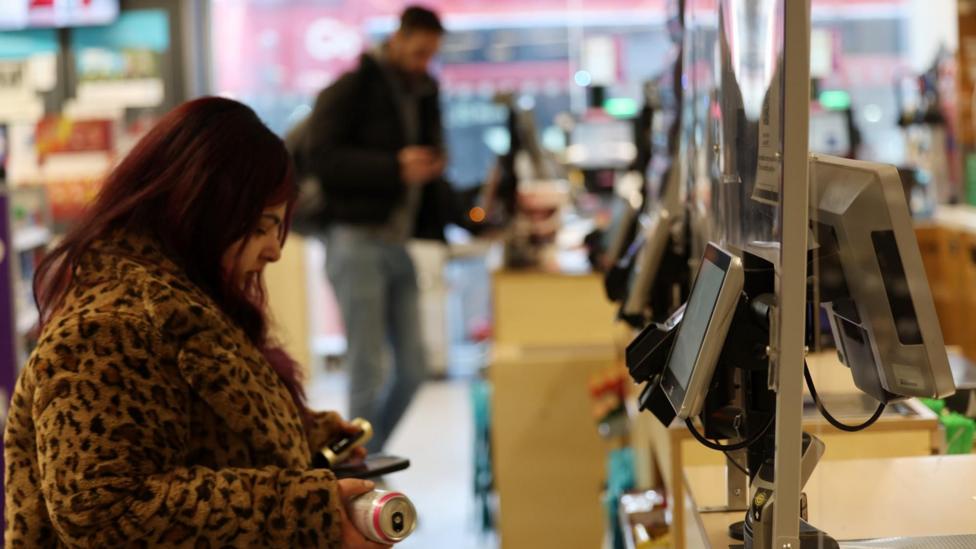
Replacing supermarket checkout staff with self-service facilities could add to rural loneliness, according to one Suffolk shopper and a charity worker who supports isolated communities. James Ackroyd-Cooper, 53, said his concerns were raised after he visited the Co-op in Laxfield, Suffolk, last week and found staff had been replaced by self-checkouts.
He said the loss of face-to-face interaction could be particularly difficult in a village setting, where shops are part of the local community.
“I went in to find the two tills that are usually there, of which one was usually manned... had been replaced with two self-checkouts,” Ackroyd-Cooper told BBC Suffolk.
“No tills at all. No human being at all, and the setting of this seems completely inappropriate.
“If we were on a main road, in a petrol station... I could kind of cope with it, but it seems so totally inappropriate in this setting where there is a sense of community.
“You often see older people, and my parents are older and I know they don't like struggling with their basket, their bags and scanning everything.”
He said he had always chosen the supermarket because of the staff behind the counter, adding that they gave him a real sense of welcome. He said one member of staff seemed to know about customers' lives and would ask about their families, while another always had a joke to tell or a “hysterical” comment about what people were buying.
He said it was clear these people “lived in the community and worked in the community”. He added that this kind of human contact was important and called on supermarkets to reverse such decisions.
“It's really, really life-affirming – that kind of human contact... is so important,” Ackroyd-Cooper said.
“Just because you can do something, it doesn't mean you need to, or should.”
A spokesperson for the Co-operative Group said many customers preferred the ease of using self-service tills, but colleagues were still available in store to serve, support and assist customers as required.
“Self-service tills provide added ease, speed and convenience, especially during peak times – many customers like the ability to quickly pop into the Co-op.
“Colleagues remain available in store to serve, support and assist customers as required.”
The Co-op said self-checkouts are preferred by many shoppers.
Garry Simmonds, who works for The Rural Coffee Caravan, said human interaction was “totally essential” in isolated rural areas. His charity holds events in communities that can be cut off from regular day-to-day contact.
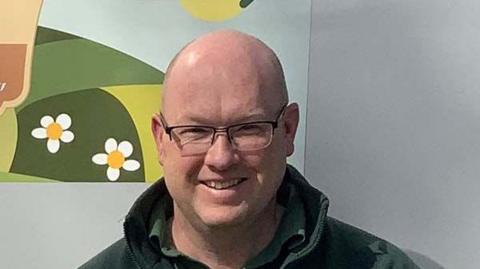
He said: “Getting out there into the rural communities is our daily bread and butter,” and explained that the charity visits these places with four vehicles on a monthly basis.

“We're an independent charity with four lovely vehicles and we visit these rural communities and we know that isolation in these areas doesn't have to mean loneliness if we come out and see them on a monthly basis.”
Simmonds said automation was “creeping in everywhere”, citing the loss of rail ticket booths, pay-at-the-pump petrol stations and no milkmen to chat to on the doorstep. He said this left people more isolated and less likely to see others day to day.
“It leaves people more isolated and not seeing people day-to-day,” said Simmonds.
He said the charity runs two-hour coffee events in villages that attract stay-at-home parents, home-workers and “a lot of retired people”. He said the groups mix together and that he does not see phones being used.
The charity has also launched an initiative called More Than a Shop, which encourages shop owners to welcome people in for more than just shopping and to let them stay longer to make friends and chat to others.
Do you have a story suggestion for Suffolk? Contact us below.
Get in touch
Follow Suffolk news on , Facebook, external, Instagram, external and X, external.
More stories like this
Helping people overcome loneliness since 2009
Combating loneliness gives 'so much joy'
Pop-up gigs aim to tackle 'loneliness' in city


