

Scotland Legalizes Water Cremations
Scotland has become the first country in the United Kingdom to legalize water cremations, also known as alkaline hydrolysis. This new method provides families with a third option for handling remains, alongside traditional burial and cremation.
The alkaline hydrolysis process involves wrapping the body in a biodegradable shroud made of materials such as silk or wool. The body is then placed in a pressurized chamber containing hot water and chemicals, which accelerates decomposition.
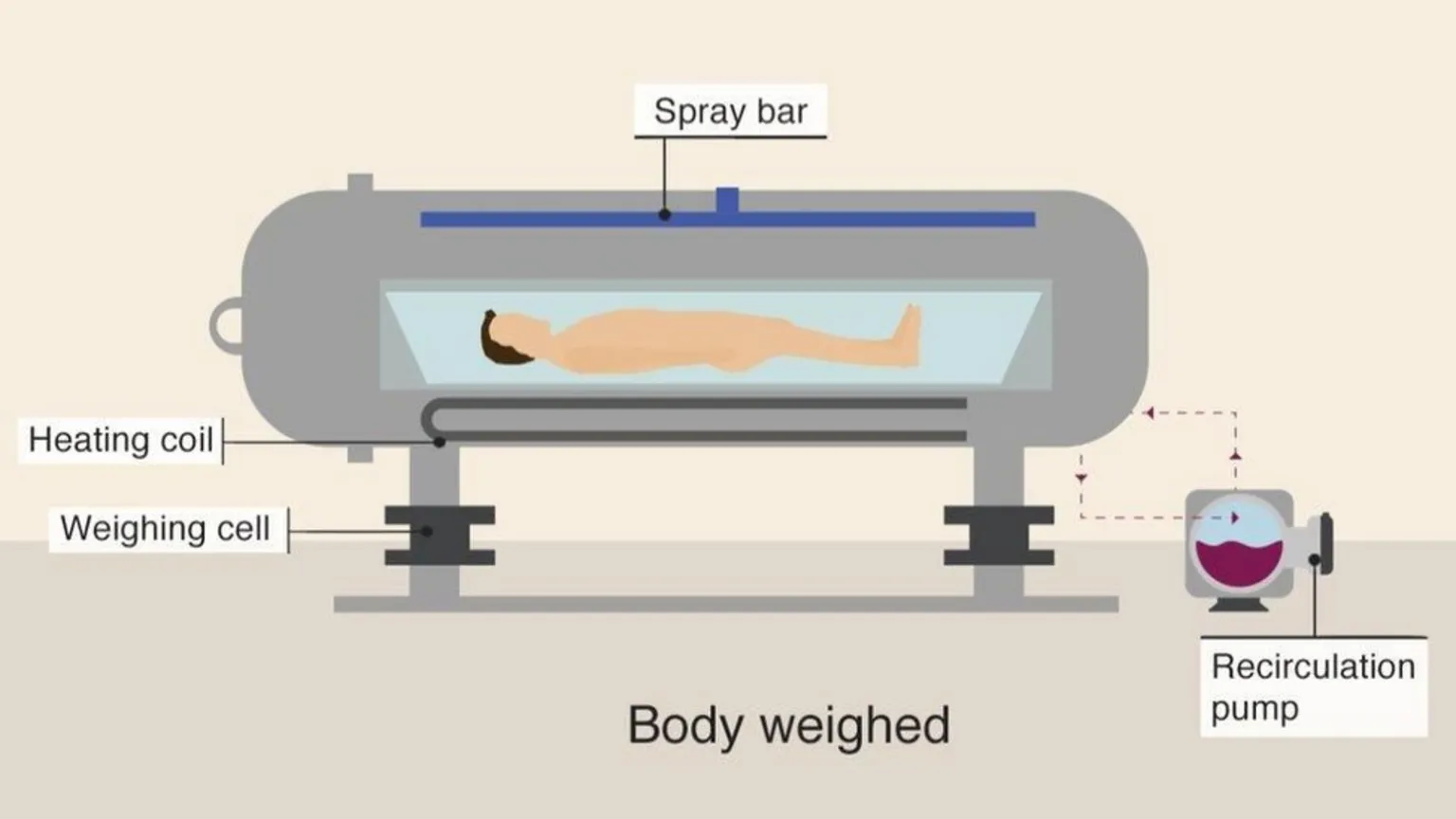
The remains are reduced to a powder, which is returned to the family in an urn, similar to ashes from conventional cremation. This story contains details about water cremation that some readers may find distressing.
The company advocating for this practice in Scotland described the legalization as the most significant change to cremation law since its introduction in 1902.
How Alkaline Hydrolysis Works
Water cremations are already practiced in countries such as the Republic of Ireland and the United States and are often referred to as "green cremations" due to their environmental benefits.
The procedure begins by weighing the body, which is then heated to 150°C (300°F) in a solution of potassium hydroxide and water for up to 90 minutes. This process dissolves the body's tissues, leaving only the bones.
Subsequently, the bones are rinsed at 120°C, dried, and pulverized into a coarse powder using a machine called a cremulator. The resulting remains can be returned to the next of kin, similar to traditional cremation ashes.
It is estimated that a typical cremation produces a carbon footprint equivalent to approximately 320 kilograms of carbon dioxide. In contrast, alkaline hydrolysis results in emissions that are seven times lower.

The method is used internationally and was chosen by anti-apartheid campaigner Archbishop Desmond Tutu for his cremation.
Official Statements and Regulatory Process
Public Health Minister Jenni Minto described the process as an "environmentally friendly alternative" to traditional burial or cremation methods.
"The choices people make about their remains prior to death are deeply personal, shaped by individual values, beliefs and the wishes of their families.
"The process will be subject to the same assurances and regulatory requirements as existing methods, giving bereaved families confidence that their loved ones are treated with care, dignity and respect."
Before water cremations can commence in Scotland, hydrolysis equipment must be constructed. This will require planning permission and approval from Scottish Water. The Scottish government anticipates that the first procedures will take place during the summer.
Industry Perspectives and Future Outlook
Kindly Earth, which holds exclusive rights to manufacture hydrolysis equipment in the UK, has been in discussions with several Scottish organizations for several years.
General Manager Hannah Chandler stated she does not expect hydrolysis to become the predominant funeral method but emphasized that it will provide an additional choice for grieving families.
"We know that not everyone will choose hydrolysis - and that's the point. It's about giving families more choice," she said.
"Each family has different values and priorities. Some people, particularly those planning ahead for their own funeral, are looking for options that feel more aligned to their own preferences."
Funeral Directors Welcome the Change
Andrew Purves, Chief Operations Director at William Purves Funeral Directors, described the legalization as an exciting development for the funeral industry.
"For me, funerals are all about choice and having a funeral that somebody feels is fitting to them," he said.
"For many people in their lives they get lots of choices so it's nice to know that for their funerals they now have another choice.
"We have some people who have already written it into their funeral plans for the future."
Purves added that the cost of water cremation is expected to be similar to, or slightly higher than, that of a traditional cremation.
A spokesperson for Co-op Funeralcare expressed support for the legislative change, emphasizing their commitment to sustainable and affordable services.
"At Co-op Funeralcare, we are committed to offering the most sustainable and affordable services for our member owners and clients and therefore welcome the legislative change in Scotland in relation to alkaline hydrolysis.
"Providing consumers with greater choice is an integral part to our offering, so we are heavily supportive of the exploration into alternative funerary methods."


