

Reform UK Proposes Scrapping VAT and Green Levies on Energy Bills
Reform UK has pledged to eliminate VAT and green levies on household energy bills if the party attains power. The party estimates this policy would save the average family approximately £200 annually.
Energy costs have garnered renewed attention following the outbreak of the war in Iran, amid concerns that sustained increases in oil prices could significantly raise household energy bills.
The government has already announced that starting in April, some levies will be removed or funded through general taxation, which is expected to reduce energy costs for a typical household. However, energy bills may increase again in July when the energy price cap is reset.
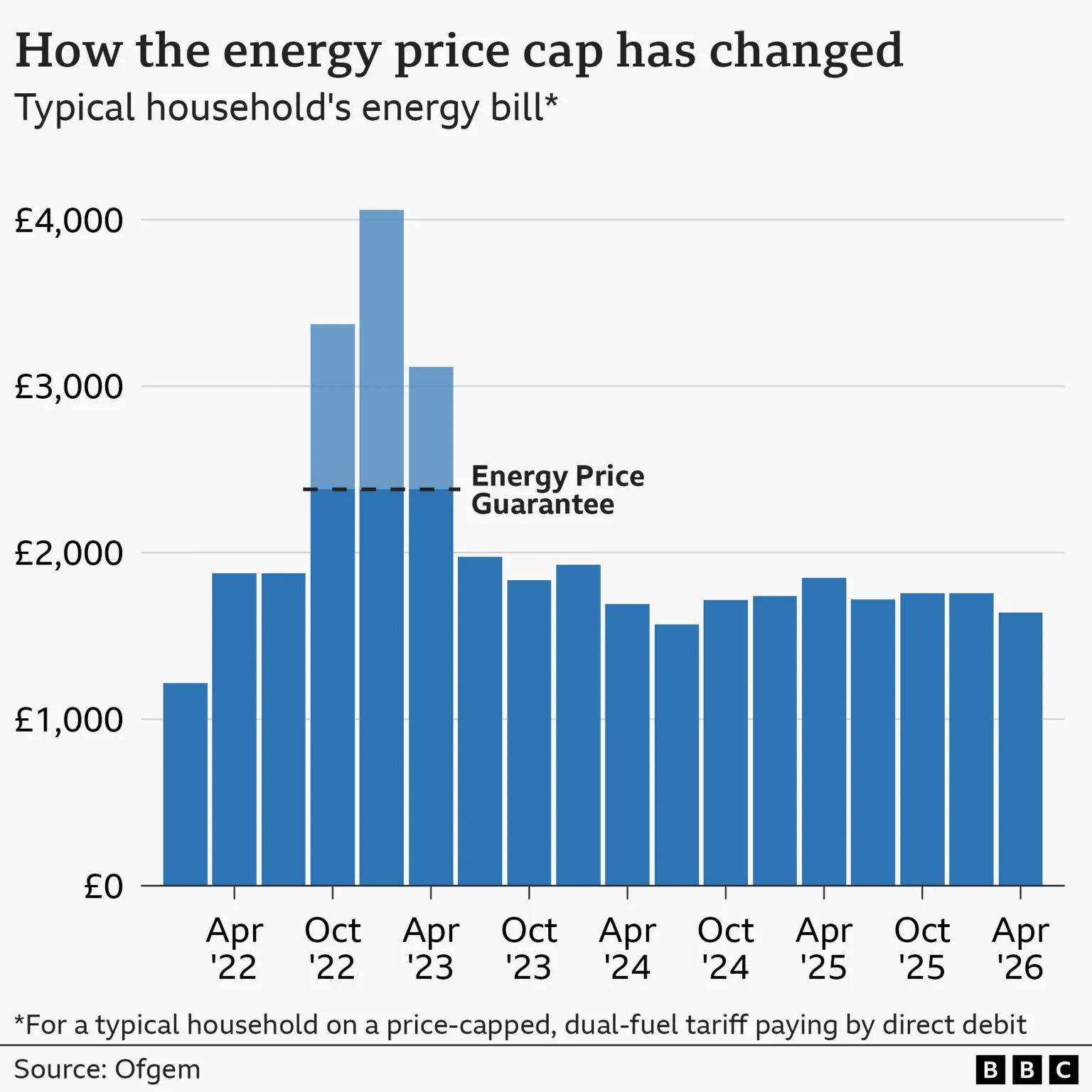
Separately, the government has allocated £53 million in support for "vulnerable" households that use heating oil, whose energy prices are not subject to the same caps as those using gas and electricity.
Reform UK Launches Prize Draw to Promote Energy Bill Policy
To promote its announcement, Reform UK is launching a prize draw in which the party will pay the energy bills of the winner and their entire street.
A party spokesman stated that the competition complies with electoral law.
"If people think there is anything improper in this, they should report us. They won't because there isn't," he said.
Statements from Reform UK Leaders
At a rally in London, Nigel Farage is expected to criticize the major parties' energy policies.
"Labour and the Conservatives have pursued a net zero agenda that has only led to skyrocketing energy bills for working people."
Reform's Treasury spokesperson, Robert Jenrick, also commented on the issue.
"It's outrageous that as people face soaring bills, the chancellor is slapping £200 worth of levies and taxes on the price of energy."
Details on VAT and Green Levies
Currently, VAT is charged at 5% on household energy bills. Reform UK stated that removing this levy would save the average household £78 annually based on current prices, with potential for greater savings if prices rise.
The party also intends to eliminate the Renewables Obligation levy, which funds renewable energy projects, entirely from household energy bills.

In the previous year's Budget, Chancellor Rachel Reeves announced that the government would cover 75% of the Renewables Obligation scheme costs until 2028-29, rather than passing these costs onto energy bills.
The Treasury has estimated that this levy adds £117 to the average household energy bill in 2025/26.
Additionally, Reform UK plans to scrap the Carbon Price Support levy, another green charge, which it estimates would save households £15 annually.
Funding and Impact of Reform UK's Proposals
The party asserts that these policies would be cost-neutral in the long term, as a Reform government would terminate and unwind subsidies for renewable energy.
In the short term, the package would be financed by a 7.5% reduction in the budgets of unprotected quangos, projected to save £2.5 billion annually by 2029/30.
Quangos, or arm's length bodies, include organisations such as regulators, cultural institutions, and advisory bodies funded by taxpayers but not directly controlled by Whitehall.
Reform UK is conducting an audit of quangos to determine which should be abolished, reintegrated into central government, or maintained in their current form.
Recent Reform UK Cost-of-Living Initiatives and Political Context
In recent weeks, Reform UK has made several announcements focused on the cost-of-living crisis, including urging the government to reverse a planned increase in fuel duty.
The Conservative Party has also pledged to reduce renewable energy subsidies and to scrap net zero targets.

for our Politics Essential newsletter to keep up with the inner workings of Westminster and beyond.


