

PM Affirms Decision Against Joining Initial Strikes on Iran
Sir Keir Starmer has reaffirmed his decision not to participate in the initial US-Israel strikes on Iran conducted on Saturday, emphasizing that diplomatic talks represent the most effective path forward.
Speaking at a Downing Street press conference, the Prime Minister stated that the United Kingdom possesses "the strength to stand by our values and our principles no matter the pressure to do otherwise."
He reiterated the UK's longstanding position advocating for a "negotiated settlement with Iran where they give up their nuclear ambitions," and stressed the importance of efforts to "de-escalate" the ongoing conflict.
UK Deploys Additional Military Assets to the Region
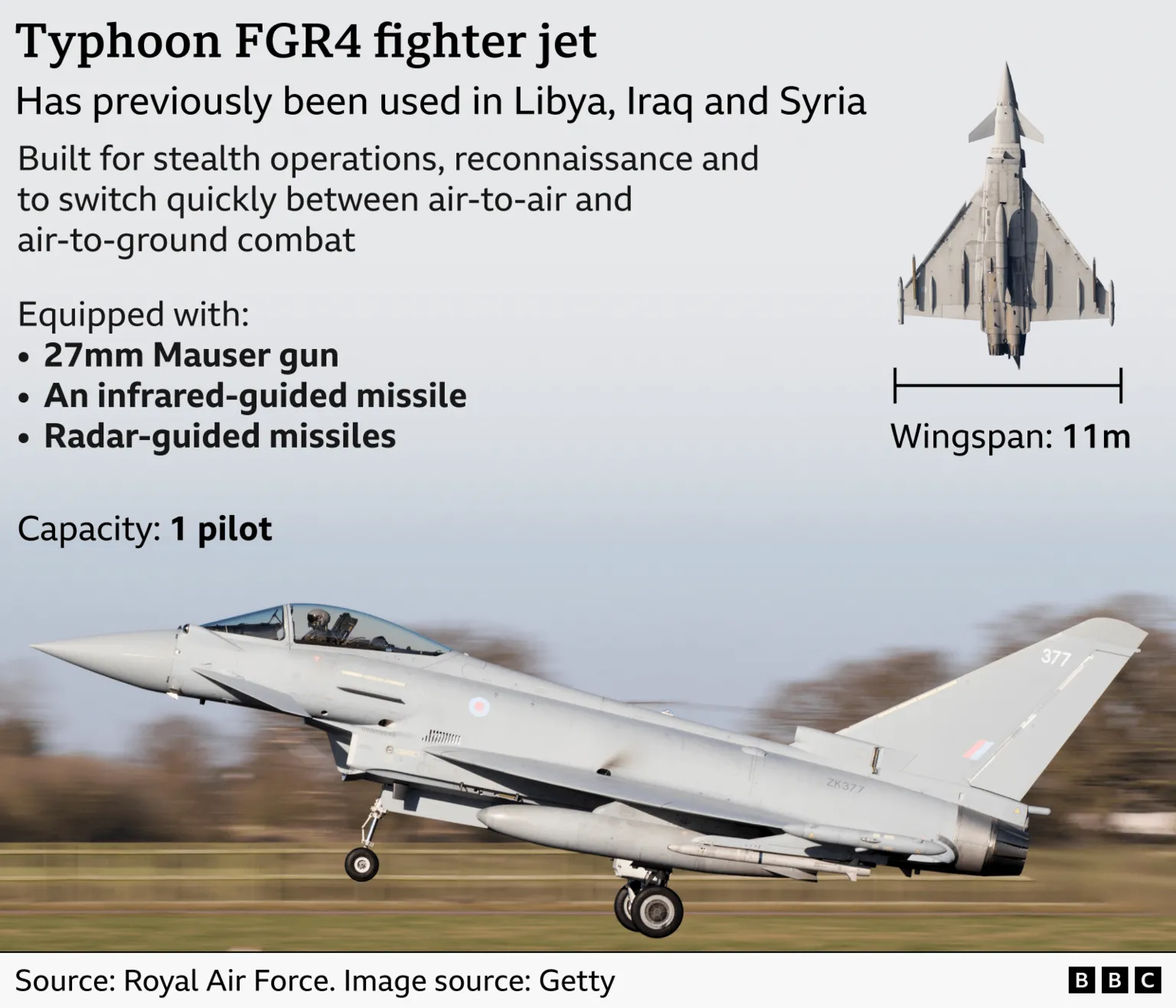
Sir Keir acknowledged that the conflict may persist for "some time" and announced that the UK is dispatching four additional Typhoon fighter jets to Qatar.
US President Donald Trump has criticized the Prime Minister for declining to permit the use of UK bases during the initial strikes, stating he is "not Winston Churchill."
On Sunday, the UK consented to a US request to utilize British military bases, but restricted their use to defensive operations targeting Iranian missile sites.
Trump described the initial refusal as "shocking" and remarked that the UK-US relationship "was not what it was."
Despite these tensions, Sir Keir maintained that the special relationship between the US and UK remains intact.
"Look, the special relationship is in operation right now," he told reporters on Thursday. "We're sharing intelligence on a 24/7 basis in the usual way. That is the special relationship."
Government Response and Public Concerns
Chairing a meeting of the government's emergency committee Cobra on Thursday, Sir Keir acknowledged widespread public concern, noting that people are "worried sick about their family and friends who are caught up in this."
"We will do everything we can to protect British lives," he affirmed.
The Prime Minister refuted claims that the UK was unprepared for the conflict, highlighting that Britain began pre-deploying military assets to the region earlier in the year, particularly to Qatar and Cyprus, in coordination with the US and other allies.
This announcement follows criticism of the government's response after British bases in Bahrain and Cyprus were targeted over the weekend.

"A lot of pre-planning has gone into this and a lot of pre-deployment," the Prime Minister said. "I am satisfied we can keep our people safe."
In addition to the Typhoon jets, two wildcat helicopters equipped with anti-drone capabilities are scheduled to arrive in Cyprus on Friday.
The British warship HMS Dragon will also be deployed to Cyprus, although it is not expected to sail until next week.
Political Perspectives and International Cooperation
Earlier, Conservative leader Kemi Badenoch told BBC Radio 4's Today programme:
"Sometimes the best way to de-escalate a situation is to try and finish it quickly, rather than let it drag out because you don't want to get involved. Once our bases had been attacked, I think we became part of this, whether we liked it or not."
Defence Secretary John Healey met with his Cypriot counterpart Vasilis Palmas on Thursday to discuss the reinforcement of air defences aimed at supporting "our shared security," according to a spokesman for the Prime Minister.
Repatriation Efforts for British Nationals
Sir Keir also reported that the first government-chartered flight for British nationals stranded in the Middle East has departed from Oman after experiencing delays.
The repatriation flight, originally scheduled for Wednesday evening, was grounded due to technical issues before finally taking off.
Approximately 4,000 Britons have already returned from the region, with thousands more still awaiting evacuation.
More than 140,000 individuals in the region have registered their presence with the UK government, the Prime Minister stated.
Seven additional flights are planned to depart from the UAE to the UK on Thursday, with further charter flights to be arranged in the coming days.
British Airways is operating daily flights from Oman, and the government continues to collaborate with partners to "increase the speed and capacity of this airlift," Sir Keir added.
Regional Tensions and Iranian Retaliation
Iran has responded to US-Israeli air strikes by launching attacks on Israel and US-allied states in the Gulf region, including Qatar, Bahrain, Jordan, the United Arab Emirates, Kuwait, Oman, and Saudi Arabia.


