
Potential Ban on Commercial Coasteering in Parts of Pembrokeshire
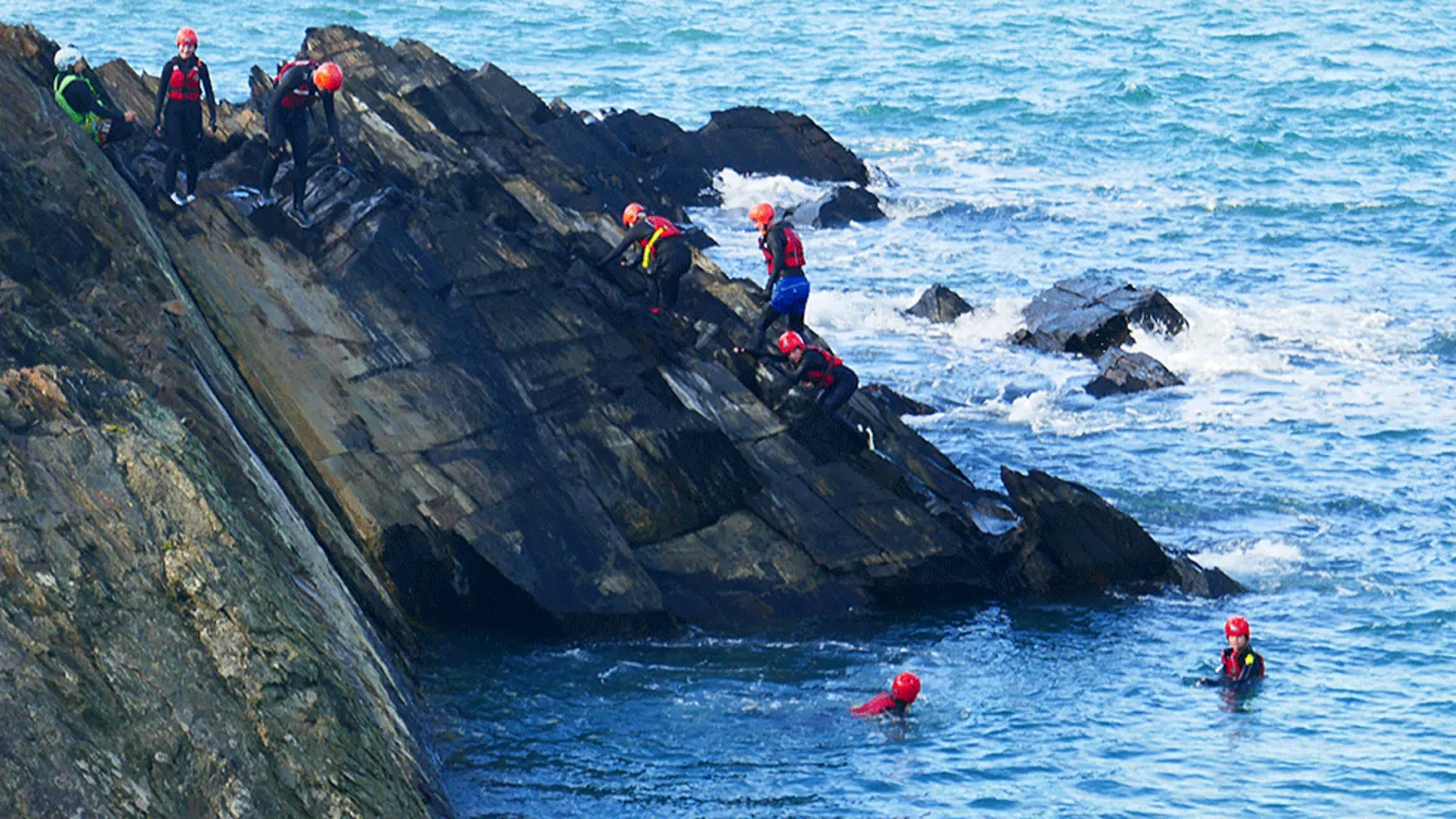
Commercial coasteering trips may be prohibited in certain areas of what is known as "Wales' coasteering heartland" if they are found to negatively affect wildlife or the environment.
The Pembrokeshire Coast National Park intends to introduce a licensing scheme in May to regulate the activity, following a rise in complaints and an increase in the number of providers offering coasteering experiences.
Tegryn Jones, the park's chief executive, told Newyddion S4C that while previous voluntary codes had been effective, the new scheme aims to be "fit for purpose for the future".
One coasteering operator expressed support for delaying the licensing scheme to allow different approaches to be trialled, whereas a wildlife advocate emphasized that some locations should remain "wild and remote".
Background on Coasteering and Its Popularity in Pembrokeshire
Coasteering, which combines climbing and scrambling along rocky coastlines with swimming, originated in Pembrokeshire in the late 1980s.
The Welsh government's official tourism site, Visit Wales, promotes Pembrokeshire as "Wales' coasteering heartland" and describes the activity as an "all-in-one coastal adventure, treating the foreshore as nature's obstacle course."
Concerns Over Wildlife Disturbance
Some wildlife campaigners have raised concerns that coasteering may disturb nesting birds, seals, and other wildlife in sensitive areas.
Last September, the campaign group Wild Justice won a judicial review that overturned planning permission for a new adventure sports centre in Moylegrove, near Ceibwr Bay, due to concerns about potential disturbance to wildlife in a protected site.
Current and Future Regulation of Coasteering
Currently, twelve sites within the Pembrokeshire Coast National Park are used for coasteering, with the activity regulated through voluntary codes of behaviour.
Under the forthcoming licensing scheme, companies will be required to pay £100 for a licence, although this fee is expected to rise.
Comprehensive environmental assessments are being conducted to evaluate the suitability of coasteering routes.
Tegryn Jones stated that the licensing scheme will align coasteering with other commercial activities in the national park.
"If you want to film or sell ice cream, you have to have a licence, so what we're doing is bringing coasteering under the same system as we have for other commercial activity," he said.
Jones added that licensing would enable the park to take action in rare cases where companies fail to meet environmental standards.
Existing Measures and Local Perspectives
On Anglesey, a seasonal exclusion zone has been established to prevent adventure sports in a protected area.
Local wildlife campaigner Dagmarr Moore, who considers Ceibwr an unsuitable location for coasteering, welcomed the licensing scheme in principle but believes Ceibwr "should be kept wild and remote."
She expressed hope that ecological assessments conducted as part of the licensing process will support this perspective.
"There are loads of suitable places with parking, public conveniences, and cafés where people might have a much better experience," she said.

Industry Response
Mark Hicks from Tenby Adventure, who has operated coasteering trips at Lydstep and Stackpole for approximately 10 years, noted that coasteering is "by far the most popular activity" his company offers, especially during summer months.
"I feel a bit sad that something that was collaborative is being shut down and is going to be replaced, it seems, by something statutory," he said.
"It was really successful. I don't think wildlife will be better off."
Hicks believes coasteering has a "positive effect" on wildlife in south Pembrokeshire by allowing people to experience the environment uniquely.
He also mentioned that his company often collects discarded fishing gear during trips; last year alone, 136 items were retrieved and "15 or 16 birds entangled in fishing gear" were rescued at Lydstep.
Another coasteering provider, who wished to remain anonymous, expressed concern that licensing could threaten his business and called for further consultation before implementation.
Economic Impact of Tourism
The visitor economy in Pembrokeshire generates an estimated £639 million annually, according to Visit Pembrokeshire.
Additional reporting by Nicholas Bourne


