

Oxford Street Traffic Ban Plans Accelerated
The mayor of London, Sir Sadiq Khan, has directed his team to "work at pace" to implement a traffic ban on Oxford Street "as quickly as possible." The pedestrianisation will cover the stretch from Orchard Street to Great Portland Street, following plans approved last week.
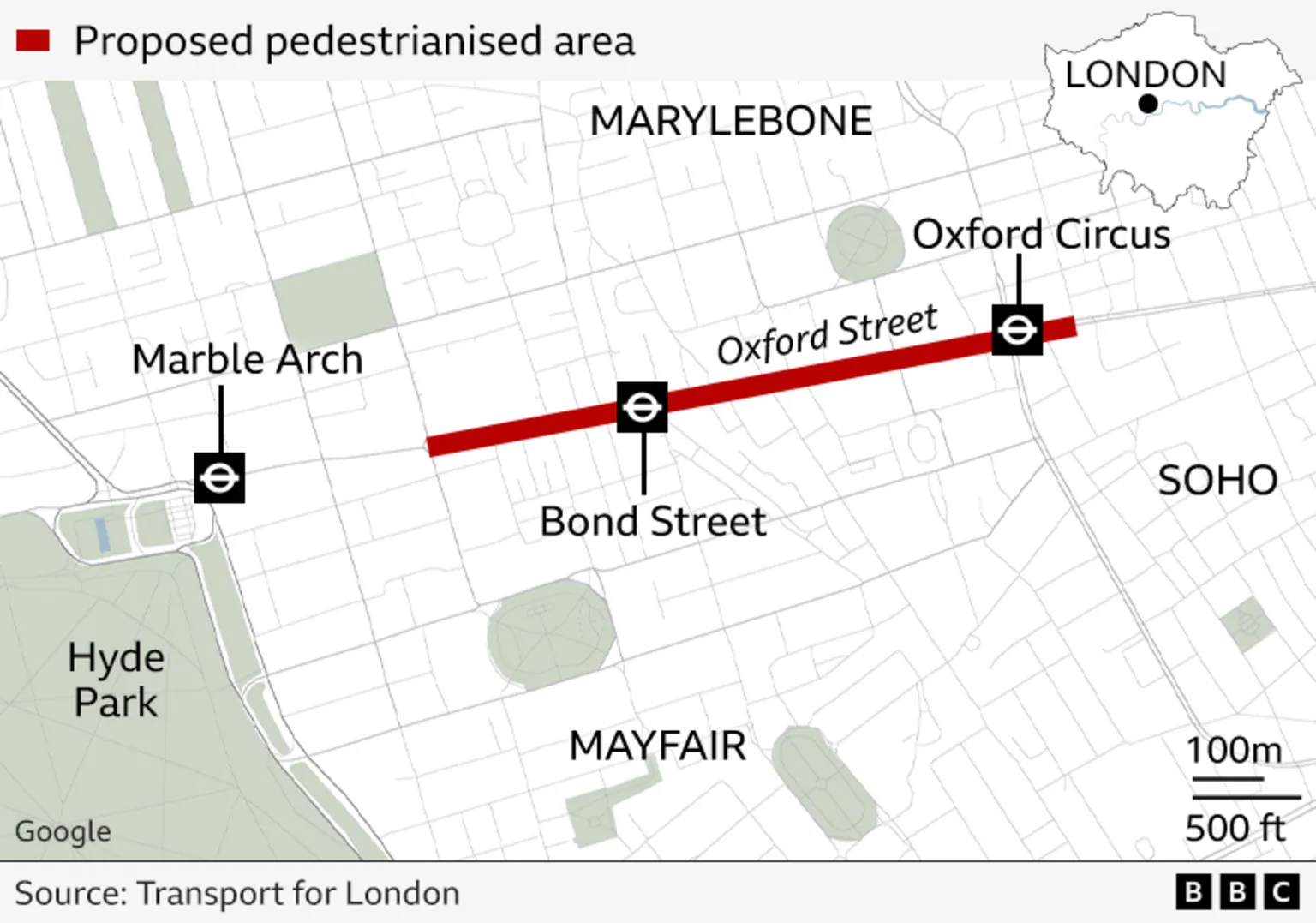
Sir Sadiq Khan indicated that work to establish the traffic-free zone could commence immediately, aiming for completion by the end of the summer. The initiative seeks to transform this central London shopping street into a pedestrian-friendly area.
Political Opposition and Planning Authority
Westminster City Council's Conservative members have criticized the mayor for "pressing on regardless" despite significant opposition. The pedestrianisation scheme was only approved after Sir Sadiq obtained government authorization to assume planning powers, which were previously held by the local council that had rejected the proposals.
Details of the Pedestrianisation Scheme
Under the approved plans, the western section of Oxford Street will be closed to private motor vehicles, buses, taxis, private hire vehicles, cycles, scooters, and pedicabs. The designated zone will extend from the Ikea store at one end to Selfridge's department store at the other.
Following the implementation of these changes, the mayor intends to create a new events space within the area starting this year. Additional plans include planting more trees and greenery, as well as establishing new rest areas for seating and children's play.
Sir Sadiq emphasized that safety will be a "priority," with the installation of CCTV, enhanced signage, and improved lighting throughout the zone.

Vision for a Vibrant Public Space
"Following strong support from Londoners and businesses, I've asked the team to move at pace with plans to pedestrianise Oxford Street this summer so we can deliver a vibrant, world-class, accessible destination," Sir Sadiq said.
"I want this stretch of Oxford Street to be transformed into a pedestrian plaza – a space designed to host world-class events, from sport to culture and fashion, as well as exciting new retail and leisure experiences," he added.
Access and Transport Considerations
The scheme has been designed to ensure that emergency services will retain access to Oxford Street at all times. Servicing vehicles will be permitted to enter the traffic-free area overnight, according to City Hall.
Alex Williams, chief customer and strategy officer at Transport for London, stated:
"In the coming months, we'll work to implement changes to the roads around Oxford Street to allow for proposed bus changes to be implemented. We'll also begin work along Oxford Street to prepare the road for pedestrianisation."
Governance and Legislative Changes
Sir Sadiq personally approved the scheme following the establishment of a mayoral development corporation (MDC), a statutory body created to oversee regeneration projects. The MDC was authorized by the current government and required new legislation to transfer planning powers from the local authority to the mayor.
Westminster City Council had previously rejected the pedestrianisation plans, citing opposition from local residents.
Local Opposition and Criticism
Paul Swaddle, leader of the Conservative group at Westminster City Council, criticized the mayor's approach:
"The mayor just isn't listening. He's got his plan, he got his vanity project, and he's just pressing on regardless. So it doesn't matter if people object - which they did. The consultation was fudged... and people are really concerned here locally."
Swaddle also accused Sir Sadiq of "totally abusing" the MDC system by using it to implement the traffic-free scheme.
Public Consultation and Support
The mayor reported that 2,700 people responded to a public consultation, with the majority supporting the pedestrianisation plans.
For further updates, listeners can tune into BBC Radio London on Sounds and follow BBC London on Facebook, X, and Instagram. Story ideas can be sent to hello.bbclondon@bbc.co.uk.


