

Labour MP joins Tories in suggesting full truth about McSweeney's stolen phone not being told
The Conservative Party continues to raise concerns that Morgan McSweeney may have been involved in disposing of his mobile phone to prevent Parliament from accessing his messages with Peter Mandelson. Yesterday, Kemi Badenoch stated,
“it is only right that Morgan McSweeney testifies in Parliament and explains exactly what happened.”This morning, Andrew Griffith, the shadow business secretary, told ,
“the whole thing is as smelly as a fish market on a hot summer’s afternoon.”
Griffith referred to claims that McSweeney’s account of his phone being stolen—which allegedly prevents message recovery—and the police’s purported inadequate investigation do not add up. He said:
“It just doesn’t compute, does it? I worked in Number 10. Briefly, I had a Number 10 phone. There was a paranoia about devices like that falling into other people’s hands.
And so whether it was the Met Police, whether it was Morgan McSweeney, and what sounds like pretty evasive set of reporting, even when you look at that transcript, or whether it was the Number 10 security team following up something that at the time they could not have been sure had not been taken by a state actor, a phone with all sorts of government secrets potentially in it, that’s precisely why people in government have two separate phones.”
Griffith, who worked in No 10 under Boris Johnson—who claimed he could not read messages on one of his phones due to a forgotten password—expressed scepticism about explanations from No 10 figures regarding the inability to obtain phone messages.
Keir Starmer described the notion that McSweeney was involved in a plot to dispose of the phone as
“far-fetched.”Others have criticized the Conservatives for engaging in conspiracy theories. Last year, Badenoch and her team spent several weeks promoting the theory that Jonathan Powell, the Prime Minister’s national security adviser, influenced the CPS to drop the China spy case, a claim ultimately unsupported by a parliamentary inquiry.
However, suspicion is not limited to the Conservatives. Last night, Labour MP Karl Turner posted on social media accusing McSweeney of lying about his phone theft:
“I don’t believe McSwindle had his iPhone stolen.
Honest believe, Matt. It’s smacks of the liar Johnson defence of ‘lost all my WhatsApp messages’. We mustn’t take the public for fools. And I am afraid this smacks of too convenient by far. I won’t do it. I will say what I actually think. And I don’t believe it. End of!”
“I believe the report was made. McSwindle didn’t mention that he was the chief of staff to the PM. A significant omission if he’d wanted the police to prioritise the offence.”
Turner is known for his outspoken and provocative statements. This morning, he received partial support from Richard Burgon, who submitted parliamentary written questions regarding McSweeney’s phone, indicating doubts about the full truth being disclosed.
Burgon, a prominent member of the Socialist Campaign Group and a supporter of Jeremy Corbyn, is critical of McSweeney due to his role in the Labour Together operation aimed at undermining Corbynism. Burgon’s intervention may be viewed as part of ongoing internal Labour disputes.
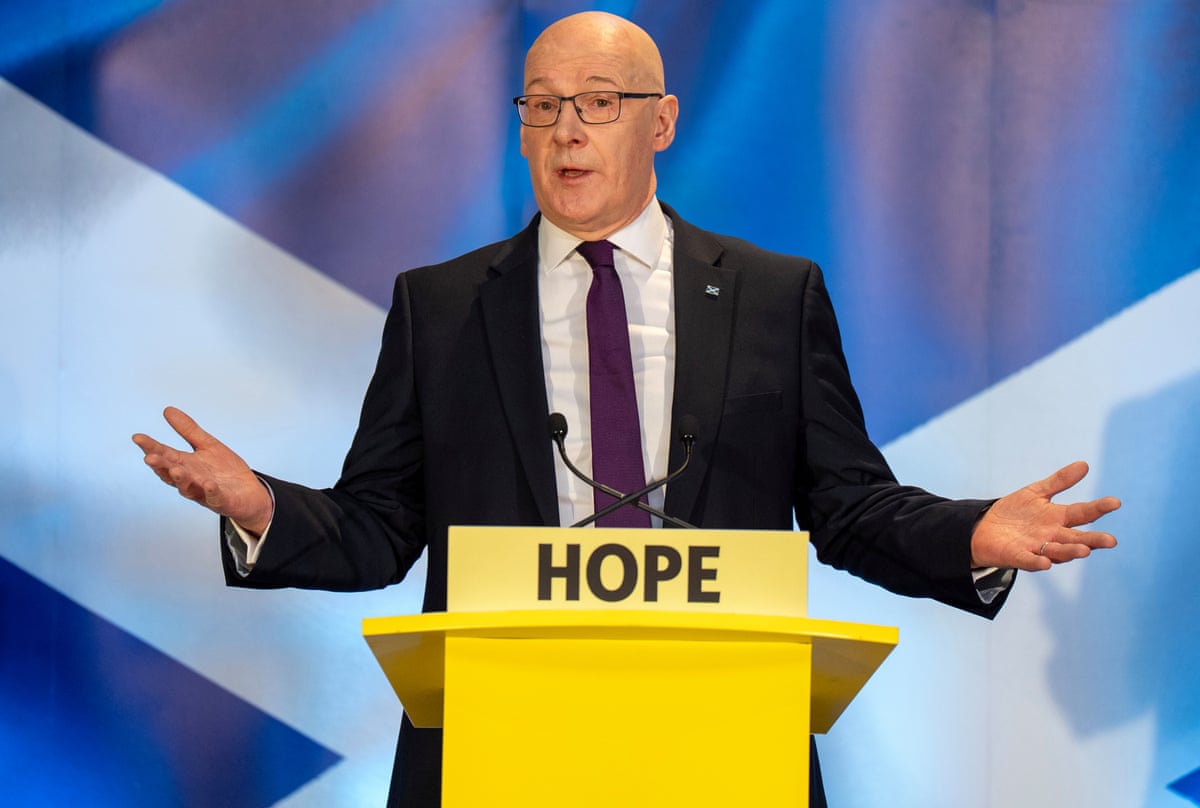
SNP ‘ready to win big’ and put Scotland on path to independence, says Swinney at campaign launch
The Scottish National Party (SNP) is prepared to achieve a significant victory in the upcoming Holyrood election, according to John Swinney, who emphasized that a majority for the party would pave the way for independence. The Press Association reported:
“The first minister has set his targets firmly on winning an overall majority in the 7 May election, believing such a result will lead to a second referendum on the future of the UK.”
Speaking at the launch of the SNP’s campaign in Glasgow, Swinney described the election as
“crucial”and promised the party would run its
“biggest and best campaign”over the next six weeks. He declared he would lead the campaign personally and told supporters the SNP was
“ready not just to fight this election, not just to win this election, but to win big.”
Swinney stated that an SNP majority at Holyrood would not only enable another referendum but also prevent Nigel Farage’s Reform UK party from gaining power in Scotland. Polls have indicated Reform, led in Scotland by Malcolm Offord, could come second in the vote.
He warned:
“Depending on how the numbers stack up after the election, without an SNP majority there is always the potential for a grubby, backroom deal between Labour and Reform.”
He added that the election could deliver Scotland the
“greatest prize”through a referendum. An overall SNP majority, similar to that achieved in 2011 under Alex Salmond, would
“send a message that the Westminster establishment cannot sweep under the carpet.”
Home Office names panel of experts to advise inquiry into battle of Orgreave during miners' strike
The Home Office has announced the appointment of a panel of experts to assist the inquiry into the violent confrontation between police and mineworkers at Orgreave in 1984. The inquiry, chaired by the Rt Revd Dr Pete Wilcox, Bishop of Sheffield, was announced last year.
The panel includes Mary Bousted, former teachers’ union leader; Wendy Williams, former chief prosecutor; Joanna Gilmore, law lecturer with research on the miners’ strike; and Angie Sutton-Vane, a historian.
In announcing the appointments, Home Office minister Sarah Jones said:
“This inquiry delivers on the government’s manifesto commitment to uncover the truth about Orgreave and to rebuild public confidence in policing. It will investigate the events of that day, resulting in the arrest of 95 picketers and scores of injuries, which left a lasting impact on communities across South Yorkshire and beyond.”
King's speech to take place on Wednesday 13 May, less than week after local elections, MPs told
Alan Campbell, Leader of the Commons, informed MPs that the state opening of Parliament and the King’s speech will occur on Wednesday, 13 May.
The King’s speech outlines the government’s legislative agenda for the new parliamentary session. It will take place less than a week after the Scottish Parliament, Welsh Senedd, and English local elections, which are anticipated to be unfavorable for the government. Holding the state opening soon after may assist the government in progressing following potential electoral setbacks.
The current parliamentary session, which began after the general election, has lasted 22 months, longer than usual. Campbell noted that over 50 bills have been passed during this period.
The date for prorogation, marking the end of the current session, will be announced in due course.

No 10 says it's 'categorically untrue' to say McSweeney's phone theft linked to Mandelson humble address
Downing Street has reiterated that there is no connection between Morgan McSweeney’s phone theft and the humble address motion passed by MPs requiring the disclosure of messages with Peter Mandelson.
When questioned, Keir Starmer said:
“The idea that somehow everybody could have seen that sometime in the future there’d be a request over the phone is, to my mind, a little bit far-fetched.”
At the Downing Street lobby briefing, the Prime Minister’s spokesperson stated it was
“categorically untrue”to claim a link between the phone theft and the humble address requiring message disclosure.
“The point the prime minister was making was that the idea that the theft was connected to the humble address is categorically untrue.
We’re committed to complying with the humble address in full. All government departments, ministers and relevant individuals have been asked to provide all the relevant information they hold in the scope of the humble address.”
This denial is unlikely to quell conspiracy allegations, some of which claim the phone was never stolen. McSweeney reported his phone stolen in October last year, over three months before the humble address motion was passed. Reports suggest that even then, following Mandelson’s recent dismissal over Epstein links, No 10 officials anticipated a humble address motion might be tabled.
The spokesperson did not comment on actions taken by No 10 to disable McSweeney’s phone after it was reported missing or the impact on message retrieval but said the response followed
“longstanding and robust”procedures.
The spokesperson did not dispute reports that some messages between McSweeney and Mandelson have been retained but affirmed the government’s intention to comply fully with the humble address motion. Some documents are withheld pending a police investigation into Mandelson.
Jenrick claims Labour acting like 'banana republic' in banning political parties from accepting crypto donations
Robert Jenrick, Reform UK’s Treasury spokesperson, criticized Labour for banning political parties from accepting cryptocurrency donations.
Speaking at a media event this morning, Jenrick acknowledged the ban targets Labour’s main opponent, Reform UK, which encourages crypto donations. He accused Labour of attempting to
“stop its opponents from succeeding.”
“Look, the government is failing. It’s losing the argument. So what’s it doing? It’s like a banana republic - resorting to attacking how political parties raise money – perfectly legitimate ways for British citizens to donate, as they’ve always done, to political parties.
This isn’t serious politics. It’s just the mark of a government that is failing and is having to use every lever at its disposal to try and stop its opponents from succeeding. It’s not going to work.
We’re going to see in May that people across the country come out to vote, to send a signal, a very clear message, to Keir Starmer that he is one of the worst prime ministers we’ve ever had, and we want to get him out of office as quickly as possible and have real change, which is what Reform offer.”
Jenrick made these remarks at a petrol station while promoting Reform UK’s call for the government to halve VAT on petrol for three months amid rising oil prices caused by the Iran conflict.

Steve Reed rejects Tory call for political parties to be banned from distributing campaign literature in foreign languages
The Conservative Party proposed banning political parties from distributing campaign literature in foreign languages by amending the Representation of the People Bill. Shadow communities minister Paul Holmes stated:
“Campaigning in a foreign language as the Greens did in Gorton and Denton only fosters greater division. A coherent national culture relies on shared values, and an inclusive electoral process relies on a common tongue.”
Steve Reed, local government secretary, rejected this proposal in an interview with GB News, saying:
“I think it’s for political parties to choose how they campaign and communicate with British voters. If they’re using British money that is funding their campaigns and they’re speaking to people who have the right to vote, then why would you not show those voters the respect of communication?
What fuels division is Nick Timothy standing up and singling out Muslim forms of worship for a ban when he’s not applying that to forms of worship that other religions are talking about.”
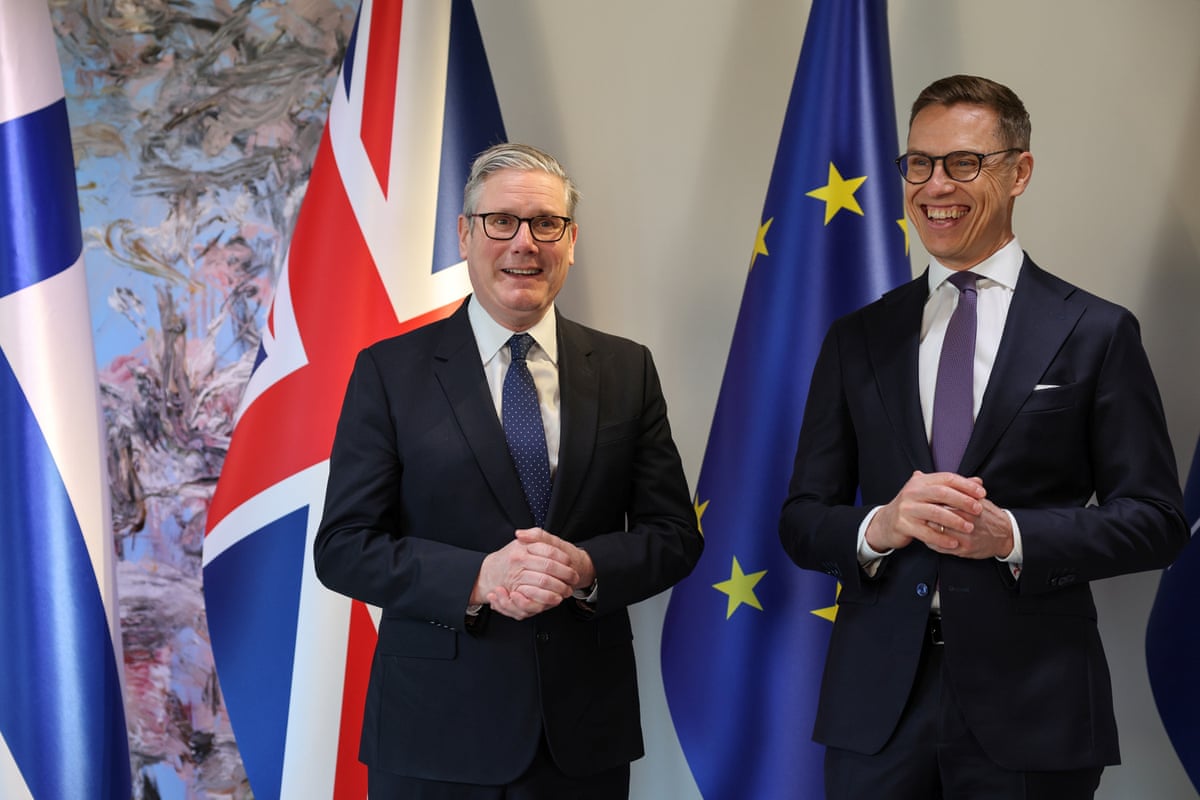
Starmer says threat from Russia 'has grown' as he meets fellow JEF leaders in Helsinki
Keir Starmer spoke at the Joint Expeditionary Force (JEF) leaders’ summit in Helsinki, emphasizing that the war in Iran should not distract from the growing threat posed by Russia.
“A couple of months ago all eyes of the world were on the High North, and now they’re on the Gulf. And, of course, we will continue to defend our interests, there.
But the threat from Russia in the north and the east has not gone away. And therefore it’s important that we’re here today.
In fact, in my view, that threat has grown, and we all know very well the impact of that threat for our security, for our economies and the cost of living for families in each of our countries.
So it’s right that we’re focussed, as ever, on Euro-Atlantic security and on Ukraine, and bringing those two together the Joint Expeditionary Force has a vital role to play here.”


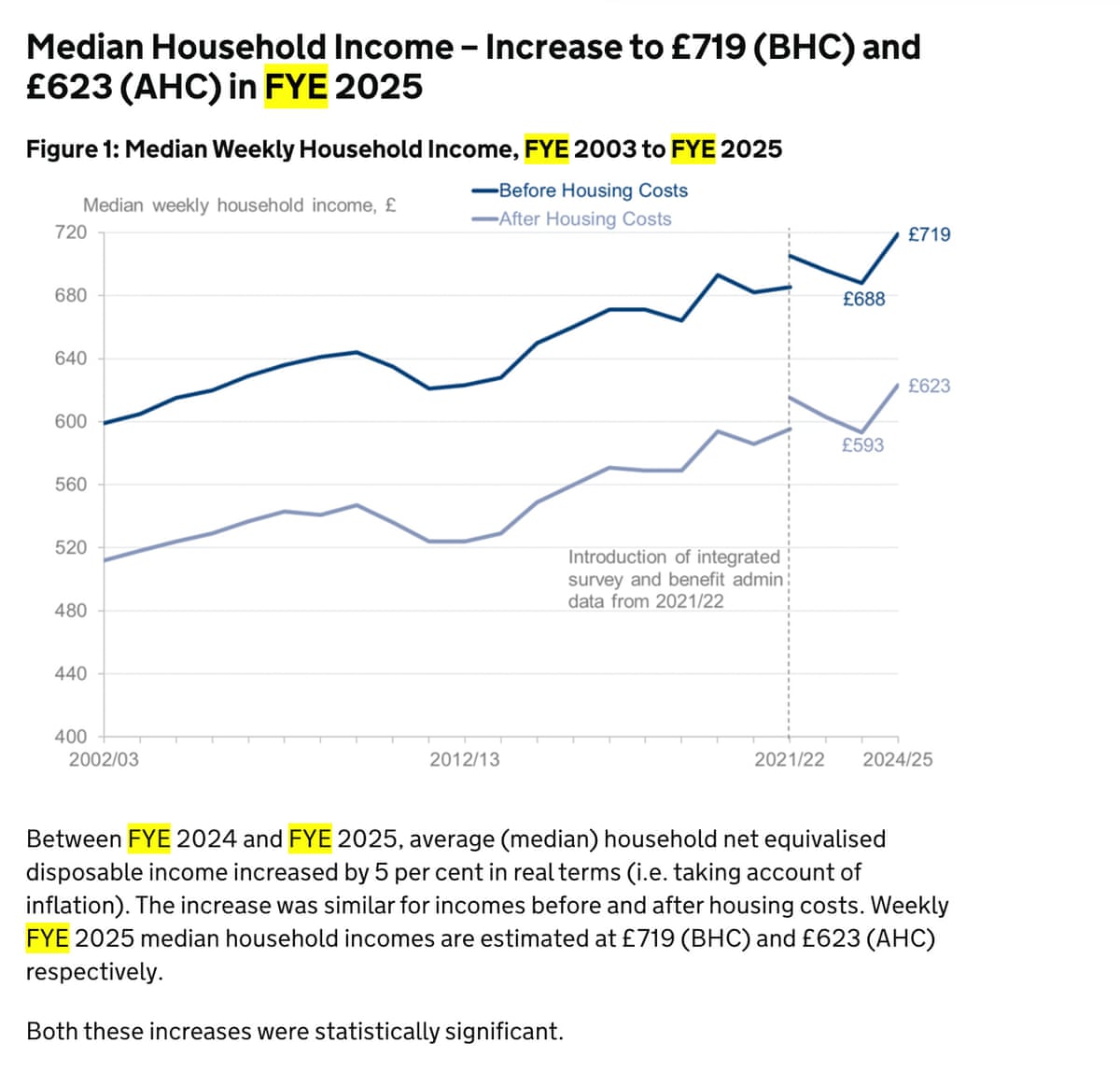
Average household income rose in real terms by 5% in Labour's first year in office, DWP says
Keir Starmer has highlighted that real household incomes have increased under Labour, a trend not seen when the previous Conservative government took office. The Department for Work and Pensions (DWP) published data this morning supporting this claim:
- Median household income increased in real terms between financial year end (FYE) 2024 and FYE 2025, rising by 5% before housing costs (BHC) and 5% after housing costs (AHC) to £719 and £623 per week respectively. The increases for both measures were statistically significant.
- Household incomes increased across almost the entire BHC distribution, with the largest increases in the central deciles. Smaller increases were recorded at the top and bottom ends. For AHC, increases were seen across most percentiles except the very lowest, which experienced a slight fall.
- For the more central deciles, income increases were statistically significant, though changes at the extremes are more uncertain due to wider confidence intervals.
The report also noted that poverty rates remained relatively stable:
- Relative low-income rates increased slightly, rising from 15% to 16% (BHC) and 19% to 20% (AHC). These changes were less than 1 percentage point (the AHC change was less than 0.5 percentage points) and not statistically significant.
The DWP has modified its poverty data collection methods, making exact comparisons with historical data difficult, as explained in the report.
UK set to suffer bigger GDP setback than any other major country due to Iran war, OECD says
The Organisation for Economic Cooperation and Development (OECD) has forecast that the UK will experience a larger economic downturn than any other industrialized nation due to the war in Iran, warning of rising inflation. Phillip Inman reports:
“Noting a weakening of the UK jobs market and a contraction in business investment towards the end of 2025, the OECD attributed the downgrade to a lack of momentum going into 2026 as well as the shock from rising oil and gas prices as a result of the US-Israel attacks on Iran.”
The OECD highlighted the UK’s dependence on international trade and fuel imports, explaining that the growth forecast for 2026 was downgraded due to expected higher inflation.
The 0.5 percentage point reduction in UK growth contrasts with smaller reductions of 0.2 percentage points expected for France, Germany, and Italy, which are more insulated from rising energy prices.
Tories claim plan to create 15 new councils involves 'outright gerrymandering' to benefit Labour
Steve Reed, local government secretary, announced plans to create 15 new councils in the south and east of England as part of the government’s local government reorganization. Patrick Butler reports.
James Cleverly, shadow local government secretary, responded:
“This is outright gerrymandering from a Labour government desperate to shore up its collapsing support.
Reorganisation should be bottom-up, informed by and reflecting local priorities and voices. Instead, Labour are imposing top-down decisions on communities while claiming to be empowering them.”
This article was sourced from theguardian


