

The King pays some taxes voluntarily
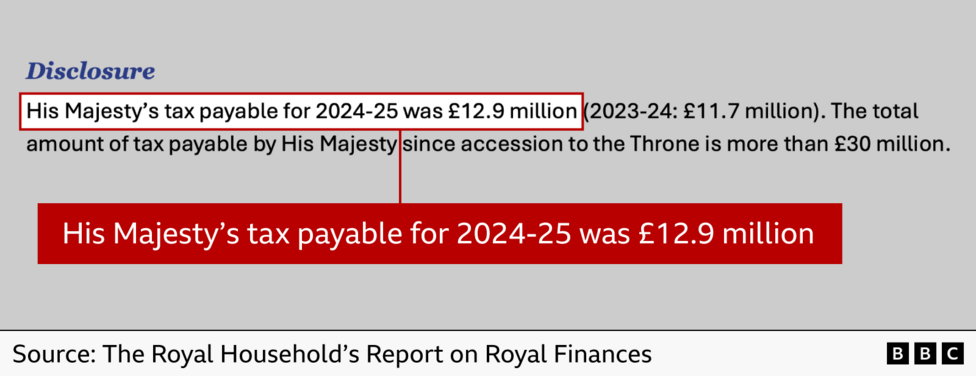
King Charles has made history by disclosing his £12.9 million tax bill, a payment that is far from typical. This announcement coincides with the Royal Household's release of its annual financial report.
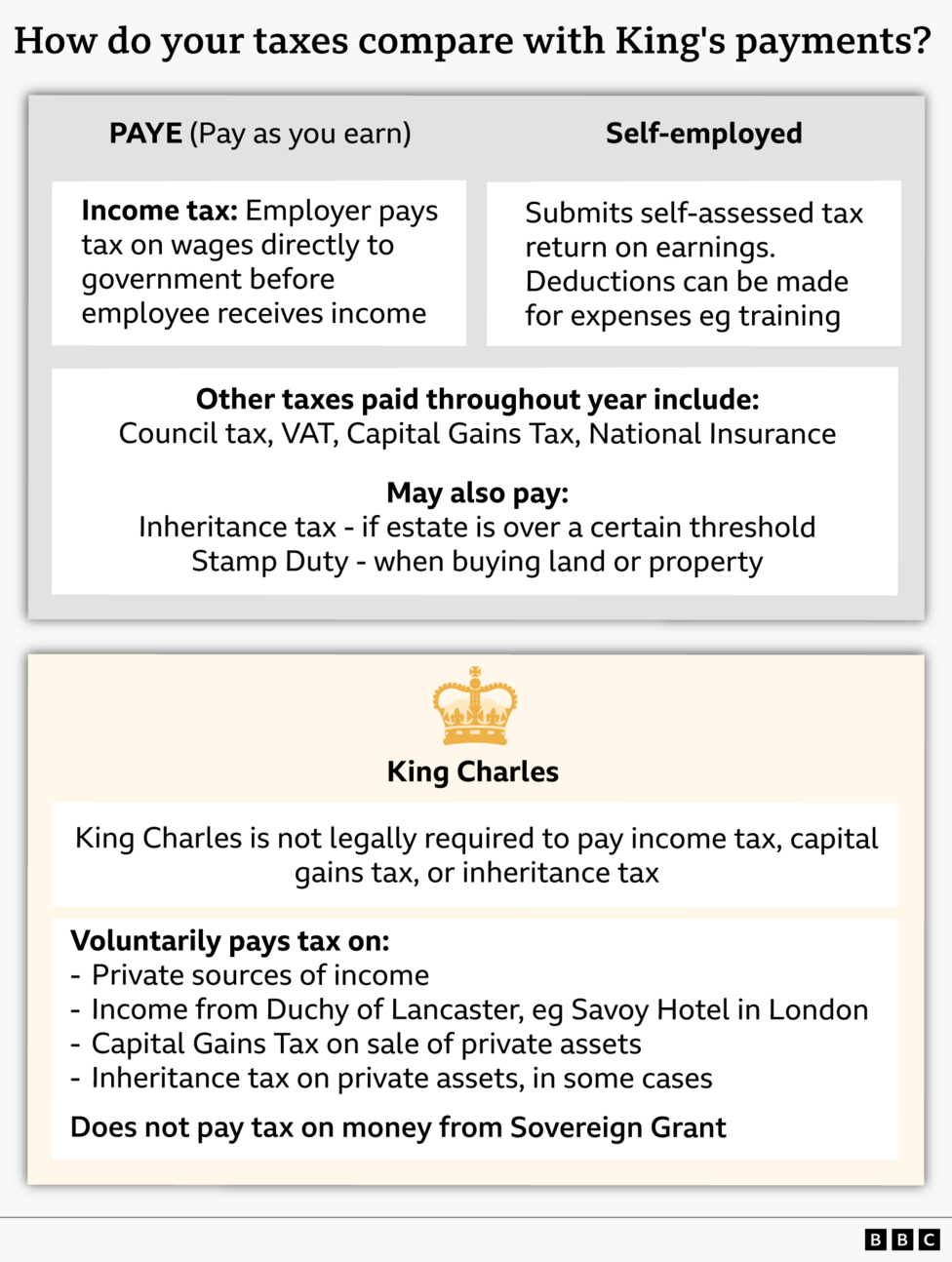
King Charles is not legally obligated to pay income tax, capital gains tax, or inheritance tax. Instead, he voluntarily pays certain taxes, including income tax, capital gains tax, and inheritance tax, under a government agreement known as the Memorandum of Understanding (MoU).
The MoU was established in 1993 following public concern about the costs of maintaining the Royal Family and has been updated occasionally, most recently in 2023 to reflect the succession of King Charles after Queen Elizabeth II's passing.
This voluntary payment arrangement distinguishes the King from ordinary taxpayers, leading some to argue that these payments do not constitute actual taxes. HM Revenue and Customs (HMRC) defines tax as "money that individual people and businesses are legally required to pay to the government."
Dan Neidle, founder of Tax Policy Associates, told the BBC: "If it's voluntary, it's not tax."
Additionally, the report states that King Charles pays VAT, employer taxes, and local rates "in line with requirements."
We don't know how his tax bill was calculated
Although the Royal Household describes the publication of the King's tax bill as part of its "commitment to transparency," the methodology behind the calculation remains unclear.
It is known that the King has agreed to pay tax on personal income, income from the Privy Purse not used for official duties, and capital gains tax on private property sales. However, the exact proportions of these taxes contributing to the £12.9 million total are not disclosed.
The Privy Purse represents a source of private income for the reigning monarch, primarily derived from the Duchy of Lancaster, an estate owned by the monarch that includes assets such as the Savoy Hotel in London.

The report indicates that the Privy Purse received £25.2 million from the Duchy of Lancaster for the year ending 31 March, but this does not encompass the King's entire income. He also has personal earnings, which the Royal Household suggests may include "investment income and trading profits," though no specific figures are provided.
Buckingham Palace characterized the decision to publish the tax bills of King Charles and Prince William as an effort to increase transparency and "encourage wider understanding of our accountability."
Historian Anna Whitelock said the King revealing his tax bill puts him "front and centre as a very rich man".
"I do think this is very much a sign of the times, and it's an attempt by the monarchy to try and get on the front foot and before they were absolutely pushed to try and show they are responsive and not reactive."
However, Shaun Moore, tax and financial planning expert at wealth manager Quilter, noted the report lacks detailed information.
"The headline figure is a large sum of tax and there's also a large sum of income quoted as well, but there's not any breakdown of about how that was arrived at."
These observations raise questions about the extent of the royals' financial transparency.
He can deduct official royal business from the bill
The report does not specify what portion of the Privy Purse income the King has spent personally versus what has been allocated to official royal duties. This distinction is significant because the King voluntarily pays tax only on income spent personally, effectively allowing him to deduct expenses related to royal business from his tax bill.
Furthermore, the King does not pay tax on the Sovereign Grant, funds provided by the Treasury to the Royal Household to cover official duties.
This arrangement resembles how a self-employed individual might claim expenses on a self-assessment tax return for items such as uniforms or training. However, the King benefits from two tax-exempt sources to fund official duties.
Moreover, the definition of official duties differs substantially from what a typical self-employed taxpayer can expense. For instance, the untaxed Sovereign Grant can be used to cover staff salaries and operational costs of the King's official household. Untaxed official duties funded by the Privy Purse include the personal income of working members of the Royal Family.
The Keeper of the Privy Purse, James Chalmers, said: "While Royal finances can sometimes appear complex, the underlying system is clear in principle, structured in law and refined over time to ensure the Monarch can serve with independence, accountability and in the long-term interests of the nation."
- Royal finances face a cut. But will much really change?
- King becomes first monarch to reveal tax bill as royal public funding to double to £100m


