

John Swinney Reappointed as Scotland's First Minister
John Swinney is set to be reappointed as the First Minister of Scotland following a nomination victory in the Scottish Parliament.
The SNP leader secured the nomination through a parliamentary vote. Although leaders from the five other parties at Holyrood also contested the role, the SNP's decisive election win made Swinney's nomination almost certain.
His appointment will be formally approved by the King before a signing-in ceremony at the Court of Session scheduled for Wednesday.
Swinney, who has held the position since succeeding Humza Yousaf two years ago, will announce his cabinet appointments on Wednesday.
Addressing MSPs, Swinney pledged to provide
"reliable, trusted leadership in turbulent times".
He stated his intention to collaborate with the entire chamber to address the cost of living crisis, enhance the NHS, stimulate economic growth, and safeguard the environment.
The First Minister emphasized that with a record pro-independence majority in parliament, formed by SNP and Green MSPs, the public had expressed their desire for independence
"loud and clear", and he would
"seek to abide by those wishes".
Swinney affirmed that his government was prepared to implement
"ambitious, practical"strategies to advance towards independence.
Parliamentary Composition and Voting Process
While the SNP achieved a clear victory in the Holyrood election, it did not obtain an outright majority. Consequently, Swinney's administration will require support from other parties to pass legislation.
Following the election of SNP veteran Kenneth Gibson as presiding officer, the SNP's number of MSPs decreased to 57, which is eight short of a majority.
The nomination for First Minister required candidates to secure more votes than all other contenders combined. The voting proceeded through multiple rounds, eliminating the lowest-scoring candidate each time until a winner emerged.
Reform UK Scotland and Labour both finished in second place in the election, each returning 17 MSPs.
The Greens secured a record 15 seats, followed by the Conservatives with 12 and the Liberal Democrats with 10.
Swinney won the nomination after three rounds of voting, with Alex Cole-Hamilton of the Liberal Democrats and Conservative Russell Findlay eliminated in the first two rounds.
Party Leaders' Appeals to MSPs
During their addresses to MSPs, opposition leaders emphasized the need to reduce the cost of living and improve the NHS. They also warned of growing public disillusionment with politics.
Reform's Malcolm Offord criticized the SNP for creating a
"broken system of high taxation and welfare dependency", asserting that only his party could deliver
"prosperity for every Scot".
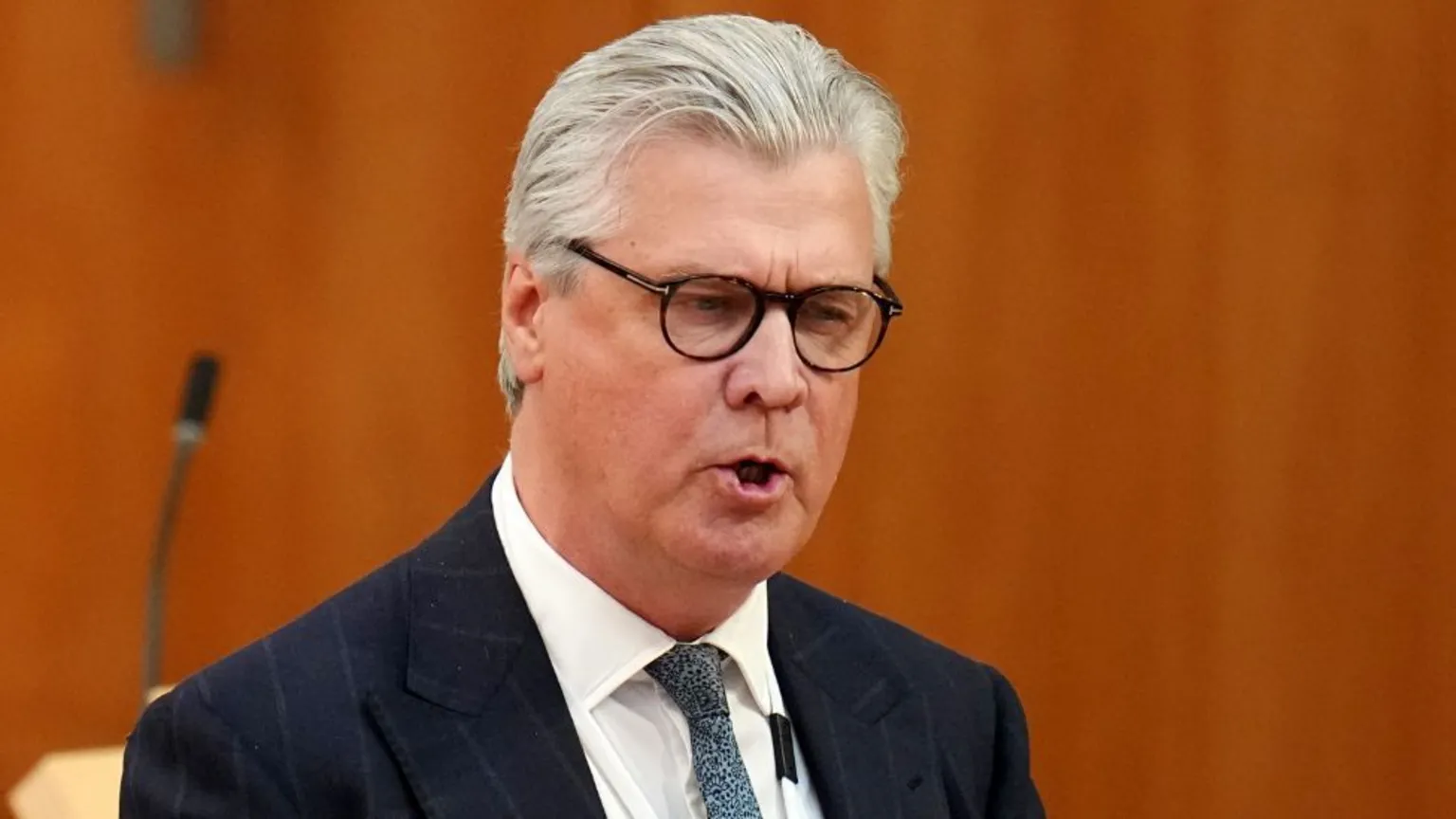
Labour leader Anas Sarwar, acknowledging his party's disappointing election results, stated that the parliament had a duty to overcome
"the politics of fear and blame"and regain the trust of a
"scunnered"public.
Green co-leader Gillian Mackay highlighted that Scots had elected the largest-ever pro-independence majority, insisting that the country should be given the opportunity to vote on its constitutional future.
Conservative chief Russell Findlay, recognizing the inevitability of the vote's outcome, urged Swinney not to prioritize
"constitutional paralysis above good governance".
Liberal Democrat Alex Cole-Hamilton called on the SNP to place the
"divisive"issue of a second independence referendum
"in the deep freezer".
A second independence referendum would require approval from the UK government, which has consistently rejected the prospect of another vote.
Swinney has yet to outline detailed plans on how to address this constitutional stalemate.
Swinney's Political Comeback
John Swinney's reappointment marks a notable political resurgence for the SNP veteran.
He appeared to have stepped away from frontbench politics in 2023 after resigning from the cabinet following Nicola Sturgeon's resignation as First Minister.
However, this changed when Humza Yousaf's premiership collapsed in April 2024. Swinney, citing a
"profound sense of duty", decided he still had contributions to make to his party and country.
Although he was unable to prevent the SNP's defeat in the 2024 general election, Swinney has now secured a fifth consecutive term of SNP government at Holyrood.


