

MPs Reflect on Safety Following Ann Widdecombe's Death
There is a familiar and somber tone among Members of Parliament when discussing their personal safety. This is a subject that politicians from all parties often contemplate privately due to its daily relevance.
However, the recent development of counter-terrorism police assuming control of the investigation into Ann Widdecombe's death has reignited public discourse on how to balance MPs' accessibility with their protection.
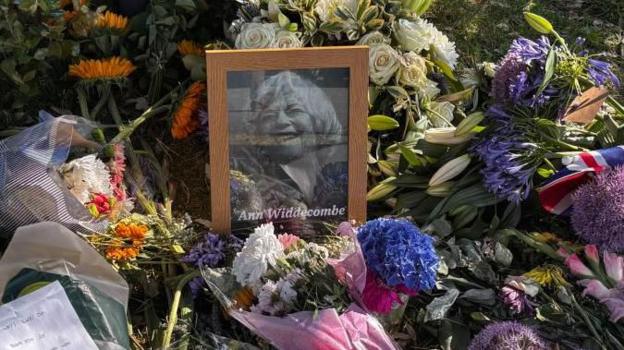
On Monday afternoon, the House of Commons was marked by a reflective atmosphere as MPs paid tribute to Widdecombe. Regardless of political alignment, many expressed admiration for her character and conviction. The discussion also turned toward potential measures to enhance the security of public officials.
Concerns Raised About Risks Faced by MPs
Sir Bernard Jenkin, a long-serving Conservative MP, highlighted a concerning statistic, stating:
"It is an unfortunate statistical fact that as a member of parliament you are more likely to meet a violent death than a member of His Majesty's armed forces or a member of the British police forces."
Several MPs, including veterans of many years, conveyed a sense that the environment feels increasingly perilous. Many attributed this to social media's role in normalizing violent rhetoric and abuse.
Former Conservative leader Sir Iain Duncan Smith emphasized the need for action against harmful online content:
"We need to reiterate, and the Government and the home secretary needs to specify, to all those social media companies they must do something to close down on the visceral, violent language that some people use, attacking personally – as they did over her murder – which has shocked me, to make sure we get on top of that because that is the root of violence and death."
Counter-Terrorism Police Take Over Investigation
The investigation into Ann Widdecombe's death is now under the jurisdiction of counter-terrorism police. Authorities have indicated that the suspect was not previously known to the Prevent program, which focuses on countering extremism.
Further details about the ongoing probe have been made available, outlining the current status and known facts.

Government Response and Security Concerns for Politicians
Home Secretary Shabana Mahmood acknowledged ongoing efforts and the need for further measures:
"The Government has already done some work in this area, but I'm sure we will have to go further."
Mahmood also addressed public concerns raised by Reform UK leader Nigel Farage regarding his personal security. She extended an offer for him to meet with the chair of the Royal and VIP Executive Committee (Ravec), the group responsible for overseeing MPs' security arrangements.
Farage expressed gratitude for the invitation and indicated his intention to discuss the security of all Reform politicians during the meeting.
Reform UK has publicly stated that it declined a state-provided security package for Farage last year, which included a bodyguard and driver, deeming it insufficient for his protection.
A spokesperson for Reform UK explained:
"Within days of the assassination of Charlie Kirk, at a moment when the threat to public figures on the right was escalating, the security package Mr Farage was offered represented a 75% cut without clear reason.
Faced with a state offer that no longer matched the threat against him, Nigel declined the downgraded and inadequate package and Reform took the responsible decision to maintain proper protection rather than gamble with his life."
Broader Challenges in Protecting Public Figures
The circumstances surrounding Widdecombe's death and Farage's concerns underscore the complexity of assessing threats to public figures. While there are 650 sitting MPs, questions arise about the security of former members like Widdecombe.
Additionally, prominent political figures who are not MPs, such as Zack Polanski, leader of the Green Party of England and Wales, and Andrea Jenkyns, the Reform Mayor of Lincolnshire, also face security considerations.
This ongoing debate raises concerns about attracting future generations to political careers across all parties. Potential candidates and their families may question whether Westminster remains a safe and appealing environment.


