

Lewisham Council has become the first local authority in the UK to refuse to assist Home Office immigration raids wherever "legally possible". A motion to that effect, proposed by the Green administration, was formally agreed at a meeting of Lewisham's full council at the Town Hall on Wednesday.
The motion included a review of the council's data-sharing and service agreements, and pledged not to use council resources or public money for immigration enforcement. A Home Office spokesperson said, while immigration enforcement visits are intelligence led, they make "no apology" for joining local authorities to enable information sharing and " fighting criminals who fuel immigration crime".
Home Office data, obtained under freedom of information by the grassroots organisation Lewisham Anti-Raids, indicates that Lewisham has become a "major focus" for immigration enforcement, according to the Local Democracy Reporting Service (LDRS). The data shows 177 raids occurred in the SE13 area during 2025.
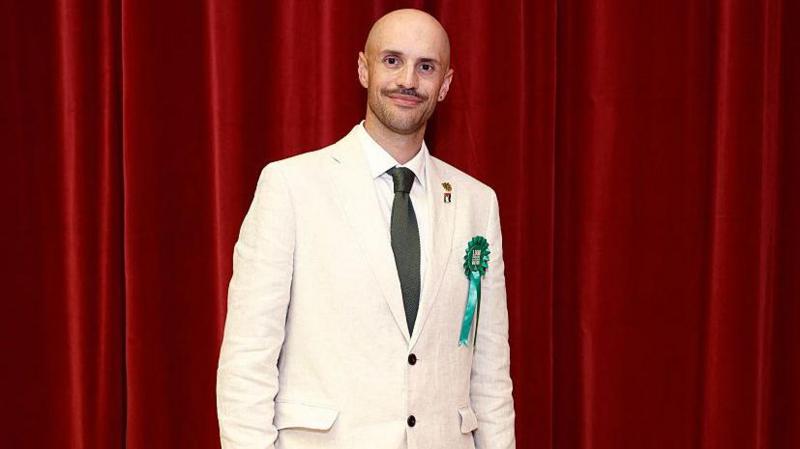
Mayor of Lewisham Liam Shrivastava said the council would "defend our migrant workers".
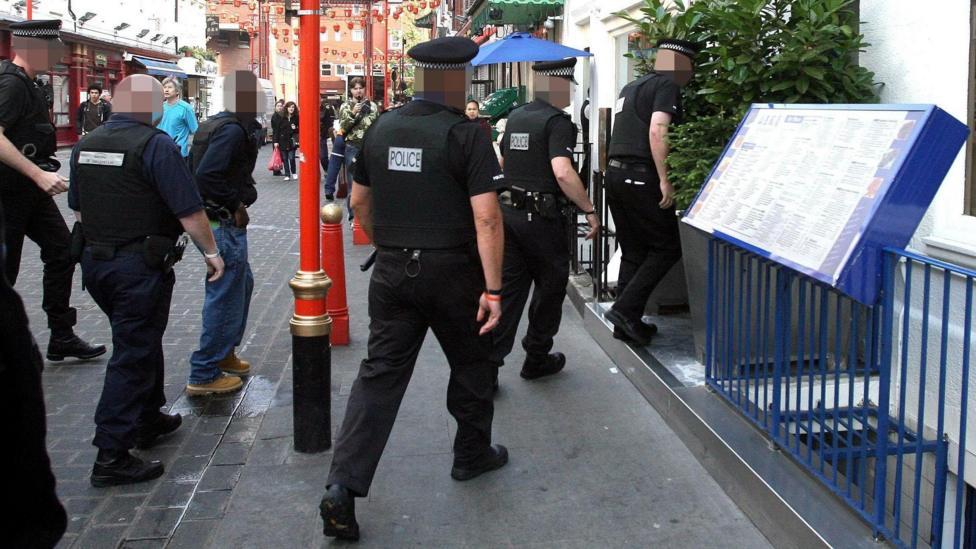
According to the Home Office, immigration enforcement teams carried out 2,715 illegal working visits and raids in London during 2025, resulting in 2,172 arrests. The previous year there were 2,008 raids.
What did the council motion say?
The Green-led motion committed the council to resisting assistance for Home Office immigration raids where that could be done lawfully, and to reviewing agreements that involve data sharing or services linked to immigration enforcement. It also said council resources and public money should not be used for immigration enforcement.
Greens councillor Hau-Yu Tam, who had proposed the motion, said in January 2026 there had been immigration raids at a nail bar in Catford and a car wash in Brockley which was attended by the then immigration minister Mike Tapp and a film crew.
Cllr Tam, cabinet member for communities, sanctuary and healing, said:
"Despite the resources, despite the spectacle, only two people were arrested and both [were] later released on bail. A few months later, a nail bar was raided again, and again a few days after.
"According to local accounts, Chinese women workers were filmed, handcuffed and intimidated by a large officer team. They were not arrested, but they were intimidated," she said.
"That is political theatre. That is a theatre of cruelty," she added.
"And if the purpose of race is simply enforcement ... there's no evidence these operations are making our community safer.
"Our immigration system is broken," she said.

How did Labour respond?
At the meeting, the Labour opposition on Lewisham Council attempted to introduce an amendment relating to modern slavery, but it was voted down. Labour councillor Andre Bourne said:
"We are in support of this motion; however, we are making amendments to strengthen it – we are here to support your motion."

Lewisham became a 'Borough of Sanctuary', in recognition of the borough's work in supporting those fleeing violence and persecution, in 2021 under the previous Labour administration.
A Home Office spokesperson said:
"Since coming into power, [Labour] have increased immigration enforcement action to the highest level in British history.
"This has delivered an 83% rise in illegal working arrests and 77% rise in raids between 1 July 2024 to 31 December 2025."
Mayor of Lewisham Liam Shrivastava said:
"I'm incredibly proud that Lewisham Council has made this historic decision to defend our migrant workers against the hostile environment.
"Immigration raids do not build safety in our communities, they spread fear and make it even harder for victims of modern slavery and trafficking to come forward and seek protection."
What happens next?
Lewisham said it will now work with Lambeth and other Green-led councils to build a 'sanctuary corridor' across parts of London, which aims to work with migrant organisations, anti-raids networks, law centres, faith and community groups.
There were 2,715 illegal working visits and raids in London during 2025.
Prof Jonathan Darling, an urban and political geographer at Durham University, said Lewisham's focus on non-cooperation is "indicative of the limits that any council has in opposing Home Office policy".
He said:
"The motion is very unlikely to stop immigration raids in Lambeth, though it may reduce them.
"Non-cooperation with the Home Office, in the form of denying access to information and refusing to coordinate council work on housing, education, and health with immigration enforcement, will hinder but not necessarily stop raids."
Darling added:
"The commitment to inform migrant communities of their rights when faced with immigration enforcement may be as significant in terms of reducing the effectiveness of raids."
Listen to the best of BBC Radio London on Sounds and follow BBC London on Facebook, external, X, external and Instagram, external. Send your story ideas to hello.bbclondon@bbc.co.uk, external


