How did the fire start?
A significant fire broke out in a vape shop on Union Street in Glasgow at approximately 15:45 on Sunday, rapidly spreading to engulf a B-listed Victorian building located at the corner of Union Street and Gordon Street, adjacent to Glasgow Central Station. The fire caused partial collapse of the structure.
The Scottish Fire and Rescue Service (SFRS) initially deployed six crews to the four-storey building. Videos shared on X showed smoke emanating from the ground-floor vape shop near a side entrance to the railway station.
An eyewitness, Lamin Kongira, recounted to BBC Scotland News his attempt to extinguish the fire before having to retreat due to explosions. He described how a shopkeeper alerted him with shouts of "fire, fire" as he passed by. Upon entering the shop, Lamin observed an adapter charging system under the counter with a small fire. He then sought assistance from a nearby Subway sandwich shop, returning with a fire extinguisher. However, after hearing two explosions within the vape shop, he was forced to cease efforts. Lamin suggested the second explosion contributed to the fire spreading throughout the building.
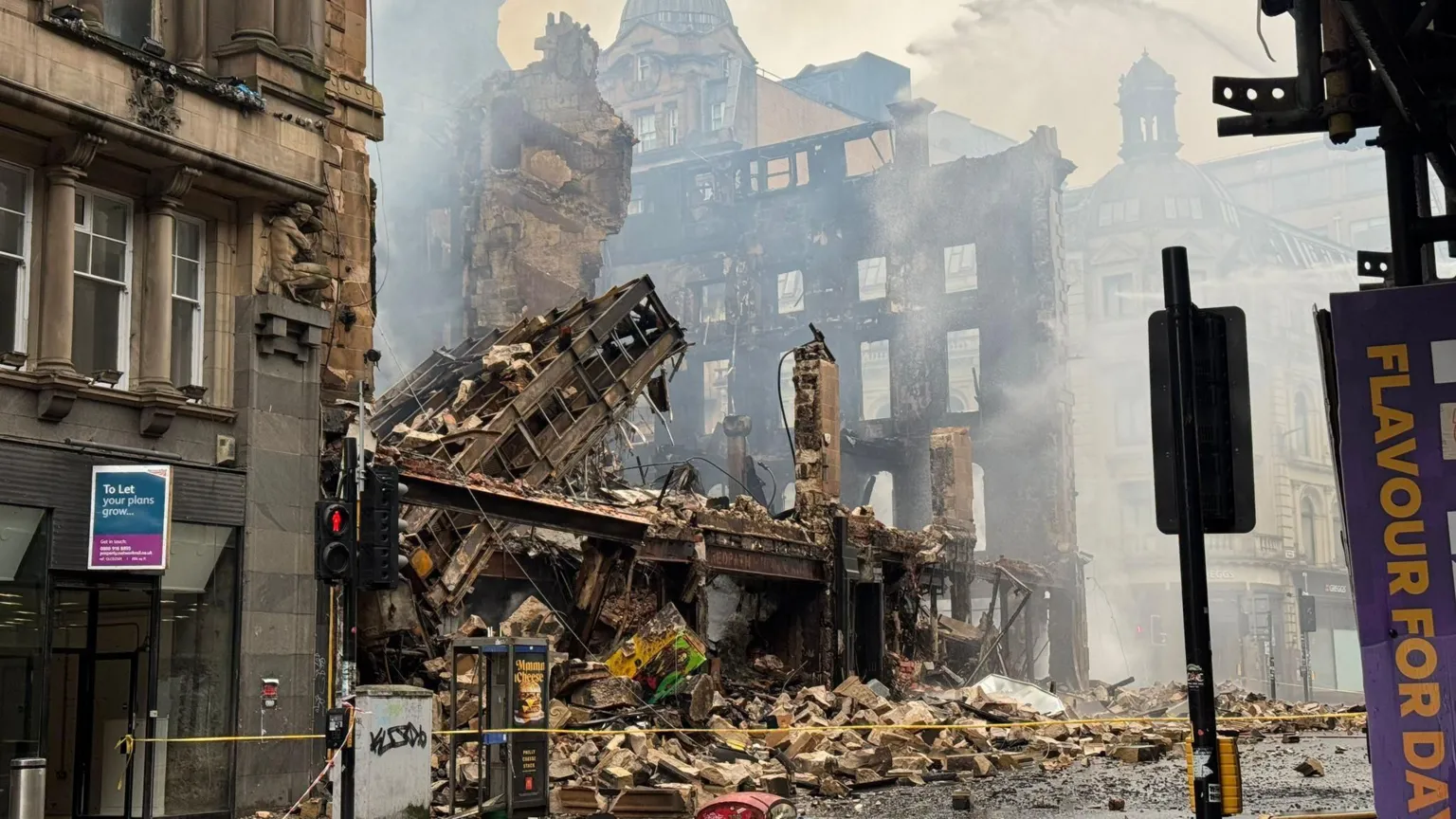
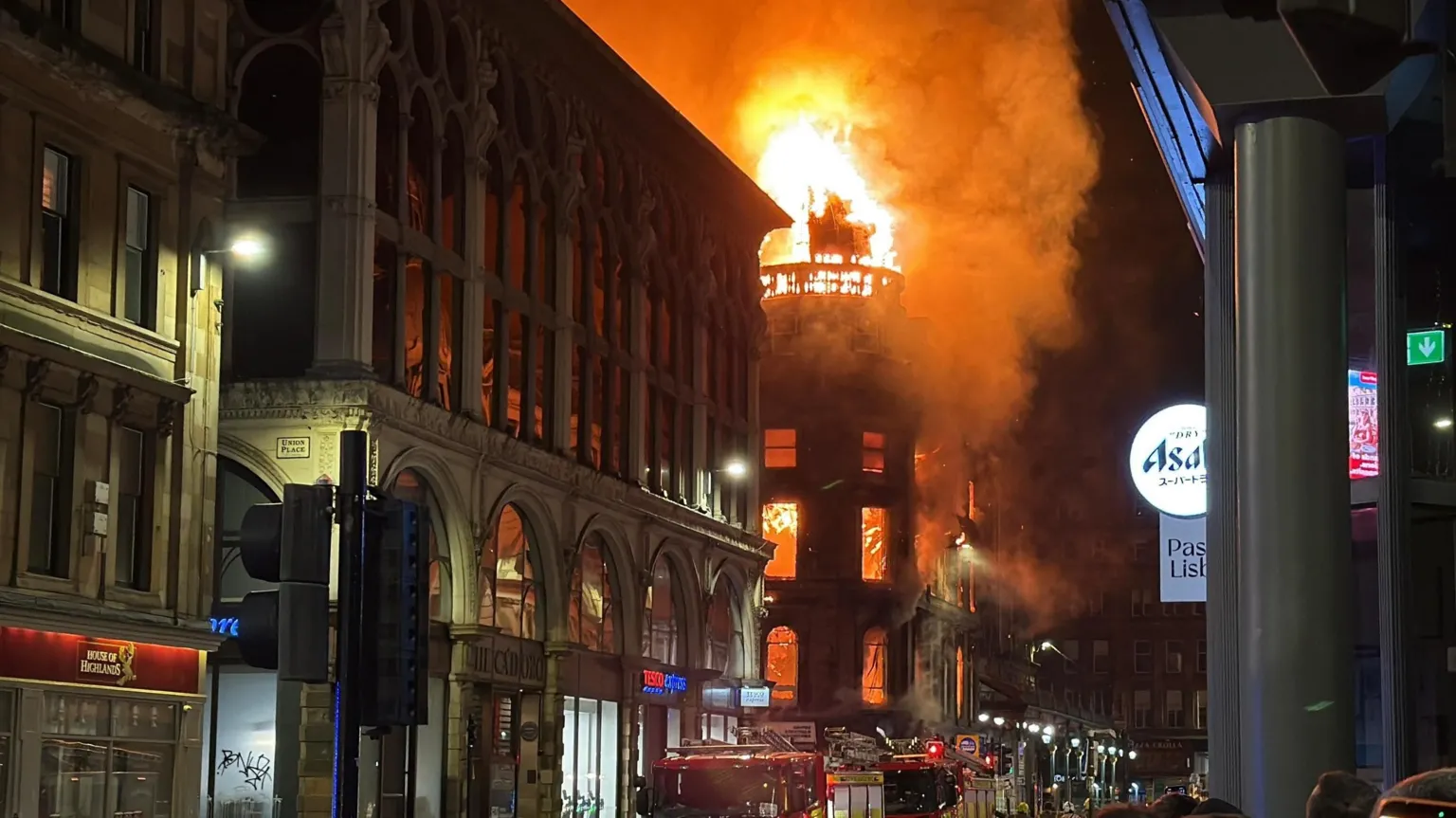
By Sunday evening, the fire had fully taken hold, with flames reaching the dome atop the historic 19th-century building. The front wall collapsed to the ground. The SFRS confirmed the fire originated in the vape shop and indicated that a preliminary multi-agency investigation into the cause had commenced.
How much damage has been caused?
At the peak of the incident, 250 firefighters, 18 fire engines, and specialized equipment, including a high-volume pump drawing water from the River Clyde, were engaged in firefighting efforts.
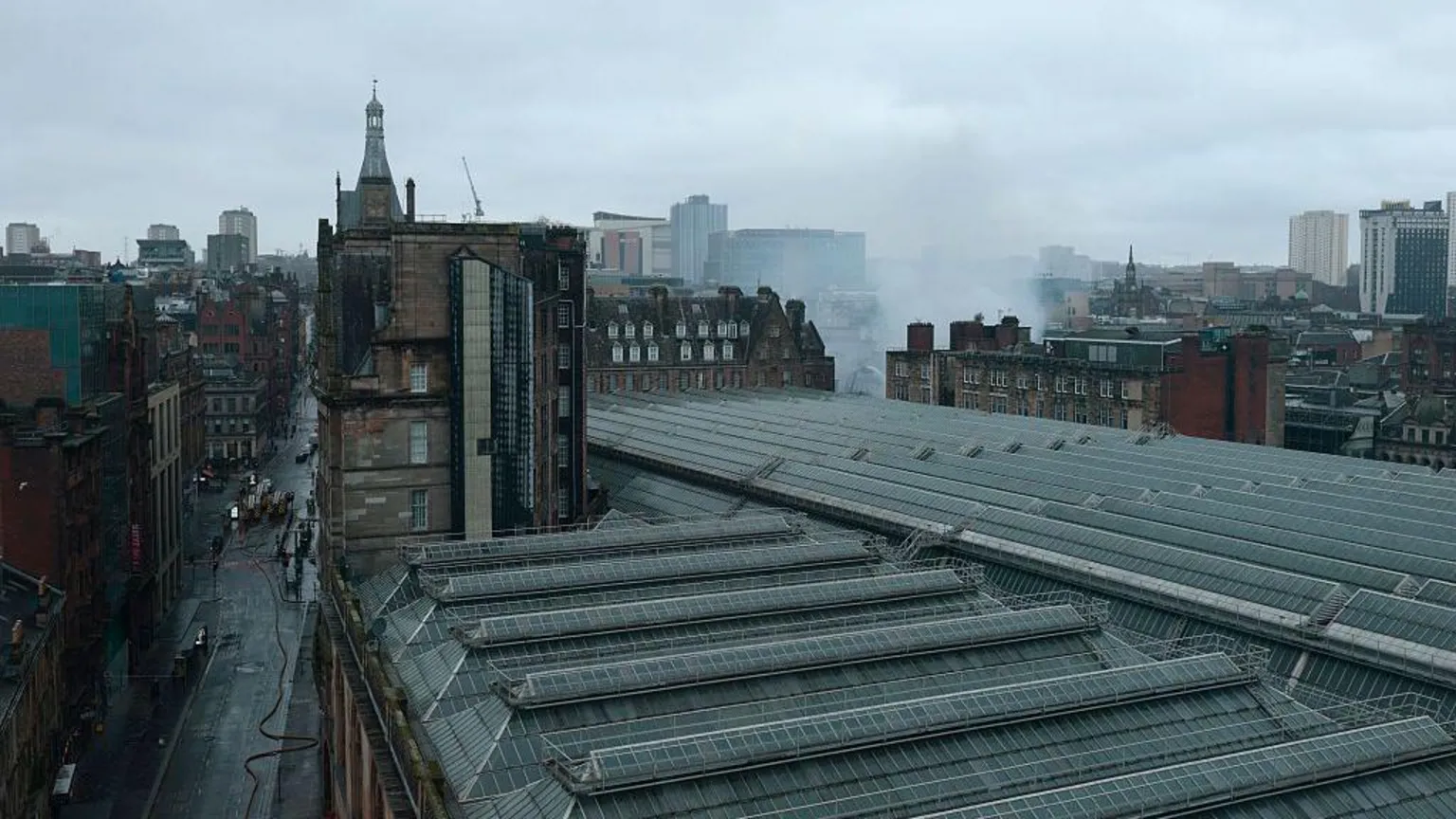
On Monday, the SFRS scaled back its response, maintaining eight fire engines on site, including three high-reach vehicles. Fire crews utilized aerial platforms to douse remaining parts of the building, while smoke continued to linger in the area.
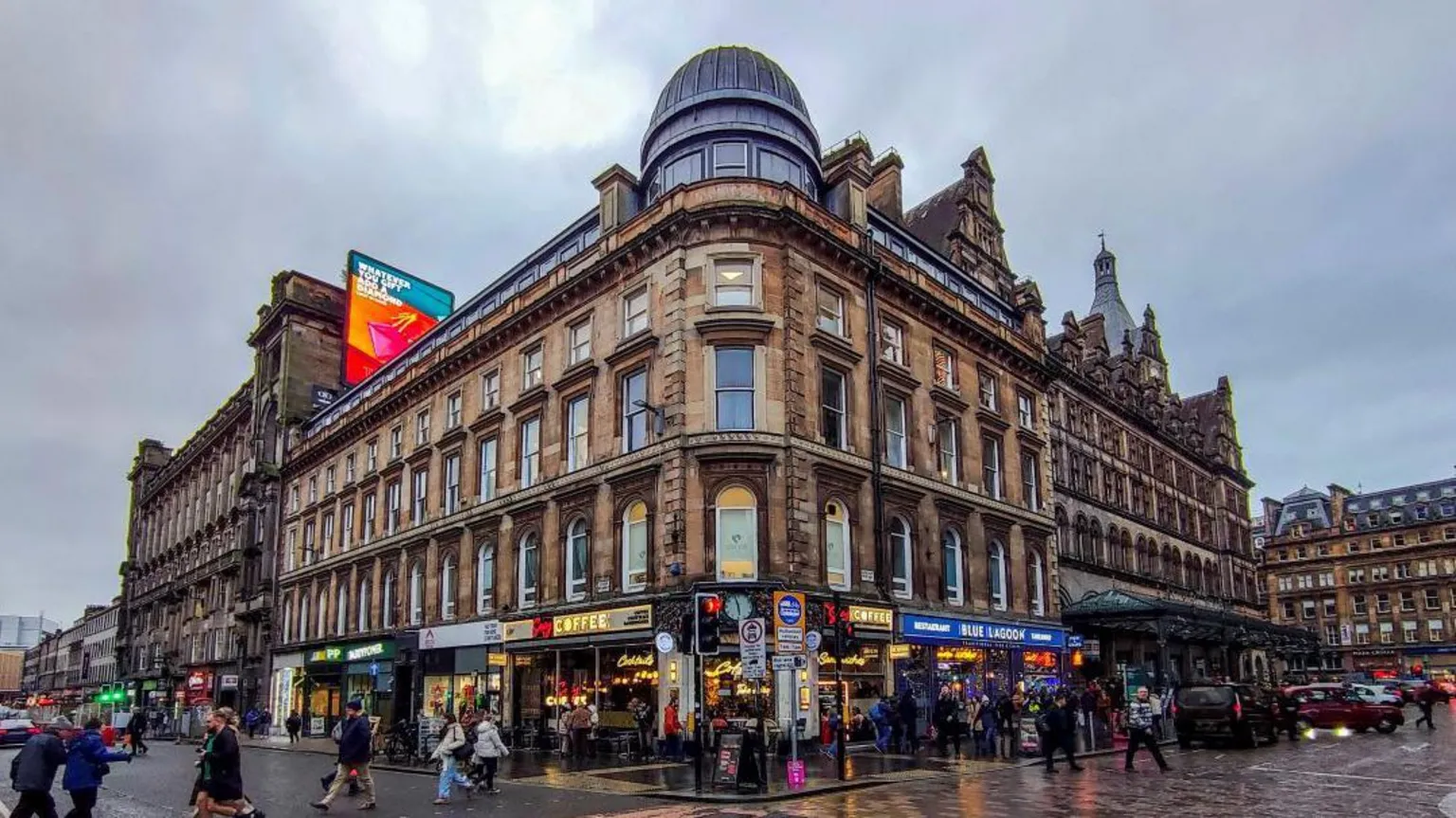
Only the facade of the building at the corner of Gordon Street and Union Street remains standing. The building, known as Union Corner, dates back to 1851, predating Glasgow Central Station, which opened in 1879.
Fire crews focused on cooling hotspots within the stonework and assisting structural engineers in evaluating the stability of the remaining structure.
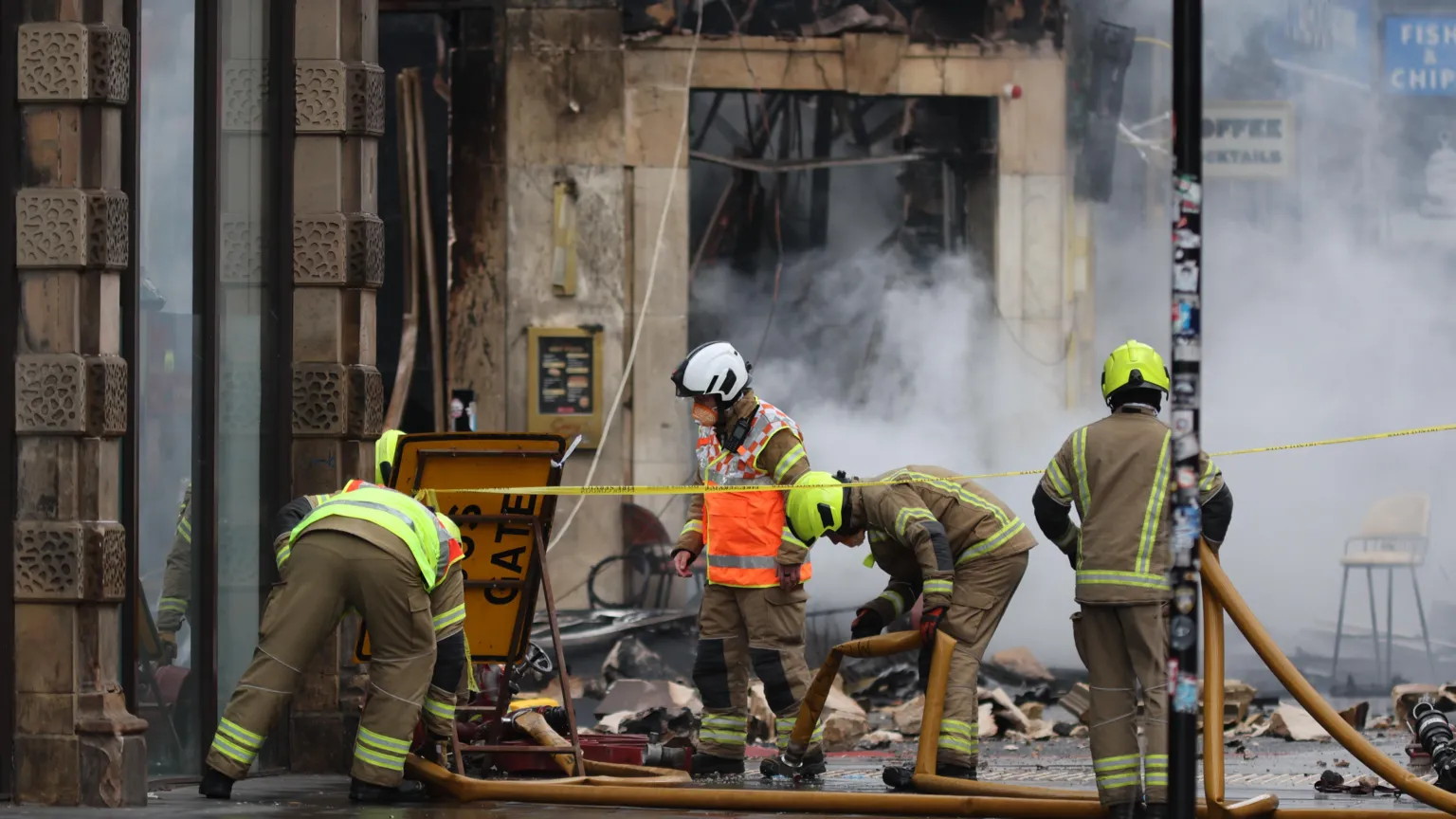
The city council has described the remaining facade as being in a state of "ongoing and uncontrolled collapse."
Business owners affected by the fire expressed their devastation to BBC Scotland, lamenting the loss of dozens of retail units housed within Union Corner.
Courtney MacKinnon, who operated Cece's Salon, a hairdressing business in the building for four years, described the situation as "really shocking," emphasizing the hard work of the small businesses lost and the uncertainty facing their futures.
"It's really shocking, the amount of small businesses that are gone," she said. "Everybody there works so hard, it's difficult for everyone. Everything seems to be gone."
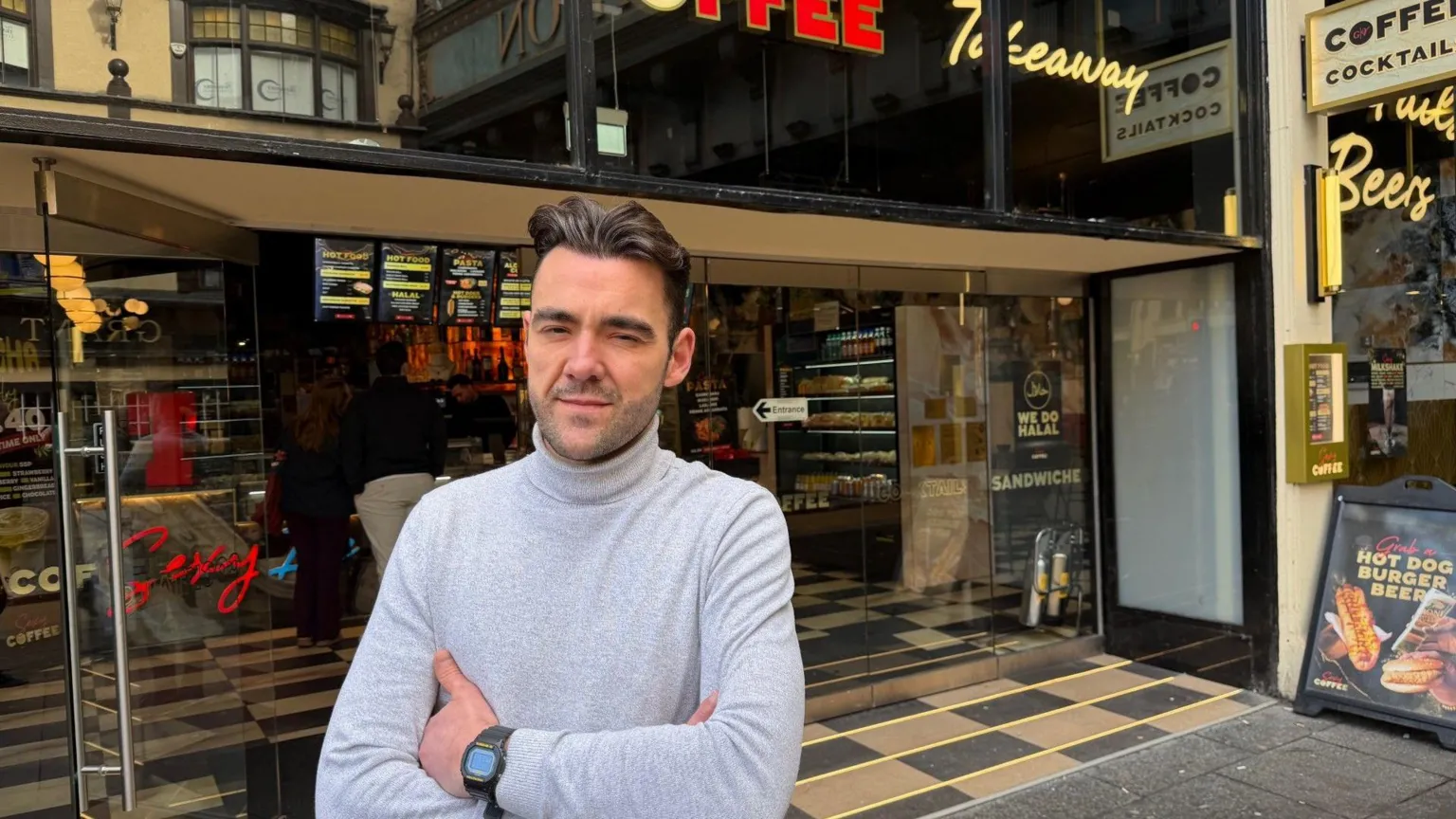
Alessandro Varese, owner of the Blue Lagoon chip shop on Gordon Street and the adjacent Sexy Coffee, confirmed both establishments were "completely destroyed." Another Blue Lagoon branch on Argyle Street was closed due to smoke damage, and an office on the third floor of the Gordon Street building was also damaged by the fire.
He said he wanted all of the business owners in the block to "stick together" and rebuild.
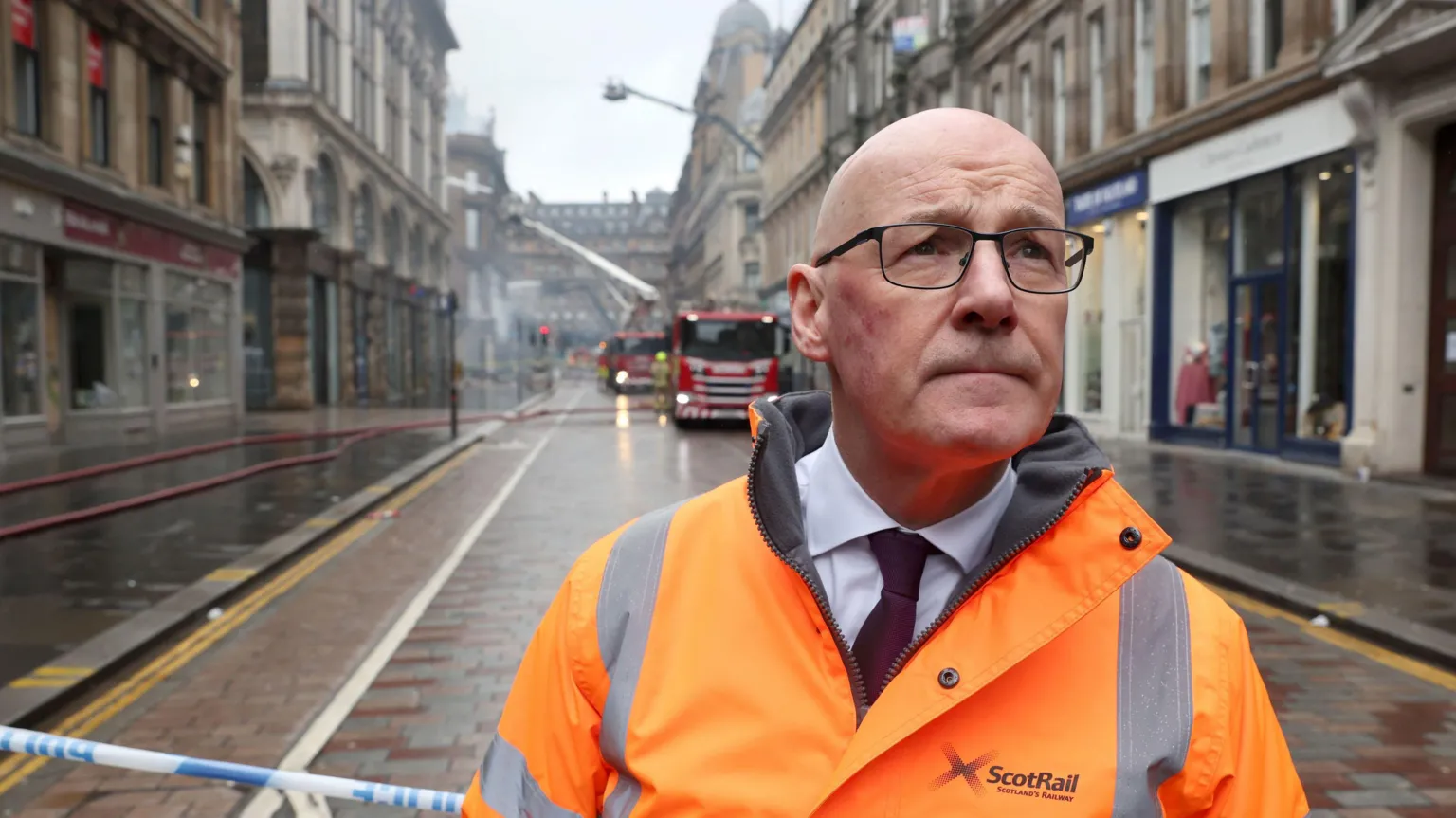
First Minister John Swinney visited the scene on Monday, affirming that the Scottish government would provide financial support to assist the council.

"The Scottish government will contribute financially to help the council," he said.
However, no definitive recovery plan for the affected local businesses has been announced. Studios and costly equipment were lost in the blaze, prompting fundraising efforts to mitigate the financial impact.
What disruption has been caused?
Glasgow Central Station, one of the busiest in the UK with 25 million passenger visits annually, serves as the main hub for west coast mainline services to England and routes throughout central Scotland.
ScotRail announced that no services would operate in or out of Central Station on Tuesday, although low-level trains would continue to pass through, stopping at nearby Argyle Street and Anderston stations. Limited replacement bus services will be available for some routes. ScotRail committed to updating passengers via social media, its website, and app.
Avanti West Coast stated that tickets dated 8 and 13 March would be valid on any Avanti West Coast train on the same route until Friday at no extra cost.
"The majority of our trains between Scotland and London are able to run normally to/from Motherwell and Edinburgh," the company said. "Our other routes, such as to Manchester, Liverpool, Birmingham, and North Wales are unaffected by this disruption."
Police Scotland confirmed that several roads around Union Street and Central Station would remain closed, including:
- Union Street
- Gordon Street
- Other adjacent streets
First Bus Greater Glasgow reported that the fire and road closures had disrupted multiple bus services. Union Street, the site of the fire, serves as a primary drop-off point for many city centre passengers.
When will Glasgow Central Station reopen?
Glasgow Central Station has remained closed since Sunday but appears to have avoided significant damage from the fire.
Network Rail staff and fire service teams continue to work on site, with service disruptions expected to persist for several days.
BBC Scotland News has learned that Network Rail engineers, after inspecting the station concourse and the nearby Caledonian Chambers building, found no major damage.
A firebreak between Union Corner and the station's external wall is believed to have prevented the fire from spreading further.
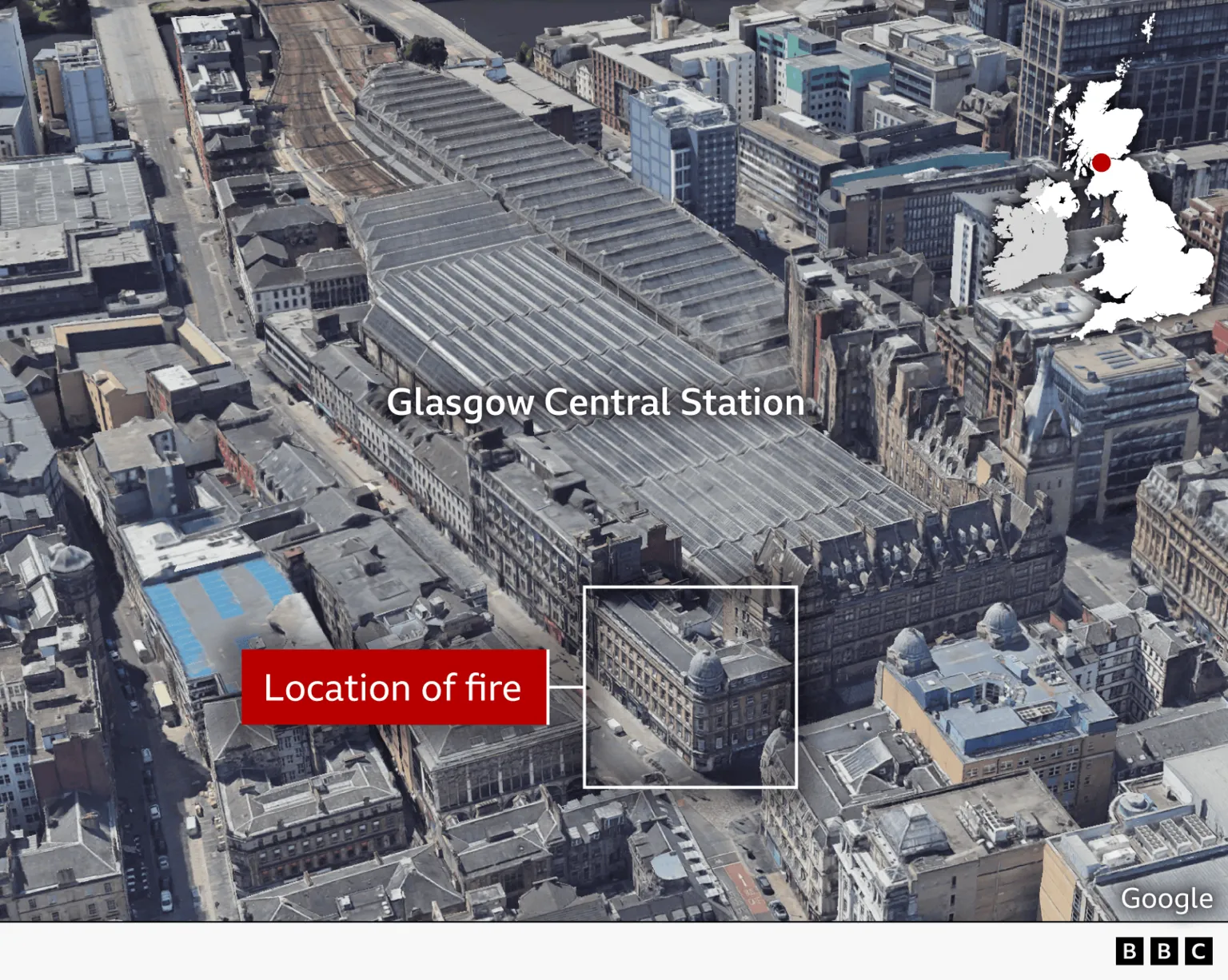
A phased process will be required before reopening. Once the SFRS confirms that all hotspots in the rubble have been extinguished, the site will be handed over to Glasgow City Council.
The council will then determine the fate of the remains of Union Corner, where the facade still stands and poses a risk of collapse that could damage the station.
Following this, Network Rail will conduct safety inspections to establish when services can resume.