

Call for Stronger Gun Laws 30 Years After Dunblane
The father of Sophie North, a five-year-old girl killed in the Dunblane primary school shooting, has stated that gun laws in the UK remain insufficiently strict three decades after the tragedy.
On 13 March 1996, Sophie was among 16 children and their teacher, Gwen Mayor, who were fatally shot at the school in central Scotland. The perpetrator, Thomas Hamilton, entered the school armed with four legally-owned handguns and 743 rounds of ammunition.
Following the incident, Mick North helped initiate a campaign that successfully advocated for a comprehensive ban on private handgun ownership.
North now emphasizes the need for UK government ministers to adopt a more proactive stance in identifying potential firearm threats as the nature of these dangers evolves.
"The whole of firearms legislation needs to be reviewed,"
he said, citing the regulation of 3D printed guns as an example of how firearm laws have developed in a piecemeal manner.
He also expressed concerns about converted replica firearms and weapons with barrels just long enough to evade the handgun ban.
North advocates for enhanced background checks for firearms licensing, including assessments of social media activity and the opinions of an applicant's partner.
Currently, Members of Parliament are considering proposals to tighten shotgun licensing laws to align them more closely with rifle restrictions.
"The government should be leading, they should be spotting loopholes in the law and plugging them before anything happens,"
North told .
"They certainly shouldn't be complacent and they should always remain vigilant and that's a message I will continue to try and push."
Firearms regulation in the UK is complex, with some regional variations; however, the overall framework is established by the Westminster government.
Gun Owners Emphasize Victims' Memory and Legal Compliance
A spokesperson for the British Association for Shooting and Conservation (BASC) stated that the anniversary serves as a moment to remember the victims and expressed condolences to the families and all affected.
The BASC highlighted that the UK maintains one of the most comprehensive and stringent firearms licensing systems globally. Legal firearm owners undergo extensive background and suitability checks, medical evaluations, secure storage requirements, and ongoing police oversight.
The spokesperson noted that firearms used in criminal activity in the UK are predominantly held illegally, not by licensed certificate holders who comply with the law within a tightly regulated system.
Regarding 3D printed firearms, the BASC confirmed they are already illegal in the UK and expressed support for the existing legislation.
BASC does not support proposals that would fundamentally change the shotgun licensing system without clear evidence that they would improve public safety,

North Challenges Nigel Farage's Past Comments
North also called on Reform UK leader Nigel Farage to retract comments made in 2014 on LBC, where Farage described the handgun ban as "ludicrous" and a "knee-jerk reaction" to Dunblane.
"There is a man out there who some people might be predicting could be the prime minister of this country who is advocating re-arming people,"North said.
Farage made these remarks while leading UKIP. Reform UK, however, maintains it has no intention of repealing or weakening current firearms legislation.
In response to an interview request, Reform UK provided a statement from Farage:
"I assure you Reform UK has absolutely no plans to loosen gun laws. My previous comments referred to the impracticality of laws affecting competitive sports,"
This statement echoed arguments made after Dunblane that shooting clubs and Britain's Olympic shooting team would be unfairly impacted by a handgun ban.
The gun lobby previously received support from Prince Philip, Queen Elizabeth's husband, who suggested that banning handguns in response to Dunblane would be comparable to banning cricket bats because they too could be used as lethal weapons.
Campaigners Reflect on Their Work
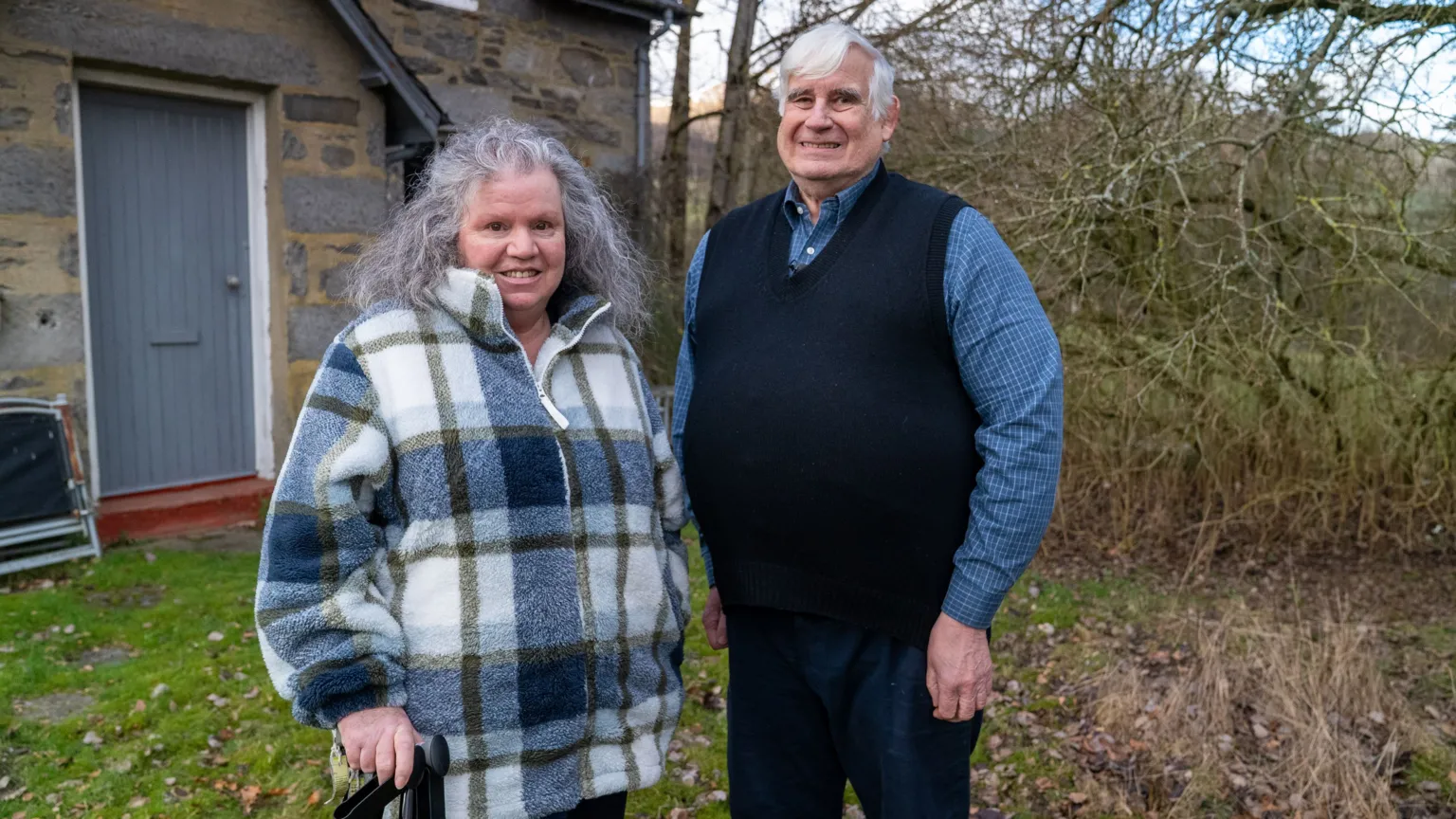
North and Ann Pearston, who led the Snowdrop Campaign advocating for a handgun ban after Dunblane, spoke to at North's home in Perthshire.
North recalled how he campaigned through his grief, helping to establish the Gun Control Network.
"I just knew that fate had put me in this position and that I thought it was very important to do whatever I could,"
he said.
The Snowdrop Campaign, named after the only flower in bloom at the time of the shooting, collected 705,000 signatures on a petition to Members of Parliament. The petition called for enhanced safety measures and restrictions on firearms, including a ban on private handgun ownership.
Historical Context of Gun Safety Legislation
Nine years before Dunblane, the 1988 Firearms Amendment Act was enacted following a mass shooting in Hungerford, Berkshire, where 16 people were killed.
This legislation banned ownership of semi-automatic and pump-action rifles, weapons firing explosive ammunition, and short shotguns with magazines. It also tightened licensing, registration, and storage requirements for shotguns, although handguns remained legal.
In 1997, under pressure from Dunblane families, Snowdrop campaigners, and others, Conservative Prime Minister John Major introduced a partial handgun ban in Scotland, England, and Wales, exempting .22 calibre weapons used in competitive shooting.
Later that year, following Tony Blair's election as Labour Prime Minister, the ban was extended to cover all handguns.
Shadow Home Secretary Michael Howard of the Conservative Party criticized the ban as a "draconian" infringement of liberty that was "unnecessary, unfair and expensive."
Impact of the Handgun Ban
Thirty years on, North and Pearston affirm that the handgun ban they helped bring about has saved lives.
"Undoubtedly, yes,"North said, highlighting the stark contrast with the United States, where more people are murdered with guns daily than are shot and killed annually in Britain.
"The legacy,"Pearston added,
"is that this is now one of the safest countries in the world for gun crime."


